
YONGXING MATERIALS(002756)

Search documents
美伊战局发酵,搅动全球商品市场
Guolian Minsheng Securities· 2026-03-08 08:08
Investment Rating - The report maintains a "Buy" rating for all key companies listed, including Zijin Mining, Luoyang Molybdenum, and Huayou Cobalt [2][4]. Core Views - The ongoing geopolitical tensions in the Middle East are impacting global commodity markets, particularly in the non-ferrous metals sector, leading to increased prices for key resources [8][28]. - The report highlights a strong expectation for aluminum prices to rise due to supply constraints caused by geopolitical risks, particularly in the Middle East [28]. - Demand recovery is noted in the aluminum sector as downstream industries resume operations post-holiday, with significant increases in aluminum water ratios [28]. - The lithium and cobalt markets are experiencing upward price pressures due to supply concerns from Zimbabwe and the Democratic Republic of Congo, respectively [28]. - Precious metals are expected to benefit from heightened risk aversion due to geopolitical tensions, with a bullish outlook on gold prices in the medium to long term [28]. Summary by Sections Industry and Stock Performance - The report provides a detailed performance analysis of key stocks in the non-ferrous metals sector, indicating a general upward trend in stock prices despite recent market volatility [11][13]. Base Metals - Aluminum prices have increased by 9.22% week-on-week, with expectations for continued strength due to supply disruptions from geopolitical tensions [15][28]. - Copper prices have shown volatility, with a recent decline attributed to rising geopolitical risks and a strong dollar, impacting market sentiment [48][49]. - Zinc prices have fluctuated due to supply and demand dynamics, with recent increases in domestic inventories affecting price stability [60][61]. Precious Metals and Minor Metals - Gold prices have risen by 3.71% recently, driven by increased demand for safe-haven assets amid geopolitical uncertainties [16][28]. - The report notes that silver prices have also increased significantly, reflecting strong industrial demand and investment interest [16][28]. - Cobalt and nickel markets are under pressure from supply constraints and geopolitical factors, with expectations for price increases in the near term [28][73]. Rare Earths - The report does not provide specific insights into rare earths in this section, focusing instead on the broader non-ferrous metals market dynamics [28].




有色:能源金属行业周报:节后多数金属价格继续回暖,后续仍看好关键金属全面行情
HUAXI Securities· 2026-03-01 10:35
Investment Rating - The industry rating is "Recommended" [3] Core Views - The report highlights that the supply disruptions in Indonesia are raising expectations for tighter market conditions, which may support nickel prices. As of February 27, the LME nickel spot price was $17,685 per ton, up 3.09% from February 20, with total LME nickel inventory at 287,976 tons, an increase of 0.09% [1] - The cobalt raw material supply remains tight, with expectations for continued price increases. As of February 27, electrolytic cobalt was priced at 440,000 yuan per ton, up 2.92% from February 13 [2] - The report indicates that the overall supply of antimony is slightly contracting, which may support antimony prices. The average price of domestic antimony ingots was 167,500 yuan per ton as of February 26, up 1.82% from February 12 [6] - The report notes that the supply of lithium carbonate is expected to remain tight, with prices rising to 176,000 yuan per ton as of February 27, an increase of 17.82% from February 13 [8] - The report emphasizes that the supply of praseodymium and neodymium is likely to remain short, which may support prices in the rare earth magnetic materials sector. As of February 27, the average price of praseodymium oxide was 955 yuan per kilogram, up 6.70% from February 14 [9] - The report discusses the ongoing tensions in northern Myanmar, which are raising concerns about the supply chain for tin, with the LME tin spot price reaching $57,425 per ton, up 26.21% from February 20 [11] - The report indicates that the supply shortage of tungsten is worsening, with white tungsten concentrate priced at 796,000 yuan per ton as of February 28, up 14.86% from February 13 [13] - The report highlights that expectations for tight uranium supply are continuing to develop, with the global uranium market price at $69.71 per pound as of January, remaining high despite some fluctuations [14] Summary by Sections Nickel and Cobalt Industry - Nickel prices are expected to find support due to supply constraints from Indonesia, with a significant reduction in approved mining quotas [1][16] - Cobalt supply is projected to remain structurally tight, with potential for further price increases benefiting cobalt resource companies [2][17] Antimony Industry - Antimony supply is tightening, with domestic prices expected to rise as export controls and supply chain issues persist [6][19] Lithium Industry - Lithium carbonate prices are expected to remain strong due to supply constraints and increased demand from battery manufacturers [8][20] Rare Earth Industry - The supply of praseodymium and neodymium is expected to remain tight, with price support anticipated due to regulatory changes and supply chain disruptions [9][21] Tin Industry - Ongoing geopolitical tensions in Myanmar and supply chain uncertainties are expected to support tin prices [11][22] Tungsten Industry - The tungsten market is facing supply shortages, with prices expected to rise further due to production constraints and regulatory measures [13][23] Uranium Industry - The uranium market is experiencing tight supply conditions, with prices remaining elevated due to geopolitical factors and production delays [14][24]


有色金属周报 20260301:美伊军事冲突开启,关键战略资源+贵金属价值提升
Guolian Minsheng Securities· 2026-03-01 10:35
Investment Rating - The report maintains a "Buy" rating for the sector, with specific recommendations for various companies in the precious and base metals sectors [2][4]. Core Views - The military conflict between the US and Iran has heightened geopolitical tensions, leading to increased demand for precious metals as safe-haven assets. The report anticipates a significant rise in gold prices driven by central bank purchases and a weakening dollar [2][4]. - Industrial metal prices are expected to experience short-term fluctuations due to the ongoing geopolitical situation and domestic recovery post-holiday. The report highlights a steady recovery in production and demand for aluminum and copper, while also noting potential supply constraints for lithium and cobalt [2][4]. Summary by Sections 1. Industry and Stock Performance - The SW Nonferrous Index increased by 9.77% during the reporting period, indicating strong performance in the nonferrous metals sector [8]. - Key companies such as Zijin Mining, China Molybdenum, and Huayou Cobalt are highlighted for their strong earnings forecasts and favorable valuations [2][4]. 2. Base Metals - Aluminum prices are projected to stabilize post-holiday, with expected trading ranges between 22,800 and 24,000 CNY/ton. The report notes a slight decrease in production due to the holiday but anticipates a recovery as downstream processing resumes [29][30]. - Copper prices are expected to fluctuate between 12,800 and 13,500 USD/ton, influenced by macroeconomic factors and domestic inventory levels. The report indicates a cautious market sentiment with weak demand impacting prices [49][50]. 3. Precious Metals - Gold prices are forecasted to rise significantly due to increased safe-haven demand amid geopolitical tensions. The report emphasizes the role of central bank purchases in supporting gold prices [2][4]. - Silver's industrial demand may face challenges due to the impact of cheaper materials in photovoltaic applications, potentially affecting its price trajectory [2][4]. 4. Energy Metals - The report highlights supply constraints for lithium and cobalt, with Zimbabwe's policy changes affecting lithium prices and ongoing delays in cobalt shipments from the Democratic Republic of Congo [2][4]. - Nickel prices are expected to rise due to tightening supply from Indonesia, with the report noting a significant reduction in export quotas [2][4]. 5. Key Company Recommendations - The report recommends several companies for investment, including Zijin Mining, China Gold International, and Western Mining, based on their strong earnings potential and market positioning [2][4].
有色金属周报 20260301:美伊军事冲突开启,关键战略资源+贵金属价值提升-20260301
Guolian Minsheng Securities· 2026-03-01 07:56
Investment Rating - The report maintains a "Buy" rating for the industry and specific companies, highlighting strong potential for growth in precious metals and industrial metals due to geopolitical tensions and market dynamics [2][4]. Core Insights - The report emphasizes that the recent military conflict between the US and Iran has heightened risk aversion, positively impacting gold prices. The long-term outlook remains bullish for gold and silver due to central bank purchases and weakening dollar credit [2][4]. - Industrial metal prices are expected to experience fluctuations in the short term, influenced by supply chain dynamics and post-holiday recovery in demand. The report notes that the aluminum market is stabilizing, while copper prices are under pressure due to increased inventories and slow recovery in domestic demand [2][4][28]. Summary by Sections 1. Industry and Stock Performance - The report indicates a significant increase in the SW Nonferrous Index, which rose by 9.77% during the reporting period [8]. - Key companies in the nonferrous metals sector are recommended for investment, including Zijin Mining, China Molybdenum, and Huayou Cobalt, all of which are expected to benefit from the current market conditions [2][4]. 2. Base Metals - Aluminum prices are projected to stabilize around 23,000-24,000 RMB/ton, with LME aluminum expected to trade between 3,080-3,180 USD/ton [29][30]. - Copper prices are anticipated to fluctuate between 12,800-13,500 USD/ton, with domestic prices ranging from 98,000-104,000 RMB/ton due to weak demand and high inventories [49][50]. 3. Precious Metals - Gold prices are expected to rise, with current COMEX gold trading at 5,015.50 USD/ounce, reflecting a slight decline of 0.95% recently but a strong long-term outlook [15][16]. - Silver prices are also projected to increase, driven by industrial demand and investment interest, with current prices at 78.44 USD/ounce [15][16]. 4. Energy Metals - Lithium prices are expected to remain strong due to supply constraints from Zimbabwe, while cobalt supply may tighten due to slow shipments from the Democratic Republic of Congo [2][4]. - Nickel prices are projected to rise, supported by supply tightening from Indonesia and strong demand from the stainless steel sector [2][4].
永兴材料:子公司永兴特钢的“高铝钛沉淀强化型铁镍基高温紧固件材料”在航空航天领域实现初步销售
Mei Ri Jing Ji Xin Wen· 2026-02-27 11:08
每经AI快讯,有投资者在投资者互动平台提问:高铝钛高温合金紧固件材料,目标应用于航空航天飞 行器、深海设施等极端环境。是否属实? 永兴材料(002756.SZ)2月27日在投资者互动平台表示,公司子公司永兴特钢自主研发的"高铝钛沉淀 强化型铁镍基高温紧固件材料"可应用于航空航天、汽车工业、深海设施等高端制造领域,目前在汽车 工业领域已实现批量销售,在航空航天领域实现初步销售,深海设施暂无应用实例。 (文章来源:每日经济新闻) ...


春季行情正当时!供给密集扰动下,碳酸锂剑指20万元大关?
Hua Er Jie Jian Wen· 2026-02-27 09:10
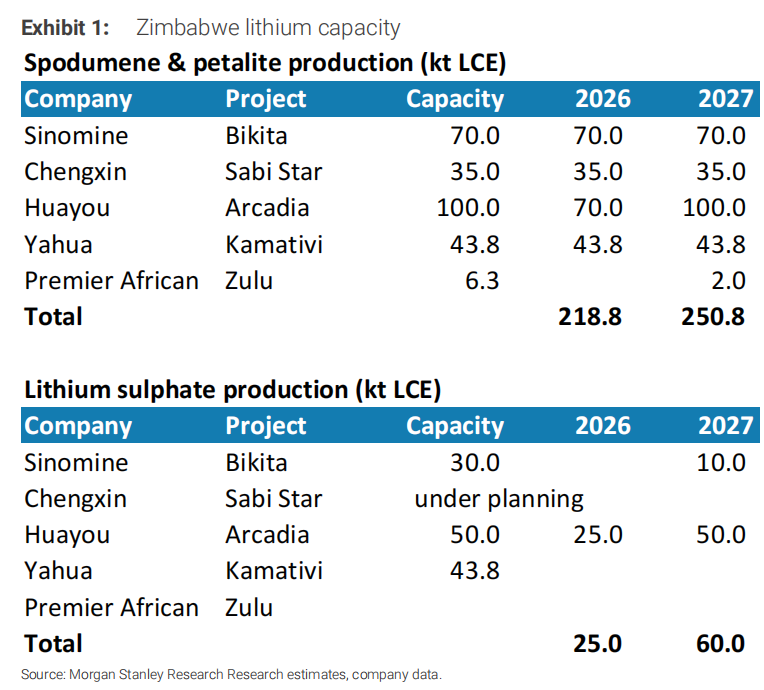
Core Viewpoint - Zimbabwe's sudden ban on all raw mineral and lithium concentrate exports has triggered a significant market reaction, with lithium carbonate futures surging over 11% to exceed 160,000 yuan/ton, indicating a potential new cycle in the lithium market driven by supply disruptions and surging demand from energy storage batteries [1][2][3]. Supply Side - The ban from Zimbabwe is expected to have a short-term impact, with current compliant export capacity limited to 25,000 tons of lithium carbonate equivalent (LCE) in 2026, increasing to 60,000 tons in 2027 [3][5]. - The global lithium supply is projected to be approximately 202,000 tons of LCE in 2026, with demand expected to reach around 201.7 million tons, indicating a tight supply-demand balance [22]. - The recovery of lithium production in Australia is anticipated to take at least a quarter, with many projects still in the planning stages, which limits immediate supply response to rising prices [8][12]. Demand Side - The demand for lithium is increasingly driven by energy storage, with global shipments of storage batteries expected to reach 900 GWh in 2026, translating to a demand for approximately 540,000 tons of LCE, a 50% year-on-year increase [16][18]. - Despite a temporary slowdown in demand for power batteries due to policy changes, the overall demand for lithium is expected to rebound significantly in 2026, with projections of 1.9 million electric vehicles sold in China, a 15.2% increase year-on-year [16][18]. Pricing Dynamics - The current low inventory levels, with social stocks of lithium carbonate dropping to around 10,300 tons, have significantly amplified price elasticity, leading to a market that is trading on "shortage driven by restocking" rather than waiting for supply-demand equilibrium [18][24]. - The pricing logic in the lithium market is shifting from "current period looseness" to "future period tightness," as financial attributes of lithium are becoming more pronounced, with market participants pricing in future scarcity [25][26]. Geopolitical Factors - The emergence of a "Lithium OPEC" in South America, involving Argentina, Bolivia, and Chile, aims to regain pricing power over lithium resources, which could further complicate supply dynamics [6][7]. - Geopolitical and policy variables, such as nationalization efforts in Chile and Mexico's strategic designation of lithium, are expected to layer additional pricing options that could influence market dynamics over time [6][7]. Future Outlook - Analysts predict that lithium carbonate prices could exceed 200,000 yuan/ton in the short term, supported by low inventory, concentrated supply disruptions, and the upcoming demand peak [26]. - The long-term outlook remains uncertain, with differing views on whether prices above 200,000 yuan/ton will be sustainable or if they represent a temporary window before supply increases catch up [26].


2月27日沪深两市涨停分析


Xin Lang Cai Jing· 2026-02-27 07:49
Group 1: Rare Earth and Tungsten Industry - The company is one of the six major rare earth groups in the country, having completed the integration of rare earth resources in Fujian Province [2] - The company possesses a complete tungsten industry chain, with significant competitive advantages in tungsten mining, smelting, powder, wire materials, and hard alloy deep processing [2] - The company is the first in China to develop and produce ITER filter tungsten probe components for nuclear fusion devices, capable of precision machining large-sized ITER-grade tungsten materials [2] Group 2: Data Center and AI Computing - The company is planning to acquire a stake in Xiantian Computing and aims to leverage it to acquire control of Zhengzhou Heying, which focuses on third-party large-scale data center operations [3] - The company is collaborating with Alibaba Cloud to jointly invest 15.8 billion yuan in building a cloud computing data center in Zhejiang [3] - The company has established a large data center in Xinjiang Hami, with a total computing power exceeding 80,000 P [3] Group 3: Power and Energy Sector - The company has acquired Honghe Power, a major thermal power plant in southern Yunnan, with a certified installed capacity of 1,300 MW [5] - The company is a leading player in the composite insulator market for high-voltage transmission lines, with a net profit growth of 177.52% year-on-year [5] - The company is expected to achieve a profit of 300 million to 360 million yuan by 2025, marking a turnaround from previous losses [5] Group 4: Semiconductor and AI Technology - The company has developed a low-code platform that integrates AI capabilities and has been applied in various sectors including power, aerospace, and manufacturing [4] - The company is a leading domestic player in crystal oscillators, with products applicable in optical communication and navigation systems [4] - The company has launched a series of AI products and is involved in the construction of AI computing centers across the country [4] Group 5: Renewable Energy and Materials - The company is a leader in the photovoltaic aluminum frame market, with a global market share exceeding 18% [5] - The company is investing 600 million yuan to build a project for producing 10,000 tons of iron phosphate battery precursor materials annually [8] - The company has established a comprehensive lithium battery supply chain, including mining, selection, and processing of lithium carbonate [8]

永兴材料股价涨5.41%,鹏华基金旗下1只基金重仓,持有67.66万股浮盈赚取215.83万元
Xin Lang Cai Jing· 2026-02-27 05:25
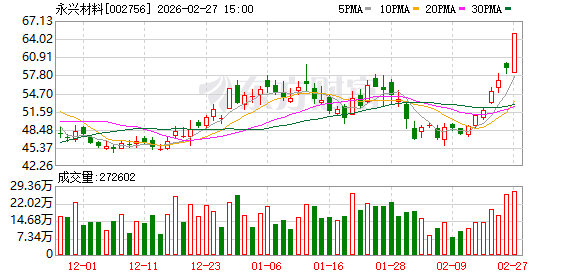
Group 1 - Yongxing Materials' stock price increased by 5.41% to 62.19 CNY per share, with a trading volume of 861 million CNY and a turnover rate of 3.69%, resulting in a total market capitalization of 33.527 billion CNY [1] - The stock has risen for six consecutive days, with a cumulative increase of 23.69% during this period [1] - Yongxing Special Materials Technology Co., Ltd. specializes in the research, production, and sales of special metal materials, including stainless steel and special alloy materials, with main revenue sources being bars (47.71%), wires (24.66%), lithium carbonate (20.10%), and others (7.53%) [1] Group 2 - Penghua Fund has a significant holding in Yongxing Materials, with the Penghua Guozheng Steel Industry Index (LOF) A fund reducing its holdings by 88,900 shares to 676,600 shares, representing 4.72% of the fund's net value, making it the fourth-largest holding [2] - The fund has realized a floating profit of approximately 2.1583 million CNY today and 7.6452 million CNY during the six-day rising period [2] - The Penghua Guozheng Steel Industry Index (LOF) A fund was established on August 13, 2015, with a current size of 340 million CNY, and has achieved a year-to-date return of 10.8% and a one-year return of 33.67% [2]
津巴布韦暂停锂矿出口,13家锂矿公司或将受益,其中7家年报预增
Sou Hu Cai Jing· 2026-02-26 17:37
Core Viewpoint - Zimbabwe's sudden ban on lithium ore and concentrate exports has created significant disruptions in the global lithium supply chain, affecting nearly 20% of China's lithium raw material supply and potentially leading to a supply gap of approximately 14,000 to 15,000 tons of lithium carbonate equivalent per month starting in May 2026 [1][3][4]. Group 1: Impact of Zimbabwe's Ban - Zimbabwe's Ministry of Mines announced an immediate suspension of all lithium ore and concentrate exports, including shipments already at sea, to strengthen mineral regulation and promote domestic processing [1][3]. - In 2025, China imported 7.75 million tons of lithium concentrate, with 1.2 million tons (19%) coming from Zimbabwe, highlighting the critical role of Zimbabwe in China's lithium supply [3]. - The ban is expected to lead to a significant increase in lithium prices, with domestic carbonate lithium futures prices surging to over 171,440 yuan per ton, reflecting a nearly 17% increase in just two trading days [4]. Group 2: Market Reactions and Opportunities - The immediate market reaction saw a spike in lithium prices, with the benchmark price for battery-grade lithium carbonate reaching 162,000 yuan per ton, an increase of over 8% since the beginning of the month [4]. - Companies with integrated mining and processing capabilities in Zimbabwe are positioned to benefit from the ban, as they can still apply for export licenses while others face supply constraints [6]. - A total of 13 domestic companies with lithium carbonate production or lithium mining resources are now in the spotlight, with 7 of them forecasting significant profit increases for 2025 [7]. Group 3: Company Profiles and Strategies - The first tier of companies, termed "ban immune," includes Huayou Cobalt, which has established deep processing capacity in Zimbabwe and is set to produce lithium sulfate, allowing it to circumvent the export ban [9]. - Zhongjin Lingnan has a strong position with its control over the Bikita lithium mine, which allows it to apply for export licenses despite the ban, and it has a stockpile of 150,000 tons of lithium concentrate to buffer against short-term export restrictions [11]. - The second tier includes resource giants like Ganfeng Lithium, which has diversified global resources and is expected to see a significant increase in production from 200,000 tons to 500,000 tons by 2026, benefiting from rising lithium prices [11][13]. Group 4: Long-term Industry Implications - The ban is prompting a reevaluation of companies with overseas resources, local processing capabilities, or stable domestic sources, as their strategic value is being reassessed in the market [17]. - The surge in lithium carbonate futures and the rising stock prices of lithium mining companies reflect this market reassessment and the potential for long-term growth in the sector [17].


国信证券:供需趋紧+低库存 重视锂业春季行情
智通财经网· 2026-02-26 06:38
Core Viewpoint - The report from Guosen Securities indicates that the global lithium demand is expected to reach approximately 2 million tons of LCE by 2026, driven by both power batteries and energy storage batteries. The recent reduction in export tax for domestic lithium batteries may lead to a surge in exports, tightening the supply-demand dynamics in the lithium industry [1][3]. Supply - Lithium price rebound is stimulating supply, but short-term increments are limited. In Australia, stable production from existing lithium projects is expected, but the recovery of suspended projects will take at least a quarter. In South America, new projects are progressing slower than anticipated, and there are discussions among Argentina, Bolivia, and Chile to form a "Lithium OPEC" to enhance their influence on global lithium pricing and supply chains. Zimbabwe has tightened its lithium export policies, which may impact supply in the short term [1][2]. Domestic Supply - Domestic lithium spodumene production has not yet reached large-scale output. The supply disruptions from domestic lithium mica mines remain unresolved. By mid-2025, mining licenses for "ceramic clay" will need to be changed to "lithium mine" licenses due to new regulations. The timing for resuming production at various projects remains uncertain, and there may be temporary shutdowns during this transition [2]. Demand - Domestic demand for power batteries is expected to surge, with energy storage becoming a significant marginal variable for lithium salt demand. Global lithium demand is projected to reach around 2 million tons of LCE by 2026, with energy storage battery shipments expected to reach approximately 900 GWh, a year-on-year growth of nearly 50%. Power battery demand is anticipated to recover rapidly starting in March, with an expected annual growth of around 20%. The reduction in export tax for lithium batteries may lead to preemptive demand, tightening the supply-demand balance in the lithium industry [3]. Balance Sheet - The global lithium supply and demand are expected to be balanced at around 2 million tons of LCE by 2026. If demand exceeds expectations, there could be a significant shortfall in the lithium industry. The supply of global lithium resources is expected to be low initially and high later, while lithium demand exhibits clear seasonal variations, which may lead to rapid price increases. Following several months of destocking, domestic lithium salt inventory cycles are currently less than one month, highlighting the intensifying inventory issues [4]. Related Companies - Key companies in the lithium sector include Ganfeng Lithium, Tianqi Lithium, Salt Lake Industry, Zhongjin Lingnan, Yongxing Materials, Huayou Cobalt, Shengxin Lithium Energy, Yahua Group, Dazhong Mining, and Guocheng Mining [4].
