BANK OF QINGDAO(002948)

Search documents
青岛银行(002948) - 关于公司章程修订获监管机构核准及不再设置监事会的公告
2025-11-25 12:00
青岛银行股份有限公司(以下简称"本行")于2025年9月26日召开的2025年第 一次临时股东大会、2025年第一次A股类别股东大会及2025年第一次H股类别股东 大会审议通过了《关于修订<青岛银行股份有限公司章程>的议案》,于2025年9月 26日召开的2025年第一次临时股东大会审议通过了《关于青岛银行股份有限公司不 再设置监事会的议案》。 近日,本行收到《国家金融监督管理总局青岛监管局关于青岛银行修改公司章 程的批复》(青金复〔2025〕278号),本次修订后的《青岛银行股份有限公司章 程》(以下简称"《公司章程》")已获核准。本次修订后的《公司章程》全文已在 深圳证券交易所网站(http://www.szse.cn/)、巨潮资讯网(http://www.cninfo.com.cn/)、 香港联合交易所有限公司披露易网站(http://www.hkexnews.hk/)及本行网站 (http://www.qdccb.com/)披露,供投资者查阅。自本次修订后的《公司章程》获 核准之日起,本行"董事会战略委员会"更名为"董事会战略和可持续发展委员会"。 证券代码:002948 证券简称:青岛银行 公告编号 ...
地方上市银行高管,频频增持自家银行股份
Xin Lang Cai Jing· 2025-11-24 13:25
Core Viewpoint - Regional banks have seen significant increases in shareholding by executives and institutional investors throughout the year, indicating growing confidence in these financial institutions [1] Group 1: Executive Shareholding Increases - Several regional banks, including Nanjing Bank, Wuxi Bank, Suzhou Bank, Lanzhou Bank, Chengdu Bank, Chongqing Bank, Qingdao Bank, and Xiamen Bank, have reported increases in shareholding by executives and institutional shareholders [1] - Su Nong Bank's management team, including President Wang Liang and Vice Presidents Fei Haibin and Geng Zhi, plans to increase their A-share holdings by no less than 1.8 million yuan within six months starting from November 11, 2025 [1] - Qilu Bank has disclosed that its executives have collectively increased their holdings by approximately 3.15 million yuan, which accounts for 90% of the planned increase amount [1] Group 2: Institutional Shareholding Increases - Qingdao Bank has announced that its shareholder, Qingdao Guoxin Financial Holdings Group Co., Ltd., has recently increased its H-share holdings through the Hong Kong Stock Connect, raising its total shareholding to 15.42%, making it the largest shareholder of the bank [1]

青岛银行发布外贸金融白皮书,精准赋能外贸企业发展
Da Zhong Ri Bao· 2025-11-24 09:28
Core Viewpoint - Qingdao Bank has released a "Foreign Trade Financial White Paper" outlining 17 specific measures to support foreign trade enterprises in enhancing their global presence, aligning with the national strategy of "expanding high-level opening-up" [1][3]. Group 1: Financial Support Initiatives - The bank has established a cross-border financial product system centered around Qingyin Huitong, Qingyin Trade Loan, Qingyin Golden Bridge, and Qingyin Huitong, serving over 5,000 foreign trade enterprises with an international settlement volume exceeding $20 billion and cross-border RMB settlement exceeding 50 billion [1]. - Qingdao Bank aims to integrate financial support for stabilizing foreign trade into its strategic planning, enhancing trade facilitation, and providing comprehensive support for enterprises to "go global" [1][3]. Group 2: Regional Focus and Industry Specialization - The bank focuses on Shandong's foreign trade industry characteristics, particularly in machinery, agricultural products, and textiles, implementing a "one place, one policy" service model [1][9]. - It is developing a comprehensive financial system for bulk commodities, including innovative tools like digital warehouse receipts and specialized shipping financial products to foster competitive regional foreign trade industry clusters [1][12]. Group 3: Cost Reduction and Efficiency Improvement - Qingdao Bank has introduced a series of services aimed at reducing comprehensive costs for enterprises, enhancing funding efficiency, and improving risk response capabilities [2][16]. - Specific measures include fee reductions, cross-border financing price subsidies, and the promotion of specialized credit financing products to help enterprises convert transaction flows into credit resources [17][16]. Group 4: Innovation in Financial Services - The bank is committed to innovating financial service mechanisms and enhancing its cross-border financial service capabilities through the launch of the CIPS direct reference system [1][7]. - It is also exploring digital settlement solutions to support new foreign trade business models, such as cross-border e-commerce and overseas warehouses [17].


银行周报(2025/11/17-2025/11/21):多家银行股东及管理层踊跃增持-20251123




GUOTAI HAITONG SECURITIES· 2025-11-23 12:42
Investment Rating - The report assigns an "Accumulate" rating for the banking sector [5]. Core Insights - Since the beginning of the year, many banks' shareholders and executives have actively increased their holdings, ranking first among 31 industries in terms of the amount of increase. Notable banks with significant increases include Nanjing Bank, Suzhou Bank, Everbright Bank, Shanghai Pudong Development Bank, and Chengdu Bank [2][5]. - The net amount of shareholding changes in the banking sector is approximately 9.03 billion, with an increase of about 12.63 billion, ranking second only to the transportation industry. The decrease amounts to about 3.60 billion [5]. - More than half of the banks have disclosed plans for major shareholders or executives to increase their holdings, with the top three banks in terms of increased amounts being Nanjing Bank (7.38 billion), Suzhou Bank (1.74 billion), and Everbright Bank (1.24 billion) [5]. Summary by Sections Related Reports - The report references several related reports on banking, including topics such as mid-term dividend acceleration and credit issuance tracking [4]. Industry and Company Dynamics Tracking Major News - The People's Bank of China announced the LPR rates for one year and five years remain unchanged at 3.0% and 3.5%, respectively [11]. - Recent surveys indicate that operating loan rates have dropped significantly, with some banks offering rates below 2.5% [11]. Major Announcements - Wuxi Bank plans to implement a mid-term dividend of 0.11 yuan per share, totaling 241 million [12]. - Nanjing Bank's major shareholder, France's BNP Paribas, increased its holdings by 128 million shares, representing 1.04% of the total share capital [12]. Weekly Data Tracking - During the period from November 17 to November 21, the banking sector experienced a decline of 0.87%, outperforming the CSI 300 index by 2.90 percentage points [5][14]. - The average interest rate for the six-month national large banks and joint-stock banks increased by 7 basis points to 0.68% [5].
青岛银行:截至2025年9月30日,本行普通股股东总数为46057户
Zheng Quan Ri Bao Wang· 2025-11-20 13:13
Core Viewpoint - Qingdao Bank (002948) reported that as of September 30, 2025, the total number of ordinary shareholders is expected to reach 46,057 [1] Summary by Category - **Company Information** - Qingdao Bank anticipates having a total of 46,057 ordinary shareholders by September 30, 2025 [1]
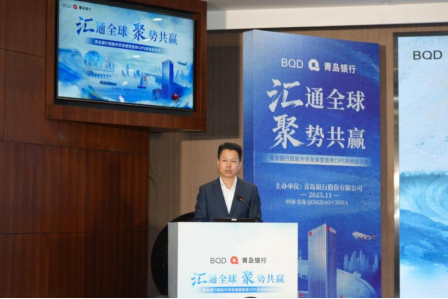
青岛银行举行CIPS直参启动会
Zhong Guo Jin Rong Xin Xi Wang· 2025-11-20 08:05
Core Viewpoint - Qingdao Bank is enhancing its cross-border financial services and supporting foreign trade development through the launch of the CIPS direct access system, aiming to facilitate local brands' global expansion [1][3]. Group 1: International Business Development - As of November 18, 2025, Qingdao Bank's international business scale is set to exceed $20 billion, representing a 40% year-on-year growth, serving over 5,000 enterprises [3]. - The cross-border RMB settlement volume has surpassed 50 billion yuan, with a year-on-year increase of 52% [3]. Group 2: CIPS Direct Access Launch - The CIPS system, approved by the People's Bank of China, provides secure, efficient, and low-cost cross-border payment services, marking a significant upgrade in Qingdao Bank's cross-border RMB service capabilities [3][4]. - Qingdao Bank is the first legal entity bank in Shandong to obtain direct access to the CIPS system, enabling point-to-point, real-time cross-border RMB clearing [3][4]. Group 3: Collaborative Support and Future Plans - The event received strong support from CIPS, government, and regulatory bodies, with participation from over ten domestic and foreign financial institutions and more than fifty key enterprises [6]. - Qingdao Bank plans to optimize its cross-border financial products and services using the CIPS system, aiming to contribute to the internationalization of the RMB and a new high-level opening-up framework [6].
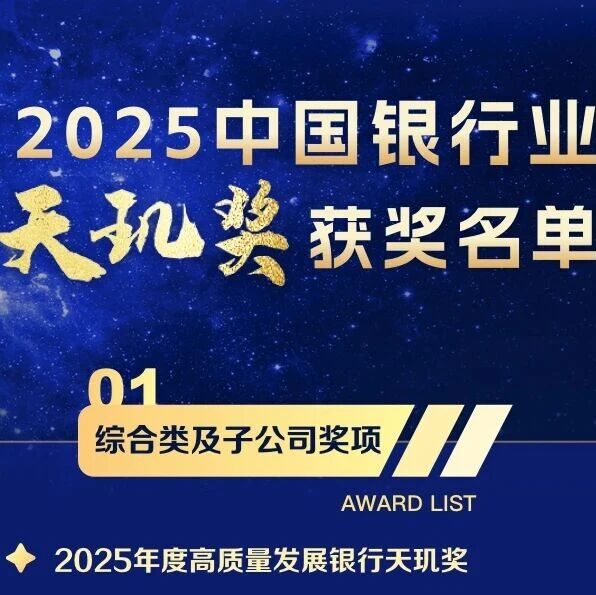
重磅发布!2025中国银行业天玑奖名单出炉,属于你的荣耀时刻来了
券商中国· 2025-11-19 13:48
Core Viewpoint - The "2025 China Financial Institutions Annual Conference" held in Shenzhen focuses on empowering and reshaping value in the financial sector, with discussions on current economic and financial issues in China [1][2]. Group 1: Event Overview - The conference includes a main forum and six sub-forums covering various sectors such as securities investment banking, asset management, banking, insurance, trust, and futures [2]. - Over 1,000 industry elites from leading banks, insurance companies, securities firms, and futures companies participated in discussions [2]. Group 2: Awards and Recognitions - The "2025 China Banking Industry Tianji Award" results were announced, with over 100 banking institutions competing [2]. - Notable winners include: - Regional Influence Bank Tianji Award: Industrial Bank, Ningbo Bank, WeBank, and others [5]. - Outstanding Service Bank Tianji Award for the Guangdong-Hong Kong-Macao Greater Bay Area: China Construction Bank Shenzhen Branch, CITIC Bank Shenzhen Branch, and others [5]. - Outstanding Wealth Management Bank Tianji Award: Agricultural Bank of China Wealth Management, Ping An Wealth Management, and others [6]. Group 3: Specific Awards - Various awards were given for different categories, including: - Outstanding Consumer Finance Company Tianji Award: Zhaolian [6]. - Leading Wealth Management Team Tianji Award: Teams from Bank of China Wealth Management, Ping An Wealth Management, and others [11]. - Outstanding Mobile Banking APP Tianji Award: Shanghai Bank's mobile banking [18]. Group 4: Industry Impact - The Tianji Award, organized by the Securities Times, is a prestigious recognition in the banking sector, focusing on the progress and development of commercial banks over the past year [21]. - The award evaluation process combines quantitative indicators, expert reviews, and public voting, aiming to identify the best companies and innovations in the Chinese banking industry [21].



AI重塑银行数字竞争力,机制与人才变革正在进行时
2 1 Shi Ji Jing Ji Bao Dao· 2025-11-19 09:26
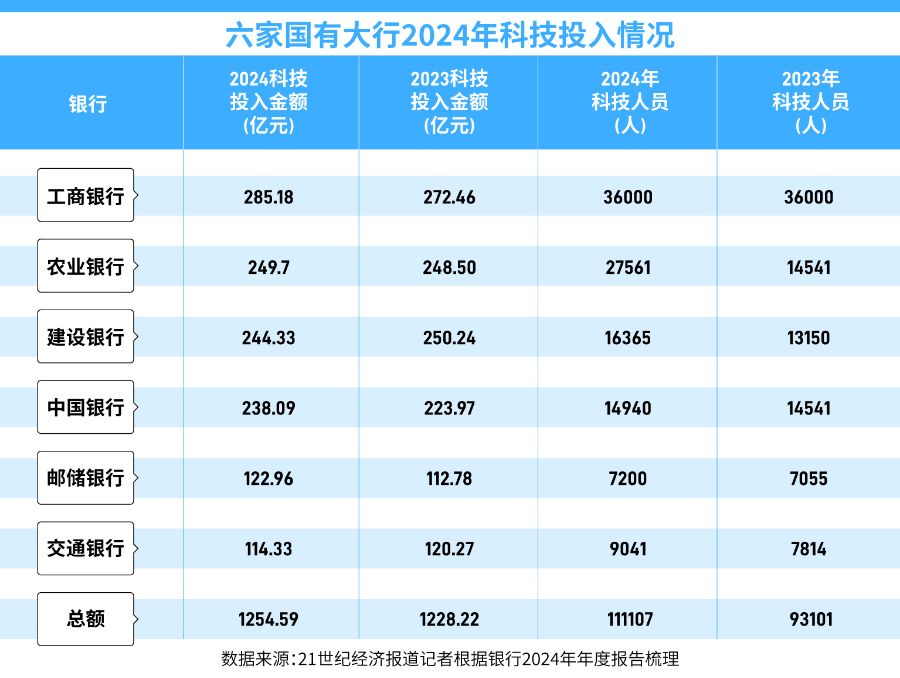
Core Insights - The banking industry is entering a new phase of digital finance development driven by AI applications, enhancing the integration of technology and business operations [2] - There is a significant increase in technology investment among major banks, with a focus on optimizing governance structures and resource management [3][4] - AI is reshaping competitive dynamics in the banking sector, enabling smaller banks to leverage technology for innovation and growth [2] Technology Investment and Governance - In 2024, the total technology investment by six major state-owned banks exceeded 120 billion yuan, marking a 2.15% year-on-year increase, with a total of over 111,000 technology personnel, up 19.34% from the previous year [3][4] - The technology investment of these six banks accounts for over 50% of the total technology spending in the banking industry, which exceeds 200 billion yuan [4] - Some banks, such as China Construction Bank and Ping An Bank, have reported a decrease in technology investment, indicating a shift towards optimizing technology resource management [5][6] AI Application and Innovation - AI applications are accelerating the integration of business and technology, with various banks launching innovative projects across different scenarios [2][6] - Smaller banks like Qingdao Bank and Hunan Bank have demonstrated significant innovation capabilities through AI, winning multiple awards in recent fintech competitions [2] Talent Development and Resource Allocation - The proportion of technology personnel in major banks has increased, reflecting a growing emphasis on talent as a core resource for digital finance development [9][10] - Banks are adopting dual pathways for cultivating composite talents, focusing on both external recruitment and internal mechanisms to enhance the integration of technology and business [11][12] - The shift towards "business-technology co-creation" is emphasized, with banks encouraging deeper involvement of business units in technology development processes [13]





区域银行频获增持,银行ETF天弘(515290)规模近62亿元,机构:银行营收端增速有望持续改善
2 1 Shi Ji Jing Ji Bao Dao· 2025-11-19 03:31
Group 1 - The A-share market showed a positive trend on November 19, with the banking index rising by 0.93% [1] - The Tianhong Bank ETF (515290) recorded a trading volume exceeding 35 million yuan, indicating strong investor interest [1] - Major banks such as Bank of China, Everbright Bank, and Postal Savings Bank saw their stock prices increase by over 2% [1] Group 2 - As of November 18, the Tianhong Bank ETF had a total scale of nearly 6.2 billion yuan, covering 42 listed banks across various categories [2] - There has been significant insider buying in regional banks this year, with several banks announcing plans for share buybacks in November [2] - Securities firms noted that the profit growth rate for listed banks improved in Q3, driven by reduced provisioning, stabilized net interest margins, and improved wealth management income [2]


地方上市银行高管频频增持自家银行股份
Zheng Quan Shi Bao· 2025-11-18 18:13
Core Viewpoint - The announcement from Hu Nong Commercial Bank indicates significant insider buying by top executives, reflecting confidence in the bank's future performance and aligning with a broader trend of regional banks experiencing similar increases in executive and institutional shareholdings [1]. Group 1: Executive Purchases - Five senior executives of Hu Nong Commercial Bank, including the president and several vice presidents, purchased a total of 259,100 shares from November 13 to November 17, 2025, at prices ranging from 9.02 to 9.08 yuan [1]. - This trend of executive share purchases is not isolated, as other regional banks such as Nanjing Bank, Wuxi Bank, and Suzhou Bank have also seen similar actions from their management teams [1]. Group 2: Institutional Purchases - Qingdao Bank reported that its major shareholder, Qingdao Guoxin Financial Holdings Group Co., Ltd., increased its holdings through the Hong Kong Stock Connect, raising its total stake to 15.42%, making it the largest shareholder of the bank [1]. - In addition, Su Nong Bank's executives plan to purchase at least 1.8 million yuan worth of A-shares within six months starting from November 11, 2025 [1]. - Qilu Bank disclosed that its management has already purchased approximately 3.15 million yuan worth of shares, achieving 90% of its planned increase since announcing its buyback plan in mid-September [1].