BANK OF QINGDAO(002948)

Search documents
银行股逆势上涨,中信银行涨超3%
Ge Long Hui· 2026-02-02 03:57
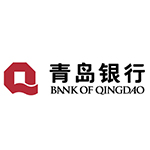
Core Viewpoint - The A-share market's banking sector experienced a counter-trend increase, with several banks showing significant gains despite overall market conditions [1]. Group 1: Stock Performance - CITIC Bank saw an increase of 3.48%, with a total market capitalization of 414 billion [2] - Shanghai Bank increased by 2.49%, with a market cap of 134.6 billion [2] - Huaxia Bank rose by 2.05%, with a market cap of 103 billion [2] - Other banks such as Industrial Bank, Everbright Bank, and Nanjing Bank also reported gains exceeding 1% [1][2] - Agricultural Bank, Industrial and Commercial Bank, and China Merchants Bank had market caps of 2386.9 billion, 2619.6 billion, and 2304.7 billion respectively, with slight increases [2] Group 2: Year-to-Date Performance - Year-to-date performance shows that most banks have negative returns, with CITIC Bank down 3.38% and Shanghai Bank down 6.24% [2] - Notably, Qingdao Bank has a positive year-to-date return of 17.86%, indicating strong performance relative to its peers [2] - Other banks like Agricultural Bank and Industrial Bank have year-to-date declines of 11.20% and 7.31% respectively [2]





A股银行股逆势上涨,中信银行涨超3%
Ge Long Hui A P P· 2026-02-02 03:54
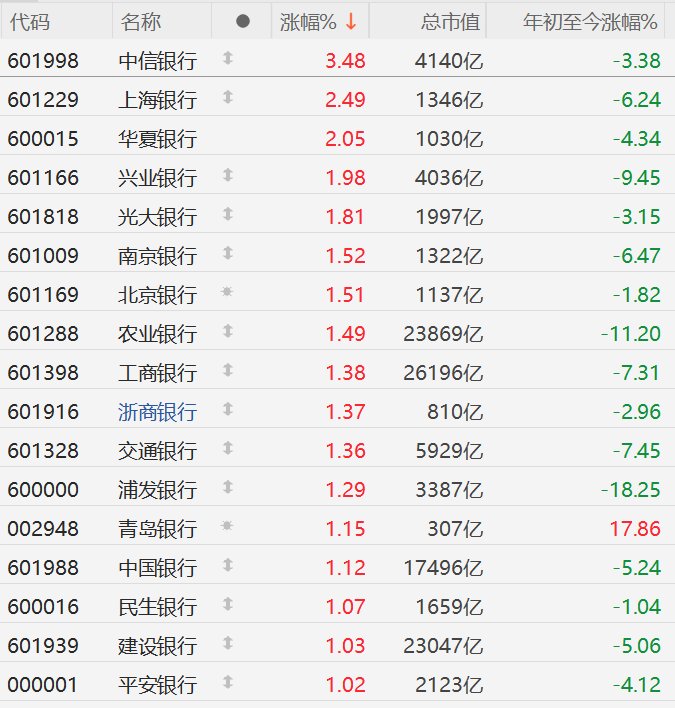
Core Viewpoint - The A-share market has seen a rise in bank stocks, with several banks experiencing significant gains despite overall market trends [1] Group 1: Stock Performance - CITIC Bank increased by 3.48%, with a total market capitalization of 414 billion [2] - Shanghai Bank rose by 2.49%, with a market cap of 134.6 billion [2] - Huaxia Bank saw a gain of 2.05%, with a market value of 103 billion [2] - Industrial Bank increased by 1.98%, with a market cap of 403.6 billion [2] - Everbright Bank rose by 1.81%, with a total market capitalization of 199.7 billion [2] - Nanjing Bank increased by 1.52%, with a market cap of 132.2 billion [2] - Beijing Bank saw a rise of 1.51%, with a market value of 113.7 billion [2] - Agricultural Bank increased by 1.49%, with a market cap of 23,869 billion [2] - Industrial and Commercial Bank rose by 1.38%, with a market value of 26,196 billion [2] - Zhejiang Bank increased by 1.37%, with a market cap of 81 billion [2] - Bank of Communications rose by 1.36%, with a market value of 592.9 billion [2] - Shanghai Pudong Development Bank increased by 1.29%, with a market cap of 338.7 billion [2] - Qingdao Bank saw a rise of 1.15%, with a market value of 30.7 billion [2] - Bank of China increased by 1.12%, with a market cap of 17,496 billion [2] - Minsheng Bank rose by 1.07%, with a market value of 165.9 billion [2] - China Construction Bank increased by 1.03%, with a market cap of 23,047 billion [2] - Ping An Bank rose by 1.02%, with a market value of 212.3 billion [2] Group 2: Year-to-Date Performance - CITIC Bank has a year-to-date decline of 3.38% [2] - Shanghai Bank has decreased by 6.24% year-to-date [2] - Huaxia Bank has a year-to-date decline of 4.34% [2] - Industrial Bank has decreased by 9.45% year-to-date [2] - Everbright Bank has a year-to-date decline of 3.15% [2] - Nanjing Bank has decreased by 6.47% year-to-date [2] - Beijing Bank has a year-to-date decline of 1.82% [2] - Agricultural Bank has decreased by 11.20% year-to-date [2] - Industrial and Commercial Bank has a year-to-date decline of 7.31% [2] - Zhejiang Bank has decreased by 2.96% year-to-date [2] - Bank of Communications has a year-to-date decline of 7.45% [2] - Shanghai Pudong Development Bank has decreased by 18.25% year-to-date [2] - Qingdao Bank has increased by 17.86% year-to-date [2] - Bank of China has a year-to-date decline of 5.24% [2] - Minsheng Bank has decreased by 1.04% year-to-date [2] - China Construction Bank has a year-to-date decline of 5.06% [2] - Ping An Bank has decreased by 4.12% year-to-date [2]
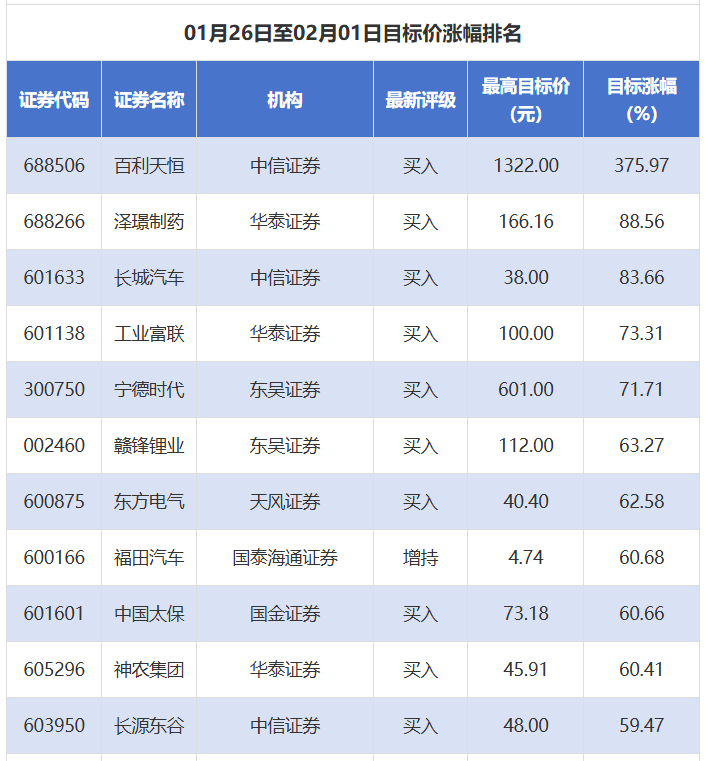
百利天恒目标价涨幅近376% 金辰股份评级被调低丨券商评级观察
2 1 Shi Ji Jing Ji Bao Dao· 2026-02-02 01:31
Core Viewpoint - The report highlights significant target price increases for several listed companies from January 26 to February 1, with notable mentions including Baili Tianheng, Zexing Pharmaceutical, and Great Wall Motors, indicating strong bullish sentiment in the market for these stocks [1][2]. Target Price Increases - Baili Tianheng (688506) has a target price increase of 375.97%, with a highest target price set at 1322.00 yuan [2]. - Zexing Pharmaceutical (688266) shows a target price increase of 88.56%, with a highest target price of 166.16 yuan [2]. - Great Wall Motors (601633) has a target price increase of 83.66%, with a highest target price of 38.00 yuan [2]. - Other companies with notable target price increases include Industrial Fulian (601138) at 73.31% and CATL (300750) at 71.71% [2][3]. Broker Recommendations - A total of 265 listed companies received broker recommendations during the period, with Qingdao Bank receiving the highest number of recommendations at 8 [3][4]. - Other companies with multiple recommendations include Xian Dao Intelligent and Wancheng Group, each receiving 5 recommendations [3][4]. Rating Adjustments - Eight companies had their ratings upgraded, including Shanghai Jahwa (600315) from "Hold" to "Buy" and ZTE Corporation (000063) from "Cautious Buy" to "Buy" [5][6]. - Two companies had their ratings downgraded, including Jincheng Shares (603396) from "Buy" to "Hold" and Huasheng Group (603018) from "Buy" to "Hold" [6]. First-Time Coverage - During the same period, 75 instances of first-time coverage were reported, with notable ratings including Shaanxi Tourism (603402) receiving a "Outperform Industry" rating and Bichu Electronics (688188) receiving a "Buy" rating [7].





金融风向标2026-W04:不一样的“开门红”
CMS· 2026-02-01 12:31
Investment Rating - The report maintains a positive outlook on the banking sector, indicating a potential for stabilization and improvement in operational pressures for banks in 2026 [2][5]. Core Insights - The banking sector has shown a "double opening red" phenomenon in both deposits and loans, with a structural difference in credit allocation. The signs of "deposit migration" are not significant, suggesting a stable deposit base [2][5]. - The total assets of the banking industry reached 471 trillion yuan by the end of 2025, reflecting an 8.0% year-on-year growth. Major banks, joint-stock banks, city commercial banks, and rural commercial banks reported asset growth rates of 11.0%, 4.7%, 9.7%, and 5.2%, respectively [3][14]. - The overall net interest margin is expected to decline further, but at a slower pace, indicating some relief in operational pressures. The banks have passed the phase of accelerated risk exposure and are nearing a "stock digestion period" [5][6]. Summary by Sections Regulatory Dynamics - The Financial Regulatory Bureau released data on the total assets and liabilities of the banking sector for 2025, showing a total asset growth of 8.0% year-on-year [3][14]. Industry Dynamics - Qingdao Bank and Xiamen Bank reported their 2025 performance, with Qingdao Bank achieving a net profit growth of 21.66% and an asset quality improvement, while Xiamen Bank also reported significant growth in total assets and loans [15][16]. Market Dynamics - The overall A-share market saw a decline of 1.59%, while the banking sector increased by 0.86%, indicating a defensive characteristic of the banking stocks [2][18]. Data Overview - The report highlights the central bank's net injection of 0.4 trillion yuan and the mixed movement of interest rates across different maturities, with short-term rates showing slight declines and long-term rates experiencing mixed trends [4][21][23].




阅峰 | 光大研究热门研报阅读榜 20260125-20260131
光大证券研究· 2026-02-01 00:04
Group 1 - The core viewpoint of the article is that Anta Sports (2020.HK) plans to acquire a 29.06% stake in PUMA for a total consideration of 1.5 billion, marking a significant milestone in its multi-brand global strategy [3][4]. Group 2 - In FY26Q2, New Oriental-S (9901.HK) achieved a net revenue of 1.191 billion USD, representing a year-on-year increase of 14.7%, and a net profit attributable to shareholders of 45.45 million USD, up 42.3% year-on-year [9][10]. - The company has raised its net profit forecasts for FY26-28 to 497 million, 585 million, and 680 million USD, reflecting increases of 13%, 14%, and 17% respectively [10]. Group 3 - As of Q4 2025, the scale of convertible bonds held by funds was 308.256 billion, a decrease of 8.362 billion from Q3 [13]. - The largest increase in convertible bonds held by funds was in the banking sector, while the non-ferrous metals sector saw the most significant reduction [13]. Group 4 - China Petroleum & Chemical Corporation (Sinopec) held its 2026 work meeting on January 26, summarizing achievements from 2025 and outlining goals for the 14th Five-Year Plan, emphasizing its integrated industry chain advantages [19]. - The report suggests focusing on companies like Sinopec, Sinopec Oilfield Service, and others due to their strategic positioning [19]. Group 5 - In December, industrial enterprises' profits showed a significant year-on-year increase, driven by rising prices and improved profit margins, particularly in upstream non-ferrous metals and midstream equipment manufacturing [21]. - The outlook for 2026 indicates continued recovery in industrial profits, with a shift in profit distribution favoring midstream and upstream sectors [21]. Group 6 - Qingdao Bank (002948.SZ) reported a revenue of 14.6 billion for 2025, a year-on-year growth of 8%, and a net profit of 5.2 billion, up 21.7% year-on-year, marking the successful completion of its three-year strategic plan [22]. - The bank aims to enhance its regional value leadership through strategies focused on capability improvement and structural optimization [22]. Group 7 - The People's Bank of China reported that corporate loans acted as a stabilizing force in Q4 2025, with technology sectors maintaining double-digit growth, while real estate loans continued to decline [25]. - The report anticipates ongoing challenges for retail loans, with a slow recovery in demand expected [25].
国联民生资管携手青岛银行,渠道版图再下一城
Jing Ji Guan Cha Wang· 2026-01-30 09:31
2026年伊始,国联民生(601456)资管子公司与青岛银行(002948)达成深度合作,正式成为青岛银行 在零售私募代销业务的首家合作伙伴。双方强强联合落地的首期私募资管新产品,在首发销售中表现亮 眼。数据显示,该产品首期募集规模超1亿元,不仅圆满完成了既定目标,更为公司的新年征程带来了 第一声捷报。 展望2026,国联民生资管将继续秉承"专业创造价值,陪伴铸就成长"的理念,依托不断扩大的客户基 础,力争通过精细化管理与多元策略工具选择,为更广泛的客户提供可持续的业绩回报。 截至目前,国联民生资管已积淀出强大的渠道网络与机构客户资源禀赋。公司积极扩容朋友圈,构建了 多元化的代销客户资源:涵盖国有大行、券商财富管理部、以及大型城农商行等。目前核心合作渠道已 达10余家,实现了渠道广度与深度的双双跃升。 此次与青岛银行的成功牵手,标志着国联民生资管在渠道开拓战略上再下一城。作为青岛银行引入的首 家合作伙伴,这不仅是国联民生资管子一直以来坚定执行"渠道深耕"战略的硕果,也是双方团队精诚协 作、不懈努力的结晶。展望未来,我们将以此为契机,进一步挖掘合作潜力,为公司拓展了北方地区更 广阔的市场空间。 ...

东兴证券晨报-20260130
Dongxing Securities· 2026-01-30 08:10
Core Insights - The report highlights the ongoing development of U.S.-China relations, with President Trump planning a visit to China in April, which is seen as beneficial for both nations [2] - The People's Bank of China is actively engaging with global financial leaders, indicating a focus on macroeconomic policies and trade relations [2] - The Chinese government is prioritizing the service sector in 2026, aiming to expand market access and promote digital trade [2] - The State-owned Assets Supervision and Administration Commission is working on initiatives to optimize the layout of state-owned enterprises, with significant investment planned for R&D and asset growth [2] - The report emphasizes the importance of the photovoltaic industry and the need for regulatory measures to ensure healthy competition [2] Company Insights - TikTok has established a joint venture in the U.S. for data security, indicating a strategic move to enhance its operational transparency [5] - China National Petroleum Corporation has achieved large-scale production of high-end materials, reducing reliance on imports for strategic industries [5] - SpaceX is preparing for a significant IPO, aiming for a valuation of approximately $1.5 trillion, which reflects its growth potential in the commercial space sector [5] - China Aerospace Science and Technology Corporation is focusing on enhancing its commercial launch capabilities, with ambitious goals for the next decade [5] Banking Sector Insights - The report indicates a slight increase in the proportion of active funds in the banking sector, with a total market value of 1.61 trillion yuan allocated to A-shares [6] - The concentration of holdings among the top five banks has decreased, with notable fluctuations in individual bank positions [7] - Northbound capital has seen a net reduction in bank stocks, with significant decreases in holdings for certain banks [8] - The banking sector is expected to benefit from macroeconomic policies aimed at improving credit conditions and stabilizing net interest margins [8][9]




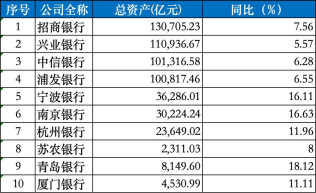
10家银行业绩速览:浦发业绩回暖,8家下调拨备
2 1 Shi Ji Jing Ji Bao Dao· 2026-01-30 07:45
Core Viewpoint - The overall performance of the banking industry shows a steady improvement in asset scale expansion, profitability, and risk management as ten listed banks report their preliminary performance for 2025 [1] Group 1: Asset Scale Expansion - Ten banks achieved steady growth in total asset scale, with some banks reaching new milestones; for instance, China Merchants Bank's total assets exceeded 13 trillion yuan for the first time, reaching 13.07 trillion yuan, an increase of 918.49 billion yuan or 7.56% year-on-year [3][5] - CITIC Bank and Shanghai Pudong Development Bank both surpassed the 10 trillion yuan mark in total assets, indicating a significant expansion in their asset scale [5][4] - By the end of 2025, the total assets of CITIC Bank reached 10.13 trillion yuan, growing by 6.28%, while Shanghai Pudong Development Bank's total assets reached 10.08 trillion yuan, increasing by 6.55% [5][6] Group 2: Profitability Performance - Nine banks reported both revenue and net profit growth, with notable performances from Hangzhou Bank, Shanghai Pudong Development Bank, and Qingdao Bank, which achieved double-digit growth in net profit [8] - In 2025, Hangzhou Bank's operating income was 38.80 billion yuan, a year-on-year increase of 1.09%, with net profit attributable to shareholders reaching 19.03 billion yuan, up 12.05% [8] - Shanghai Pudong Development Bank's operating income was 173.96 billion yuan, an increase of 1.88%, while net profit attributable to shareholders rose by 10.52% to 50.02 billion yuan [9][10] Group 3: Risk Management - Half of the banks reported a decline in non-performing loan (NPL) ratios, indicating effective risk management; for example, CITIC Bank's NPL ratio was 1.15%, down by 0.01 percentage points [12][11] - The overall NPL ratio for the ten banks remained stable, with five banks showing a decrease, while others maintained their ratios, reflecting strong asset quality management [12][11] - The provision coverage ratio for eight banks decreased, but remained at sufficient levels to absorb potential risks, with Shanghai Pudong Development Bank and Qingdao Bank being the exceptions, as their ratios increased [15][14]


10家银行业绩速览:9家营收净利双增长,城商行两位数扩表
2 1 Shi Ji Jing Ji Bao Dao· 2026-01-30 07:39
中信、浦发资产规模破十万亿,城商行保持两位数高增 具体来看,中信银行、浦发银行资产规模双双迈入十万亿关口;9家银行实现营收净利双增长,城商行 增速表现亮眼;半数银行不良率下行,拨备出现回调但风险缓冲空间依旧充足。 截至目前,10 家上市银行 2025 年业绩快报首批亮相。整体上,行业规模扩张、盈利表现、风险管控三 大核心维度均呈现稳健向好态势。 2025年,10家银行总资产规模均实现了稳步增长,且部分银行资产规模上了新台阶。其中,招商银行资 产总额首次超过13万亿元,截至2025年12月31日,招商银行资产总规模13.07万亿元,较上年末增加 9184.87亿元,增幅7.56%;负债总额11.79万亿元,较上年末增加8710.63亿元,增幅7.98%。 兴业银行总资产也突破11万亿元,截至年末达11.09万亿元,同比增长5.57%。从核心业务来看,其各项 贷款余额5.95万亿元,同比增长3.70%;各项存款余额5.93万亿元,同比增速达7.18%,存款端增长势头 强劲。 值得关注的是,中信银行、浦发银行的资产规模双双迈进10万亿元大关。 而截至2025年末,中信银行、浦发银行双双迈过十万亿门槛,使该俱乐部成员 ...
27股获推荐 宁德时代目标价涨幅达75%丨券商评级观察
2 1 Shi Ji Jing Ji Bao Dao· 2026-01-30 01:26
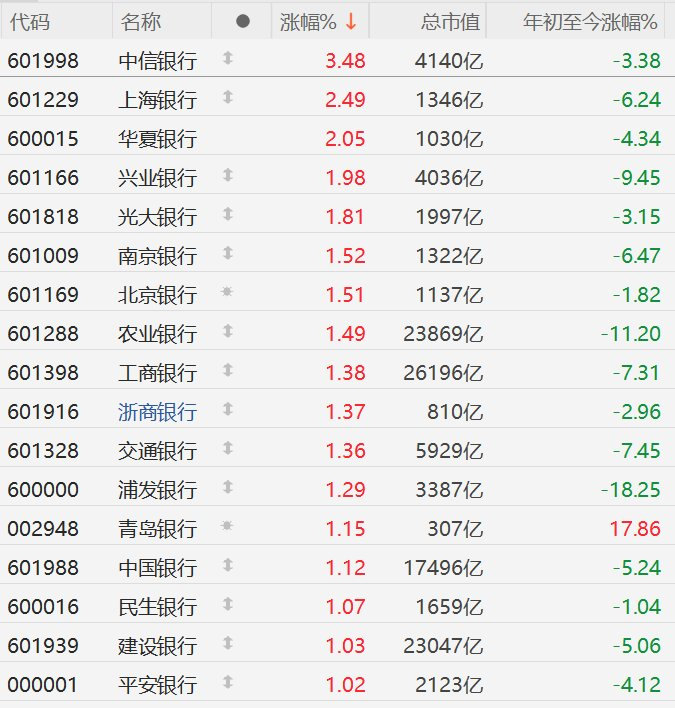
Group 1 - The core viewpoint of the article highlights the target price increases for several listed companies, with notable gains for Ningde Times, China Railway, and Shanghai Jahwa, reflecting strong market confidence in these sectors [1][2]. Group 2 - On January 29, the companies with the highest target price increases were Ningde Times (75.79%), China Railway (53.99%), and Shanghai Jahwa (52.17%), indicating significant bullish sentiment in the battery, infrastructure, and cosmetics industries respectively [1][2]. - A total of 27 listed companies received broker recommendations on January 29, with Qingdao Bank receiving the most recommendations at 5, followed by Mingyang Smart Energy and Ruoyuchen with 2 each [1][3]. - Three companies had their ratings upgraded on January 29, including TBEA, which was upgraded from "Hold" to "Buy" by Huatai Securities, reflecting improved outlooks for these firms [4][6]. - Five companies received initial coverage on January 29, with Qingdao Bank rated "Recommended" by Guolian Minsheng Securities, indicating new interest from analysts in these stocks [6][7].