ZHIFEI-BIOL(300122)

Search documents
疫苗降价潮
投资界· 2025-09-16 08:36
Core Viewpoint - The vaccine industry is experiencing a downturn, with significant revenue and profit declines among major companies, attributed to price wars, vaccine hesitancy, and intense competition [4][5][10][20]. Group 1: Industry Performance - In the first half of 2025, the overall vaccine revenue of listed companies in China decreased by 60% year-on-year, and net profit dropped by 113% [5]. - Major vaccine companies like Zhifei Biological and Wantai Biological reported their first half-year losses since going public, with net profits declining by 127% and 155% respectively [5][10]. - Only six out of 17 listed vaccine companies achieved profitability, with the highest profit being 122 million yuan from Chengda Biological [5]. Group 2: Price Wars - The price of flu vaccines has significantly dropped, with some prices reaching as low as 5.5 yuan per dose, leading to a continuous price war in the market [8][9]. - Wantai Biological's revenue from its main product, the bivalent HPV vaccine, fell by 38% to 844 million yuan, marking its first loss since listing [10]. - The price competition has also affected other vaccines, including HPV and shingles vaccines, with prices dropping dramatically in recent years [9][10][11]. Group 3: Vaccine Hesitancy - Vaccine hesitancy has become a significant issue, particularly for non-mandatory vaccines like HPV and flu vaccines, with many individuals expressing doubts about their effectiveness [13][14][15]. - The average flu vaccine coverage in China remains below 4%, significantly lower than in developed countries where it is around 50% [15]. - Factors contributing to vaccine hesitancy include dissatisfaction with COVID-19 vaccine outcomes, misinformation, and a lack of awareness regarding adult vaccinations [15][16]. Group 4: Future Outlook - Experts predict that the current downturn in the vaccine industry may last for five to ten years, with potential consolidation and elimination of weaker companies [20]. - The industry faces challenges in changing public perception and increasing adult vaccination rates, which are crucial for market expansion [20]. - The competition is expected to remain fierce, with many companies struggling to differentiate their products in a saturated market [19][20].







中新健康丨HPV疫苗市场争夺白热化 政策调整对企业影响几何?
Zhong Guo Xin Wen Wang· 2025-09-12 15:21
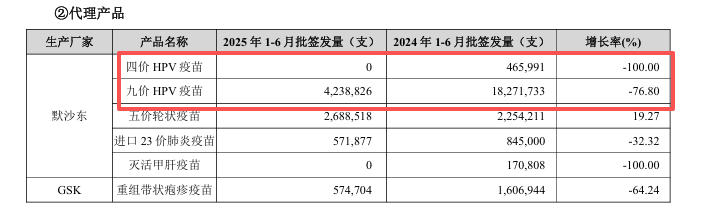
Core Viewpoint - The Chinese government is set to include HPV vaccination services for eligible girls in the national immunization program, which may positively impact the competitive landscape of the vaccine industry [1][3]. Group 1: Market Dynamics - The HPV vaccine market in China is transitioning from a "blue ocean" to a "red ocean," indicating increased competition among vaccine manufacturers [3]. - The introduction of domestic two-valent HPV vaccines has improved accessibility and affordability, breaking the previous monopoly of imported nine-valent vaccines [2][3]. - Financial data shows significant revenue declines for major players: Watson Bio's revenue dropped by 19.47% to 1.154 billion yuan, WanTai Bio's revenue fell by 38.25% to 844 million yuan, and Zhifei Biological's revenue decreased by 73.06% to 4.919 billion yuan in the first half of 2025 [3][4]. Group 2: Product and Pricing Information - WanTai Bio's nine-valent HPV vaccine "Xinkening®9" is priced at 499 yuan per dose, approximately 40% lower than imported alternatives [2]. - The batch issuance of Merck's four-valent HPV vaccine was zero in the first half of 2025, while the nine-valent vaccine saw a 76.8% decline in issuance compared to the previous year [4][5]. Group 3: Future Prospects - There is a strong possibility that the two-valent HPV vaccine will be included in the national immunization program, which could significantly boost sales [7]. - The male HPV vaccine market is also becoming competitive, with Merck expanding its HPV vaccine indications to males aged 9-26, while domestic companies are conducting clinical trials for male indications [8].

中新健康丨HPV疫苗市场争夺白热化,政策调整对企业影响几何?
Zhong Guo Xin Wen Wang· 2025-09-12 15:15
Group 1 - The Chinese government will introduce HPV vaccination services for eligible girls and include HPV vaccines in the national immunization program, which is expected to enhance women's health protection [1][3] - The market for HPV vaccines has shifted from a "blue ocean" to a "red ocean," indicating increased competition among vaccine manufacturers [6] - Domestic companies such as Wantai Biological Pharmacy and Watson Bio have received approvals for their HPV vaccines, breaking the previous monopoly held by Merck's Gardasil 9 [3][4] Group 2 - Financial data shows significant revenue declines for major vaccine manufacturers in the first half of 2025, with Watson Bio's revenue down 19.47% and Wantai Biological's down 38.25% [6][7] - The approval of male indications for HPV vaccines by Merck and ongoing clinical trials by domestic companies indicate a growing focus on the male market, which is expected to become highly competitive [9] - The inclusion of the bivalent HPV vaccine in the national immunization program could lead to increased sales through government procurement [8]

HPV疫苗将纳入国家免疫规划,疫苗企业业绩承压,政策红利或带来行业拐点?
3 6 Ke· 2025-09-12 11:16
Group 1: HPV Vaccine Inclusion in National Immunization Program - The National Health Commission announced the inclusion of HPV vaccination services for eligible girls in the national immunization program to enhance women's health protection [1][2] - Since 1978, China's immunization program has expanded from 4 vaccines to 14 vaccines preventing 15 infectious diseases [1] - HPV is a major cause of cervical cancer, and vaccination is a primary preventive measure, with existing vaccines effectively preventing over 70% of cervical cancer cases [1][2] Group 2: Cervical Cancer Statistics - In 2022, China reported 151,000 new cervical cancer cases, ranking fifth among female cancers, with 56,000 deaths, ranking sixth in female cancer mortality [2] Group 3: Free Vaccination Initiatives - Several regions have initiated free HPV vaccination programs, with Beijing starting free vaccinations for girls entering the first year of junior high school in 2025 [3] - As of August 2023, 18 provinces and several cities have included HPV vaccination in government initiatives, covering approximately 60% of eligible girls [3] Group 4: Market Dynamics and Company Performance - The inclusion of HPV vaccines in the national program is expected to improve public awareness and accessibility, potentially stabilizing sales for vaccine companies [4][5] - Companies like Watson Bio and Zhifei Biological have faced performance pressures due to declining public willingness to vaccinate and increased competition [7] - Watson Bio reported a revenue of 1.154 billion yuan in the first half of the year, down 19.47%, while Zhifei Biological's revenue was 4.919 billion yuan, down 73.06% [7] Group 5: Pricing and Competition - The first domestic two-valent HPV vaccine was priced at 499 yuan per dose, significantly lower than imported alternatives, which were priced over 1,300 yuan per dose [8] - The market for nine-valent HPV vaccines has become competitive, with companies like Zhifei Biological reducing prices and offering promotions to maintain market share [9]
时隔17年,国家免疫规划将迎实质性扩容
Di Yi Cai Jing Zi Xun· 2025-09-11 15:31
Core Viewpoint - The announcement of HPV vaccines being included in the national immunization program is expected to positively impact the HPV vaccine market and related companies, which have been struggling with declining performance [1][3][4]. Group 1: Market Response - On September 11, HPV vaccine concept stocks in the A-share market saw a rise, with notable increases in companies such as Kangla Weishi (up 3.09%), Wantai Biological Pharmacy (up 2.69%), Zhifei Biological Products (up 1.98%), and Watson Bio (up 1.71%) [1]. - The National Health Commission's announcement regarding the introduction of HPV vaccination services for eligible girls and its inclusion in the national immunization plan is a significant development [1][2]. Group 2: Industry Challenges - HPV vaccine manufacturers are currently facing challenges due to declining sales and increased competition in the market, leading to a price war [3][4]. - The performance of HPV vaccine companies has been poor, with Wantai Biological reporting a revenue of 844 million yuan, down 38.25% year-on-year, and a net loss of 144 million yuan [4]. - Watson Bio's revenue was 1.154 billion yuan, down 19.47%, with a net profit decline of 74.69% [4]. - Zhifei Biological reported a revenue of 4.919 billion yuan, down 73.06%, and a net loss of 597 million yuan, a 126.72% decline [4][5]. Group 3: Potential for Growth - The global incidence of cervical cancer is rising, particularly among younger women in China, highlighting the need for effective HPV vaccination [6]. - The World Health Organization recommends that countries include HPV vaccination in their national immunization programs, prioritizing girls aged 9 to 14 [6]. - Currently, 143 out of 194 WHO member countries have included HPV vaccines in their national immunization plans, indicating a global trend towards increased vaccination [6]. - With the supply of HPV vaccines becoming sufficient and prices decreasing, the timing for including HPV vaccines in the national immunization program in China is considered ripe [7]. - The minimum price for HPV vaccines has dropped to 27.5 yuan per dose, significantly lower than initial prices, making it more accessible [7]. - If included in the national immunization program, HPV vaccines would likely see increased sales despite lower profit margins compared to local immunization programs [7].
HPV疫苗接种要免费了
第一财经· 2025-09-11 15:19
Core Viewpoint - The article discusses the recent announcement by the National Health Commission of China to include HPV vaccines in the national immunization program, which is expected to boost the performance of HPV vaccine manufacturers struggling with declining sales and profits [3][4]. Group 1: Market Performance of HPV Vaccine Companies - HPV vaccine stocks in the A-share market saw a rise, with notable increases in companies like Kangla Weishi (3.09%), Wantai Biological (2.69%), Zhifei Biological (1.98%), and Watson Bio (1.71%) [3]. - The HPV vaccine market in China has become increasingly competitive, leading to a price war and a decline in public willingness to get vaccinated, which has negatively impacted sales [6][7]. - For instance, Wantai Biological reported a revenue of 844 million yuan, down 38.25% year-on-year, and a net loss of 144 million yuan [7]. Watson Bio's revenue was 1.154 billion yuan, down 19.47%, with a net profit decline of 74.69% [7]. Zhifei Biological's revenue fell to 4.919 billion yuan, down 73.06%, with a net loss of 597 million yuan [7]. Group 2: HPV Vaccine Market Dynamics - The HPV vaccine market in China has seen a total of six listed vaccines, including three bivalent, one quadrivalent, and two nonavalent vaccines [5][6]. - The initial demand for HPV vaccines was high, but the market has cooled due to increased competition and limited public awareness and financial capability [6]. - The World Health Organization recommends that countries include HPV vaccination in their national immunization programs, prioritizing girls aged 9 to 14 [9]. As of the end of 2024, 143 out of 194 WHO member countries have included HPV vaccines in their national programs [9]. Group 3: Future Prospects of HPV Vaccines in China - The inclusion of HPV vaccines in the national immunization program is seen as timely due to sufficient supply and decreasing prices, with the lowest bid for HPV vaccines currently at 27.5 yuan per dose [11]. - Industry insiders suggest that the bivalent HPV vaccine is likely to be included in the national immunization program, which would stabilize prices and increase sales volume [11]. - Although profit margins may be lower under the national program, they could still be higher than those under local immunization programs, where competition is more intense [11].

HPV疫苗要纳入国家免疫规划!HPV疫苗股齐涨,厂商业绩能否止跌
Di Yi Cai Jing· 2025-09-11 13:29
Core Viewpoint - HPV vaccine manufacturers are currently facing performance declines, but the recent inclusion of HPV vaccines in the national immunization program may provide a potential boost to the industry [1][2]. Industry Overview - There are currently six HPV vaccines listed in China, including three bivalent, one quadrivalent, and two nonavalent vaccines [2]. - The HPV vaccination market in China has become competitive, with initial high demand now facing challenges due to increased competition, low public awareness, and limited payment capabilities [2]. Company Performance - WanTai Bio achieved revenue of 844 million yuan in the first half of the year, a year-on-year decline of 38.25%, with a net loss of 144 million yuan [3]. - Watson Bio reported revenue of 1.154 billion yuan, down 19.47%, and a net profit of 43.16 million yuan, down 74.69% [3]. - Zhifei Biological's revenue was 4.919 billion yuan, a decrease of 73.06%, with a net loss of 597 million yuan, reflecting a decline of 126.72% [3][4]. - Companies are facing challenges in sales, leading to asset impairment provisions, including a 76.3 million yuan impairment for bivalent HPV vaccine intangible assets by Watson Bio [3]. Market Demand and Health Impact - Cervical cancer is the fourth most common malignancy among women globally, with significant incidence and mortality rates in China, particularly among younger women [5]. - The World Health Organization recommends that countries include HPV vaccination in their national immunization programs, prioritizing girls aged 9 to 14 [5][6]. National Immunization Program Inclusion - As of the end of 2024, 143 out of 194 WHO member countries have included HPV vaccines in their national immunization programs, but China has not yet done so [6]. - Several regions in China are already offering free HPV vaccinations for eligible girls, indicating a growing trend towards public health initiatives [7]. - The current lowest price for HPV vaccines is 27.5 yuan per dose, significantly lower than initial prices, making it more accessible [7]. - If included in the national immunization program, bivalent HPV vaccines are expected to see increased sales, although profit margins may be lower compared to local immunization programs [7].
疫苗降到蜜雪冰城价,企业集体亏损
Jing Ji Guan Cha Bao· 2025-09-11 11:34
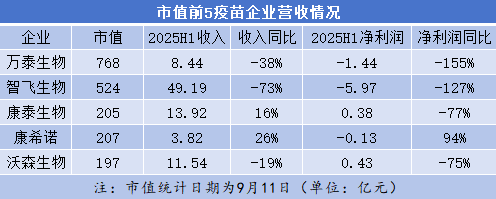
Core Insights - The vaccine industry is experiencing significant challenges, with many companies reporting substantial losses and declining revenues in 2025 [4][20][21] - Price wars and vaccine hesitancy are identified as major factors contributing to the industry's downturn [4][12][14] Financial Performance - In the first half of 2025, major vaccine companies like Zhifei Biological and Wantai Biological reported their first-ever half-year losses, with net profits dropping by 127% and 155% respectively [4][5] - Overall, vaccine revenue for listed companies in China decreased by 60% year-on-year, with net profits down by 113% [4] - Among 17 listed vaccine companies, only 6 reported profits, with the highest profit being 1.22 billion yuan from Chengda Biological [4] Market Dynamics - The top five vaccine companies by market capitalization are Wantai Biological, Zhifei Biological, CanSino, Kangtai Biological, and Watson Biological, with only CanSino showing a profit increase due to its innovative four-valent meningococcal vaccine [4][5] - A significant price drop in flu vaccines has been noted, with prices falling to as low as 5.5 yuan per dose, leading to intense competition [6][7][8] Price Wars - The price of various vaccines, including flu and HPV vaccines, has been driven down due to aggressive competition, with some prices dropping to a fraction of their previous levels [9][10][11] - Wantai Biological's entry into the nine-valent HPV vaccine market has intensified competition, leading to significant price reductions across the sector [9][10] Vaccine Hesitancy - Vaccine hesitancy has become a critical issue, particularly for non-mandatory vaccines, with many individuals expressing doubts about vaccine efficacy [14][15][16] - The overall vaccination rates for flu vaccines remain low in China, with annual rates below 4%, compared to over 50% in developed countries [16] Industry Outlook - The vaccine industry is facing a prolonged period of challenges, with experts predicting that the current downturn may last five to ten years unless significant changes occur in public perception and market dynamics [20][21] - The industry is expected to undergo consolidation, with weaker companies likely to be eliminated as competition intensifies [21]

疫苗降到蜜雪冰城价 企业集体亏损
经济观察报· 2025-09-11 11:16
Core Viewpoint - The vaccine industry is experiencing significant challenges, including price wars, vaccine hesitancy, and intense competition, leading to substantial declines in revenue and profits for major companies [4][10][19]. Group 1: Industry Performance - In the first half of 2025, the overall vaccine revenue for Chinese listed companies decreased by 60% year-on-year, with net profits dropping by 113% [4]. - Major companies like Zhifei Biological and Wantai Biological reported their first half-year losses since going public, with net profits declining by 127% and 155% respectively [4][12]. - Only six out of 17 listed vaccine companies achieved profitability, with the highest profit being 1.22 billion yuan from Chengda Biological [4]. Group 2: Price Wars - The price of flu vaccines has significantly dropped, with some prices reaching as low as 5.5 yuan per dose, marking a new low for public flu vaccine prices [7]. - The price competition has extended beyond flu vaccines to include HPV, shingles, and pneumonia vaccines, with prices for HPV vaccines dropping dramatically [8][9]. - Wantai Biological's revenue fell by 38% to 8.44 billion yuan in the first half of 2025, primarily due to aggressive price competition [9]. Group 3: Vaccine Hesitancy - Vaccine hesitancy has become a significant issue, with many individuals expressing doubts about vaccine efficacy, particularly for non-mandatory vaccines like HPV and flu vaccines [13][15]. - The average flu vaccine coverage in China remains below 4%, significantly lower than in developed countries where it is around 50% [15]. - Factors contributing to vaccine hesitancy include dissatisfaction with COVID-19 vaccine outcomes and the spread of misinformation [15]. Group 4: Market Dynamics - The vaccine market is characterized by increasing competition and product homogeneity, leading to a challenging environment for companies [18][19]. - Experts suggest that the current state of the vaccine industry resembles a "deep winter," with potential for consolidation and elimination of weaker players [19]. - The long-term outlook for the vaccine industry remains uncertain, with expectations of a prolonged period of challenges lasting five to ten years [19].

疫苗降到蜜雪冰城价 企业集体亏损
Jing Ji Guan Cha Wang· 2025-09-11 07:55
Core Viewpoint - The vaccine industry in China is experiencing significant challenges, with many companies reporting substantial losses and a decline in revenue due to price wars, vaccine hesitancy, and intense competition [1][4][15]. Group 1: Financial Performance of Vaccine Companies - In the first half of 2025, major vaccine companies like Zhifei Biological and Wantai Biological reported their first-ever half-year losses, with net profits dropping by 127% and 155% respectively [1][3]. - Overall, the revenue of Chinese vaccine listed companies decreased by 60% year-on-year, and net profits fell by 113% in the first half of 2025 [1]. - Among the top five vaccine companies by market capitalization, only CanSino reported a year-on-year net profit increase, attributed to its innovative four-valent meningococcal vaccine [2][3]. Group 2: Price Wars and Market Dynamics - The price of flu vaccines has significantly dropped, with some prices reaching as low as 5.5 yuan per dose, leading to a price war that has affected various vaccine types including HPV and pneumonia vaccines [4][5]. - Wantai Biological's revenue from its main product, the bivalent HPV vaccine, fell by 38% to 8.44 billion yuan, marking its first loss since going public [5][8]. - The industry is facing a normalization of price competition, with companies engaging in various promotional strategies to capture market share, further compressing product pricing [8][15]. Group 3: Vaccine Hesitancy - Vaccine hesitancy has become a significant issue, with many individuals expressing doubts about vaccine efficacy, particularly for non-mandatory vaccines like HPV and flu vaccines [10][12]. - The average flu vaccine coverage in China remains below 4%, significantly lower than in developed countries where it can reach 50% [12]. - Factors contributing to vaccine hesitancy include dissatisfaction with COVID-19 vaccine outcomes, misinformation, and a lack of awareness regarding the importance of adult vaccinations [12][13]. Group 4: Future Outlook and Industry Challenges - The vaccine industry is expected to face prolonged challenges, with experts predicting that the current competitive landscape will lead to consolidation and potential elimination of weaker players [15][16]. - The market for adult vaccines is particularly underdeveloped, and significant efforts are needed to improve public awareness and acceptance [12][16]. - The industry consensus suggests that without substantial changes in public perception and a more robust adult vaccination framework, the market will continue to struggle [16].