
SNIBE(300832)

Search documents
新产业跌2.05%,成交额1.12亿元,主力资金净流出764.90万元
Xin Lang Cai Jing· 2026-01-20 04:16
Core Viewpoint - The company, New Industry Biomedical Engineering Co., Ltd., has experienced a decline in stock price and a mixed financial performance, with a slight increase in revenue but a significant decrease in net profit [1][2]. Group 1: Stock Performance - On January 20, the stock price of New Industry fell by 2.05% to 56.76 CNY per share, with a trading volume of 112 million CNY and a turnover rate of 0.29%, resulting in a total market capitalization of 44.597 billion CNY [1]. - Year-to-date, the stock price has increased by 0.91%, but it has decreased by 4.96% over the last five trading days, 3.80% over the last 20 days, and 8.32% over the last 60 days [1]. Group 2: Financial Performance - For the period from January to September 2025, the company achieved a revenue of 3.428 billion CNY, representing a year-on-year growth of 0.39%, while the net profit attributable to shareholders was 1.205 billion CNY, reflecting a year-on-year decrease of 12.92% [2]. - Cumulatively, since its A-share listing, the company has distributed a total of 3.86 billion CNY in dividends, with 2.357 billion CNY distributed over the last three years [3]. Group 3: Shareholder Information - As of September 30, 2025, the number of shareholders decreased by 15.87% to 13,100, with an average of 51,997 circulating shares per shareholder, which is an increase of 18.87% [2]. - Among the top ten circulating shareholders, Hong Kong Central Clearing Limited is the fourth largest, holding 26.4824 million shares, an increase of 4.2383 million shares from the previous period [3].
中国医院调研:对 2026 年持谨慎乐观态度-China Healthcare-China Hospital Survey Cautiously Optimistic for 2026
2026-01-20 03:19
Summary of China Healthcare Conference Call Industry Overview - **Industry**: China Healthcare - **Survey**: AlphaWise survey conducted with 80 hospital executives in November 2025, focusing on hospital capital expenditures (capex), procedure volumes, and brand preferences for 2026 [1][26] Key Findings Hospital Capex Outlook - **Cautiously Optimistic**: 59% of hospital executives expect higher capex in 2026, up from 43% in 2025, but still below 85% in 2024 [3][51] - **Expected Growth**: Average capex growth projected at 4.7% YoY for 2026, compared to 3.0% for 2025 [3][51] - **Actual Growth in 2025**: Estimated capex growth for 2025 was 5.8% YoY, indicating better-than-expected performance [3][51] - **Key Drivers**: Hospital surplus (69%), patient demand (50%), and local fiscal budgets (44%) are primary factors influencing capex decisions [31] Equipment Spending Trends - **Top Equipment Categories**: Surgical and soft endoscopes expected to see the highest unit growth at 26% and 16% respectively, followed by CT, ultrasound, and CLIA analyzers with high-teens growth [32][93] - **AI and Digitization**: AI, digitization, and cloud capabilities are the top investment priorities, with 84% of executives planning to increase spending in these areas [33][78] Brand Preferences and Market Dynamics - **Domestic Brands**: Mindray and United Imaging maintain strong positions in brand preference, with Mindray expected to gain share in surgical endoscopes and ultrasound [36][38] - **Foreign Brands**: Siemens Healthineers, GE Healthcare, and Philips show mixed performance, with potential share losses due to domestic competition [17][19][20] - **Market Shifts**: United Imaging is expected to gain significant share in CT and MR equipment, while Mindray is anticipated to strengthen its position in various categories [38] Pricing and Procurement - **Pricing Pressures**: Continuous pricing pressure expected in clinical testing, negatively impacting the IVD segment [10][42] - **Procurement Changes**: Increased expectations for centralized procurement and shorter tender cycles, which could lead to downward pricing pressures [30][61][62] Procedure Volume Expectations - **Moderating Growth**: Only 17% of executives expect growth in procedure volumes, down from 31% in the previous year, primarily due to budget constraints [39] - **Specialty Procedures**: Expected growth across major specialties is clustered in the mid-single-digit range, indicating stable demand [40] Stock Implications - **Positive Outlook for Certain Companies**: - **Mindray**: Expected to recover to positive revenue growth in 2026 due to stable capex environment [11] - **United Imaging**: Positioned to benefit from high-end imaging demand [12] - **APT Medical**: Anticipated to capture growth in cardiac ablation procedures [14][15] - **Zylox-Tonbridge**: Expected to see growth in neuro and peripheral intervention procedures [16] Risks and Challenges - **Market Uncertainty**: Hospital executives express caution regarding capex decisions, with procurement timing expected to be back-loaded into the second half of 2026 [68] - **Regulatory Pressures**: Ongoing regulatory scrutiny and tighter budgets continue to pose challenges for lower-tier hospitals [56] Conclusion The 2026 outlook for the China healthcare sector is cautiously optimistic, with expected growth in hospital capex and a focus on advanced medical technologies. However, challenges such as pricing pressures and market competition from domestic players remain significant factors influencing the landscape.



从“制造”到“智造”传统产业焕新“加速跑” 新产业激活增长新动能奔向万亿之城
Yang Shi Wang· 2026-01-18 04:34
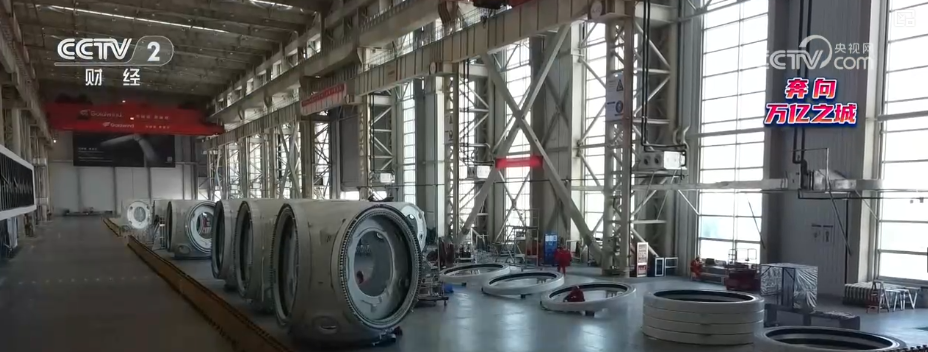
Core Insights - Wenzhou, known as the "capital of China's private economy," is transitioning towards a trillion-level economic scale, focusing on new growth points and industrial transformation [1] Group 1: Offshore Wind Power Development - Wenzhou is accelerating the development of deep-sea offshore wind power, with 17 projects planned and a capacity exceeding 20 million kilowatts, accounting for over 50% of the province's total [7] - The deep-sea wind power base in Wenzhou is set to deliver over 50 large offshore wind turbines and complete over 100 overseas orders by 2025 [1][3] Group 2: Manufacturing Investment Growth - Manufacturing investment in Wenzhou increased by 23.9% year-on-year from January to November 2025, driven by significant project implementations [5] Group 3: Artificial Intelligence and Data Integration - Wenzhou is leveraging data elements to support the development of its artificial intelligence industry, with plans to create a 100 billion-level AI industry cluster by 2027 [10] - The city has developed 50 high-quality datasets across various fields, including healthcare and industrial manufacturing, to support the training of vertical AI models [10] Group 4: Traditional Industry Transformation - The automotive and motorcycle parts industry in Wenzhou saw an increase of nearly 20% in value added from January to November 2025, showcasing its ability to maintain growth during transformation [12][21] - Traditional automotive parts are evolving towards high-end and intelligent upgrades, with a complete industrial chain being revitalized in Wenzhou [19] Group 5: Technological Advancements - Investment in technology research and development is creating new growth drivers for traditional industries, with automotive parts companies supplying over 100 vehicle models and producing more than 5,000 product varieties [21]

国务院国资委:“十五五”时期大幅提升国企战新产业增加值占比
Zhong Guo Zheng Quan Bao· 2026-01-17 03:02
Core Viewpoint - The State-owned Assets Supervision and Administration Commission (SASAC) emphasizes the need to significantly increase the proportion of value added from strategic emerging industries during the 14th Five-Year Plan period, focusing on optimizing the layout and structural adjustments of state-owned enterprises (SOEs) [1][2]. Group 1: Key Goals for State-owned Enterprises - The total assets of state-owned enterprises under SASAC grew from 235 trillion yuan to 387 trillion yuan during the 14th Five-Year Plan, with an average annual growth rate of 10.5% [2]. - By the end of 2025, local state-owned enterprises achieved a value added of 6.9 trillion yuan and completed fixed asset investments of 5.3 trillion yuan [2]. - The main goals for the 15th Five-Year Plan include enhancing strategic missions, improving contributions to economic and social development, and increasing the number of leading technology enterprises [2][3]. Group 2: Enhancing Capabilities of State-owned Enterprises - SASAC aims to improve five key capabilities of SOEs: value creation, technological innovation, industrial upgrading, reform breakthroughs, and party leadership [3][4]. - In terms of value creation, SOEs are encouraged to focus on long-term value and improve productivity metrics such as labor productivity and asset turnover [3]. - For technological innovation, there is a push for increased investment in basic research and the cultivation of talent to enhance the national innovation system [3][4]. Group 3: Industrial Upgrading and Reform - The focus on industrial upgrading includes promoting intelligent, green, and integrated development, while also strengthening traditional industries and creating new pillar industries [4][5]. - SASAC emphasizes the need for deeper reforms in SOEs to establish a modern corporate governance structure and a market-oriented operational mechanism [4][5]. - The importance of artificial intelligence is highlighted, with support for enterprises to engage in AI-related initiatives and the development of high-value application scenarios [5][6]. Group 4: Investment and Innovation Strategies - SASAC encourages the use of special bonds and loans to support key projects that strengthen supply chains and stimulate demand [5][6]. - There is a call for the establishment of high-level innovation platforms and mechanisms to facilitate the commercialization of research outcomes [6]. - The integration of local industrial policies and resources is crucial for driving the development of emerging pillar industries through internal growth and mergers [6].
国务院国资委召开会议提出 “十五五”时期大幅提升国企战新产业增加值占比
Zhong Guo Zheng Quan Bao· 2026-01-16 21:40
Core Viewpoint - The State-owned Assets Supervision and Administration Commission (SASAC) aims to significantly enhance the contribution of state-owned enterprises (SOEs) to the economy during the 14th Five-Year Plan period, with a focus on strategic emerging industries and technological innovation [1][2]. Group 1: Economic Growth and Performance - During the 14th Five-Year Plan period, the total assets of state-owned enterprises under SASAC increased from 235 trillion yuan to 387 trillion yuan, representing an average annual growth of 10.5% [1][2]. - From January to November 2025, local state-owned enterprises achieved a value-added output of 6.9 trillion yuan and completed fixed asset investments of 5.3 trillion yuan [2]. Group 2: Strategic Goals for the 15th Five-Year Plan - The SASAC plans to enhance the strategic mission of SOEs, focusing on strategic security, industry leadership, and public service, while increasing the contribution of state-owned economy to social development [2]. - Key goals include improving self-reliance in technology, increasing the number of leading technology enterprises, optimizing the layout of state-owned capital, and enhancing the vitality of enterprises [2][3]. Group 3: Enhancing Capabilities - SASAC emphasizes the need to improve five key capabilities of SOEs: value creation, technological innovation, industrial upgrading, reform breakthroughs, and party leadership [3][4]. - In terms of value creation, SOEs are encouraged to focus on long-term value and improve productivity metrics such as labor productivity and asset turnover [3]. - For technological innovation, there is a push for increased investment in basic research and the cultivation of talent to enhance the innovation capacity of enterprises [3]. Group 4: Industry Upgrading and Reform - The SASAC aims to guide SOEs in pursuing intelligent, green, and integrated development, while fostering new production capabilities and enhancing the competitiveness of traditional industries [4]. - There is a call for deeper reforms in the governance and operational mechanisms of SOEs to support high-quality development [4]. Group 5: Focus on Technological Innovation and AI - SASAC highlights the importance of artificial intelligence and encourages enterprises to participate in national AI initiatives, aiming to create high-value applications across various industries [6]. - The focus is on fostering collaboration within the industrial chain and promoting the development of emerging pillar industries that can lead future growth [6].
“十五五”时期大幅提升国企战新产业增加值占比
Zhong Guo Zheng Quan Bao· 2026-01-16 20:47
Core Viewpoint - The State-owned Assets Supervision and Administration Commission (SASAC) aims to enhance the strategic role and contribution of state-owned enterprises (SOEs) in China's economic development during the 14th Five-Year Plan period, with a focus on optimizing the layout and structure of state-owned capital and promoting emerging industries. Group 1: Economic Growth and Performance - During the 14th Five-Year Plan period, the total assets of enterprises supervised by the SASAC increased from 235 trillion yuan to 387 trillion yuan, representing an average annual growth of 10.5%, which significantly supported China's sustained economic and social development [1][2] - From January to November 2025, local state-owned enterprises achieved a value-added output of 6.9 trillion yuan and completed fixed asset investments of 5.3 trillion yuan [1] Group 2: Strategic Goals for the 15th Five-Year Plan - The SASAC aims to strengthen the strategic mission of SOEs, enhancing their roles in national security, public service, and economic contribution [2] - Key goals include improving the level of technological self-reliance, increasing the number of leading technology enterprises, and optimizing the layout of SOEs in critical industries [2][3] Group 3: Enhancing Capabilities of State-Owned Enterprises - The SASAC emphasizes the need to improve five key capabilities of SOEs: value creation, technological innovation, industrial upgrading, reform breakthroughs, and party leadership [2][3] - There is a focus on guiding enterprises to adopt a value creation orientation, improve productivity, and enhance risk management [2] Group 4: Technological Innovation and Industrial Upgrading - The SASAC plans to strengthen the role of SOEs in technological innovation by increasing investment in basic research and fostering talent [3] - Enterprises are encouraged to pursue intelligent, green, and integrated development, while also enhancing their competitive position in global industrial divisions [3][4] Group 5: Structural Adjustment and Investment Strategies - The SASAC aims to optimize the layout and structure of state-owned capital, focusing on strengthening core businesses and supporting the modernization of the industrial system [4][5] - There is an emphasis on leveraging long-term special bonds and loans to implement key projects that enhance supply chains and stimulate demand growth [4][5]
国资委:“十五五”时期大幅提升国企战新产业增加值占比
Zhong Guo Zheng Quan Bao· 2026-01-16 20:47
Group 1 - The State-owned Assets Supervision and Administration Commission (SASAC) held a meeting emphasizing the need for rapid breakthroughs in key core technologies during the 14th Five-Year Plan period [1] - The number of leading technology enterprises is expected to steadily increase [1]
医疗器械板块1月16日跌1.58%,康众医疗领跌,主力资金净流出13.95亿元
Zheng Xing Xing Ye Ri Bao· 2026-01-16 08:56
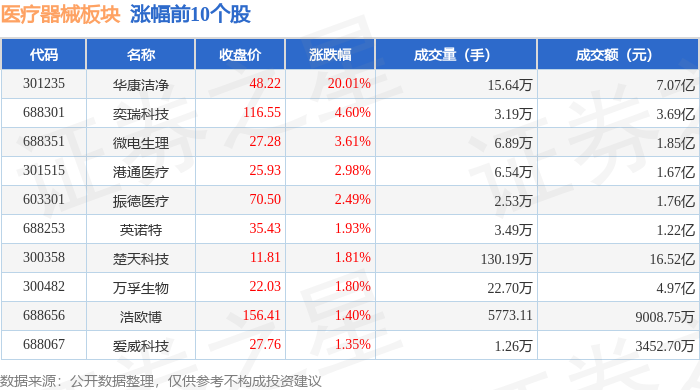
Core Viewpoint - The medical device sector experienced a decline of 1.58% on January 16, with Kangzhong Medical leading the losses, while the Shanghai Composite Index fell by 0.26% and the Shenzhen Component Index decreased by 0.18% [1]. Group 1: Market Performance - The medical device sector's stocks showed mixed performance, with notable gainers including Huakang Clean (20.01% increase) and Yirui Technology (4.60% increase) [1]. - Conversely, Kangzhong Medical saw a significant drop of 8.60%, followed by Huada Zhizao with a decline of 6.61% [2]. - The overall trading volume in the medical device sector was substantial, with Huakang Clean achieving a transaction amount of 707 million yuan [1]. Group 2: Capital Flow - The medical device sector experienced a net outflow of 1.395 billion yuan from major funds, while retail investors contributed a net inflow of 1.42 billion yuan [2]. - Specific stocks like Huakang Clean had a net inflow of 58.17 million yuan from major funds, while retail investors showed a net outflow of 46.88 million yuan [3]. - The capital flow dynamics indicate a shift in investor sentiment, with retail investors actively participating despite the overall sector decline [2][3].


郑州市国创战新产业投资母基金登记成立
Sou Hu Cai Jing· 2026-01-16 04:20
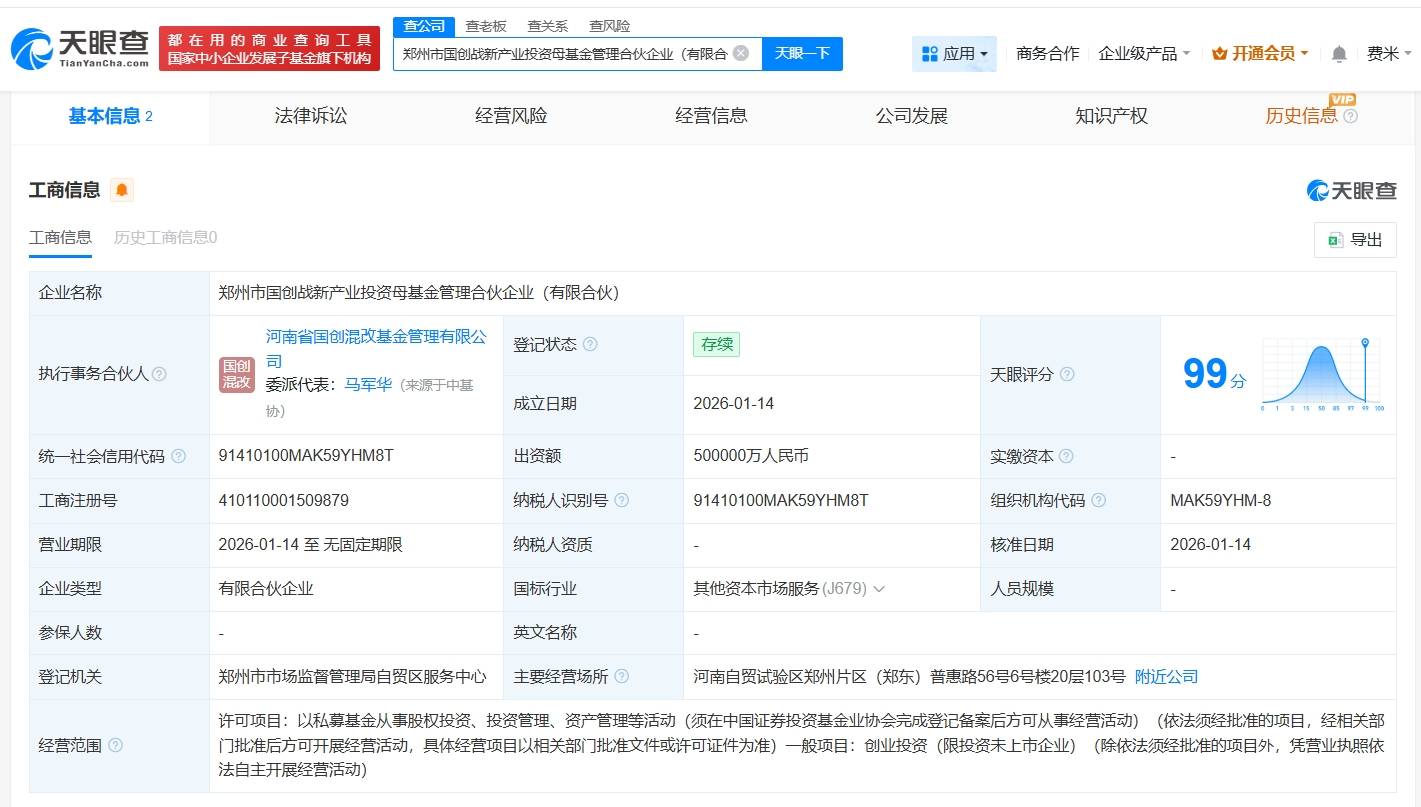
Group 1 - Zhengzhou Guochuang Zhanxin Industry Investment Mother Fund Management Partnership (Limited Partnership) has been established with a capital contribution of 5 billion RMB [1] - The fund is managed by Henan Guochuang Mixed Reform Fund Management Co., Ltd. and Zhengzhou Industrial Investment Group Co., Ltd. as partners [1] - The fund's business scope includes private equity investment, investment management, asset management, and venture capital [1] Group 2 - The fund is registered with the Zhengzhou Market Supervision Administration Free Trade Zone Service Center [2] - The fund's operational period is from January 14, 2026, with no fixed term [2] - The fund is classified under other capital market services in the national industry standard [2]
郑州市国创战新产业投资母基金登记成立 出资额50亿
Xin Lang Cai Jing· 2026-01-16 03:45
Group 1 - The Zhengzhou National Innovation and New Industry Investment Mother Fund Management Partnership has been established with a capital contribution of 5 billion RMB [1] - The fund is managed by Henan National Innovation Mixed Reform Fund Management Co., Ltd. and Zhengzhou Industrial Investment Group Co., Ltd. as partners [1] - The fund's operational scope includes private equity investment, investment management, asset management, and venture capital activities [1]