
SNIBE(300832)

Search documents
广东数字金融创新产业园金融城园区正式挂牌 支撑广东打造数字金融高地
Guang Zhou Ri Bao· 2026-02-05 10:37
Core Insights - The Guangdong Digital Financial Innovation Industrial Park has officially launched its Financial City Park in Guangzhou, marking a significant step in the establishment of the first provincial-level digital financial park in China [1] - The park aims to create a robust ecosystem for financial technology companies by focusing on innovation in data, algorithms, computing power, and application scenarios, thereby fostering growth in the Greater Bay Area and influencing the national digital financial landscape [1] Group 1 - The Financial City Park covers an area of 50,000 square meters, indicating a transition from pilot exploration to a new phase of scale aggregation in the development of the industrial park [1] - The park is a key component of the Guangdong Digital Financial Innovation Industrial Park's core strategy, which includes "one room, one platform, and one park" [1] - The establishment of the park is intended to support Guangdong in becoming a digital financial hub and nurturing a technology-driven financial ecosystem [1]

广东数字金融创新产业园金融城园区正式挂牌
Guang Zhou Ri Bao· 2026-02-05 09:09
Core Viewpoint - The Guangdong Digital Financial Innovation Industrial Park has officially launched its Financial City Park, marking a significant step in the development of a digital financial hub in China [1] Group 1: Overview of the Financial City Park - The Financial City Park is located in the heart of Guangzhou's financial district and is part of the first provincial-level digital financial park in China [1] - The park covers an area of 50,000 square meters, indicating a shift from pilot exploration to a new phase of large-scale aggregation [1] Group 2: Strategic Goals and Ecosystem Development - The park aims to leverage the core strategy of the Guangdong Digital Financial Innovation Industrial Park, which includes "data, algorithms, computing power, and scenarios" to foster an innovative service ecosystem [1] - The initiative is designed to support the growth of fintech companies in the Tianhe area, ultimately creating a digital financial industry cluster that radiates throughout the Greater Bay Area and influences the entire country [1]
文化与科技融合 赋能信息技术应用创新产业高质量发展
Zhong Guo Jing Ji Wang· 2026-02-05 08:37
Core Insights - The integration of culture and technology is crucial for the high-quality development of the information technology application innovation industry, injecting new momentum into its growth [2][4]. Group 1: Industry Development - The new round of technological revolution and industrial transformation is significantly impacting the development of the information technology application innovation industry, with advancements in AI, large models, big data, and IoT [1]. - Information technology application innovation is reshaping China's modern industrial system at an unprecedented speed and intensity, serving as a key engine for national information security and economic growth [1]. Group 2: Cultural and Technological Integration - The fusion of culture and technology enhances market competitiveness for information technology application innovation enterprises by incorporating local cultural elements into product design and driving precise innovation through cultural scenarios [2]. - This integration has led to the emergence of new business models and optimized the industry structure, with digital technology deeply embedded in various cultural scenarios, resulting in new sectors like digital cultural heritage and smart tourism [2]. Group 3: Challenges in Integration - The industry faces multiple challenges, including a lack of depth in cultural integration, absence of standardized systems, shortage of interdisciplinary talent, inadequate collaborative mechanisms, and limited international perspectives [3]. - Companies often only scratch the surface of cultural connotations without fully integrating them into the entire process of technology development and user experience [3]. Group 4: Recommendations for Improvement - It is recommended to enhance policy support and establish a standard system to create a favorable development environment, including financial subsidies and tax incentives for enterprises [4]. - Building a cultural and technological integration innovation platform is essential to strengthen collaborative research capabilities across various sectors [4]. - Companies should delve deeper into cultural connotations to create distinctive information technology application innovation products and services, leveraging China's rich cultural resources [5]. - There is a need to cultivate interdisciplinary talent that understands both technology and culture, with educational programs focusing on cultural big data and AI [5]. - Information technology application innovation enterprises should leverage their innovation advantages to support the healthy development of the AI industry, focusing on core technologies and ecosystem collaboration [6].
CPONPOCPC-可插拔最新产业趋势观瞻
2026-02-05 02:21
Summary of Key Points from Conference Call Industry Overview - The conference discusses the trends in the optical module industry, focusing on technologies such as CPO (Co-Packaged Optics), NPO (Near-Packaged Optics), CPC (Co-Packaged Copper), and their implications for network architecture and cloud service providers [1][2][4][19]. Core Insights and Arguments - **Network Architecture Breakdown**: The network architecture can be divided into two main approaches: Scale Up and Scale Out, further detailed into six specific scenarios, which helps clarify the application of different technologies [3]. - **CPC Technology**: CPC is noted for its ability to reduce losses and is expected to remain relevant until 2030. Major companies are developing 3.2T pluggable module solutions [4][15]. - **NPO vs. CPO**: NPO offers advantages in maintenance and is more accepted by cloud service providers due to its open ecosystem, while CPO faces challenges with packaging yield and maintenance costs [6][11][12]. - **Market Acceptance**: Cloud service providers show low acceptance of CPU technologies, with companies like Google explicitly rejecting them in favor of NPO, which aligns better with their preference for open ecosystems [12][13]. - **Challenges for NVIDIA**: NVIDIA faces challenges in promoting its CPU solutions due to limited CoWoS capacity from TSMC and the need to prove reliability through extensive testing [7][12]. Technical Comparisons - **CPU vs. NPU**: The commercial speed of NPU is faster due to its detachable design and simpler packaging, with expected shipments starting in 2027, while CPU testing is lengthy and slow [8]. - **Performance Metrics**: In terms of bandwidth, power consumption, loss, and latency, both CPU and NPU show similar performance, with CPU having a slight edge in power consumption [9]. - **Cost Considerations**: Currently, NPO is seen as having a cost advantage over CPO due to lower maintenance costs and better yield rates, despite CPO's theoretical lower costs [10][11]. Future Trends and Market Dynamics - **Shift in Supplier Strategies**: Companies like Broadcom are shifting towards supporting NPU technologies, reflecting a broader market trend away from CPU reliance [13][14]. - **Investment Opportunities**: The valuation of optical module companies is currently low, presenting a potential investment opportunity as market misjudgments may lead to undervaluation [21]. - **Technological Advancements**: The rapid development of silicon photonics technology is expected to enhance product margins and market share, with leading companies like Xuchuang making significant advancements [20]. Additional Important Insights - **Industry Consolidation**: The optical module industry is expected to see increased competition and consolidation, with leading firms maintaining high profit margins due to their technological advancements [20]. - **Future of Optical Module Companies**: These companies are transitioning from mere assembly to comprehensive solution providers, requiring capabilities in semiconductor design and advanced packaging [19].
广东数字金融创新产业园金融城园区挂牌运营
Zhong Guo Xin Wen Wang· 2026-02-04 14:10
Core Viewpoint - The Guangdong Digital Financial Innovation Industrial Park has officially commenced operations, aiming to support Guangdong in becoming a digital financial hub and nurturing a technology finance ecosystem [1] Group 1: Overview of the Financial City Park - The Financial City Park is located in Guangzhou International Financial City and covers an area of 50,000 square meters [1] - It is part of the Guangdong Digital Financial Innovation Industrial Park, which is the first provincial-level digital financial park in China [1] - The park's launch signifies a significant step in integrating digital finance with technology finance, contributing to the development of the Greater Bay Area as an international financial hub [1] Group 2: Future Development and Ecosystem - The Financial City Park aims to deepen the innovation service ecosystem focusing on "data, algorithms, computing power, and scenarios" to foster the growth of fintech companies in Guangzhou [1] - It will leverage the Zhongda Bay Valley Risk Management Technology Laboratory as a "R&D engine" and the local financial digital infrastructure platform as a "digital foundation" [1] - The park will promote a collaborative operational system integrating "finance + technology + industry + ecology + talent" through deep cooperation among government, industry, academia, research, and application [1]
助力科技金融加速跑,广东数字金融创新产业园新园区挂牌运营
Nan Fang Du Shi Bao· 2026-02-04 10:06
Core Insights - The Guangdong Digital Financial Innovation Industrial Park has officially launched its Financial City Park in Guangzhou, marking a significant step in the development of the digital financial ecosystem in the Guangdong-Hong Kong-Macao Greater Bay Area [2][3] Group 1: Industrial Park Overview - The Financial City Park is part of the Guangdong Digital Financial Innovation Industrial Park, which is the first provincial-level digital financial park in China [2] - The park aims to create a digital financial industry cluster and innovation source that influences the entire country, focusing on "data, algorithms, computing power, and scenarios" [2] - The park covers an area of 50,000 square meters and signifies a transition from a pilot phase to a new stage of scale aggregation [2] Group 2: Strategic Framework - The operational framework includes a "one room, one platform, one park" strategy, integrating a risk management technology laboratory, a digital infrastructure platform, and the industrial park itself [3] - Collaboration agreements have been signed with various financial institutions to provide services such as credit financing, equity financing, computing power services, and data services [3] Group 3: Economic Impact - By 2025, the financial sector in the Tianhe District is projected to achieve an added value of 170.3 billion yuan, accounting for 52.8% of the city's total financial sector value [4] - The financial industry is expected to contribute 24.3% to the district's GDP, driving a GDP growth rate of 1.87 percentage points [4] - The district currently has 306 licensed financial institutions, representing over 70% of the city's total, and 49 listed companies with a total market value of 1.14 trillion yuan, which is 33% of the city's total [5]

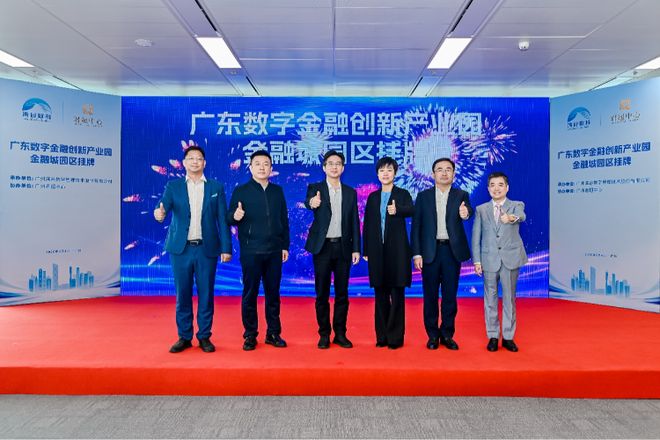
天河再添数字金融新载体,广东数字金融创新产业园金融城园区挂牌
2 1 Shi Ji Jing Ji Bao Dao· 2026-02-04 07:20
Group 1 - The Guangdong Digital Financial Innovation Industrial Park has officially commenced operations, marking a transition from pilot exploration to a new phase of scale aggregation, crucial for supporting Guangdong's development as a digital financial hub [1] - The park covers an area of 50,000 square meters and aims to cultivate a technology finance ecosystem, leveraging the strong financial and software industries in the Tianhe District [1] - The operational entity, Bay Valley Digital Management Technology Co., has established a collaborative framework involving government, industry, academia, research, and application to create a symbiotic ecosystem of finance, technology, industry, ecology, and talent [2] Group 2 - The park will integrate a strategic framework of "one room, one platform, one park," utilizing a risk management technology laboratory as a research engine and a digital infrastructure platform as a foundational layer [2] - Partnerships have been formed with institutions like Guangzhou Unicom to establish an AI promotion center, addressing the growing demand for computational power in the financial sector [2] - By 2025, the financial sector in Tianhe District is projected to achieve an added value of 170.3 billion yuan, contributing 24.3% to the district's GDP and driving a 1.87 percentage point increase in GDP growth [3]
万亿区观察:两度写进重要报告,“独角兽走廊”凭何火出圈?
Nan Fang Du Shi Bao· 2026-02-04 02:43
Core Insights - The "Unicorn Corridor" has been highlighted in recent reports as a key focus for the high-quality development of Nanshan, Shenzhen, indicating its significance in understanding the area's economic growth [1][7]. Group 1: Development of the Unicorn Corridor - The concept of the "Unicorn Corridor" was first introduced in 2025 and represents a shift from isolated breakthroughs to clustered development in Nanshan's tech innovation landscape [2]. - The corridor's formation is a result of historical milestones in Shenzhen's innovation journey, including the establishment of the Shenzhen Technology Industrial Park and the "independent innovation core area" strategy [2][3]. - The corridor connects major innovation hubs and has become a focal point for high-tech resources, contributing over 50% of Shenzhen's unicorn companies for six consecutive years [3]. Group 2: Economic Impact and Growth - In 2025, Nanshan's GDP surpassed 1 trillion yuan, reaching 10,102.38 billion yuan, with a year-on-year growth of 6.3%, making it the first district in China to achieve this milestone [7]. - The corridor is crucial for Nanshan's economic performance, with 19 unicorn companies collectively valued at 593.9 billion yuan, significantly contributing to the region's economic output [3][7]. - The third sector's value added reached 7,757.25 billion yuan, accounting for over 76% of GDP, with a growth rate of 6.5%, highlighting the corridor's role in driving economic growth [8]. Group 3: Industry Composition and Innovation - Over 80% of the companies in the Unicorn Corridor are hard-tech firms, with a strong focus on emerging sectors such as semiconductors, AI, and renewable energy [4][8]. - Key sectors within the corridor include fintech, robotics, and logistics, with leading companies like WeBank and DJI achieving valuations exceeding 240 billion yuan and dominating their respective markets [5]. - The corridor supports a full-cycle nurturing system for companies, providing resources and policies tailored to different growth stages, which enhances the overall innovation ecosystem [5][6]. Group 4: Future Prospects - The Unicorn Corridor is expected to play a pivotal role in the collaborative development of the Greater Bay Area, serving as a model for high-quality urban development across China [8]. - Companies within the corridor, such as Fire乐科技, emphasize the importance of local supply chain collaboration, which enhances their competitive edge in the market [9][10].
国资基金加速布局战新产业 “耐心资本”赋能新质生产力
Zhong Guo Zheng Quan Bao· 2026-02-03 23:26
Group 1 - The core viewpoint of the articles emphasizes the acceleration of state-owned capital investment in strategic emerging industries and technological innovation, with a projected investment of 2.5 trillion yuan by state-owned enterprises (SOEs) by 2025, accounting for 41.8% of total investments [1] - The total scale of venture capital funds from SOEs is nearing 100 billion yuan, with the establishment of a new emerging industry merger fund by the State-owned Assets Supervision and Administration Commission (SASAC) [1] - The collaboration of national and local state-owned capital funds is forming a "patient capital" national team focused on strategic emerging industries and key core technologies, aiming to solidify the foundation for high-quality economic development in China [1] Group 2 - State-owned capital has become a significant force in cultivating new productive forces through market-oriented operations of investment funds, with a total fund scale of 710 billion yuan by China Chengtong, and over 170 billion yuan invested in strategic emerging industries by 2025 [2] - The investment focus includes SOEs, strategic emerging industries, and key industries, with respective proportions of 89.99%, 97.99%, and 79.53% [2] - The National New Fund has achieved nearly 80% coverage of the nine strategic emerging industries, with cumulative investments exceeding 120 billion yuan across various projects [2] Group 3 - The State Investment Group has invested over 200 billion yuan in strategic emerging industries, managing 61 funds with a total subscription scale of 345.1 billion yuan [3] - The group has directly invested in 1,249 projects and supported 293 companies to go public, with a significant portion of funding directed towards private enterprises [3] - The focus on high-end chips and artificial intelligence aligns with national strategies, aiming to leverage capital to mobilize social resources and enhance the innovation ecosystem [3] Group 4 - Local state-owned capital funds are actively participating in regional economic development, with initiatives like the Shenzhen state-owned fund matrix plan focusing on hard technology fields such as semiconductors and artificial intelligence [4] - The Hangzhou state-owned capital fund cluster has approved 392 funds with a total scale exceeding 310 billion yuan, supporting numerous strategic projects [4] - Various cities are optimizing investment environments and establishing mechanisms to support early-stage investments in hard technology [5] Group 5 - Experts emphasize the need for a robust mechanism to support "patient capital," including scientific assessment and error tolerance mechanisms [6] - The introduction of compliance exemption clauses aims to enhance the exploration of strategic emerging industries and technological innovation [6] - Recommendations include improving regional coordination to avoid fragmented competition and ensuring that performance evaluations respect the long investment cycles of hard technology [6]
国资基金加速布局战新产业
Zhong Guo Zheng Quan Bao· 2026-02-03 20:21
Core Viewpoint - State-owned capital is accelerating investments in strategic emerging industries and technological innovation, with a target of 2.5 trillion yuan in investments by 2025, accounting for 41.8% of total investments [1] Group 1: Investment Scale and Focus - By 2025, central enterprises are expected to complete strategic emerging industry investments of 2.5 trillion yuan, with current venture capital fund sizes nearing 100 billion yuan [1] - As of December 2025, the fund system of China Chengtong is projected to reach 710 billion yuan, with over 170 billion yuan invested in strategic emerging industries [2] - The National Investment Group has invested over 200 billion yuan in strategic emerging industries, managing 61 funds with a total subscription scale of 345.1 billion yuan [3] Group 2: Investment Strategy and Mechanisms - The investment strategy focuses on high-end chips, artificial intelligence, and other key areas, utilizing a "early, small, and long-term" investment approach to address market investment gaps [3] - Local state-owned capital funds are actively integrating into regional economic development, with specific plans to support hard technology sectors like semiconductors and AI [4] - Various cities are optimizing investment environments and establishing error-tolerance mechanisms to support early-stage investments in hard technology [5] Group 3: Regulatory and Structural Enhancements - The State-owned Assets Supervision and Administration Commission has introduced measures to enhance compliance and accountability in investment operations, including a compliance exemption clause [6] - Experts suggest that state-owned capital funds should strengthen regional coordination to avoid redundant investments and improve resource allocation efficiency [6] - Recommendations include embedding error-tolerance into performance evaluations and allowing for individual project losses within an overall profitable framework [6]