AbbVie(ABBV)

Search documents
SKYRIZI® (risankizumab) Receives Positive Reimbursement Recommendation by Canada’s Drug Agency for Ulcerative Colitis and AbbVie Concludes Letter of Intent with the pan-Canadian Pharmaceutical Alliance
Globenewswire· 2025-11-28 12:01
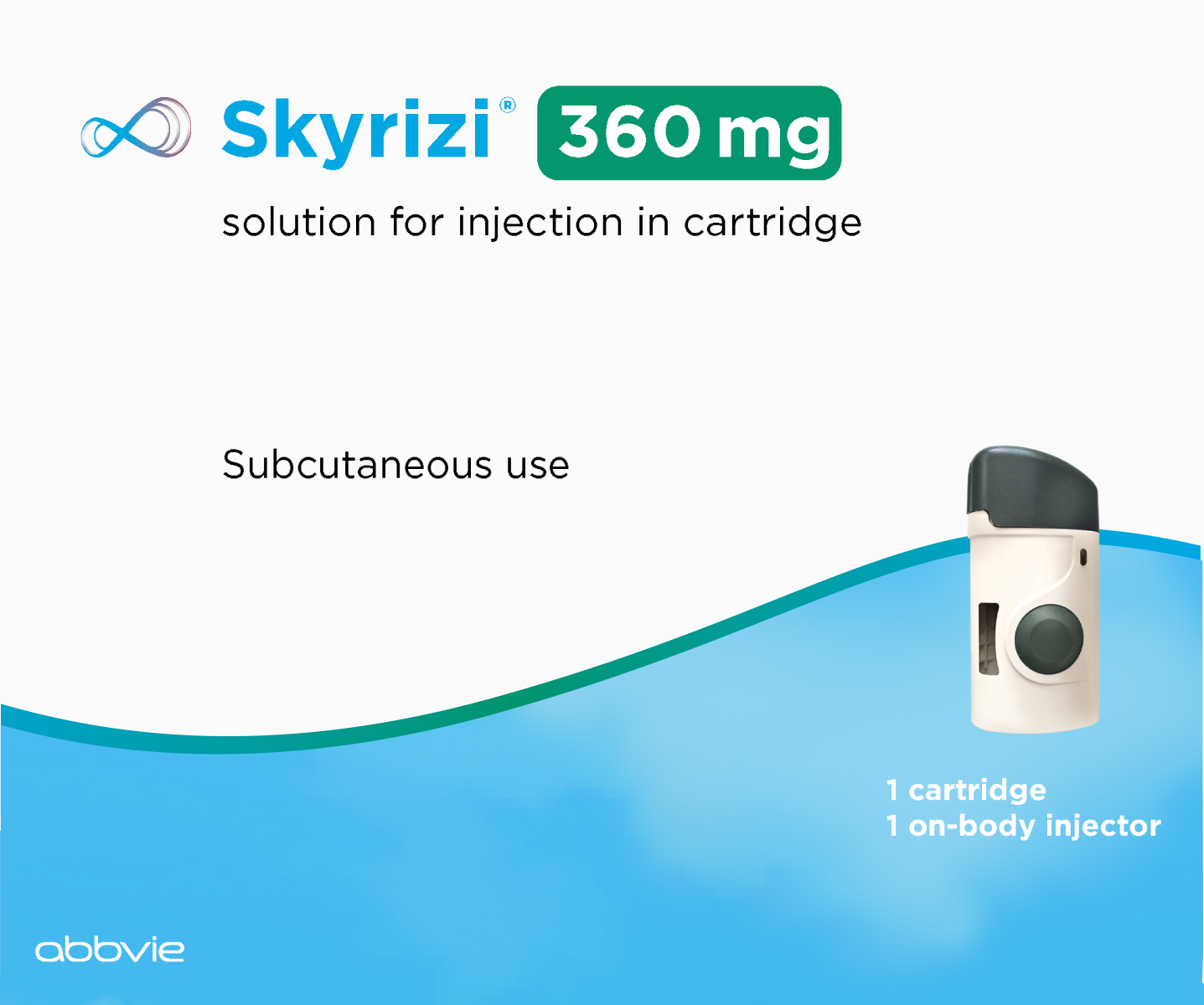
Core Insights - AbbVie has announced two positive updates for Canadians living with ulcerative colitis (UC) [1] - Canada's Drug Agency (CDA-AMC) has recommended SKYRIZI (risankizumab) for reimbursement under specific conditions for adults with moderately to severely active UC [2][3] - AbbVie has completed negotiations with the pan-Canadian Pharmaceutical Alliance (pCPA) regarding SKYRIZI for UC, resulting in a signed Letter of Intent (LOI) [3][5] Summary by Sections Treatment Recommendations - The CDA-AMC's recommendation for SKYRIZI is based on feedback from 25 Canadian clinicians and two patient organizations, ensuring patient perspectives were included [3] - SKYRIZI is indicated for adults with UC who have had inadequate responses to conventional therapies, biologic treatments, or Janus kinase (JAK) inhibitors [8] Clinical Evidence - The positive recommendations for SKYRIZI were supported by evidence from pivotal phase 3 clinical trials, including MOTIVATE, ADVANCE, FORTIFY (for Crohn's disease), and INSPIRE, COMMAND (for UC) [5] Patient Impact - The introduction of SKYRIZI is seen as a significant step towards providing effective treatment options for UC patients, which can help improve their quality of life and long-term health outcomes [5][6] - Approximately 120,000 Canadians are estimated to live with UC, highlighting the need for effective treatment options [7] Company Commitment - AbbVie expresses commitment to improving patient access to innovative medicines for inflammatory bowel disease through collaboration with health authorities [6]


8 Dividend Stocks Every Investor Should Consider
The Motley Fool· 2025-11-28 10:30
Core Viewpoint - The article highlights eight dividend stocks that cater to various investment styles, emphasizing the importance of balancing current income with long-term growth in a diversified dividend strategy [1][2]. Group 1: Stock Summaries - **American Express (AXP)**: Operates a closed-loop payments network with a yield of 0.87% and a payout ratio of 16%, indicating significant potential for dividend growth due to its affluent customer base and strong pricing power [3][4]. - **JPMorgan Chase (JPM)**: The largest U.S. bank by assets, offering a 2% yield and a 28% payout ratio, making it a solid choice for investors seeking both income and capital appreciation [5]. - **Costco (COST)**: Generates profit primarily from membership fees, with a low yield of 0.5% but a 27% payout ratio and a history of substantial special dividends, showcasing its commitment to shareholder returns [6][7]. - **S&P Global (SPGI)**: Provides essential financial market services with a yield of 0.8% and a 28% payout ratio, boasting a 52-year history of dividend increases, reflecting its strong market position [9]. - **AbbVie (ABBV)**: A biopharmaceutical company with a 3% yield and a remarkable 53 consecutive years of dividend increases, supported by a robust pipeline and strategic acquisitions [10]. - **Pfizer (PFE)**: A major pharmaceutical company with a high yield of 6.7% but a payout ratio near 98%, appealing to income-focused investors despite earnings volatility risks [11]. - **Philip Morris International (PM)**: Offers a 3.8% yield with a payout ratio of nearly 78%, focusing on smoke-free products to differentiate itself and provide growth opportunities [12][13]. - **Nvidia (NVDA)**: A technology company with a minimal yield of 0.02% but a low payout ratio of 1%, indicating strong potential for future dividend growth driven by substantial free cash flow [15].


AbbVie and Pfizer: A Closer Look at Two Pharma Heavyweights
ZACKS· 2025-11-26 16:45
Core Insights - Pfizer and AbbVie are both leading U.S. pharmaceutical companies with strong positions in various therapeutic areas, with Pfizer's oncology sales accounting for approximately 28% of its total revenues and AbbVie’s immunology drugs contributing around 50% of its net revenues [1][2]. Pfizer (PFE) Overview - Pfizer has strengthened its oncology position with the acquisition of Seagen in 2023, leading to a 7% increase in oncology revenues year-to-date, driven by key drugs [4]. - Non-COVID operational revenues are improving, with a 9% operational increase in recently launched and acquired products in the first nine months of 2025, supporting growth expectations for 2026 [5]. - Pfizer anticipates cost savings of $7.7 billion by the end of 2027 through restructuring and cost reduction efforts, with a dividend yield of around 7% [6]. - The company is expanding its pipeline through acquisitions, including a $10 billion deal for Metsera, which adds significant potential in the obesity market [7]. - Pfizer faces challenges with declining sales of COVID products and expects a significant impact from patent expirations between 2026-2030, estimating a $1 billion unfavorable impact from the Inflation Reduction Act [8][10]. AbbVie (ABBV) Overview - AbbVie has successfully navigated the loss of exclusivity for Humira by launching new immunology drugs, Skyrizi and Rinvoq, which generated combined sales of $18.5 billion in the first nine months of 2025 [11][12]. - The oncology segment contributed $5.0 billion in revenues, while neuroscience drugs saw a 20.3% increase in sales, totaling almost $7.8 billion [13]. - AbbVie has pursued inorganic growth through over 30 M&A transactions since early 2024, particularly in immunology, while facing near-term challenges from Humira's biosimilars and competitive pressures [14]. - The aesthetics portfolio has seen a 7.4% decline in global sales, impacted by macroeconomic challenges and low consumer sentiment [15]. Financial Estimates and Performance - The Zacks Consensus Estimate for Pfizer's 2025 sales implies a 1.1% decrease, while AbbVie's estimates indicate an 8.1% increase in sales [16]. - Year-to-date, Pfizer's stock has declined by 3.0%, whereas AbbVie's stock has risen by 30.5%, outperforming the industry average of 15.9% [20]. - AbbVie’s dividend yield is 2.8%, compared to Pfizer’s 6.7% [26]. Investment Outlook - Both companies hold a Zacks Rank 3 (Hold), but AbbVie is favored due to its robust growth prospects and lack of significant upcoming loss of exclusivity events [28]. - AbbVie expects to achieve mid-single-digit revenue growth in 2025, driven by the strong performance of Skyrizi and Rinvoq, with a high single-digit CAGR projected through 2029 [29].
Is AbbVie Stock Outperforming the Nasdaq?
Yahoo Finance· 2025-11-26 15:02
Core Insights - AbbVie Inc. is a major player in the pharmaceutical industry with a market cap of $405.6 billion, focusing on various health issues across multiple therapeutic areas [1][2] Company Overview - AbbVie is categorized as a "mega-cap stock" due to its market cap exceeding $200 billion, indicating its substantial size and influence in the drug manufacturing sector [2] - The company has a strong presence in immunology and oncology, with key products like Imbruvica and Rinvoq, supported by significant investments in research and development [2] Stock Performance - AbbVie shares have experienced a decline of 5.3% from their 52-week high of $244.81, reached on October 1 [3] - Over the past three months, AbbVie stock has gained 11.7%, outperforming the Nasdaq Composite's 7.4% increase during the same period [3] - Year-to-date, AbbVie shares have risen by 30.4%, and 30.9% over the past 52 weeks, surpassing the Nasdaq's YTD gains of 19.2% and 20.8% respectively [4] Technical Indicators - AbbVie has been trading above its 200-day moving average since early July, indicating a bullish trend, with some fluctuations [4] - The stock has also been above its 50-day moving average since early June, reflecting a positive trading pattern [4] Growth Drivers - The company's growth is attributed to the success of its products Skyrizi and Rinvoq, along with double-digit growth in neuroscience [5] - AbbVie is making strategic acquisitions, including Gilgamesh and Capstan Therapeutics, and is expanding manufacturing capabilities with a $195 million investment in North Chicago and a $70 million expansion in Worcester [5] - The company is advancing pipeline programs targeting alopecia areata, vitiligo, and Parkinson's disease, despite facing challenges in the aesthetics sector [5] Recent Financial Results - For Q3, AbbVie reported an adjusted EPS of $1.86, exceeding Wall Street's expectation of $1.77, with revenue of $15.8 billion, also above the forecast of $15.6 billion [6] - The company anticipates full-year adjusted EPS in the range of $10.61 to $10.65 [6]
从“减肥神药”覆盖到抗癌药!“美国版集采”来势汹汹 将削减36%支出
Zhi Tong Cai Jing· 2025-11-26 08:37
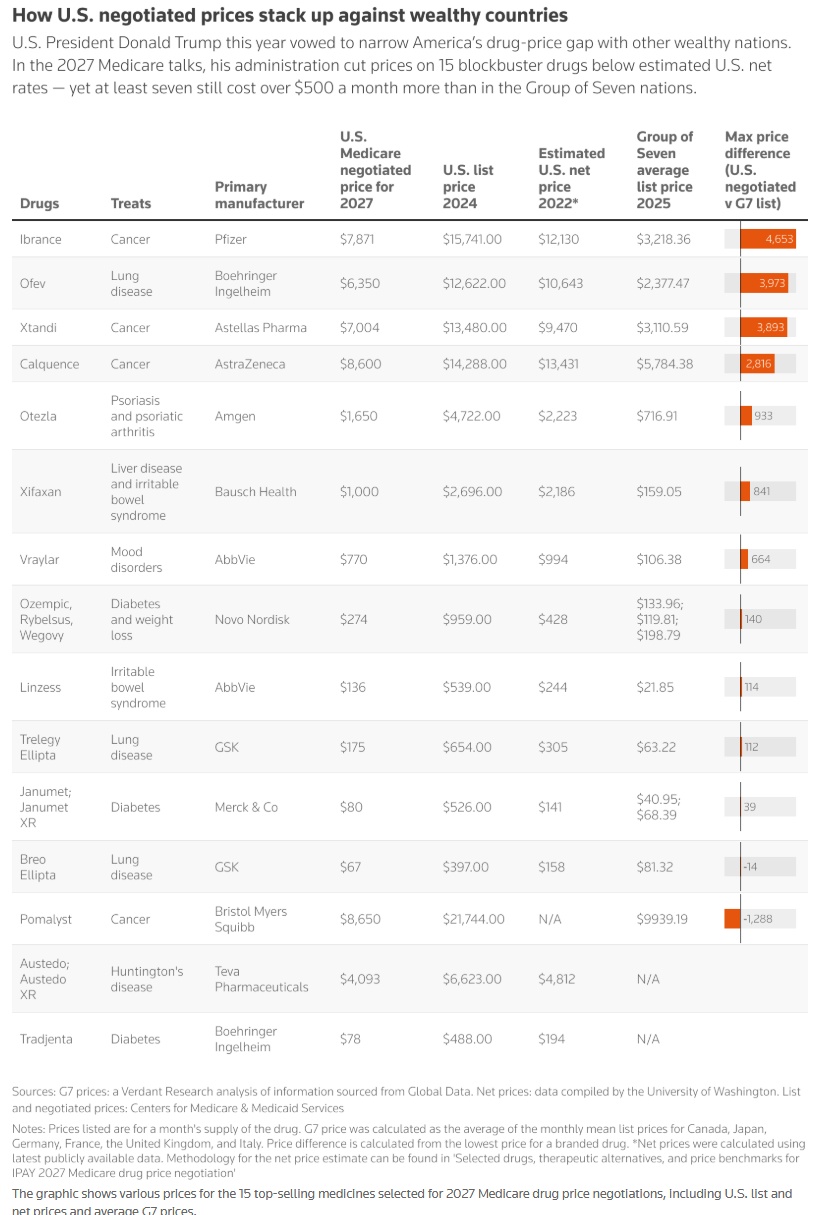
Core Insights - The recent Medicare negotiations are expected to save approximately 36% on the prices of 15 high-cost drugs, translating to around $8.5 billion in net reimbursement costs [1][3][10] - The new prices will take effect in 2027, with significant reductions for popular drugs like semaglutide, which will drop over 70% to about $274 per month [1][4] - The negotiations are part of the Inflation Reduction Act signed by President Biden in 2022, which allows Medicare to negotiate drug prices for the first time [2][11] Drug Price Reductions - The estimated net prices for drugs like Calquence, Ofev, and Ibrance have been reduced by over $4,000 each in the latest negotiations [2][4] - The new pricing for other drugs includes Trelegy Ellipta at $175 (down from $654) and Linzess at $136 (down from $539) [4][10] - The average negotiated prices for these drugs are still higher than those in the Group of Seven (G7) nations, with some drugs costing over $500 more than their G7 counterparts [7][11] Comparison with Previous Negotiations - The 36% savings in the current negotiations surpasses the 22% savings achieved in the previous year's negotiations for 10 different drugs [3][10] - The pricing strategy has become more efficient, with newer products potentially having greater flexibility in pricing [4][10] Industry Response - The pharmaceutical industry has expressed strong opposition to government price negotiations, arguing that such policies are detrimental [5][10] - Industry representatives claim that government pricing policies like the Inflation Reduction Act and the Most-Favored-Nation pricing are misguided [5][12] Future Implications - The Medicare negotiations are expected to influence other payers to seek similar pricing from drug manufacturers [10] - Future negotiations will include an additional 15 drugs, with discussions set to begin in February [12]


董莉君:艾伯维愿积极参与山东生物医药生态建设
Qi Lu Wan Bao· 2025-11-26 04:08
Core Viewpoint - The article emphasizes the commitment of AbbVie to participate in the development of the biopharmaceutical ecosystem in Shandong, China, highlighting the importance of international collaboration and innovation in the industry [1][3]. Group 1: Company Strategy - AbbVie views Shandong as a critical strategic hub for its operations in China, having already engaged in over 30 clinical studies with local medical institutions [3]. - The company plans to increase its investment in China, aiming to accelerate global synchronized research and product launches [3]. Group 2: Future Projections - AbbVie anticipates launching more than 40 new products in China by 2030, reflecting its long-term commitment to the Chinese market [3].

AbbVie and adMare BioInnovations Foster Life Sciences Innovation with the Launch of the AbbVie Biotech Innovators Award in Quebec
Globenewswire· 2025-11-25 14:30
Core Points - AbbVie, in collaboration with adMare BioInnovations, has launched the AbbVie Biotech Innovators Award to support innovation in Quebec's life sciences sector [1][2] - The award aims to assist early-stage biotechnology startups that align with AbbVie's therapeutic focus areas, including immunology, oncology, neuroscience, eye care, and aesthetics [2][3] - The selected startup will receive a year of laboratory and office space at the adMare Innovation Centre in Montreal, along with access to AbbVie's expertise and mentorship [3][9] Industry Impact - Quebec's life sciences and health technologies industry contributes $6.5 billion to the province's GDP, highlighting its significance in the regional economy [5] - adMare BioInnovations has a strong track record, having built 38 companies that have attracted $2.5 billion in risk capital and created around 1,000 jobs in Canada [8] - The initiative reflects a commitment to fostering a thriving biotech ecosystem in Quebec, aiming to accelerate the development of transformative therapies [4][9]
海外MNC动态跟踪系列(十八):艾伯维发布2025Q3财报:自免双星销售强劲
Ping An Securities· 2025-11-25 03:32
Investment Rating - The industry investment rating is "Outperform the Market" [29] Core Insights - AbbVie reported a total revenue of $44.542 billion for the first three quarters of 2025, representing an 8.0% year-over-year growth, with Q3 revenue reaching $15.776 billion, up 9.1% [5][9] - The strong performance is primarily driven by two key immunology drugs, Rinvoq and Skyrizi, which have seen significant sales growth [5][19] - AbbVie has raised its full-year guidance, indicating positive momentum across its business segments, including immunology, neuroscience, and oncology [5][9] Summary by Sections Part 1: Financial Overview and Key Events - AbbVie’s revenue contributions from major segments include Immunology at $21.780 billion (+12.3%), Neuroscience at $7.806 billion (+20.3%), and Oncology at $4.991 billion (+2.6%) for the first three quarters of 2025 [5][9] - The company has advanced several projects into regulatory approval and submission phases, including Rinvoq for various indications [10][12][23] Part 2: Core Product Sales Analysis - Rinvoq generated $5.930 billion in revenue for the first three quarters of 2025, a 43.3% increase, while Skyrizi achieved $12.556 billion, growing 58.1% [19][17] - The combined sales of Rinvoq and Skyrizi reached $6.9 billion in Q3 alone, establishing them as leading products in the immunology sector [19][27] Part 3: Future Pipeline Milestones - In 2026, AbbVie anticipates five drug approvals, four regulatory submissions, and five Phase III data readouts, including Rinvoq for vitiligo and alopecia areata [22][23] - Key upcoming regulatory events include submissions for Tavapadon for Parkinson's disease and Venclexta for higher-risk MDS [22][23] Part 4: Investment Recommendations - The strong sales of Skyrizi and Rinvoq are expected to continue driving AbbVie's growth, with Skyrizi projected to become a "super blockbuster" in 2024 [27] - Investors are advised to monitor domestic companies targeting the IL-23 pathway, such as Innovent Biologics and Kintor Pharmaceutical [27]
How This 'Hidden Gold Mine' Has Beaten The Market For 30 Years
Benzinga· 2025-11-24 18:19
Core Insights - Corporate spin-offs have consistently outperformed the market for 30 years, creating significant investment opportunities [1][32][35] Historical Performance - Research from 1964 to 1990 indicated that spin-offs delivered average excess returns of 3.0% on ex-dates and outperformed the overall market by 10% in their first three years [2][3] - An updated study covering 2007 to 2017 confirmed that spin-offs maintained similar abnormal returns, indicating a persistent market inefficiency [3] Mechanisms of Outperformance - Indiscriminate selling by shareholders who receive spin-off shares often depresses prices below intrinsic value, creating opportunities for investors [29] - Spin-off management teams can make operational improvements without corporate bureaucracy, leading to better capital allocation and focused strategies [30] - The separation of complex conglomerates reveals hidden value, allowing for clearer valuation of individual businesses [31] Notable Spin-off Examples - Yum Brands, spun off from PepsiCo, achieved a total shareholder return of over 1,600% since its spin-off in 1997, compared to the S&P 500's 280% return [9][10] - Chipotle, spun off from McDonald's, saw its stock rise from $22 to $1,592.25, a gain of over 7,100% since its IPO [12] - Abbott Laboratories and AbbVie both performed well post-separation, with AbbVie returning about 20.1% per year since its debut [14][15] - Ferrari's stock rose tenfold after its spin-off from Fiat Chrysler, highlighting the value unlocked through separation [18] - Phillips 66 doubled in size within two years of its spin-off from ConocoPhillips, demonstrating the benefits of operational focus [19][20] Current Market Trends - The average market value of spin-offs has increased from around $1 billion before 2008 to $2.5 billion today, indicating a trend towards larger and more impactful separations [24][25] - Activist investors are increasingly advocating for spin-offs, as seen in campaigns targeting companies like Honeywell and General Electric [26][27] Future Opportunities - Spin-offs remain a fertile ground for outsized returns, but require thorough analysis and patience from investors [34][35] - Recent spin-offs like Solstice Advanced Materials and Qnity Electronics are positioned to benefit from strong market trends, including demand for cooling systems and semiconductor materials [37][42]



AbbVie to Present at the Piper Sandler 37th Annual Healthcare Conference
Prnewswire· 2025-11-24 13:00
Accessibility StatementSkip Navigation AbbVie Announces U.S. FDA Approval of EPKINLY® (epcoritamab-bysp) in Combination with Rituximab and Lenalidomide for Relapsed or Refractory Follicular Lymphoma NORTH CHICAGO, Ill., Nov. 24, 2025 /PRNewswire/ -- AbbVie (NYSE: ABBV) will participate in the Piper Sandler 37th Annual Healthcare Conference on Wednesday, December 3, 2025. Management will participate in a fireside chat at 7:30 a.m. Central time. A live audio webcast of the presentation will be accessible thro ...