Applied Materials(AMAT)

Search documents
芯片设备,产能过剩
半导体行业观察· 2025-10-12 01:17
Core Insights - The semiconductor industry is at a crossroads of unprecedented opportunities and uncertainties, driven by technological advancements and geopolitical factors affecting equipment procurement [2][4] - The WFE market is projected to reach $184 billion by 2030, with equipment shipments at $151 billion and service shipments at $33 billion, reflecting a stable growth trajectory despite structural inefficiencies and economic pressures [2] WFE Market: Overcapacity and Redundancy - The semiconductor industry is facing significant overcapacity, with foundries and IDMs experiencing low utilization rates and squeezed profitability, yet equipment investments continue [4] - This dynamic leads to redundant construction of fabs as regions seek to strengthen local manufacturing ecosystems, ensuring sustained demand for WFE tools despite short-term returns being suppressed [7] Competitive Landscape - The market concentration among the "Big Five" remains a notable characteristic of the WFE industry, reflecting the capital intensity, technical expertise, and long-term relationships required to serve leading chip manufacturers [9][10] - By 2024, the "Big Five" (ASML, Applied Materials, Lam Research, Tokyo Electron, and KLA) are expected to hold nearly 70% of the market share, with ASML leading at approximately 20% due to its dominance in EUV lithography [15] Equipment Segmentation: Technology and Applications - In 2024, lithography equipment will dominate the market with a 26.5% share, followed by deposition, etching, cleaning, and measurement [12] - The compound annual growth rates (CAGRs) for various technologies from 2024 to 2030 are as follows: lithography at +4.7%, etching and cleaning at +5.5%, deposition at +4.0%, and wafer bonding at +10.4% [16] Innovation Driven by Competition - The evolution of semiconductor devices is driving corresponding innovations in the WFE sector, with suppliers needing to respond quickly to maintain competitiveness [19] - Key innovation drivers from 2024 to 2030 include the need for WFE suppliers to provide integrated process solutions that balance specialization and flexibility [19] WFE Market Dynamics - The WFE market reflects the contradictions of modern semiconductor manufacturing, with global overcapacity and low profitability pressures on foundries, while technological autonomy and innovation support market growth [23] - By 2030, the WFE market is expected to grow to $184 billion, driven by stable CAGRs of 4-5% in equipment and services, with market leadership remaining concentrated among the "Big Five" [23]


Tech Corner: AMAT's Place in China, A.I. Trade
Youtube· 2025-10-11 17:15
Core Viewpoint - Applied Materials is a leading provider of materials engineering solutions for semiconductor and advanced display production, facing challenges due to new export rules affecting revenue from China [2][6]. Company Overview - The company operates through three primary segments: semiconductor systems, applied global services, and display technology [2][3]. - It serves various industries, including personal computing, mobile devices, artificial intelligence, data centers, automotive, and consumer electronics [4]. Competitive Landscape - Applied Materials competes with major players such as Lam Research, KLA Corporation, and ASML Holdings [4]. - The company distinguishes itself with a comprehensive product portfolio and technological leadership in materials engineering, particularly in AI-driven applications [5]. Recent Developments - A recent export rule is expected to reduce revenues by approximately $110 million in Q4 and $600 million for fiscal year 2026 [6]. - In fiscal Q3, the company reported revenue of $7.3 billion, an 8% year-over-year increase, and non-GAAP earnings of $248 per diluted share, reflecting a 17% increase [7]. Financial Health - The company demonstrates strong financial health with robust cash flow and a commitment to returning about 90% of free cash flow to shareholders [8]. - Applied Materials has a net income margin of approximately 24%, significantly higher than the sector average of around 4% [9][10]. Growth and Valuation Concerns - The company faces geopolitical risks due to approximately 35% revenue exposure to China, which may impact customer demand [11]. - Current valuation metrics indicate a forward PE ratio of 23, higher than the sector average of 19, suggesting potential overvaluation [12][13]. - Forward revenue growth is expected to be around 3%, compared to a 5-year average of 9%, indicating slower growth prospects [14]. Technical Analysis - The stock has recently reached a new 52-week high and has outperformed the S&P 500, increasing approximately 33% year-to-date [16]. - Technical indicators suggest a bullish trend, with the stock trading above key moving averages [17][18]. Strategic Positioning - Applied Materials continues to advance its technology portfolio to meet the evolving demands of the semiconductor and display industries, leveraging its global service network for high customer satisfaction [18][19].
The world’s chip supply chain is bracing for fallout from China’s rare-earth curbs
BusinessLine· 2025-10-11 03:51
Core Viewpoint - The global semiconductor supply chain is facing significant disruptions due to escalating trade tensions between the US and China, particularly following China's restrictions on rare-earth mineral exports and the US's response with tariffs and software sales restrictions [1][2]. Semiconductor Industry Impact - China's restrictions on rare-earth materials are aimed at limiting supplies to the semiconductor industry, which could hinder the production of advanced chips essential for AI technologies [2][6]. - The new rules require foreign companies to seek approval for shipping materials containing even trace amounts of Chinese rare earths, affecting components used in computer chips and AI research [6][9]. - Major US chip companies are assessing the impact of these restrictions, with concerns about rising prices for rare earth-dependent magnets critical to the chip supply chain [3][4]. Company-Specific Responses - ASML Holding NV, the sole manufacturer of machines for advanced semiconductor production, is preparing for potential shipment delays due to the new export controls [2][8]. - Other US chip companies are identifying products that contain rare earths from China and are worried about the licensing requirements potentially halting their supply chains [4][9]. Trade Relations and Political Context - The US government is evaluating the implications of China's export controls, which have been described as an "economic declaration of war" against the US by the House Select Committee on China [15]. - President Trump's announcement of a 100% tariff on Chinese goods and export controls on critical software is a direct response to China's actions, escalating tensions further [2][11]. - The situation is viewed as a continuation of the trade war, with previous agreements between the US and China having been undermined by these recent developments [13][14]. Global Reactions - Germany has expressed concerns over China's curbs and is taking measures to diversify its supply of raw materials [15]. - Taiwan is monitoring the situation closely, assessing the indirect impacts on its chip industry due to fluctuations in raw material pricing and supply chain adjustments [16].
应材:芯片正在进入原子时代
半导体行业观察· 2025-10-11 01:27
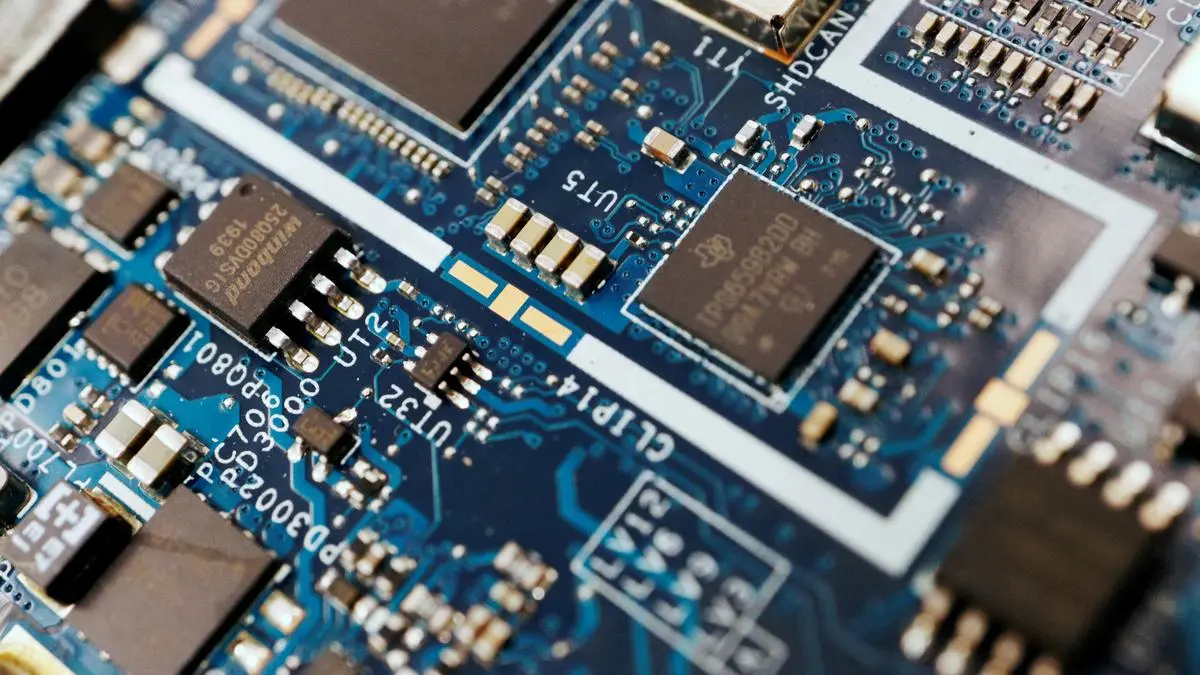
Core Viewpoint - Applied Materials is betting on the sustained demand for more powerful AI chips as it launches new chip manufacturing equipment with "atomic-level" precision, highlighting the increasing complexity and technological challenges in semiconductor manufacturing [2][3]. Group 1: Technological Advancements - The semiconductor manufacturing industry is entering an unprecedented complex era, requiring equipment manufacturers to adapt quickly to evolving demands [2]. - Leading chip manufacturers, including TSMC, Intel, and Samsung, plan to start 2nm chip production this year, transitioning to a new transistor architecture known as "Gate-All-Around" (GAA) technology, which allows for more complex transistor structures in limited space [3]. - Applied Materials is introducing a new series of advanced chip manufacturing tools aimed at enhancing AI chip performance, covering integrated chip-to-wafer hybrid bonding systems, new material deposition systems for GAA transistors, and sub-nanometer imaging metrology tools [4]. Group 2: Market Dynamics - Despite concerns about a potential AI "bubble," leading U.S. chip equipment manufacturers have not observed a slowdown in industry investments, with 100 wafer fabs currently under construction [3]. - The company anticipates a revenue reduction of $600 million in fiscal year 2026 due to U.S. export restrictions affecting China, yet its stock price has risen over 30% this year [5]. Group 3: Collaboration and Limitations - The complexity of current technologies has changed how customers collaborate with chip equipment manufacturers, with clients engaging earlier in the process [4]. - Due to U.S. export controls, Applied Materials' new chip manufacturing tools will not be available to Chinese customers, particularly affecting processes below 14nm [4].

The World’s Chip Supply Chain Is Bracing for Fallout From China’s Rare-Earth Curbs
MINT· 2025-10-10 21:17
Core Viewpoint - The global semiconductor supply chain is facing potential disruptions due to China's new restrictions on rare-earth materials, which are essential for chip production, particularly in the context of the AI industry [1][4]. Group 1: Impact on Companies - ASML Holding NV may experience shipment delays for weeks due to the new restrictions, as foreign firms must seek China's approval for re-exports of products containing rare earths [2]. - A major US chip company is assessing the impact of rising prices for rare earth-dependent magnets, which are crucial for the chip supply chain [3]. - Another US chip company is concerned that the licensing requirements imposed by China could halt its supply chain [3]. Group 2: Regulatory Context - The restrictions mark a significant move by Beijing to exert control over foreign companies in the semiconductor and AI sectors, requiring approval for shipping materials with even trace amounts of Chinese rare earths [4][6]. - The new rules were announced without prior notice, indicating an effort by China to control global technology supply chains [9]. Group 3: Reactions and Responses - The US House Select Committee on China criticized the restrictions as an "economic declaration of war" against the US, highlighting the potential economic ramifications [10]. - Germany has expressed concerns over the restrictions and is taking measures to diversify its supply of raw materials [10]. - Taiwan is monitoring the situation and assessing the indirect impacts on its industry due to fluctuations in raw material pricing and supply chain adjustments [11].

S&P500 and Nasdaq Index: Tech Stocks Like Nvidia, Applied Materials US Stock Forecast
FX Empire· 2025-10-10 14:53
Core Insights - The content emphasizes the importance of conducting personal due diligence before making any financial decisions [1] Group 1 - The website provides general news, personal analysis, and third-party content for educational and research purposes [1] - It explicitly states that the information should not be interpreted as investment advice or recommendations [1] - Users are encouraged to consult their own advisors and consider their financial situations before making decisions [1] Group 2 - The website includes information on complex financial instruments such as cryptocurrencies and contracts for difference (CFDs) [1] - It highlights the high risk associated with these instruments and the potential for significant financial loss [1] - Users are advised to fully understand the workings and risks of any financial instruments before investing [1]

AMAT Stock Is Up 35% In A Month: Does It Have More Room To Run?
Forbes· 2025-10-10 14:40
Core Viewpoint - Applied Materials (AMAT) demonstrates strong operational performance and financial health, leading to a conclusion that the stock is fairly priced despite its high valuation [2][4]. Valuation - AMAT's valuation appears high compared to the broader market, indicating a need for careful evaluation [5]. Growth - The company has experienced moderate growth, with an average revenue growth rate of 4.4% over the past three years and a 6.6% increase in revenues from $27 billion to $29 billion over the last 12 months [6]. Profitability - AMAT's operating income for the last 12 months was $8.6 billion, resulting in an operating margin of 30.1%. The company generated nearly $7.7 billion in operating cash flow, with a cash flow margin of 26.9% and a net income of approximately $6.8 billion, reflecting a net margin of 23.9% [9]. Financial Stability - The company has a debt of $6.8 billion against a market capitalization of $176 billion, resulting in a debt-to-equity ratio of 3.8%. AMAT holds $7.0 billion in cash, which is 20.5% of its total assets of $34 billion [9]. Downturn Resilience - AMAT has historically underperformed compared to the S&P 500 during economic downturns, with significant declines observed during the 2022 inflation shock, the 2020 COVID pandemic, and the 2008 global financial crisis. The stock has shown a tendency to fully rebound to pre-crisis peaks after substantial declines [7][9].
AI日报丨富国银行力挺半导体设备牛市,英特尔盘前走高
美股研究社· 2025-10-10 12:53
Core Insights - The rapid development of artificial intelligence (AI) technology is creating extensive opportunities in the market [2] - The commercialization and monetization of the AI industry are expected to accelerate, with significant advancements in both domestic and international AI sectors [4] Group 1: AI Industry Developments - Major AI models like Sora2 and Claude Sonnet 4.5 have exceeded expectations, indicating a robust growth trajectory for the AI industry [4] - Companies like OpenAI are accelerating their computing power deployments, highlighting the increasing importance of computational infrastructure in the AI sector [4] - Domestic AI industries are catching up, showcasing impressive capabilities in model performance and computing cluster deployments [4] Group 2: Company-Specific Updates - Intel's new Core Ultra series processors, based on the 18A process node, feature significant performance improvements, with AI capabilities reaching up to 180 TOPS [5] - Reflection AI, a US-based startup, raised $2 billion in funding led by Nvidia, aiming to develop an open-source AI model to compete with existing closed-source models [8] - Meta's Instagram is exploring the development of a standalone TV application to compete with YouTube, indicating a strategic shift towards video content [9] Group 3: Semiconductor Equipment Market - Wells Fargo's bullish report on the semiconductor equipment industry emphasizes the ongoing expansion of AI infrastructure led by major tech companies [11] - The report highlights key players like ASML, Applied Materials, and KLA, which are expected to continue their strong performance in the semiconductor equipment market [11]



AI算力热浪点火3nm与先进封装 富国银行力挺半导体设备牛市
Zhi Tong Cai Jing· 2025-10-10 07:21
Group 1: Semiconductor Equipment Industry Outlook - Wells Fargo has released a bullish report on the semiconductor equipment industry, highlighting the acceleration of advanced process chip production and packaging capacity expansion driven by major tech companies like Microsoft, Google, and Meta [1] - The long-term bullish narrative for the semiconductor equipment sector remains strong, with a focus on companies like ASML, Applied Materials, and KLA, all receiving "buy" ratings and target price increases [1][4] - The demand for 3nm and below high-performance AI chips is expected to remain robust at least until 2027, prompting major manufacturers like TSMC, Samsung, and Intel to expand their production capacities [5] Group 2: Key Collaborations and Investments - Nvidia and Intel have announced a collaboration, alongside Nvidia's significant investment of up to $100 billion in OpenAI, aiming to build a super AI data center with at least 10 GW of computing power [2] - AMD has also partnered with OpenAI to deploy a total of 6 GW of AI GPU computing power, indicating a substantial scale of collaboration within the semiconductor and AI sectors [2] Group 3: Performance of Key Companies - Applied Materials' target price has been raised from $240 to $250, with a year-to-date stock price increase of over 36%, outperforming major indices [8] - ASML's target price has been significantly increased from $890 to $1,105, with a stock price increase of 40% year-to-date, driven by strong demand for High-NA EUV lithography machines [9] - KLA's target price has been raised from $920 to $1,115, with a year-to-date stock price increase of over 70%, focusing on defect detection and yield management in semiconductor manufacturing [10]


Applied Materials and Arizona State University Celebrate Opening of ‘Materials-to-Fab’ Center
Globenewswire· 2025-10-09 15:30
Core Insights - The official opening of the Materials-to-Fab Center, a $270 million facility, was celebrated by Applied Materials and Arizona State University (ASU) [1][2] - The center aims to enhance the U.S. semiconductor manufacturing industry by facilitating collaboration among universities, industry partners, and government entities [3][4] Company Overview - Applied Materials is the largest U.S. producer of semiconductor manufacturing equipment, with major production facilities in Texas, Massachusetts, Montana, and a new site in Chandler, Arizona [4] - The company is focused on advancing semiconductor technologies crucial for AI and high-performance computing [4] Industry Impact - The Materials-to-Fab Center is expected to accelerate innovation in semiconductor processes and technologies, positioning Arizona as a national leader in semiconductor R&D [8] - The center will support both small and large companies in the semiconductor ecosystem, enhancing connections between research and manufacturing investments [8][6] Academic Collaboration - ASU is recognized as a leading institution in microelectronics, contributing to workforce development and innovation across the microelectronics ecosystem [5][6] - The collaboration between Applied Materials and ASU is designed to foster breakthroughs in semiconductor technology, benefiting the entire industry [3][4]