
Alphabet(GOOG)

Search documents
European Publishers Council files EU antitrust complaint about Google's AI Overviews
Reuters· 2026-02-10 13:23
Group 1 - The European Publishers Council has lodged a complaint with EU antitrust regulators regarding Google's AI-generated summaries, referred to as AI Overviews [1]


Coca-Cola earnings, Google's AI risks, Target layoffs and more in Morning Squawk
CNBC· 2026-02-10 13:08
Group 1: MrBeast and Banking - MrBeast, also known as Jimmy Donaldson, has acquired the financial services app Step through his company Beast Industries [1] Group 2: Coca-Cola's Financial Performance - Coca-Cola's shares are down following mixed fourth-quarter results, with adjusted earnings per share exceeding expectations but adjusted revenue at $11.82 billion, below the anticipated $12.03 billion [2][3] - The company projects organic revenue growth of 4% to 5% for 2026, facing weakening demand as consumers become more budget-conscious [3] Group 3: Alphabet's AI Investments - Alphabet is planning to raise $20 billion through a U.S. dollar bond sale to fund its artificial intelligence initiatives, with capital expenditures in 2026 expected to more than double those of 2025 [6] - The company has acknowledged risks associated with increased consumer use of generative AI, which could impact its core advertising business [5] Group 4: Target's Operational Changes - Target is reallocating resources to improve in-store experiences by increasing staffing while cutting around 500 jobs at distribution centers and regional offices [10] - The new CEO, Michael Fiddelke, aims to address customer complaints regarding store conditions and checkout efficiency [11] Group 5: Novo Nordisk's Regulatory Issues - Novo Nordisk is under scrutiny from the FDA for misleading claims in an advertisement for its Wegovy pill, which the company is addressing [12] - Despite the regulatory challenges, shares of Novo Nordisk rose over 3% in the previous trading session [12]

谷歌:对有机会解决英国竞争和市场管理局的关切表示欢迎
Ge Long Hui A P P· 2026-02-10 13:07
Group 1 - Google (GOOG.US) welcomes the opportunity to address concerns raised by the UK Competition and Markets Authority (CMA) [1] - The company will continue to engage in constructive interactions with the CMA [1]
All about century bonds and why analysts back Alphabet's 100-year bond
Invezz· 2026-02-10 12:57
Core Viewpoint - Alphabet Inc. is preparing to issue a rare 100-year bond, aiming to raise approximately $20 billion to support its significant investments in artificial intelligence and other technologies, marking a notable shift in how tech companies are perceived in the financial market [1][2] Group 1: Century Bonds Overview - Century bonds are unique financial instruments typically issued by companies with exceptional longevity and financial resilience, often associated with blue-chip industrial firms rather than technology companies [1] - If Alphabet proceeds with this bond issuance, it will join a select group of corporations that have issued 100-year debt, including Ford Motor Co. and Motorola [1] - The rarity of century bonds makes them attractive to life insurance companies and pension funds, which seek long-term assets to match their obligations [1][2] Group 2: Investor Demand and Market Perception - Analysts expect strong demand for Alphabet's 100-year bond, with reports indicating over $100 billion in demand across various currencies and maturities, reflecting a sustained appetite for high-grade corporate debt [1][2] - The willingness of investors to commit capital to a technology company for a century indicates a shift in perception, viewing hyperscale tech firms as critical infrastructure rather than cyclical entities [2] - The strategic choice to issue the bond in sterling is seen as beneficial, as the UK market has a deep pool of investors familiar with ultra-long maturities [2] Group 3: Alphabet's Funding Strategy - The century bond issuance is part of a broader multi-tranche offering, including a seven-part dollar transaction and potential issuance in Swiss francs, showcasing a diversified funding approach [2] - Alphabet's previous bond issuance in November raised $17.5 billion, attracting approximately $90 billion in orders, indicating strong market interest [2]
字节发完阿里发,Qwen-Image 2.0火线出击
3 6 Ke· 2026-02-10 12:52
Core Viewpoint - Alibaba has launched its new image generation model Qwen-Image 2.0, which supports up to 1,000 tokens for long instructions and 2K resolution, featuring a lighter architecture that enhances inference speed compared to its predecessor [2][37]. Group 1: Model Performance - Qwen-Image 2.0 excels in long instruction adherence and text rendering, although it slightly lags behind Google's Nano Banana Pro in image realism [2][6]. - In AI Arena testing, Qwen-Image 2.0 ranked third in text-to-image and second in image-to-image benchmarks, indicating competitive performance but still trailing behind Google’s model [6][8]. - The model can render complex text, such as the full text of "Lantingji Xu" in a brush style, while maintaining visual harmony with the background [4][9]. Group 2: Technical Enhancements - Qwen-Image 2.0 has optimized the common "greasy" appearance in AI-generated images, resulting in less saturated colors and a more realistic look [5][34]. - The model's size is significantly reduced compared to version 1.0, which had approximately 20 billion parameters, while still enhancing capabilities and speed [37][39]. - Improvements in the Variational Autoencoder (VAE) have strengthened the model's ability to generate clear and accurate small text, addressing previous issues of text distortion [39]. Group 3: Future Developments - The Qwen-Image team plans to focus on generating complex "parent images" like PPTs and multi-image posters, aiming to reduce hallucinations and errors in future iterations [14][40]. - The integration of image generation and editing capabilities is expected to enhance the model's utility, allowing for more flexible workflows in design [34][35]. - Collaborations with applications like WPS are planned to gather user feedback for continuous model improvement [40]. Group 4: Market Implications - The advancements in Qwen-Image 2.0 position it as a potential productivity tool across various industries, including e-commerce and healthcare, by visualizing complex processes and generating marketing materials [39][41]. - The rapid iteration and application of AI-generated content in China are anticipated to foster new industry chains and accelerate model development [39][41].


大厂AI硬件竞赛:软硬一体易成,生态入口难夺
Xin Lang Cai Jing· 2026-02-10 12:40
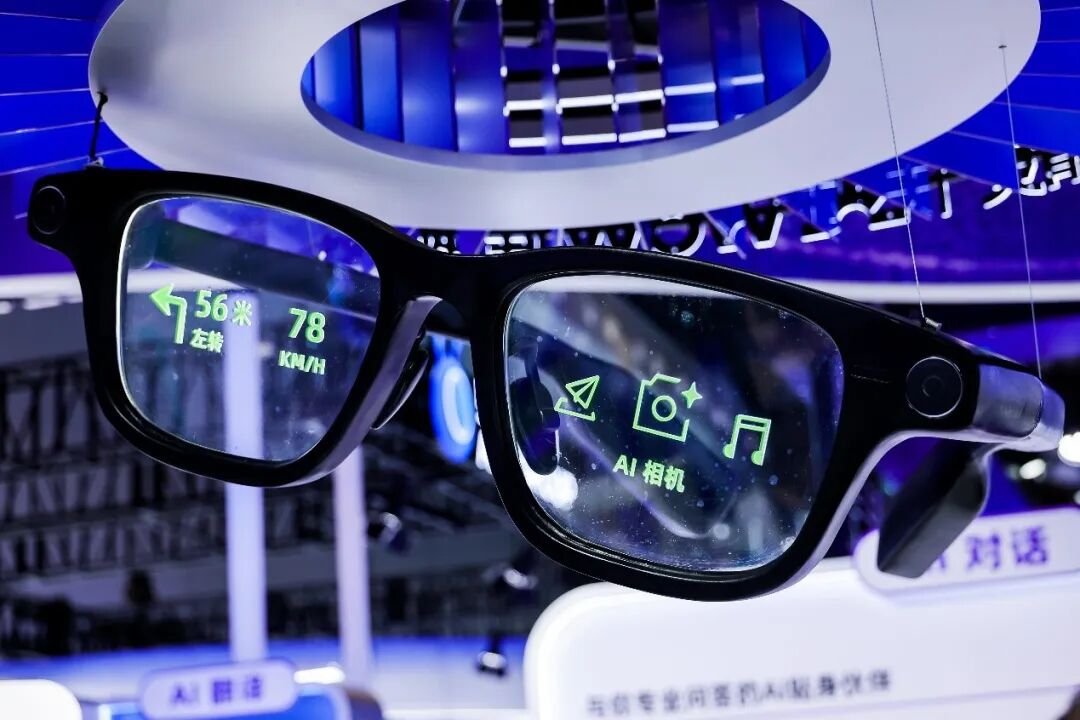
Core Insights - The next battleground for AI has shifted from the cloud to personal devices, with major tech companies exploring various forms of AI hardware, including glasses and pens [2][22] - OpenAI plans to launch a lightweight, screenless AI device in the second half of 2026, sparking speculation about its form factor [23] - The AI hardware market, particularly smart glasses, is entering a phase of scaled competition, with global shipments expected to exceed 10 million units by 2026 [3][24] Group 1: Market Dynamics - Meta has established itself as a leader in the smart glasses market, holding a 73% market share in early 2025 with its Ray-Ban collaboration [25] - Google is re-entering the smart glasses space with Project Aura, set to launch in 2026, aiming to create an open XR ecosystem [25][26] - In China, companies like Alibaba and Baidu are launching their own AI glasses, with Alibaba's Quark AI Glasses S1 topping sales charts upon release [26][27] Group 2: Product Innovations - Alibaba's Quark AI Glasses S1 features a lightweight design and advanced voice interaction capabilities, while Baidu's XiaoDu AI Glasses Pro focuses on AI voice photography [28][27] - ByteDance is preparing to launch its own AI glasses, leveraging its VR expertise from the PICO brand [27] - Other Chinese manufacturers, including XREAL and Rokid, are also developing competitive products in the global market [27] Group 3: Strategic Paths - OpenAI represents a "disruptive entry" strategy, focusing on a screenless AI pen that aims to redefine human-computer interaction [31][32] - Google is pursuing an "ecosystem platform" strategy with its Android XR operating system and Project Aura, aiming to replicate its success in the smartphone market [33] - Chinese giants like Alibaba and Baidu are adopting a "full-stack synergy" approach, integrating algorithms, chips, cloud, and terminal solutions [35][36] Group 4: Challenges Ahead - The AI hardware market faces significant challenges, including supply chain constraints and the need for robust production capabilities [39] - Privacy and ethical compliance issues are critical, as AI hardware collects extensive user data [40] - The business model may shift from selling devices to offering services, emphasizing the need for innovative revenue streams [41]


美股盘前要点 | 特朗普拟豁免科技巨头芯片关税,台积电1月销售额创新高
Ge Long Hui· 2026-02-10 12:32
Group 1 - US stock index futures showed slight increases, with Nasdaq futures up 0.22%, S&P 500 futures up 0.15%, and Dow futures up 0.01% [1] - European stock indices had mixed results, with Germany's DAX up 0.03%, UK's FTSE 100 down 0.34%, France's CAC up 0.25%, and the Euro Stoxx 50 up 0.19% [1] - Citigroup warned that "AI disruption" could lead software stocks to retest their 2023 lows, with a potential long-term terminal value evaporation of about one-third [1] - AI startup Anthropic plans to secure 10 gigawatts of data center computing power, surpassing OpenAI [1] - The US plans to exempt companies like Amazon, Google, and Microsoft from upcoming chip tariffs, potentially linked to TSMC's investment commitments [1] - TSMC reported a 36.8% year-on-year increase in January sales to a record high of NT$401.26 billion, with a board-approved capital budget of $44.962 billion [1] - Amazon plans to launch a content trading platform allowing publishers to sell content to AI companies [1] - Alphabet's Waymo achieved fully autonomous driving operations in Nashville, Tennessee [1] - Tesla's North American sales head Raj Jegannathan has left the company amid challenges of declining global demand [1] - Salesforce reportedly laid off fewer than 1,000 employees earlier this month, affecting marketing and product management roles [1] Group 2 - Eli Lilly will acquire Orna Therapeutics for $2.4 billion to strengthen its position in the autoimmune sector [2] - Baidu is reportedly secretly launching the "O Plan," which insiders say is related to the Baidu app [2] - Qianwen APP is testing integration with Damai, covering the entire process from film recommendations to payment and ticket issuance [2] - AstraZeneca expects a 9% increase in product sales to over $55.5 billion by 2025, anticipating continued growth this year [2] - Coca-Cola's Q4 net revenue of $11.8 billion fell short of expectations, with an anticipated adjusted organic revenue growth of 4-5% this year [2] - BP's Q4 underlying replacement cost profit increased by 32% year-on-year to $1.54 billion, with stock buybacks paused [2] - Barclays reported a pre-tax profit of £1.9 billion in Q4, exceeding expectations, and committed to returning at least £15 billion to shareholders by 2028 [2] - ON Semiconductor's Q4 revenue declined by 11% year-on-year to approximately $1.53 billion, with first-quarter guidance falling short of expectations [2] - Ferrari's Q4 net profit of €381 million exceeded expectations, with orders already booked through the end of 2027 [2]



Delayed Data Deluge Set To Flood Markets
Seeking Alpha· 2026-02-10 12:30
Group 1 - The U.S. has issued an advisory for American-flagged commercial vessels to avoid Iranian waters in the Strait of Hormuz [2] - Alphabet is planning to raise significant funds from the bond market to support its artificial intelligence initiatives [2] - The Nasdaq has rebounded, the S&P 500 is nearing record levels, and the Dow has surpassed the 50,000 mark [2] Group 2 - A series of economic data releases this week, including retail sales, non-farm payrolls, and the consumer price index, are expected to influence Federal Reserve interest rate decisions [3] - Nearly 20% of the S&P 500 Index reached new highs last week, despite a selloff in the software sector [4] - The ISM Manufacturing Purchasing Managers' Index has outperformed expectations, indicating favorable conditions for the stock market and the Federal Reserve [4] Group 3 - AppLovin's stock surged after a short-seller retracted previous claims [5] - Oracle's stock price increased following a bullish outlook from D.A. Davidson [6] - American Airlines flight attendants are calling for the resignation of the CEO amid ongoing issues [7]

【明日主题前瞻】算力基础设施核心,AI浪潮下电力设备供需缺口进一步放大
Xin Lang Cai Jing· 2026-02-10 12:08
Group 1: AI and Power Equipment - Alphabet plans to raise $20 billion through bond issuance, exceeding previous expectations, to invest heavily in data centers crucial for its AI strategy [1] - The global demand for high-power, stable electricity supply for AI computing is increasing, leading to a supply-demand gap in high-voltage power equipment [1] - TBEA is a leading private transformer manufacturer in China, capable of integrated services in high-voltage cables and accessories [2] Group 2: AI and Security - The integration of AI into cybersecurity is creating new opportunities, with safety and trust becoming core themes in the industry [3] - The implementation of new cybersecurity regulations in China marks a shift towards more detailed governance in the sector [3] - Anheng Information has launched China's first AI security agent, enhancing its capabilities in various security scenarios [4] Group 3: Metal Prices - The price of indium has surged to its highest level in over a decade, with a significant increase of 88% from 2500 RMB/KG to 4700 RMB/KG [5] - China accounts for 70% of global indium production, and the supply growth has been limited, indicating potential for further price increases [5] - Xiyang Co. holds the largest indium resource reserves globally, producing 101.62 tons of indium [5] Group 4: Tourism Industry - The domestic tourism market is expected to see a 300% increase in planned trips during the upcoming Spring Festival, indicating a strong recovery [6] - Companies like Sanxia Tourism are expanding their offerings to meet diverse consumer demands, including high-end cruise services [7] Group 5: AI Content Creation - Reading Group is focusing on AI-driven content creation, aiming to enhance the efficiency and value of IP development [8] - Daily Interactive provides data intelligence services, catering to the short video and short drama sectors [9] Group 6: Automotive Industry - The Ministry of Commerce is implementing measures to boost automotive consumption, including trade reforms and policies to support vehicle replacement [11] - Companies like Feilong Co. and Xingyu Co. are positioned to benefit from the anticipated growth in the automotive sector [11]



4 Things Every Alphabet Investor Needs to Know
Yahoo Finance· 2026-02-10 12:05
Core Insights - Alphabet remains a dominant player in the search engine market, holding approximately 90% global market share, with search revenue constituting 55% of its total revenue in 2025 [3][4] - The company has a significant competitive advantage due to its distribution channels, owning the leading web browser (Chrome) and smartphone operating system (Android), both with around 70% market share [5][6] - Google Cloud is identified as the primary growth driver for Alphabet, with a notable revenue increase of 48% last quarter, reaching $17.7 billion [7][8] - Alphabet's custom AI chips, known as tensor processing units (TPUs), provide a structural cost advantage in cloud computing, enhancing its competitive position against other providers [9] Group 1 - Alphabet's search business remains its core revenue source, with a 17% growth in search revenue in Q4, showing consistent acceleration throughout the previous year [4] - The company's search moat is reinforced by its partnership with Apple, ensuring it remains the default search engine on Apple devices [5][6] Group 2 - Google Cloud's operating income more than doubled from $2.1 billion to $5.3 billion last quarter, indicating strong operational leverage [8] - The development of TPUs over the past decade has allowed Alphabet to optimize its cloud services, providing a competitive edge that is difficult for others to replicate [9]
