Coca-Cola(KO)

Search documents
Better Buffett Stock: Constellation Brands vs. Coca-Cola
The Motley Fool· 2025-05-22 10:07
Core Insights - Warren Buffett plans to step down as CEO of Berkshire Hathaway but continues to make significant trades in the company's $285 billion portfolio, indicating a cautious market outlook [1] - Constellation Brands has seen a 23% decline in stock price over the past year, while Coca-Cola's shares have risen by 15%, raising questions about investment choices [4] - Constellation's investment by Buffett, totaling 12 million shares worth $2.3 billion, represents 0.8% of Berkshire's portfolio, despite facing significant challenges [4][5] Constellation Brands - Constellation Brands produces over 100 brands of alcoholic beverages, including Modelo, Corona, and Pacifico, which are affected by a 25% tariff imposed by the Trump administration [5] - The company is experiencing a decline in its cheaper wine brands and lower alcohol consumption rates among younger consumers, prompting a strategy to divest weaker brands and introduce lighter and nonalcoholic drinks [6][7] - Analysts project revenue to decrease from $10.2 billion to $9.9 billion from fiscal 2025 to fiscal 2028, with a net loss reported in fiscal 2025 due to goodwill impairment charges [8] - Expected EPS growth is projected at a compound annual growth rate (CAGR) of 7% over the next two years, with the stock trading at 15 times earnings and a forward yield of 2.1% [9] Coca-Cola - Coca-Cola is a long-term investment for Buffett, with 400 million shares valued at $28.8 billion, making it 10.1% of Berkshire's portfolio [10] - The company has diversified its product offerings beyond sugary sodas, including bottled water, juices, teas, and alcoholic beverages, to mitigate risks from declining soda consumption [11] - Coca-Cola's business model is less exposed to tariffs, as it sells concentrates and syrups, while finished products are produced by independent bottlers [12] - Analysts forecast a CAGR of 4% for revenue and 11% for EPS from 2024 to 2027, with the stock valued at 25 times forward earnings and a forward yield of 2.8% [14] Investment Recommendation - Coca-Cola is viewed as a more stable investment compared to Constellation Brands, which faces more significant challenges [15]



3 Top Warren Buffett Stocks to Buy for Reliable Dividend Income
The Motley Fool· 2025-05-22 09:06
Warren Buffett's company, Berkshire Hathaway (BRK.A -0.21%) (BRK.B -0.34%), has famously eschewed paying dividends. Buffett and his team would rather retain Berkshire's earnings and reinvest that cash than pay it out to shareholders in dividends. While Buffett doesn't want to pay dividends to his shareholders, he loves receiving them from other companies. Berkshire Hathaway owns many dividend-paying stocks. Three top options for those who like Buffett's style but also want to receive some dividend income ar ...



瓶装饮料的终端 “要塞” 抢夺战
Qi Lu Wan Bao Wang· 2025-05-22 03:08
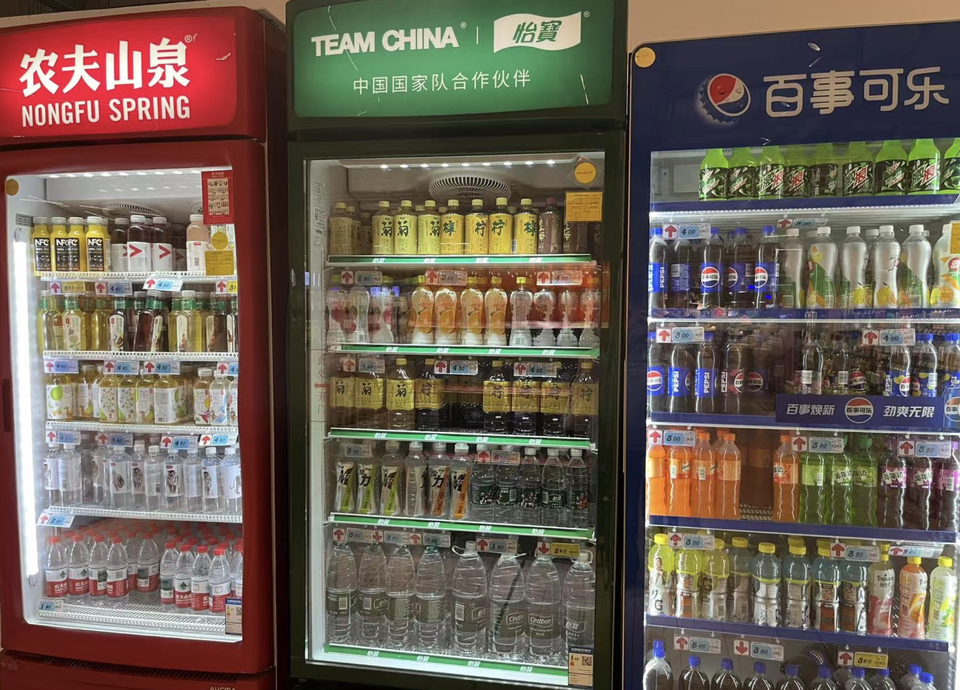
Group 1 - The demand for bottled beverages has surged due to the hot summer weather, with 67.3% of beverage consumption occurring offline, primarily in supermarkets and convenience stores [1] - Brands are engaged in a "cooler war" to secure visibility in retail spaces, deploying a strategy of extensive distribution across various locations [1][2] - The number of brand coolers has significantly increased, with Nongfu Spring's coolers rising from over 360,000 in 2019 to 650,000 in 2022, and Coca-Cola projected to exceed 1 million coolers in mainland China by 2024 [4] Group 2 - Brand coolers serve as both refrigeration units and advertising platforms, showcasing brand logos and products effectively [2] - Sales representatives play a crucial role in promoting brand coolers, with incentives for placing coolers in retail locations, although rewards have decreased from 200 yuan to 160 yuan per unit [4] - Brands utilize various incentives to encourage retailers to stock their products, including promotional gifts, seasonal subsidies, and bulk purchase discounts [4] Group 3 - Product placement in retail spaces is critical, with studies indicating that items at eye level can achieve a sales rate of 50%, while those at lower levels may only sell 30% as much [6] - Seasonal bestsellers and promotional items are strategically placed in prime locations to maximize visibility and sales [8] - Proper categorization and arrangement of products in coolers enhance consumer experience and facilitate decision-making [8]

KO vs. KDP: Which Beverage Player is More Refreshing for Investors?
ZACKS· 2025-05-21 15:30
Industry Overview - The global beverage industry is transforming, with a focus on health-conscious and convenience-driven products, moving beyond traditional carbonated soft drinks [1][2] - The competition is primarily between Coca-Cola Company (KO) and Keurig Dr Pepper Inc. (KDP), each with distinct strengths and strategies [1][2] Coca-Cola Company (KO) - Coca-Cola has over 130 years of brand equity and operates in more than 200 countries, commanding a significant market share across various beverage categories [2][5] - Approximately 30% of Coca-Cola's volume comes from low- or no-calorie beverages, aligning with consumer health preferences [5] - The company's "all-weather" business strategy includes a diverse product range, from classic sodas to health-focused options, and adapts pricing and packaging to consumer affordability [6] - Coca-Cola invests in digital innovation and marketing personalization, utilizing platforms like Studio X for localized marketing and enhancing consumer experiences through connected packaging [7] Keurig Dr Pepper Inc. (KDP) - KDP has established itself as a significant player in the beverage industry, with a diverse portfolio that includes carbonated soft drinks, premium coffee, and energy beverages [8][10] - The company's strategy balances short-term execution with long-term brand building, focusing on innovation and expanded distribution [10] - KDP is attuned to emerging demographics and trends, introducing brands that resonate with younger, health-conscious consumers and leveraging data-driven marketing for brand relevance [11] Financial Performance - The Zacks Consensus Estimate for Coca-Cola's 2025 sales and EPS indicates year-over-year growth of 2.4% and 2.9%, respectively [12] - In contrast, KDP's 2025 sales and EPS estimates suggest a higher growth of 5.6% and 6.1% [14] - Coca-Cola trades at a forward P/E ratio of 23.45X, above the industry average, while KDP trades at a lower multiple of 16.19X, indicating it as a more value-oriented option [15][17] Stock Performance - Over the past year, Coca-Cola stock has gained 13.7%, outperforming KDP and the broader industry's decline [17] - Despite KDP's lower valuation, Coca-Cola's stronger stock performance and growth trajectory provide it with an edge [17][19] Conclusion - Coca-Cola maintains a commanding edge in global scale, brand equity, and consumer loyalty, despite KDP's rising influence and innovation [18][19] - For investors seeking stability and long-term value creation, Coca-Cola is positioned as the stronger choice [19]


58% of Warren Buffett's $287 Billion Portfolio at Berkshire Hathaway Is Invested in Just 4 Unstoppable Stocks
The Motley Fool· 2025-05-21 07:06
Core Insights - Warren Buffett's investment strategy emphasizes portfolio concentration, which has significantly contributed to Berkshire Hathaway's long-term success [1][6] - Berkshire Hathaway has achieved an aggregate return of over 6,230,000% since Buffett became CEO, vastly outperforming the S&P 500's return of approximately 39,700% during the same period [2] Group 1: Recent Developments - Berkshire Hathaway's annual shareholder meeting on May 3 revealed first-quarter operating results and announced Buffett's plan to step down as CEO by the end of the year, with Greg Abel as his successor [4] - On May 15, Berkshire filed its Form 13F with the SEC, detailing stock purchases and sales made by Buffett and his advisors in the recent quarter [5] Group 2: Key Holdings - Approximately 58% of Berkshire's $287 billion portfolio is concentrated in four major stocks [6] - **Apple**: Represents $63.4 billion (22.1% of invested assets). Despite a reduction in shares from 915 million to 300 million, Apple's loyal customer base and strong capital-return program contribute to its value [7][10] - **American Express**: Valued at $45.4 billion (15.8% of invested assets). This long-held investment benefits from its position as a leading payment processor and its ability to attract high-income cardholders [12][13] - **Coca-Cola**: Worth $28.8 billion (10% of invested assets). Coca-Cola's diverse product range and geographic presence provide stability, with a yield on cost of 62.8% from dividends [15][18] - **Bank of America**: Valued at $28.2 billion (9.8% of invested assets). The bank's capital-return program and sensitivity to interest rates position it well for economic growth periods [19][22]



Here Are 3 American Companies on Warren Buffett's Balance Sheet. Are They a Buy?
The Motley Fool· 2025-05-21 01:23
Group 1: Market Overview - Recently raised import and export tariffs are increasing costs for U.S. companies, impacting international business and consumer prices, which is detrimental to both domestic and global economies [1] - Despite the challenges posed by tariffs, Warren Buffett remains optimistic about U.S. investment opportunities, emphasizing resilience through historical challenges [2] Group 2: Coca-Cola - Coca-Cola is a significant part of American culture, with its brand recognized globally, although North America accounts for just over one-third of its operating income [3][4] - The majority of Coca-Cola's products are bottled and distributed locally, minimizing the impact of tariffs, with the main cost being taxes on repatriated profits [5] - Coca-Cola offers a reliable dividend yield of 2.8% and has a history of increasing dividends for 63 consecutive years, making it a solid investment choice [6] Group 3: Apple - Apple, while a major player in consumer technology, generates only about 40% of its revenue from the U.S., with significant production in China, making it vulnerable to import tariffs [7][8][9] - Despite Berkshire Hathaway's substantial stake in Apple, the uncertainty surrounding tariffs may lead investors to consider waiting before investing in Apple stock [10][11] Group 4: Kroger - Kroger is a lesser-known holding in Berkshire Hathaway's portfolio, primarily operating in the U.S. and selling mostly American-sourced goods [12][13][14] - Although Kroger sources some products from Canada, Mexico, and China, its exposure to tariffs is minimal, with CFO Todd Foley stating that the impact of recent tariffs is not massive [15][16] - Kroger's ability to optimize its supply chain and source from various suppliers positions it well against tariff-related challenges, making it a strong choice for investors looking for stability [16][17]


Buy 3 Wide Moat Stocks With Double-Digit Near-Term Upside Potential
ZACKS· 2025-05-20 14:01
Core Insights - The wide moat strategy focuses on investing in companies with durable competitive advantages that ensure long-term profitability and market leadership [1][2] Group 1: Pfizer Inc. (PFE) - Pfizer is a leading drugmaker in oncology, bolstered by the acquisition of Seagen, which generated $3.4 billion in sales for 2024, reflecting a 38% increase on a pro forma basis [6] - The company has committed resources to develop treatments in oncology, internal medicine, immunology, inflammation, and vaccines, with new gene therapies for hemophilia gaining approval in 2024 [7] - Pfizer anticipates cost cuts and restructuring to save $7.7 billion by the end of 2027, alongside growth in non-COVID sales driving profit growth [8] - Expected revenue and earnings growth rates for Pfizer are 0.6% and 1% respectively for the current year, with a 3.4% improvement in the Zacks Consensus Estimate for earnings over the last 30 days [9] - Pfizer's forward P/E is 7.41X, significantly lower than the industry average of 12.96X and the S&P 500's 19.20X [10] - The average price target for Pfizer indicates a potential increase of 23.7% from the last closing price of $23, with a maximum upside of 43.5% [11] Group 2: The Coca-Cola Co. (KO) - Coca-Cola has shown positive business trends, consistently beating expectations, supported by higher pricing strategies amid inflation [12] - The company's all-weather strategy aims for revenue growth in 2025, focusing on marketing, innovation, and revenue management [12] - Expected revenue and earnings growth rates for Coca-Cola are 2.4% and 2.8% respectively for the current year, with a stable Zacks Consensus Estimate for earnings [13] - The average price target for Coca-Cola suggests an increase of 11.1% from the last closing price of $71.93, indicating a maximum upside of 19.6% [14] Group 3: The Walt Disney Co. (DIS) - Disney reported steady fiscal 2025 results with year-over-year growth in revenues and earnings, although international park locations faced declines [15] - The company expects double-digit percentage growth in segment operating income for fiscal 2025, with ESPN achieving significant viewership growth [16] - Disney has transformed its streaming business into a profitable growth engine, reporting its first-ever Direct-to-Consumer operating profit in FY2024 [17] - Expected revenue and earnings growth rates for Disney are 3.8% and 15.1% respectively for the current year, with a 4.6% improvement in the Zacks Consensus Estimate for earnings [18] - The average price target for Disney indicates a potential increase of 10.9% from the last closing price of $112.66, with a maximum upside of 31.4% [19]



5 Stocks That Could Create Lasting Generational Wealth
The Motley Fool· 2025-05-20 00:00
Group 1: Investment Philosophy - Investing is compared to making good BBQ, requiring time and patience for optimal results [1] - The right stocks can create generational wealth over decades [1] Group 2: Company Highlights - **Amazon**: Dominates U.S. e-commerce with approximately 40% market share; growth opportunities in grocery, healthcare, and automotive sales; also a leader in cloud computing [4][5] - **Coca-Cola**: Continues to grow with a diverse product range; 68% of people in emerging markets do not consume commercial beverages, indicating potential for expansion [6][7] - **Realty Income**: A real estate investment trust with a 5.7% dividend yield; has paid and raised dividends for 32 years, providing durable revenue streams [9][11] - **Philip Morris International**: Transitioning to next-generation nicotine products, which now account for 42% of net revenue; expected to continue growth and dividend payments [12][13] - **Take-Two Interactive Software**: A major player in the video game industry with franchises like Grand Theft Auto; the global gaming market projected to reach $257 billion by 2028 [14][16]





Why These 4 Women-Run Companies Deserve a Spot in Your Portfolio?
ZACKS· 2025-05-19 16:10
Core Insights - The corporate leadership landscape is increasingly shifting towards gender diversity, with women-run companies emerging as influential players across various sectors [2] - The McKinsey Women in the Workplace 2024 report indicates that women's representation in C-suite positions has increased from 17% in 2015 to 29% in 2024, highlighting the growing recognition of women's contributions to executive roles [2] Company Highlights - **Hershey Company (HSY)**: Under CEO Michele Buck's leadership since 2017, Hershey has achieved record profitability through strategic acquisitions and supply chain modernization, while also enhancing its direct-to-consumer channels and healthier snacks portfolio [3] - **General Motors (GM)**: CEO Mary Barra has transformed GM since 2014 by focusing on transparency and safety during crises, exiting unprofitable markets, and emphasizing electrification and innovation [3] Financial Market Trends - The financial market is increasingly valuing gender-diverse leadership, with ESG-focused funds prioritizing companies with women in executive roles [4] - Women entrepreneurs own 42% of all U.S. businesses, employing 9.4 million workers and generating $1.9 trillion in annual revenues [4] Funding Challenges - Women-led startups receive only about 2% of venture capital funding in the U.S. and Europe, partly due to biases in the investment community [5] - Only 25% of women entrepreneurs pursue loans compared to 33% of male business owners, indicating a disparity in seeking financing [5] Investment Opportunities - Companies like The Walt Disney Company (DIS), The Progressive Corporation (PGR), GSK plc (GSK), and The Coca-Cola Company (KO) exemplify how strong female leadership can drive strategic vision and long-term value across diverse sectors [6] - **Walt Disney Company**: Dana Walden's leadership has been pivotal in stabilizing Disney's entertainment business amid industry disruption, focusing on high-quality content and digital transformation [8][10] - **Progressive Corporation**: CEO Tricia Griffith has doubled annual revenues to about $75 billion since 2016, emphasizing direct-to-consumer sales and technological advancements [12][14] - **GSK**: CEO Dame Emma Walmsley has transformed GSK by focusing on key therapeutic areas and achieving significant financial milestones, with annual revenues reaching £31.4 billion in 2024 ($39.8 billion) [15][16] - **Coca-Cola Company**: Lisa Chang has influenced Coca-Cola's human capital strategy, emphasizing DEI initiatives and enhancing employee engagement through digital learning platforms [17][19]



Wall Street Analysts Think Coca-Cola (KO) Is a Good Investment: Is It?
ZACKS· 2025-05-19 14:31
Core Viewpoint - Brokerage recommendations, particularly for Coca-Cola, suggest a strong buy sentiment, but their reliability is questioned due to potential biases from brokerage firms [2][5][10]. Group 1: Brokerage Recommendations - Coca-Cola has an average brokerage recommendation (ABR) of 1.13, indicating a consensus between Strong Buy and Buy, with 22 out of 24 recommendations being Strong Buy [2]. - Strong Buy and Buy recommendations account for 91.7% and 4.2% of all recommendations, respectively [2]. - Despite the positive ABR, studies indicate that brokerage recommendations often fail to guide investors effectively towards stocks with high price appreciation potential [5][10]. Group 2: Analyst Bias and Tools - Analysts from brokerage firms tend to exhibit a strong positive bias in their ratings, issuing five "Strong Buy" recommendations for every "Strong Sell" [6][10]. - The Zacks Rank, a proprietary stock rating tool, is presented as a more reliable indicator of near-term price performance, based on earnings estimate revisions rather than brokerage recommendations [8][11]. - The Zacks Rank is timely and reflects current business trends, contrasting with the potentially outdated ABR [12]. Group 3: Earnings Estimates and Investment Potential - The Zacks Consensus Estimate for Coca-Cola's current year earnings has increased by 0.2% to $2.96, indicating growing analyst optimism [13]. - The recent change in consensus estimates, along with other factors, has resulted in a Zacks Rank 2 (Buy) for Coca-Cola, suggesting a favorable investment outlook [14].