Coca-Cola(KO)

Search documents
Long-Term Investing: 2 Monster Stocks to Own for Decades
The Motley Fool· 2025-05-30 07:35
Core Viewpoint - The article emphasizes the importance of long-term investing, highlighting that despite recent market declines, quality stocks present great buying opportunities for investors willing to hold for the long term [1][2]. Group 1: Amazon - Amazon has established leadership in e-commerce and cloud computing, achieving net sales of $638 billion in the latest full year [5]. - The company has consistently grown revenue, net income, and return on invested capital over the years [5]. - Amazon's strategic revamp of its cost structure allowed it to return to profitability and operate more efficiently, particularly by shifting to a regional fulfillment system [7]. - The company's competitive advantages include its extensive fulfillment network and Prime subscription program, which enhance customer satisfaction and loyalty [8]. - Amazon Web Services (AWS) is a significant profit driver, with an annual revenue run rate of $117 billion, and the company is heavily investing in AI technology [9]. - Amazon shares are currently trading at 33 times forward earnings estimates, down from over 42, making it an attractive investment opportunity [10]. Group 2: Coca-Cola - Coca-Cola has seen a 15% increase in stock price this year, contrasting with the struggles of major indexes [11]. - As the largest nonalcoholic beverage maker, Coca-Cola provides safety and stability for investors, especially during economic downturns [11]. - The company boasts a strong brand portfolio and extensive distribution network, contributing to its competitive moat [12]. - Coca-Cola continues to innovate with new flavors and experiences tailored to different markets, supporting its growth [13]. - The company has a long-standing commitment to shareholders, having increased its dividend for over 50 consecutive years, earning it the title of Dividend King [14]. - While Coca-Cola may not offer explosive growth compared to tech companies, it has consistently grown revenue and net income, and is currently priced at 24 times forward earnings estimates, making it a reliable long-term investment [15].



Why Is Coca-Cola (KO) Down 1.9% Since Last Earnings Report?
ZACKS· 2025-05-29 16:37
Core Insights - Coca-Cola shares have declined approximately 1.9% over the past month, underperforming the S&P 500 [1] - Recent estimates for Coca-Cola have trended downward, indicating a negative outlook [2] - The stock has received a poor VGM Score of F across Growth, Momentum, and Value categories, placing it in the lowest quintile for investment strategies [3] Earnings and Estimates - The overall direction of estimates for Coca-Cola has been downward, with significant revisions indicating a negative shift [4] - Coca-Cola holds a Zacks Rank 2 (Buy), suggesting an expectation of above-average returns in the coming months [4] Industry Comparison - Coca-Cola is part of the Zacks Beverages - Soft drinks industry, where competitor Fomento Economico has seen a 1.5% gain over the past month [5] - Fomento Economico reported revenues of $9.58 billion for the last quarter, reflecting a year-over-year decline of 11% [5] - Fomento Economico's expected earnings for the current quarter are $1.12 per share, representing a year-over-year decrease of 40.1% [6]
美洲饮料:截至5月17日的NielsenIQ数据-非酒精饮料销售增长因价格趋软而连续放缓
Goldman Sachs· 2025-05-28 05:10
Investment Rating - The report does not explicitly state an investment rating for the industry or specific companies Core Insights - Recent sales growth trends for non-alcoholic beverages have decelerated slightly, with overall dollar sales growth up +3.4% year-over-year for the two weeks ending May 17, 2025, compared to previous periods [1] - Pricing growth has softened to +2.7%, while volume growth remains stable at +0.7% year-over-year [1] - Energy drinks continue to show strong sales growth at +8.3% year-over-year, although this is a slight deceleration from previous periods [7] Summary by Category Carbonated Soft Drinks (CSDs) - Dollar sales growth in CSDs was up approximately +LSD% and stable sequentially, with pricing growth slightly stronger but offset by weaker volumes [2] - Coca-Cola Company and Pepsico Inc reported dollar sales growth of +2.7% and +0.3% respectively, with volume declines [9] Bottled Water - Dollar sales trends in bottled water were stable sequentially, with growth around +LSD% and stable pricing and volume growth [2] Energy Drinks - The energy drink category saw dollar sales growth of +8.3% year-over-year, with volume growth at +6.7% [7] - Monster Energy Co. (excluding Bang) reported dollar sales growth of +9.5% year-over-year, driven by stable volume growth [7] Salty Snacks - Dollar sales trends for salty snacks modestly accelerated to -0.9% year-over-year, with volume growth at -2.1% [8] - Pepsico Inc's salty snack sales growth was down -3.3% year-over-year [8] Specific Company Trends - PEP's dollar sales growth modestly accelerated sequentially, while MNST (excluding Bang) showed strong and stable growth at +HSD% [3] - KO's dollar sales growth remained stable at +MSD%, with stable volumes and pricing growth [3] - KDP's dollar sales growth was stable at +LSD%, with stronger pricing growth offset by softer volumes [3]


真正的好生意,毛利和净利是不会低的
Hu Xiu· 2025-05-27 00:32
Group 1: Internet Platform Companies - Tencent has a gross margin of 53% and a net margin of 33.7%, dominating the social media space [1] - Trip.com has a gross margin of 81.76% and a net margin of 32.02%, holding a market share of 65-70% in high-star hotels [1] - Pinduoduo reports a gross margin of 60.9% and a net margin of 28.6%, affected by losses from TEMU [1] - NetEase Games shows a gross margin of 57.14% and a net margin of 28.2% [1] Group 2: Fast-Moving Consumer Goods (FMCG) Brands - Leading FMCG brands like Nongfu Spring and Coca-Cola have net margins around 20%, with Coca-Cola at 22.6% due to its innovative business model [2] - Second-tier brands like PepsiCo and Nestlé have net margins around 10%, often due to insufficient brand loyalty or high pricing with low scale [3] - Third-tier brands such as Master Kong and Uni-President operate with net margins around 5%, relying on low prices for market share but struggling with brand loyalty and production scale [4] Group 3: Chain Beverage Companies - Top-tier chain beverage companies like Bawang Tea have a net margin of 20.3%, benefiting from brand premium [5] - Starbucks typically has a net margin of around 15%, but faces margin pressure due to increased competition [6] - Second-tier brands like Mixue Ice City and Gu Ming have net margins of 17.94% and 16.99%, respectively, leveraging scale advantages [6] Group 4: Hardware Companies - Apple has a gross margin of 46.2% and a net margin of 24%, while Xiaomi has a gross margin of 20.4% and a net margin of 6.44% [8] - NVIDIA shows a gross margin of 78.9% and a net margin of 57%, compared to AMD's gross margin of 50.2% and net margin of 15.3% [8] Group 5: Business Insights - High net margins (above 30%) often indicate monopolistic products, while margins below 15% suggest competitive pressures [9] - Companies with single-digit net margins typically rely on price wars, indicating weak product differentiation and low competitive advantage [14] - Trends in gross and net margins can reveal significant insights about a company's market position, as seen with Tesla and BYD [15]




This Dividend King Is Crushing the Market. Here's Why It Offers Years of Passive Income Growth.
The Motley Fool· 2025-05-25 19:29
Core Viewpoint - Many top growth stocks are underperforming due to concerns over tariffs, despite a temporary deal between the U.S. and China that postponed some tariffs [1][2] Company Overview - Coca-Cola is the largest beverage company globally, with $47 billion in trailing 12-month sales, and has shown significant improvement since CEO James Quincey took over in 2018 [4] - The company has restructured to become leaner and more efficient, owning about 200 global brands, with Coca-Cola and Sprite leading in U.S. brand awareness among soft drinks [4] Market Position and Resilience - Coca-Cola's products are affordable, making them attractive to consumers even during economic downturns, and the company has adapted its packaging to maintain affordability despite inflation and tariffs [6] - The majority of Coca-Cola's beverage production occurs in the markets where they are sold, minimizing exposure to higher import taxes [7] Financial Management - Price increases due to tariffs on certain products are expected to be minimal relative to Coca-Cola's overall cost structure, and the company has strategies in place to mitigate impacts [7] - Coca-Cola has established financial hedging positions to manage foreign currency exchange rate fluctuations, given its global operations [7] Dividend Reliability - Coca-Cola is recognized as a Dividend King, having increased its annual dividend for 63 consecutive years, demonstrating resilience through various economic conditions [9] - The current dividend yield is 2.8%, which is lower than usual due to a 14% increase in stock price this year, compared to a flat S&P 500 yielding about 1.3% [10] Long-term Value - Coca-Cola is expected to continue distributing profits to shareholders and raising dividends annually, providing long-term value to a diversified portfolio, even if it is not a top growth stock [11]
Coca-Cola Consolidated: Buybacks Support Its Stock Price
Seeking Alpha· 2025-05-25 07:57
Group 1 - The article highlights a surprising double-digit return opportunity found in Coca-Cola, a well-established blue-chip company [1] - Triba Research aims to identify high-quality businesses with sustainable, long-term double-digit returns, focusing on companies with competitive advantages, low debt, and skilled management [2] - The firm operates with a concentrated portfolio strategy, selecting 10 to 15 carefully chosen securities to generate alpha [2]
再谈资产负债表:巴菲特评估资产负债表的六个维度!
雪球· 2025-05-25 04:11
Core Viewpoint - A strong balance sheet significantly reduces company risk and ensures free cash flow is available for equity holders rather than debt repayment [2] Group 1: Importance of Balance Sheet - Companies with low debt and strong cash flow can be acquired at low valuation multiples, providing a favorable risk-reward scenario [2] - The focus should be on identifying growth businesses that can generate substantial returns with minimal investment [2] Group 2: Buffett's Investment Philosophy - When Warren Buffett invested in Apple, the company had a low price-to-earnings ratio and a crucial business model that promised high future earnings [3] Group 3: Key Indicators for Evaluating Balance Sheets - **Asset Quality Over Size**: Preference for companies with substantial cash reserves, such as Apple and Coca-Cola, indicating risk resilience [4] - **Receivables and Inventory**: Caution against companies with receivables growing faster than revenue or high inventory levels [4] - **Fixed Assets**: Favor light-asset models like Coca-Cola over heavy-asset companies due to slower returns [5] Group 4: Assessing Debt Risks - **Short-term Debt Ratio**: High short-term debt can lead to liquidity crises [6] - **Interest Coverage Ratio**: Net profit should be at least five times the interest expense [7] - **Off-Balance-Sheet Debt**: Attention to hidden liabilities such as leases and pensions [8] Group 5: Link Between Shareholder Equity and Profitability - **Return on Equity (ROE)**: A sustained ROE above 15% indicates competitive advantage [9] - **Retained Earnings Reinvestment**: Importance of reinvesting profits for compound growth [10] Group 6: Industry Characteristics and Moat Verification - **Industry Comparison**: Different industries exhibit varying debt levels; for example, utilities have high debt but stable cash flows [11] - **Moat**: Companies can build competitive advantages through brand strength, cost advantages, or patents [12] Group 7: Financial Statement Analysis - **Free Cash Flow**: Profits must convert into free cash flow to manage risks effectively [13] - **Profit Authenticity**: Warning against profit growth without corresponding cash flow, which may indicate financial manipulation [14] Group 8: Margin of Safety and Simplification Principles - **Low Leverage**: Preference for companies with debt ratios below industry averages [15] - **Financial Transparency**: Avoidance of complex financial instruments in favor of companies with clear structures [16]


Got $5,000? 2 Reliable Stocks to Buy and Hold Forever.
The Motley Fool· 2025-05-24 22:15
Group 1: Market Overview - Trump's trade policies have caused volatility in broader equities, leading to investor concerns about future market conditions [1] - Despite short-term uncertainties, the stock market is expected to provide competitive returns over the long term [1] Group 2: Coca-Cola - Coca-Cola has outperformed the market this year, benefiting from its position in the consumer staples industry, which is perceived as a safe haven during economic downturns [4] - The company's forward price-to-earnings (P/E) ratio is 24.2, which is reasonable compared to the industry average of 22.2 [4] - Coca-Cola's extensive global presence and local manufacturing reduce the impact of tariffs, making it resilient to trade policy changes [5] - The brand's strong recognition and adaptability to changing consumer demands provide a competitive advantage [6][7] - Coca-Cola has a remarkable dividend track record, having increased payouts for 63 consecutive years, indicating robust underlying operations [8] Group 3: Costco - Costco's stock appears expensive with a forward P/E of 56.7, which is significantly above the average for consumer staples [9] - The company's membership model fosters customer loyalty and encourages repeat visits, enhancing its competitive position [10] - Costco has substantial growth opportunities, particularly in international markets, with 69% of its warehouses located in the U.S. [11] - The company holds a 1.5% share of the U.S. e-commerce market, with e-commerce sales growing faster, providing a long-term growth tailwind [12] - Although tariffs may impact margins, Costco's strong brand and global expansion strategy are expected to sustain its appeal and performance in the long run [13]

雪碧偷偷换了配方?从化工厂走出来的果葡糖浆,真的是“健康杀手”吗?
3 6 Ke· 2025-05-23 00:08
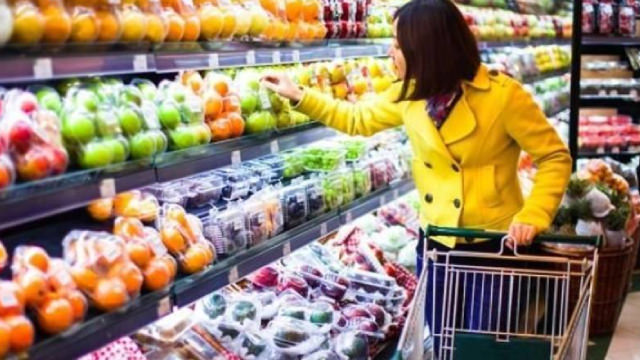
Core Viewpoint - The recent change in Sprite's formula, replacing sucrose with high fructose corn syrup (HFCS), has sparked significant discussion on social media, highlighting consumer awareness and potential health implications of sweetener choices [1][4][5]. Group 1: Formula Change - Sprite has quietly changed its formula, now using high fructose corn syrup instead of sucrose, which has led to widespread public discussion [1][4]. - The Coca-Cola Company had already made this change back in 2019 for several sugary beverages, including Sprite, Coke, and Fanta, with the transition being gradual and less noticeable [5]. Group 2: High Fructose Corn Syrup (HFCS) - HFCS, first synthesized in 1957, became commercially produced in the U.S. and gained significant market share by the 1980s, often replacing sucrose due to price fluctuations [7]. - In 2023, the price of sucrose was approximately 8000 yuan per ton, while China's production of HFCS exceeded 7 million tons, indicating its role as a substitute for sucrose [7]. Group 3: Health Implications - Initially, HFCS was considered healthier than sucrose due to its lower glycemic index (GI) and unique sweetness characteristics, but concerns have arisen regarding its long-term health effects [14][18]. - Studies have linked increased consumption of HFCS with rising obesity and diabetes rates in the U.S., leading to negative perceptions of HFCS as a health risk [18][20]. - The key issue is not the type of sugar consumed but the overall sugar intake, emphasizing the need for moderation rather than focusing solely on the type of sweetener [20].