
Coca-Cola(KO)

Search documents
Best Stock to Buy Right Now: Coca-Cola vs. Monster Beverage
Yahoo Finance· 2025-09-24 11:27
Group 1 - Coca-Cola and Monster Beverage have been partners since 2014, with Coca-Cola investing $2.2 billion in Monster and securing an exclusive distribution deal [2] - Monster Beverage has outperformed the market since the partnership, driven by significant growth in the energy drink sector [8] - Coca-Cola's diversification across various beverage segments positions it well to adapt to changing consumer preferences [5][6] Group 2 - Coca-Cola boasts a strong brand presence, with its name synonymous with soft drinks in many regions, and offers a wide range of products beyond just soda [4] - The company has a stable long-term investment profile, supported by a dividend yield of 3.1% and a modest valuation of 23.5 times earnings [6][7] - While Coca-Cola has faced slow revenue growth and modest profits recently, it has a history of recovering from setbacks, making it a potential buy for stability and dividends [7]


装瓶商与可乐公司的关系是什么?为什么分分合合?| 声动早咖啡
声动活泼· 2025-09-24 09:04
Core Viewpoint - Elliott Management has urged PepsiCo to follow Coca-Cola's lead in divesting its bottling operations, which are crucial to the beverage business [2][3] Group 1: Historical Context of Bottling Operations - The bottling business emerged as a solution to early distribution challenges faced by Coca-Cola, which initially sold only syrup to local soda fountains [4] - By 1919, Coca-Cola's bottling network had expanded to 1,200 plants, significantly increasing syrup revenue [4] - PepsiCo adopted a similar bottling strategy, inspired by Coca-Cola's model, to facilitate its own growth [4] Group 2: Advantages of the Bottling Model - The bottling model allows beverage companies to avoid heavy capital investments in manufacturing and logistics, as these responsibilities are managed by bottlers [5] - Local bottlers can leverage regional resources and market knowledge, accelerating product distribution [5][6] Group 3: International Expansion and Partnerships - Both Coca-Cola and PepsiCo replicated their bottling strategies internationally, forming partnerships with local bottlers to enhance market penetration [6][7] - Coca-Cola's return to China involved collaborations with local firms like COFCO and Swire, while Pepsi initially attempted to maintain full control over its bottling operations [7] Group 4: Tensions Between Companies and Bottlers - There exists a tension between beverage companies and bottlers regarding pricing strategies, as companies prefer a "low-margin, high-volume" approach while bottlers seek higher prices to improve their margins [8] - New product launches often create friction, as bottlers face additional costs for production line adjustments and marketing efforts [8] Group 5: Market Dynamics and Competitive Strategies - The rise of large retail chains like Walmart has shifted the dynamics, with PepsiCo gaining an advantage by negotiating directly with retailers, while Coca-Cola had to reform its bottling network to maintain competitiveness [9][10] - Coca-Cola has restructured its bottling network by acquiring stakes in bottlers and supporting larger regional bottlers, while PepsiCo continues to maintain direct control over its bottling operations [10]


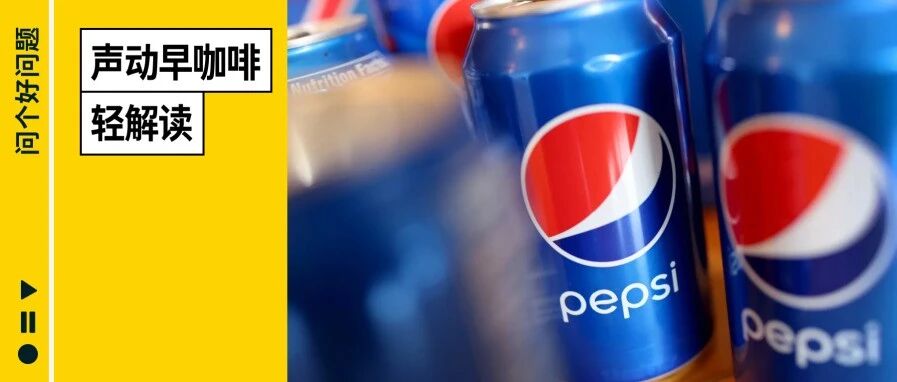
对冲基金Elliott Investment正推动百事(PEP.US)降本增效 施压效仿可口可乐(KO.US)模式拆分瓶装业务
Zhi Tong Cai Jing· 2025-09-24 01:16
Core Viewpoint - Elliott Investment Management is advocating for PepsiCo to cut costs and divest low-growth brands, gaining support from some investors, but its call for PepsiCo to emulate Coca-Cola's bottling business split has received less backing [1][2] Group 1: Cost-Cutting and Brand Divestment - Elliott Investment Management is pushing for PepsiCo to reduce costs and divest low-growth brands, a proposal that has garnered support from other investors [1] - The hedge fund has previously disclosed a $4 billion stake in PepsiCo and released a 75-page report detailing suggestions to enhance the company's profitability [2] Group 2: Bottling Business Strategy - Elliott argues that the integrated operating model of PepsiCo North America (PBNA) has been surpassed by Coca-Cola's franchised bottlers, leading to weaknesses in price-pack management, slower regional innovation, and poor in-store execution [1] - The hedge fund suggests that introducing third-party bottlers would create a checks-and-balances mechanism for brand portfolio management [1] - Coca-Cola has successfully completed a global bottling business split, resulting in the formation of independent bottling entities such as Coca-Cola Enterprises, Coca-Cola Europacific Partners, and Coca-Cola FEMSA [1]
This Baltimore parking lot attendant built a $500,000 stock portfolio. Here’s his strategy and how to apply it
Yahoo Finance· 2025-09-23 09:17
Core Insights - The article highlights the remarkable investment journey of Earl Crawley, who built a $500,000 investment portfolio despite earning a modest income as a parking lot attendant [1][2]. Investment Strategy - Crawley's investment philosophy centers on dividend-paying stocks, where he reinvested dividends instead of spending them, allowing for compounded growth over time [2][7]. - He emphasized the importance of starting small and maintaining discipline in budgeting, which enabled him to make consistent investments despite limited income [5][6]. Personal Background - Crawley faced challenges such as dyslexia, which he overcame by developing strong listening skills, allowing him to gather valuable insights from financial professionals [4][6]. - His approach included saving from various odd jobs, demonstrating a commitment to financial discipline and growth [5][6]. Compounding Effect - The article explains how reinvesting dividends can create a compounding effect, significantly amplifying portfolio growth over time [7].
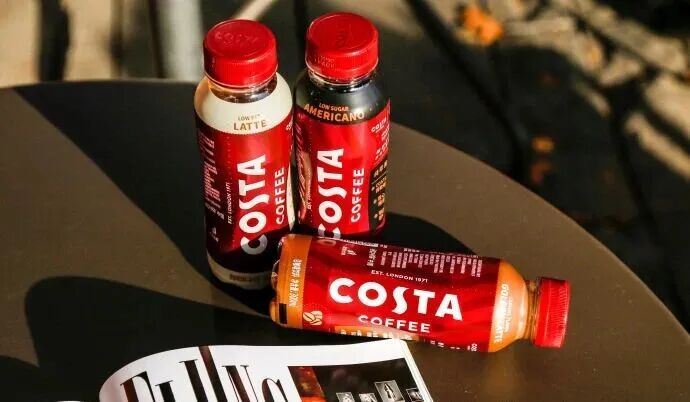
可口可乐公司要留着“自己干”,可能将继续控制COSTA咖啡即饮业务,毕竟5年内做到中国市场前三
3 6 Ke· 2025-09-23 01:00
Group 1 - Coca-Cola is reportedly looking to sell the Costa Coffee store business while retaining control over its ready-to-drink (RTD) products [1][3][4] - Apollo Global Management, a potential buyer, has decided not to participate in the bidding process, indicating a lack of strong interest from other bidders as well [3][4] - The initial valuation for Costa Coffee during the sale process was approximately £2 billion (around 194 billion RMB) [3][4] Group 2 - Costa Coffee, acquired by Coca-Cola in 2018 for £3.9 billion, has expanded its business to over 4,000 locations globally, with a significant presence in the UK and Ireland [4][6] - In China, Costa's retail business is primarily managed separately from its RTD coffee, which is expected to remain under Coca-Cola's control [6][9] - The ready-to-drink coffee market in China is dominated by foreign brands, with Nestlé leading, followed by Starbucks and Costa [7][8] Group 3 - Costa Coffee's pricing strategy positions its products slightly above local competitors but below Starbucks, making it competitive in the market [7][8] - The RTD coffee products launched in China are developed with local preferences in mind, utilizing a collaborative team from both Coca-Cola and Costa [9][11] - The potential sale of Costa's store business raises questions about how Coca-Cola will continue to innovate and draw inspiration for its RTD products without the direct influence of the store operations [11][13] Group 4 - Coca-Cola's CEO has emphasized the importance of creating overall value for the ecosystem and consumers in any acquisition or divestiture strategy [13][14] - The coffee segment is recognized as a significant growth area within the beverage industry, and Coca-Cola aims to find deeper engagement in this market [14]
Coca-Cola vs. Keurig Dr Pepper: Which Beverage Stock Has the Edge?
ZACKS· 2025-09-22 17:36
Core Insights - The beverage industry features a significant rivalry between The Coca-Cola Company (KO) and Keurig Dr Pepper Inc. (KDP), highlighting contrasting market positions and business models [1][3] Coca-Cola (KO) - Coca-Cola is the global leader in non-alcoholic beverages with a diversified portfolio valued at $30 billion, supported by a strong global distribution network and brand equity [2][4] - The company has achieved its 17th consecutive quarter of value share gains, demonstrating strong positioning in both developed and emerging markets [5] - Coca-Cola's strategy includes local execution, consumer affordability initiatives, premiumization, and digital innovation, exemplified by successful campaigns like "Share a Coke" [6][8] - The company reported organic revenue growth, margin expansion, and earnings growth in Q2 2025, indicating resilience amid macroeconomic challenges [8][10] - The Zacks Consensus Estimate for Coca-Cola's 2025 sales and EPS suggests year-over-year growth of 3.2% and 3.5%, respectively [13] - Coca-Cola trades at a forward P/E ratio of 21.29X, higher than the industry average and KDP's 12.74X, reflecting its premium valuation due to stronger returns [15][18] Keurig Dr Pepper (KDP) - KDP is reinforcing its position in the consumer goods space with a portfolio that includes soft drinks, coffee, and rapidly growing categories, achieving double-digit growth in U.S. Refreshment Beverages [9][10] - The company has seen significant growth in its energy segment, capturing a mid-single-digit share of the $26 billion energy category [9] - KDP's strategy focuses on innovation, distribution, and digital engagement, with recent product launches aimed at functional and wellness-oriented markets [11][12] - The Zacks Consensus Estimate for KDP's 2025 sales and EPS indicates year-over-year growth of 6% and 6.3%, respectively, although EPS estimates have recently declined [14] - KDP's stock has declined by 15.2% year-to-date, contrasting with Coca-Cola's 7.7% gain, highlighting performance challenges [10][18] Comparative Analysis - Coca-Cola's consistent performance and strong returns position it as the more compelling investment choice compared to KDP, which faces downward estimate revisions [22][23] - The contrasting strategies of scale versus specialization are evident, with Coca-Cola focusing on global dominance and KDP on niche markets [3][9]

Coca-Cola Builds on Away-From-Home Recovery: How Durable Is It?
ZACKS· 2025-09-22 17:26
Core Insights - The Coca-Cola Company's growth is significantly driven by the rebound in away-from-home consumption, with management noting renewed traction in foodservice and new accounts like Costco and Carnival [1][8] - The company is implementing affordability-driven initiatives alongside premium offerings to cater to diverse consumer segments, reflecting its "all-weather" strategy [2][8] - Coca-Cola's ability to sustain momentum amidst macroeconomic pressures and shifting consumer habits will depend on balancing affordability with premiumization and adapting marketing strategies [3] Company Performance - Coca-Cola's shares have increased by 7.7% year to date, outperforming the industry growth of 2.1% [7] - The company's Q2 results indicate strong performance in foodservice and new account acquisitions, highlighting effective brand campaigns aimed at enhancing visibility [8] - The forward price-to-earnings ratio for Coca-Cola is 21.29X, which is notably higher than the industry's 17.55X [9] Earnings Estimates - The Zacks Consensus Estimate for Coca-Cola's earnings implies year-over-year growth of 3.1% for 2025 and 8.3% for 2026, with estimates remaining unchanged over the past week [10] - Current earnings estimates for the upcoming quarters are consistent, with projected earnings of $0.79 for Q3 2025 and $2.98 for the full year 2025 [11]
每日钉一下(价值投资,有哪些不同的流派呢?)
银行螺丝钉· 2025-09-22 13:51
Group 1 - The article emphasizes that different regional stock markets do not move in unison, and understanding multiple markets can provide investors with more opportunities [2][3] - Global investment can significantly reduce volatility risk, suggesting that investors should consider diversifying their portfolios internationally [2] - A free course is offered to teach methods for investing in global stock markets through index funds, along with supplementary materials like course notes and mind maps [2][3] Group 2 - The article discusses various schools of thought within value investing, highlighting Graham's classic strategy evolving into value and dividend indices [4][5] - Value investing has yielded good returns in the A-share market over the long term, with multiple different schools emerging over the past century [5] Group 3 - Value investing 1.0, referred to as the "cigarette butt" strategy, involved picking up undervalued stocks during the post-war period when many companies had market values below their liquid assets [6][7] - Value investing 2.0 transitioned to a focus on low valuation investments, particularly in the 1960s during the "Nifty Fifty" bull market, where leading companies reached high price-to-earnings ratios [8][9] - Value investing 3.0, influenced by Charlie Munger, shifted towards buying excellent companies at reasonable prices, exemplified by Buffett's investment in See's Candies [11][12]



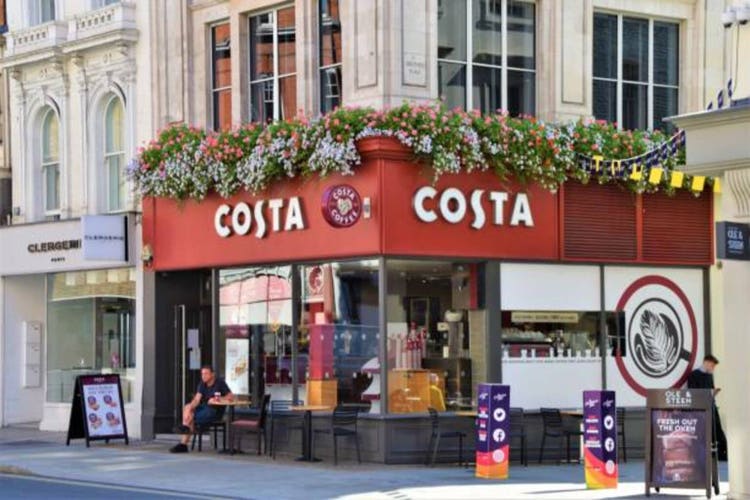
Apollo Global drops out of bidding for Coca-Cola’s Costa Coffee - report (APO:NYSE)
Seeking Alpha· 2025-09-22 09:26
Group 1 - Apollo Global Management, a potential bidder for Britain's largest coffee chain, has opted not to submit a bid before the recent deadline [1] - The decision was reported by Sky News, indicating a shift in interest regarding the acquisition [1] - Coca-Cola was mentioned in the context of the bidding process, although further details were not provided [1]

Don't Overlook These 2 Dividend Kings in Today's Volatile Market
Yahoo Finance· 2025-09-21 23:05
Group 1: Market Environment - President Trump's trade policies have introduced volatility to the stock market, with potential impacts on consumer spending and corporate financial results [1] - Despite strong equity performance this year, uncertainty remains in the market [1] Group 2: Investment Strategy - Investing in stocks that can navigate market challenges, particularly Dividend Kings, is advisable for long-term stability [2] - Dividend Kings are companies that have raised dividends for at least 50 consecutive years, indicating reliability [2] Group 3: Company Profiles - Coca-Cola is a leading consumer staples company with a diverse beverage portfolio, allowing for consistent revenue and earnings [5] - The company has maintained its strong market position through innovation, launching new products to meet evolving consumer preferences [6][7] - Coca-Cola and Abbott Laboratories have increased their dividends for a combined 116 consecutive years, showcasing their financial stability [8] Group 4: Company Performance - Coca-Cola's resilient business model is supported by its diversified product offerings and continuous innovation [7] - Abbott Laboratories is noted for its strong financial results and growth opportunities, making it an attractive investment [8]
