
Lilly(LLY)

Search documents
Lilly(LLY) - 2025 Q2 - Earnings Call Transcript
2025-08-07 13:32
Financial Data and Key Metrics Changes - Revenue grew 38% compared to Q2 2024, driven by key products including Evglis, Jaypirca, Kisunla, Mounjaro, Omvoh, Verzenio, and Zepbound [9][19] - Gross margin as a percentage of revenue was 85% in Q2, an increase of three percentage points year-over-year, primarily due to improved production costs and a favorable product mix [19] - Earnings per share increased 61% to $6.31, including a negative impact of $0.14 from acquired IPR&D charges [21] Business Line Data and Key Metrics Changes - Mounjaro posted $5.2 billion in global sales and became the U.S. market leader in total prescriptions within the type 2 diabetes incretin market [28][29] - Zepbound contributed significantly to sales, with over 1 million TRX in Q2, and accounted for approximately 20% of total U.S. prescriptions [32][86] - Eplis showed strong performance in atopic dermatitis, with total prescriptions nearly doubling since Q1 [23] Market Data and Key Metrics Changes - U.S. revenue increased 38%, driven by strong volume growth of Zepbound and Mounjaro, partially offset by an 8% decline in price [22] - Revenue in Europe grew 77% in constant currency, reflecting strong uptake of Mounjaro [22] - Japan revenue grew 7% in constant currency, driven by Mounjaro and Eplis, while China saw a 19% increase in revenue [22] Company Strategy and Development Direction - The company aims to submit orforglipron for regulatory approval globally to address the obesity challenge [8] - Continued investment in R&D is emphasized, with a focus on expanding the pipeline and increasing manufacturing capacity [11][14] - The company is committed to addressing drug pricing reform while ensuring patient access to medications [16][18] Management's Comments on Operating Environment and Future Outlook - Management expressed confidence in the strong performance and growth outlook for the company, raising revenue and earnings guidance for 2025 [12][35] - The management highlighted the importance of addressing patient safety concerns related to compounding and emphasized the need for regulatory action [72] - The company anticipates continued growth in the incretin market, with a focus on maintaining pricing strategies that reflect the value of their products [75] Other Important Information - The company announced the acquisition of SiteOne Therapeutics and Verve Therapeutics, expanding its portfolio in pain management and genetic medicines [14][54] - Manufacturing capacity has increased significantly, producing more than 1.6 times the amount of saleable incretin doses compared to 2024 [14][37] Q&A Session Summary Question: Context for orforglipron's weight loss profile compared to Wegovy - Management highlighted the efficacy of orforglipron, noting significant weight loss and improvements in key biomarkers, emphasizing its potential as a convenient oral option [61][66] Question: Pricing environment and compounding concerns - Management discussed the importance of addressing patient safety regarding compounding and indicated expectations for single-digit net pricing erosion while maintaining value [69][75] Question: Discontinuation rates and GI adverse events for orforglipron - Management confirmed that GI side effects were consistent with GLP-1 agonists, typically decreasing over time, with no significant differences noted [78][80] Question: Impact of Canadian generics on the market - Management indicated that the U.S. market remains strong, with continued growth in prescriptions despite potential competition from generics [83][86] Question: Evolution of U.S. employer coverage for anti-obesity medicines - Management confirmed that employer coverage has been steady, with ongoing efforts to improve access and simplify benefit designs [90][94] Question: Expectations for ATTAIN-two Phase III data - Management expressed confidence in the upcoming ATTAIN-two results, anticipating similar positive outcomes as seen in previous trials [97][100] Question: Differences in side effect profiles between studies - Management noted that side effect profiles can vary between populations, but overall confidence in the GLP-1 monotherapy profile remains high [103][106] Question: Gender split in the orforglipron study - Management reported a balanced gender split in the study population, with no notable differences impacting the results [111]

Eli Lilly (LLY) Q2 Earnings and Revenues Surpass Estimates
ZACKS· 2025-08-07 12:55
Group 1: Earnings Performance - Eli Lilly reported quarterly earnings of $6.31 per share, exceeding the Zacks Consensus Estimate of $5.61 per share, and up from $3.92 per share a year ago, representing an earnings surprise of +12.48% [1] - The company posted revenues of $15.56 billion for the quarter ended June 2025, surpassing the Zacks Consensus Estimate by 5.48%, compared to year-ago revenues of $11.3 billion [2] - Over the last four quarters, Eli Lilly has surpassed consensus EPS estimates two times and topped consensus revenue estimates three times [2] Group 2: Stock Performance and Outlook - Eli Lilly shares have declined approximately 3.3% since the beginning of the year, while the S&P 500 has gained 7.9% [3] - The company's earnings outlook, including current consensus earnings expectations for upcoming quarters, will be crucial for investors [4] - The current consensus EPS estimate for the coming quarter is $6.22 on revenues of $15.74 billion, and for the current fiscal year, it is $22.05 on revenues of $60.43 billion [7] Group 3: Industry Context - The Large Cap Pharmaceuticals industry, to which Eli Lilly belongs, is currently in the top 36% of over 250 Zacks industries, indicating a favorable industry outlook [8] - Empirical research shows a strong correlation between near-term stock movements and trends in earnings estimate revisions, which can impact stock performance [5]


诺和诺德(NVO.US)Wegovy与礼来(LLY.US)Mounjaro7月在印度销售额环比翻倍
智通财经网· 2025-08-07 12:49
Group 1 - Novo Nordisk's Wegovy and Eli Lilly's Mounjaro saw sales in India double in July compared to June, indicating strong demand for these obesity treatments [1] - Wegovy's sales reached 5,000 units with a revenue of 70 million INR (approximately 797,000 USD), while Mounjaro's sales hit 157,000 units with a revenue of 470 million INR [1] - Novo Nordisk's Q2 sales were 76.857 billion DKK, a 13% year-over-year increase, with a net profit of 26.503 billion DKK, up 32% [2] Group 2 - Eli Lilly reported Q2 revenue of 15.6 billion USD, a year-over-year increase of approximately 38%, but faced challenges with its oral weight loss drug underperforming expectations [2] - Novo Nordisk is advancing its research on Amycretin for weight management and has initiated the REDEFINE11 study to explore CagriSema's potential [2] - As of the latest trading, Novo Nordisk's stock rose by 8% in pre-market, while Eli Lilly's stock fell by 7.8% [3]

盘前重挫12%!礼来Q2营收大增38%并上调全年指引,但口服减肥药效果不及预期
美股IPO· 2025-08-07 12:34
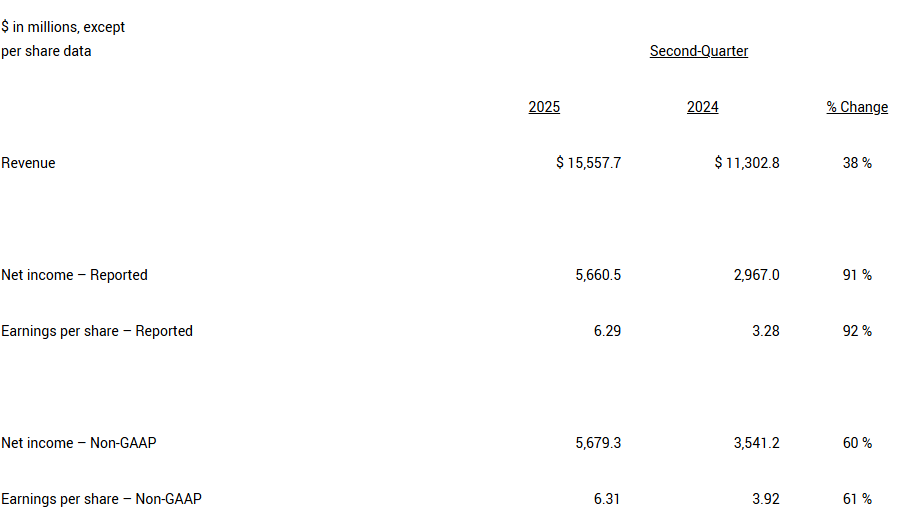
Core Viewpoint - Eli Lilly reported strong Q2 earnings with revenue of $15.56 billion, a 38% year-over-year increase, exceeding market expectations of $14.7 billion, and raised its full-year revenue guidance to $60-62 billion [1][2][10] Financial Performance - Q2 revenue reached $15.56 billion, driven by sales growth of Zepbound and Mounjaro [2] - Reported EPS was $6.29, a 92% increase year-over-year, while non-GAAP EPS was $6.31, up 61% from the previous year [3][2] - Gross margin improved to 84.3%, up 3.5 percentage points due to better production costs and product mix [2] Key Product Developments - Mounjaro generated global revenue of $5.2 billion, a 68% increase, with U.S. sales of $3.3 billion and international sales of $1.9 billion [8][9] - Zepbound saw U.S. revenue of $3.38 billion, a 172% increase, although facing pricing pressure [8][9] - Verzenio revenue was $1.49 billion, reflecting a 12% year-over-year growth [8] Market Dynamics - Despite strong revenue growth, pricing pressures were evident, contributing to a 6% decline in growth due to an 8% price drop in the U.S. market [9] - The competitive landscape for GLP-1 drugs is changing, with increased pressure from insurance companies and government programs [9] R&D and Future Outlook - R&D expenses rose to $3.34 billion, a 23% increase, indicating continued high investment in pipeline development [10] - The company raised its 2025 revenue guidance by $1.5 billion to a range of $60-62 billion, reflecting management's confidence in business prospects [10] Orforglipron Clinical Trial Results - The experimental weight loss pill orforglipron showed only an 11% weight reduction in Phase III trials, below Wall Street expectations, leading to a significant drop in stock price [6][11] - The drug is expected to provide a cheaper oral option in the weight loss market projected to grow to $95 billion by 2030 [11][12] - Common side effects include nausea and vomiting, similar to existing GLP-1 drugs, but orforglipron did not cause liver issues, a concern with other weight loss drugs [11][12]
Lilly(LLY) - 2025 Q2 - Earnings Call Presentation
2025-08-07 12:30
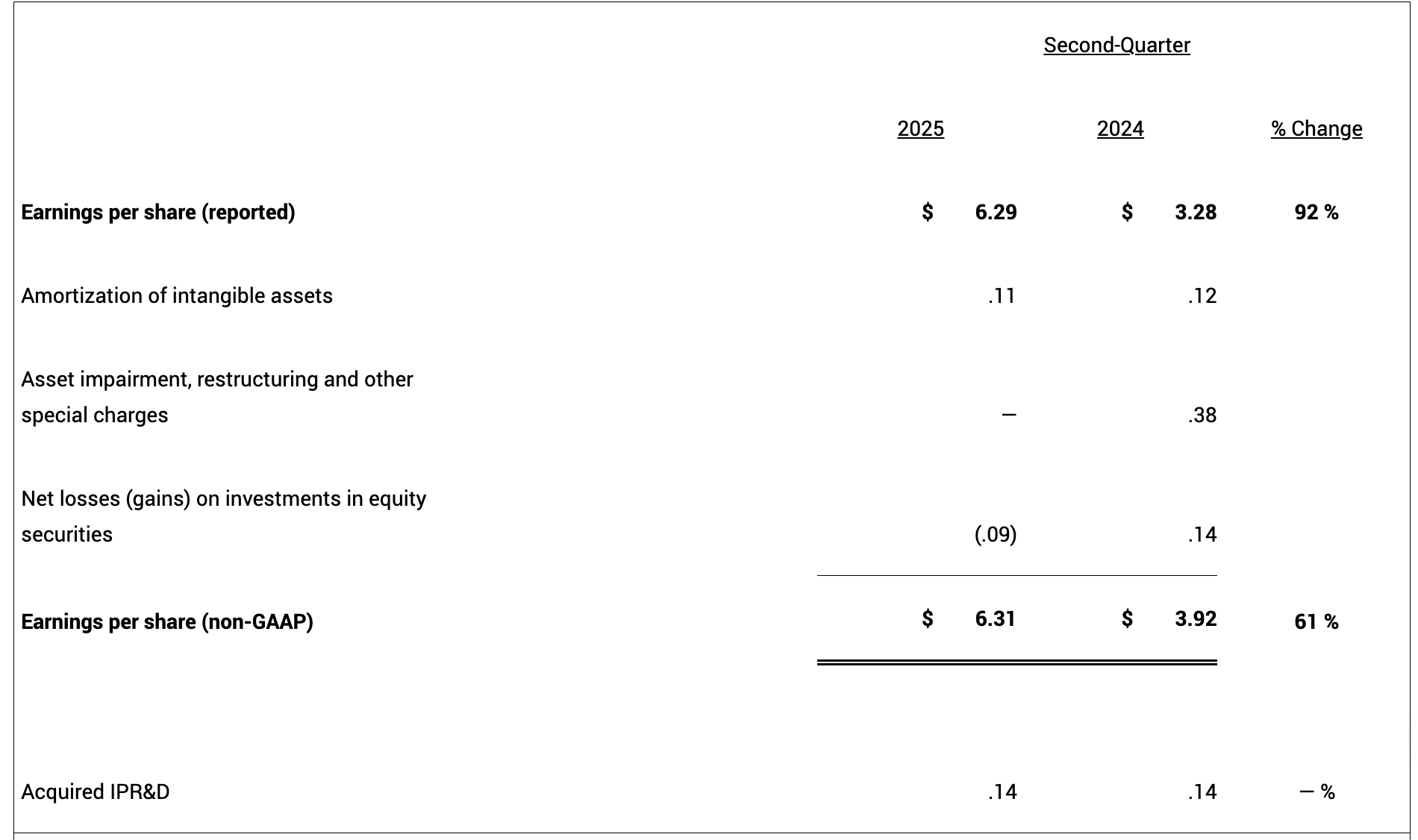
Financial Performance - Total revenue reached $15.6 billion, a 38% increase compared to Q2 2024[12] - Key product revenue grew by 80% to $10.4 billion[12] - Non-GAAP earnings per share (EPS) increased by 61% to $6.31[12] - The company raised the midpoint of its revenue guidance by $1.5 billion for the full year[10] Product Performance - Lilly's U.S. incretin analogs market share increased to 57.0% of total prescriptions, with the market growing 41% year-over-year[10] - Mounjaro U.S. sales were $3.3 billion and international sales were $1.9 billion[65] - Zepbound U.S. sales were $3.4 billion and international sales were $1.5 million[68] - Verzenio U.S. sales increased 8% and international sales increased 19%[71] - Jaypirca Q2 2025 sales reached $123 million, with TRx increasing 85% compared to Q2 2024[25] Clinical Development - Orforglipron delivered weight loss of more than 27 lbs (12.4%) in ATTAIN-1[16] - Mounjaro demonstrated cardiovascular protection in SURPASS-CVOT, showing an 8% lower rate of MACE-3 events compared to Trulicity[16, 43]
礼来(LLY.US)口服减肥药疗效不及预期 亮眼二季报难救股价大跌 诺和诺德(NVO.US)借势大涨
Zhi Tong Cai Jing· 2025-08-07 12:29
Core Insights - Eli Lilly's experimental oral weight loss drug orforglipron showed a weight reduction of approximately 11%, which fell short of Wall Street expectations that anticipated results comparable to Novo Nordisk's Wegovy [1] - Following the announcement, Eli Lilly's stock dropped 7% in pre-market trading, while Novo Nordisk's stock rose by 7% [1] - Eli Lilly reported better-than-expected Q2 earnings and raised its full-year revenue and profit guidance [2] Financial Performance - In Q2, Eli Lilly achieved revenue of $15.557 billion, a year-over-year increase of approximately 38% [2][3] - The obesity drug portfolio, primarily driven by diabetes drug Mounjaro and weight loss therapy Zepbound, generated over $8 billion in revenue due to strong demand [2] - Mounjaro generated approximately $5.199 billion in revenue, up 68% year-over-year, while Zepbound's revenue reached about $3.381 billion, a 172% increase [5] Earnings and Guidance - Eli Lilly's adjusted gross margin improved from 82% to 85% year-over-year, with non-GAAP earnings per share increasing by 61% to $6.31, exceeding market expectations by $0.72 [4] - The company raised its adjusted earnings per share guidance for the year to between $21.75 and $23, up from a previous range of $20.78 to $22.28 [6] - Eli Lilly also increased its 2025 revenue forecast by $1.5 billion to a range of $60 billion to $62 billion, aligning closely with market expectations [6] Market Competition - Eli Lilly and Novo Nordisk are competing in the rapidly growing GLP-1 agonist market, which is expected to exceed $150 billion in revenue over the next decade [6] - The oral weight loss drug market is projected to grow to $95 billion by 2030, with Eli Lilly and others facing challenges in developing effective oral medications [7] - Eli Lilly plans to submit the results of its orforglipron study to regulatory authorities by the end of the year, with results expected to be presented at a medical conference in September [7][8] Future Outlook - Eli Lilly anticipates significant growth in demand for its weight loss drug Zepbound and aims to capture more market share from Novo Nordisk's Wegovy [6] - The company is making substantial investments to meet expected demand, including reserving at least $600 million worth of orforglipron and increasing production of necessary active ingredients [8]
盘前重挫12%!礼来Q2营收大增38%并上调全年指引,但口服减肥药效果不及预期
Hua Er Jie Jian Wen· 2025-08-07 12:20
Core Viewpoint - Eli Lilly reported strong Q2 earnings but faced a significant stock price drop due to disappointing results from its experimental weight loss drug, orforglipron, which fell short of market expectations [1][8]. Financial Performance - Q2 revenue reached $15.56 billion, a 38% year-over-year increase, surpassing market expectations of $14.7 billion, driven by sales growth of Zepbound and Mounjaro [1][6]. - Reported EPS was $6.29, up 92% year-over-year; non-GAAP EPS was $6.31, a 61% increase from the previous year [1]. - Gross margin improved to 84.3%, up 3.5 percentage points, benefiting from lower production costs and optimized product mix [1]. - The company raised its full-year revenue guidance to $60-62 billion from a previous estimate of $58-61 billion [1][7]. Product Performance - Mounjaro generated global revenue of $5.2 billion, a 68% increase; U.S. sales were $3.3 billion, while international sales reached $1.9 billion [2][6]. - Zepbound's U.S. revenue was $3.38 billion, a staggering 172% increase, although it faced pricing pressure [2][6]. - Verzenio revenue was $1.49 billion, reflecting a stable 12% growth [2][4]. Market Dynamics - Despite strong revenue growth, pricing pressures reduced growth by 6 percentage points, with an 8% price decline in the U.S. market [6]. - The competitive landscape for GLP-1 drugs is evolving, with increased pricing negotiations from insurers and government programs [6]. R&D and Future Outlook - R&D expenses rose to $3.34 billion, a 23% increase, indicating continued high investment in pipeline development [6]. - The company plans to submit orforglipron's trial results for regulatory approval by the end of the year, with expectations for a market launch next year [8][9].
Eli Lilly CEO David Ricks on Q2 earnings, obesity pill late-stage trial results
CNBC Television· 2025-08-07 12:12
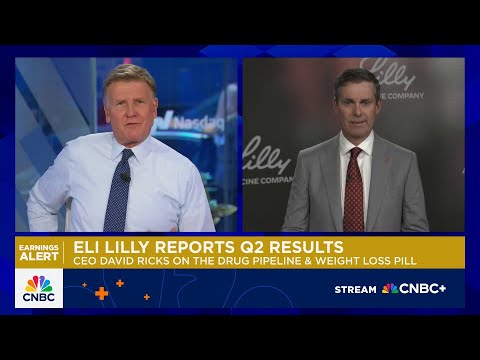
Drug Development & Clinical Trials - Eli Lilly's oral weight loss drug trial results met internal expectations, despite market disappointment, with an average weight loss of 27 pounds [2][3] - The company plans to submit the oral weight loss drug to regulators by the end of the year, anticipating potential approvals around the same time next year [4] - Safety risks associated with orforglipron have been largely addressed, paving the way for its potential as a mass-market obesity treatment [8][9] - Dropout rates in the study were comparable to placebo, alleviating concerns about the drug's tolerability [12][16] - Seven phase three studies are underway for the medicine [14] Market Position & Financial Performance - The pharmaceutical sector's price-to-earnings multiples have compressed in the last year, affecting stock prices across the industry [6] - Eli Lilly's sales increased by 38% year-over-year in the second quarter [7] - Tirzepatide (Mounjaro and Zepbound) is projected to become the best-selling drug in the industry within its third year on the market [7] - The company emphasizes its focus on increasing value for patients and investors [7] Obesity Market & Treatment Landscape - The current obesity treatment market only addresses approximately 2-3% of the global population [9] - There are an estimated 1 billion people worldwide who are overweight or obese, highlighting the significant market potential for effective treatments [9]
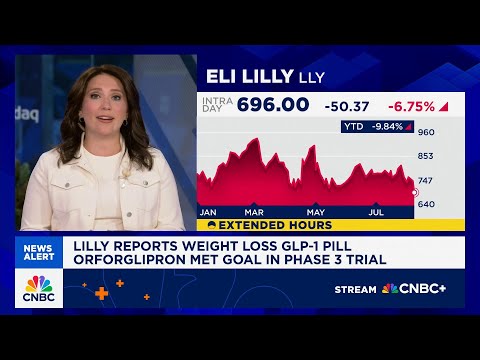
Eli Lilly’s obesity pill led to around 12% weight loss in late-stage trial, paving way for approval
CNBC Television· 2025-08-07 12:09
news uh that we've I guess been waiting for from Eli Liy. Got a look at the stock. Uh although we'll show you that Angelica Peeles that's here and joins us now, but uh as you're talking, we should take a quick look at the uh early morning action in the shares.But take it away. >> Yeah, that early morning action not good. The stock down about 6% right now and that's after we got this highly anticipated data on its obesity pill and clearly there's some disappointment.So let's go through the numbers. people lo ...
X @The Wall Street Journal
The Wall Street Journal· 2025-08-07 12:02
An experimental weight-loss pill from Eli Lilly helped people lose up to about 12% of their body weight, a new study found, potentially clearing the way for the drug to be on the market next year https://t.co/eihfsfp4I8 ...