
Lilly(LLY)

Search documents
速递|礼来“最强减重药”震撼出炉:最高减重28.7%,远超手术?
GLP1减重宝典· 2025-12-12 08:27
Core Viewpoint - Eli Lilly's next-generation weight loss drug retatrutide has shown the strongest weight loss results to date in its latest Phase III trial, significantly alleviating knee osteoarthritis pain and opening a promising start for upcoming research sequences [4][6]. Group 1: Weight Loss Efficacy - In the highest dose group of the trial, participants achieved an average weight loss of 23.7% over 68 weeks, with those adhering to treatment losing an average of 28.7% [4]. - The trial results indicate that retatrutide's weight loss effects are comparable to those of weight loss surgery, particularly targeting patients with a BMI of 35 or above, with 84% of participants classified as severely obese [6]. Group 2: Pain Relief and Safety - The study found that retatrutide reduced knee osteoarthritis pain by an average of 62.6%, with over 12.5% of patients reporting complete pain relief by the end of treatment [7]. - Approximately 18% of patients in the highest dose group discontinued treatment due to adverse reactions, compared to 4% in the placebo group, with the discontinuation rate closely linked to initial BMI [7]. Group 3: Competitive Landscape - Retatrutide, known as a "Triple G" drug, simultaneously mimics GLP-1, GIP, and glucagon, providing stronger appetite suppression and satisfaction compared to competitors like Novo Nordisk's semaglutide, which only targets GLP-1 [8]. - In response to retatrutide's promising data, Novo Nordisk has invested up to $2 billion to acquire global rights to an early-stage triple hormone candidate from a Chinese pharmaceutical company, aiming to catch up with retatrutide's development timeline [8]. Group 4: Future Outlook - Eli Lilly anticipates releasing results from seven additional Phase III trials by the end of 2026, which may yield even higher efficacy data specifically designed for weight loss [7]. - The global market for obesity and diabetes medications is expected to exceed $100 billion by the 2030s, indicating significant growth potential in this sector [6].


礼来新一代减肥针:体重可以减掉1/4
财联社· 2025-12-12 00:49
Core Insights - The latest trial data indicates that Eli Lilly's new weight loss drug, retatrutide, can help participants lose an average of nearly 25% of their body weight, potentially making it the most effective weight loss medication to date [1] - The highest dose group (12 mg) achieved a weight reduction of 23.7% over 68 weeks, with a significant decrease in knee pain scores by 62.6% [1] - Eli Lilly's results exceeded Wall Street's expectations, which predicted a weight loss range of 20% to 23% and a knee pain score reduction of 50% [1] Mechanism of Action - Retatrutide works by combining three different gut hormones: GIP, GLP-1, and glucagon, giving it an advantage over Eli Lilly's Zepbound and Novo Nordisk's Wegovy [2] Patient Outcomes - Some patients reported complete relief from knee pain by the end of the trial [3] - Eli Lilly's President of Cardiometabolic Health, Kenneth Custer, stated that retatrutide is expected to be an important option for patients with significant weight loss needs and related complications, such as knee osteoarthritis [3] - The trial is part of a series of studies aimed at testing retatrutide's effects on obesity and related diseases, with results expected to be published starting next year [3] Target Patient Profile - The drug is particularly suitable for patients with very high BMI or obesity-related complications who require significant weight loss [3] Side Effects - Approximately 18% of patients in the highest dose group withdrew from the trial due to noticeable side effects, which included nausea, diarrhea, and constipation [3] - Over 20% of high-dose patients experienced dysesthesia, an uncomfortable or abnormal nerve sensation, although most side effects were mild and rarely led to discontinuation of the drug [3] Market Position - The latest results are expected to further solidify Eli Lilly's leading position in the weight loss drug market, with Zepbound currently being the most popular weight loss medication [4] - The company is racing to develop more effective, easier-to-use, or less side-effect-prone new drugs [4]
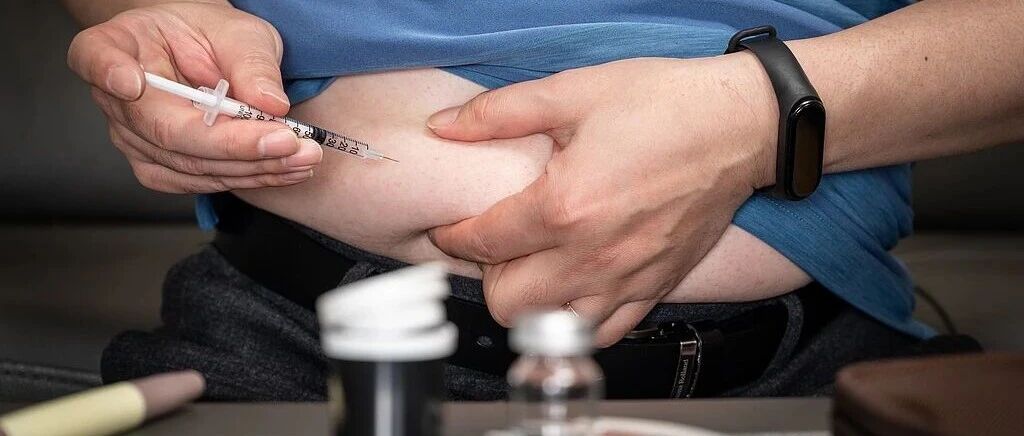
一年度疗程后平均减重达28.7%!礼来的新一代减肥药表现惊人,疗效远超同类药物
Hua Er Jie Jian Wen· 2025-12-12 00:24
Core Insights - Eli Lilly announced significant Phase 3 clinical trial results for its new obesity drug, Retatrutide, showing an average weight loss of 28.7% over 68 weeks, surpassing existing drugs like Zepbound and Novo Nordisk's Wegovy [1][2][4] - The positive trial results led to a 1.2% increase in Eli Lilly's stock price in pre-market trading, with a subsequent 1.6% rise overnight, indicating strong market confidence in Retatrutide's potential [1][2] Group 1: Clinical Trial Results - The Phase 3 trial involved patients with severe obesity (BMI ≥ 35) and knee osteoarthritis, who received either Retatrutide or a placebo [4] - The highest dosage group achieved a record weight loss of 28.7%, significantly higher than the approximately 22.5% weight loss seen with Zepbound and below 20% with Wegovy [1][4] Group 2: Mechanism and Future Potential - Retatrutide works by mimicking three gut hormones to regulate appetite and potentially increase energy expenditure, offering a more complex mechanism than existing drugs [3] - The drug also effectively alleviated knee pain in patients, suggesting broader application and market positioning opportunities [3] Group 3: Side Effects and Market Considerations - Despite its efficacy, Retatrutide is associated with side effects such as nausea and diarrhea, with a higher incidence than Wegovy and Zepbound [5] - Some participants discontinued treatment due to excessive weight loss, indicating that the target demographic may primarily consist of patients with very high BMI [5]
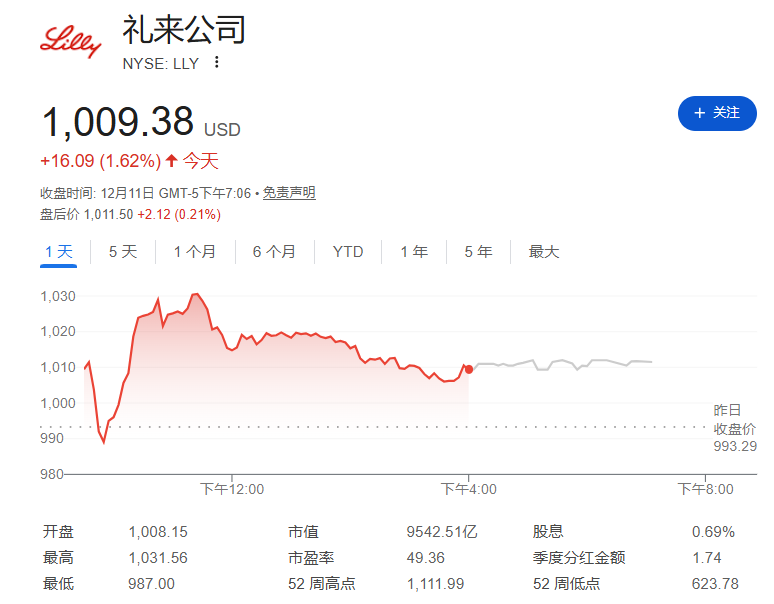
Thursday's Final Takeaways: LLY Positive Drug Trial, Home Prices Turn Negative
Youtube· 2025-12-11 22:26
分组1: Eli Lilly and Obesity Drug - Eli Lilly's new obesity drug, Retatrich, demonstrated significant efficacy, with patients losing nearly 30% of their body weight, surpassing current market treatments [1] - The drug also showed meaningful relief from knee pain and osteoarthritis, indicating its broad potential impact on patient health [2] - Following the announcement, Eli Lilly's shares increased by approximately 1.5% [2] 分组2: Housing Market Trends - Home prices have turned negative year-over-year for the first time in over two years, indicating a cooling housing market due to affordability challenges [2][3] - Rising inventory and high mortgage rates are giving buyers more leverage, leading to price drops in previously overheated markets, particularly in the Sun Belt [3] - Economists suggest that the future of the housing market will depend on whether lower borrowing costs in 2026 can revive momentum or if this marks a longer reset in home values [4] 分组3: Labor Market and Economic Indicators - Initial jobless claims rose by 44,000 to 236,000, the largest increase in four years, indicating potential cooling in the labor market [5][6] - The US trade deficit narrowed to $52.8 billion in September, down from $59.3 billion in August, marking the lowest monthly level in five years [7] - The trade deficit is 17% larger than the first nine months of the previous year, influenced by tariffs and front-loading of goods [8] 分组4: Corporate Earnings and Market Reactions - Broadcom's earnings report is anticipated to have a significant impact on the broader market, given its large market capitalization [9] - Costco's shares have slightly declined post-earnings, while Lululemon's shares increased by 9% following a strong earnings report, with international sales up 18% [10][11] - Lululemon's management has acknowledged previous concerns about being stale and predictable, indicating a potential focus on revitalization [12]

Can Eli Lilly Sustain Its Obesity Momentum as Newer Players Emerge?
ZACKS· 2025-12-11 16:26
Core Insights - Eli Lilly and Company (LLY) is a leading player in the cardiometabolic space, primarily due to its GLP-1 therapies, Mounjaro and Zepbound, both containing tirzepatide [1][2] Group 1: Market Performance - Mounjaro and Zepbound generated combined sales of $24.8 billion in the first nine months of 2025, accounting for 54% of Eli Lilly's total revenues [2] - Eli Lilly's stock has gained 27% over the past year, outperforming the industry growth of 7.2% [13] Group 2: Competitive Landscape - Eli Lilly faces strong competition from Novo Nordisk's semaglutide medicines, Ozempic and Wegovy, but has seen strong uptake of its own drugs [2][9] - Smaller biotech companies, such as Structure Therapeutics and Viking Therapeutics, are advancing rapidly in the obesity treatment space, increasing competitive pressure on Eli Lilly [3][11] Group 3: Pipeline Development - Eli Lilly is advancing next-generation obesity candidates, including orforglipron and retatrutide, to maintain its market position [6][8] - Orforglipron is positioned as a convenient once-daily oral alternative to injectable therapies, with regulatory filings expected soon [7] - Retatrutide is designed for deeper and faster weight loss, with three phase III data readouts anticipated in the second half of 2026 [8] Group 4: Financial Valuation - Eli Lilly's stock trades at a price/earnings ratio of 30.26, higher than the industry average of 16.31, but below its five-year mean of 34.54 [16] - Earnings estimates for 2025 have improved from $23.06 to $23.91 per share, and for 2026 from $30.79 to $33.36 [19]
Eli Lilly's Latest Obesity Drug Delivers Strong Results. It Might Work Too Well.
Barrons· 2025-12-11 16:23
Core Viewpoint - The company reported that some patients discontinued participation in the trial due to concerns about excessive weight loss [1] Group 1 - The trial faced challenges as patient dropout rates increased [1]

Prison Fellowship Awarded $5 Million Grant From Lilly Endowment Inc. To Broaden Its Reach in Sharing Stories of Radical Restoration
Globenewswire· 2025-12-11 16:15
Core Points - Prison Fellowship has received a $5 million grant from Lilly Endowment Inc. to enhance its mission of sharing transformative stories of faith from incarcerated individuals [1] - The grant is part of the National Storytelling Initiative on Christian Faith and Life, aimed at increasing awareness of the Church's work within prisons [2][4] - The initiative will enable the sharing of stories through various media, including video, podcasts, and social media, to illustrate the impact of faith in challenging environments [2][4] Organization Overview - Prison Fellowship is the largest Christian nonprofit in the U.S. focused on serving currently and formerly incarcerated individuals and advocating for justice and human dignity [6] - The organization aims to break cycles of crime and promote revival through faith-based initiatives [6] Grant and Initiative Details - The National Storytelling Initiative has awarded grants to 60 organizations since 2024, including various media and nonprofit entities [3] - Lilly Endowment Inc. supports community development, education, and religion, with a focus on enhancing the vitality of Christian congregations [5]

Eli Lilly Shot Reduces Body Weight by 23% in Study
Bloomberg Television· 2025-12-11 15:59
Elsewhere in the next generation. Obesity shot by Eli Lilly helped patients lose almost a quarter of their body weight. In a recent study, the drug was so effective that some patients dropped out of the study because they lost so much weight.Bloomberg health reporter Madison Muller joins us to explain. Madison just how big of a step up is this in progress for these weight loss medications. Yeah.This is a huge step up. That's exactly right. I mean, this is the next wave of therapeutics, the next generation o ...
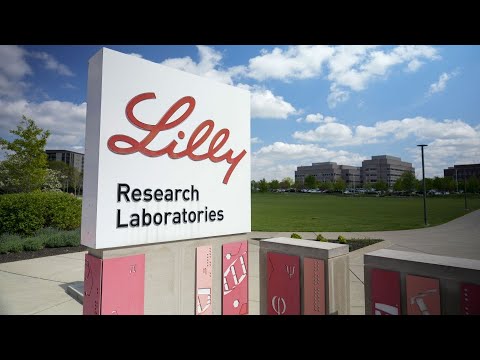
New Lilly Shot Reduces Body Weight by 23% in Study
Youtube· 2025-12-11 15:59
Core Insights - Eli Lilly's obesity drug has demonstrated significant efficacy, helping patients lose nearly 25% of their body weight, with some participants dropping out of the study due to excessive weight loss [1] - This development represents a major advancement in the next generation of weight loss therapeutics, surpassing the effectiveness of existing medications [2] - The success of Lilly's drug sets a new benchmark for future weight loss treatments, as it exceeds the previous standard of 20% weight loss established by current drugs [3][4] Company Insights - Eli Lilly is at the forefront of developing next generation weight loss drugs, with their latest phase three data showing results that exceed investor expectations [4] - The competitive landscape includes Novo Nordisk, which has faced challenges in developing similar next generation compounds [3]

Eli Lilly: Retatrutide Justifies Hype With Best Weight Loss Data Yet - I'm Sold (NYSE:LLY)
Seeking Alpha· 2025-12-11 15:57
Core Insights - Eli Lilly and Company (LLY) has experienced significant growth over the past five years, with recent developments indicating further improvement in its market position [1]. Group 1: Company Overview - Eli Lilly is recognized as a leading player in the pharmaceutical industry, demonstrating strong performance and resilience in its operations [1]. Group 2: Market Trends - The biotech, pharma, and healthcare sectors are currently witnessing key trends and catalysts that are influencing stock valuations, making it essential for investors to stay informed [1].
