
amycretin

Search documents
速递|12周减重9.79%!艾伯维长效减重药最新数据震撼发布
GLP1减重宝典· 2026-03-11 09:13
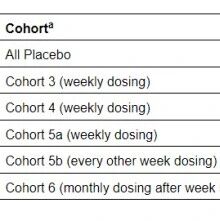
Core Insights - The article discusses the promising clinical data for AbbVie’s Amylin analog ABBV-295, which shows significant weight loss potential compared to placebo groups [5][8] - ABBV-295 demonstrates early efficacy that surpasses competitors like Roche's petrelintide and Novo Nordisk's Cagrilintide, although it requires improvements in safety, particularly regarding gastrointestinal side effects [5][7] Summary by Sections Clinical Data - After 12 weeks of weekly dosing, participants experienced a weight loss of -7.75% to -9.79%, while the placebo group showed a minimal change of -0.26% [5][6] - In the 13th week, with adjusted dosing schedules, weight loss remained significant at -7.86% to -9.73% [5][6] Molecular Design and Treatment Potential - ABBV-295's molecular design combines fragments of human adrenomedullin and amylin, optimized for stability and extended half-life, indicating potential as a long-acting weight loss medication [7] - Future combination therapies may enhance efficacy, as Cagrilintide has shown advantages in combination treatments, and Roche is exploring the use of petrelintide with GLP-1/GIP dual receptor agonists [7] Market Dynamics - AbbVie invested $350 million upfront and $1.875 billion in milestone payments for ABBV-295, highlighting its commitment to the long-acting weight loss drug market [8] - The competitive landscape includes major players like Pfizer and Novo Nordisk, with Pfizer acquiring Metsera and Novo Nordisk launching an oral amylin/GLP-1 dual-target drug that achieved a 13.1% weight reduction in 12 weeks [8] - The future of the weight loss drug market will likely focus on safety, efficacy, and the potential for combination therapies to capture market share [8]


Better Weight Loss Stock: Novo Nordisk Vs. Amgen
The Motley Fool· 2026-03-08 18:30
Industry Overview - The weight-loss market is one of the most active therapeutic areas in the pharmaceutical industry and is projected to continue growing significantly in the foreseeable future [1] Novo Nordisk - Novo Nordisk is a leader in the weight loss market with its GLP-1 drug, Wegovy, which is among the best-selling medicines in this niche [3] - The company has launched an oral version of Wegovy and has several promising pipeline candidates, including CagriSema, which has outperformed Wegovy in clinical studies and is under consideration for approval [3] - Novo Nordisk's market cap is $130 billion, with a current price of $38.58 and a gross margin of 80.90% [4][5] - The company is expanding its portfolio with candidates like amycretin, currently in phase 3 studies, and UBT251, which has shown strong efficacy in mid-stage trials in China [5] Amgen - Amgen currently does not have an approved weight loss medicine but is progressing with its leading candidate, MariTide, which is in phase 3 studies [6] - MariTide is being investigated for weight management, obstructive sleep apnea treatment, and cardiovascular outcomes, and could potentially earn approval within the next three years [8] - Amgen's market cap is $199 billion, with a current price of $369.47 and a gross margin of 70.47% [7][8] - MariTide's once-a-month administration could provide a competitive advantage over Wegovy, which is taken weekly, and it is estimated to generate $3.7 billion in sales by 2030 [8] Comparative Analysis - Novo Nordisk has a stronger portfolio and pipeline of weight loss products but is heavily reliant on its GLP-1 products for growth, facing market share losses to competitors like Eli Lilly [9] - Amgen has a more diversified portfolio, which may allow it to recover quickly even if it does not succeed in the weight-loss market [10] - While Novo Nordisk has more upside potential if its pipeline drugs succeed, its prospects are closely tied to the performance of its anti-obesity drugs, making it riskier [11] - Amgen is viewed as a safer investment option for exposure to the weight-loss market with limited downside risk [11]



《柳叶刀》权威发布:诺和诺德减重新品创纪录!36周见效,体重锐减近四分之一
GLP1减重宝典· 2026-02-25 12:40
Core Viewpoint - Novo Nordisk's innovative drug amycretin shows promising results in weight loss for overweight and obese individuals, with significant efficacy and safety demonstrated in clinical trials [6][7][9]. Group 1: Clinical Trial Results - The clinical trial results for amycretin were presented at the 85th American Diabetes Association (ADA) Scientific Sessions, highlighting its effectiveness in weight reduction [6]. - In a 36-week trial, the 60 mg dose of amycretin resulted in a weight loss of -24.3% compared to a -1.1% loss in the placebo group, while the 20 mg group achieved -22.0% [7]. - The study indicated that all dosage groups showed no plateau in weight loss curves by the end of the treatment period, suggesting potential for further weight loss with extended treatment [7]. Group 2: Safety and Tolerability - Amycretin demonstrated excellent tolerability at the 60 mg dose, with safety profiles consistent with existing GLP-1 and incretin receptor agonists [7]. - Adverse reactions were primarily gastrointestinal and showed a dose-dependent increase, but most were mild to moderate and resolved by the end of the trial [7]. - The oral formulation of amycretin also showed significant weight loss, with participants losing an average of 10.4% and 13.1% in two different dosing regimens over 12 weeks, compared to 1.2% in the placebo group [8]. Group 3: Development and Future Prospects - Amycretin is a long-acting single-molecule formulation that activates both GLP-1 and incretin receptors, providing a synergistic effect on appetite regulation for overweight or obese adults and type 2 diabetes patients [9]. - Novo Nordisk is accelerating the development of both the injectable and oral forms of amycretin, with ongoing phase 3 clinical trials to evaluate its potential as a next-generation weight management solution [9].

Novo Nordisk Stock Investors Just Got Great News From Eli Lilly
The Motley Fool· 2026-02-21 01:15
Core Insights - Novo Nordisk has faced challenges, including disappointing fourth-quarter results and negative guidance for fiscal year 2026, leading to a nearly 15% drop in stock price [1][7] - The launch of an oral version of Wegovy is a significant development for Novo Nordisk, as it expands the market rather than cannibalizing existing sales [2][5] Company Performance - Novo Nordisk's stock price has recently declined, with a current price of $47.45 and a market cap of $163 billion [6][7] - The company has a gross margin of 80.90% and a dividend yield of 3.56% [7] Product Development - Oral Wegovy is gaining traction, with increasing prescription volumes and the potential to attract new patients [4][5] - The company is awaiting approval for CagriSema, a next-generation weight loss and diabetes therapy, which could positively impact future sales [8][9] Competitive Landscape - Eli Lilly's success with Oral Wegovy indicates a competitive market, as it prepares to launch its own oral GLP-1 therapy, orforglipron [7][8] - Despite the positive reception of Oral Wegovy, Novo Nordisk anticipates a decline in sales due to competition and government-led drug price negotiations [7][8]


What obesity drugmakers see next in the market: More pills, easier access and drug combinations
CNBC· 2026-01-23 12:00
Core Insights - The obesity drug market is evolving beyond just weight loss efficacy, focusing on a wider range of treatment options and improved patient access [2][3][7] Treatment Options - Executives predict a shift from a one-size-fits-all approach to personalized treatments, including pills, less frequent injections, and combination therapies [3][4] - Novo Nordisk and Eli Lilly are leading the market with GLP-1 injections, while new oral options are being introduced to cater to different patient needs [4][11] - Combination regimens are expected to enhance treatment effectiveness, targeting various obesity-related conditions [16][18] Market Access - Access to GLP-1 treatments has improved, with price reductions and upcoming Medicare coverage for obesity drugs anticipated to increase patient access [6][30][31] - The direct-to-consumer market is projected to grow significantly, potentially comprising a large portion of the obesity drug market [32][33] Market Potential - The weight loss and diabetes drug market could reach nearly $100 billion annually by the end of the decade, driven by increased treatment options and access [7] - Current estimates suggest that 25 to 50 million U.S. patients could be using GLP-1s by 2030, indicating substantial growth potential [8] Innovative Approaches - Companies are exploring new methods for weight loss, such as targeting fat burning rather than appetite suppression, with the aim of preserving muscle mass [22][24] - Lilly's retatrutide, which mimics multiple hunger-regulating hormones, has shown promising results in trials, achieving over 28% weight loss in patients [26][27]

2 Tailwinds Behind Novo Nordisk Stock Heading Into 2026
The Motley Fool· 2026-01-03 18:23
Core Viewpoint - Novo Nordisk is expected to recover from a challenging 2025, with potential growth in 2026 driven by new product approvals and pipeline advancements [1][2]. Group 1: New Approvals - Novo Nordisk secured significant label expansions for its weight management drug Wegovy, now approved for metabolic dysfunction-associated steatohepatitis (MASH) and has an oral version approved for weight loss [3][5]. - Wegovy's MASH indication has the potential to generate over $1 billion in sales, benefiting from Novo Nordisk's larger resources compared to competitors like Madrigal Pharmaceuticals [6]. - The oral formulation of Wegovy is expected to attract patients preferring daily pills over weekly injections, contributing to improved top-line growth [7]. Group 2: Pipeline Progress - Novo Nordisk aims to regain market share in the GLP-1 market, with ongoing pipeline candidates expected to contribute positively [8]. - A promising candidate, amycretin, is in phase 3 studies and mimics the actions of GLP-1 and amylin, with interim data anticipated next year [9]. - Other investigational products, such as UBT251, could also enhance Novo Nordisk's market position if they show strong progress [10]. Group 3: Financial Outlook - The company is expected to see strong sales from Wegovy and Ozempic in the coming years, alongside new launches like CagriSema [11]. - Novo Nordisk's shares are currently valued at around 14 times forward earnings, which is lower than the healthcare sector average of 18.4, indicating a potential buying opportunity [12].
Here's How VKTX's Obesity Drug Is Moving Quickly Through Phase III
ZACKS· 2026-01-02 15:07
Core Insights - Viking Therapeutics (VKTX) is advancing its late-stage obesity candidate VK2735, a dual GLP-1 and GIP receptor agonist, through multiple clinical studies for obesity treatment [1][2] Group 1: Clinical Development - VKTX is conducting two late-stage studies, VANQUISH-1 and VANQUISH-2, evaluating the SC version of VK2735 over a 78-week treatment period [2] - Enrollment in the VANQUISH-1 study has been completed with approximately 4,650 patients, exceeding the target of 4,500 patients, while nearly 1,100 patients are expected to be enrolled in VANQUISH-2 by the end of this quarter [3][11] Group 2: Market Dynamics - The rapid enrollment in VKTX's studies indicates strong demand for VK2735, reflecting high patient and physician enthusiasm, which could lead to significant commercial potential if the drug proves effective [4] - The obesity market in the U.S. is projected to reach $100 billion by 2030, with Eli Lilly and Novo Nordisk already generating substantial revenue from their obesity drugs [5] Group 3: Competitive Landscape - Novo Nordisk has received FDA approval for the oral version of Wegovy, enhancing patient adherence due to its convenience, while Eli Lilly is pursuing approval for its oral candidate, orforglipron [6][7] - Both companies are investing in next-generation obesity therapies, with Eli Lilly developing retatrutide and Novo Nordisk advancing amycretin, indicating a competitive landscape that is evolving rapidly [8][9] Group 4: Financial Performance - VKTX shares have underperformed the industry over the past year, trading at a premium with a price-to-book value (P/B) ratio of 5.58 compared to the industry average of 3.61 [12][14] - Estimates for VKTX's loss per share for 2025 and 2026 have widened recently, indicating potential challenges ahead [16]


Can Amgen's MariTide Take on Leaders in the Obesity Space?
ZACKS· 2025-12-30 17:05
Core Insights - Amgen is developing MariTide, a late-stage obesity candidate, to compete with Eli Lilly and Novo Nordisk in the GLP-1 therapy market [1] - MariTide's long-acting profile allows for monthly or less frequent dosing, potentially improving patient adherence compared to weekly injectable options [2] - The drug is being evaluated in pivotal studies for obesity and other cardiometabolic conditions, with strong enrollment interest [3][4] Group 1: Product Development and Market Position - MariTide is part of Amgen's MARITIME phase III program, focusing on obesity and related cardiometabolic indications [1][3] - The drug has shown predictable and sustained weight loss in earlier studies, positioning it as a convenient long-term treatment option [2] - Enrollment for MARITIME-1 and MARITIME-2 studies has been completed with approximately 5,000 patients participating [3] Group 2: Competitive Landscape - Novo Nordisk has received FDA approval for an oral version of Wegovy, enhancing competition in the obesity treatment market [5] - Eli Lilly is also advancing its oral obesity candidate, orforglipron, with a potential launch next year [6] - Both market leaders continue to invest in next-generation therapies, indicating a robust competitive environment [7][8] Group 3: Financial Performance and Valuation - Amgen's shares have outperformed the industry year to date, reflecting positive market sentiment [9] - The company is trading at a P/E ratio of 15.20, which is below the industry average of 17.56, indicating a potential valuation opportunity [12] - EPS estimates for 2025 and 2026 have increased in the past 60 days, suggesting positive growth expectations [14]
Novo Nordisk (NYSE: NVO) Stock Price Prediction and Forecast 2026-2030 (Dec 2025)
247Wallst· 2025-12-21 13:25
Core Insights - Ozempic has emerged as a leading weight loss drug, projected to generate $17 billion in sales for 2024 and over $14 billion in the first nine months of 2025, significantly benefiting its manufacturer, Novo Nordisk A/S [1] - Novo Nordisk, valued at over $500 billion, has expanded its product offerings beyond diabetes treatments to include obesity drugs, with a focus on new developments in its pipeline [1][3] Company Overview - Novo Nordisk, founded in Copenhagen, originally specialized in insulin production and has diversified into various therapeutic areas, including wound healing and hormone replacement [2] - The company has made significant acquisitions to enhance its portfolio and production capabilities, including partnerships and purchases aimed at expanding its drug offerings [8][14] Product Pipeline and Market Potential - Novo Nordisk is advancing other obesity drugs in its pipeline, such as amycretin and CagriSema, which show promising efficacy compared to existing products like Ozempic and Wegovy [3][5] - The obesity drug market is expected to grow to $100 billion by 2030, presenting substantial opportunities for Novo Nordisk [5][13] Regulatory and Legal Challenges - Novo Nordisk has faced regulatory scrutiny and lawsuits related to its products, particularly Ozempic, with ongoing litigation and investigations into pricing practices [6][7] - Despite these challenges, the company maintains a confident outlook regarding its ability to manage legal issues and continue its growth trajectory [16] Financial Performance - Novo Nordisk has experienced significant revenue growth, with revenues projected to reach $290.4 billion in 2024, up from $232.3 billion in 2023 [11][12] - The company's stock price has seen fluctuations, with analysts projecting a target price of $65.52 for 2026, indicating potential upside from current levels [17][24] Future Outlook - The introduction of Wegovy in China opens up a new market with significant potential due to the growing middle and upper class [15][18] - Upcoming products in the pipeline, including CagriSema and amycretin, are expected to enhance Novo Nordisk's market position and revenue streams in the coming years [19][21]
Better Buy in 2026: Novo Nordisk or Intuitive Surgical?
Yahoo Finance· 2025-12-18 12:05
Group 1 - Novo Nordisk and Intuitive Surgical are both leaders in the healthcare sector but operate in different areas, with Novo Nordisk focusing on pharmaceutical drugs and Intuitive Surgical on robotic-assisted surgery devices [1] - Both companies have faced challenges this year, resulting in below-average stock-market performances, but there is potential for recovery in the coming years [2] Group 2 - Novo Nordisk's financial results have not met investor expectations, with a decline in top-line growth and a lowered outlook due to losing ground in the GLP-1 market, which is crucial for its revenue [4] - The company is expected to launch new products, including CagriSema, which, despite not meeting the target of 25% mean weight loss, achieved a competitive 22.7%, potentially aiding its position in the crowded GLP-1 market [5] - Recent and pending label expansions for semaglutide, including new approvals for reducing cardiovascular event risks and treating metabolic dysfunction-associated steatohepatitis, could enhance Novo Nordisk's sales growth [6] - Novo Nordisk's sales increased by 12% year over year to 229.9 billion Danish kroner ($36.2 billion) in the first nine months of the year, while net profit rose by 4% to 75.5 billion DKK ($11.9 billion) [7] Group 3 - Intuitive Surgical is expected to maintain its leadership in the robotic-assisted surgery niche despite facing increased competition [8] - Both Novo Nordisk and Intuitive Surgical have the potential to be long-term winners, with investment choices depending on individual risk tolerance [8]
