Lilly(LLY)

Search documents
Eli Lilly, Pfizer Among 19 Drugs Approved for China's Commercial Health Insurance
International Business Times· 2025-12-08 13:07
Core Insights - China has approved 19 innovative medicines for its first commercial health insurance drug catalog, allowing companies to sell advanced therapies at better prices [1] - The catalog aims to alleviate pressure on China's national insurance system, which has historically required significant price reductions from drugmakers [2] - The new list includes treatments for cancer, Alzheimer's disease, and rare genetic conditions, reflecting the growing demand for affordable healthcare options in China [2] Industry Impact - Drugmakers had to negotiate special discounted prices with the government to be included in the catalog, which will now be accessible to all private insurers [3] - The catalog is expected to benefit global companies that previously struggled to meet the steep discounts required for the national list [3] - The negotiations allow Chinese drugmakers to maintain their overseas pricing confidentiality [4] Company Specifics - The approved drugs include Eli Lilly's Kisunla and Eisai's Leqembi for Alzheimer's, as well as cancer treatments from Pfizer, Johnson & Johnson, and Bristol-Myers Squibb [4] - Several Chinese companies, including five producers of CAR-T cell therapies, were also included in the list, with BeOne Medicines having two drugs selected [5] - The final discount amounts for the drugs were not disclosed, but earlier reports indicated reductions between 15% and 50%, which are less than the 60% cuts typical under the national system [5] Regulatory Environment - Out of 24 drugs that reached final negotiations, only 19 were approved, indicating a cautious approach by regulators in the first year of the program [6] - The national insurance program has historically leveraged its power to demand low prices, complicating the market for expensive new therapies [6] - Analysts anticipate the catalog will expand to about 300 drugs by 2027, indicating potential growth in the market for innovative treatments [7]


记能达 (多奈单抗)纳入首版商保创新药目录
Jing Ji Guan Cha Wang· 2025-12-08 10:40
Core Viewpoint - The announcement by China's National Healthcare Security Administration on December 7 includes the new basic medical insurance drug catalog and the first version of the commercial insurance innovative drug catalog, highlighting the inclusion of Eli Lilly's Alzheimer's disease modification therapy, Donanemab, in the commercial insurance innovative drug catalog [1] Group 1 - The new drug catalog fills three significant gaps in traditional treatments for Alzheimer's disease: the absence of targeted Aβ plaque drugs, the lack of disease-modifying therapies for Alzheimer's, and the unavailability of drugs targeting mild cognitive impairment due to Alzheimer's [1]
数十万元阿尔茨海默病疗法纳入首版商保创新药目录,离进医保还远吗
Di Yi Cai Jing· 2025-12-08 09:55
Core Insights - The introduction of the first commercial insurance innovative drug directory by China's National Healthcare Security Administration on December 7 has garnered attention, particularly for including two Alzheimer's disease treatments from Eisai and Eli Lilly, highlighting the high barriers to drug development in this area and the limited treatment options available globally [1][2] Group 1: Drug Pricing and Accessibility - The annual treatment costs for Eisai's Lecanemab and Eli Lilly's Donanemab exceed 200,000 RMB and 300,000 RMB respectively, with total treatment expenses potentially reaching up to 500,000 RMB over a year and a half [2] - By 2025, Donanemab will be included in commercial health insurance across ten cities, including Beijing, Guangzhou, and Shenzhen, indicating a step towards broader patient access, although reliance solely on large city insurance is insufficient [2][3] Group 2: Policy and System Development - The exploration of the commercial insurance innovative drug directory reflects significant progress in China's multi-tiered healthcare system, aiming to enhance the affordability and accessibility of innovative therapies for major diseases through collaboration between commercial insurance and national healthcare [2][3] - The Chinese government encourages investment in valuable innovations, with commercial health insurance providing diverse support pathways for innovative drug payments, as emphasized by industry experts [3] Group 3: Economic Impact of Alzheimer's Disease - Alzheimer's disease poses a heavy burden, with the annual cost for patients in China reaching 1.1 trillion RMB in 2015, projected to escalate to 3.2 trillion RMB by 2030 and 11.9 trillion RMB by 2050 [4] - The disease is a key focus in addressing the challenges of an aging population, with policies aimed at facilitating access to innovative therapies for early-stage patients to improve their quality of life [4][5] Group 4: Development of Domestic Therapies - Domestic companies are actively developing related therapies, although most innovative Alzheimer's treatments are still in early preclinical stages and not yet ready for formal clinical trials [5]
Eli Lilly’s Mounjaro Now Covered by China’s Health Insurance For Diabetes Treatment - Eli Lilly (NYSE:LLY), Novo Nordisk (NYSE:NVO)
Benzinga· 2025-12-08 08:28
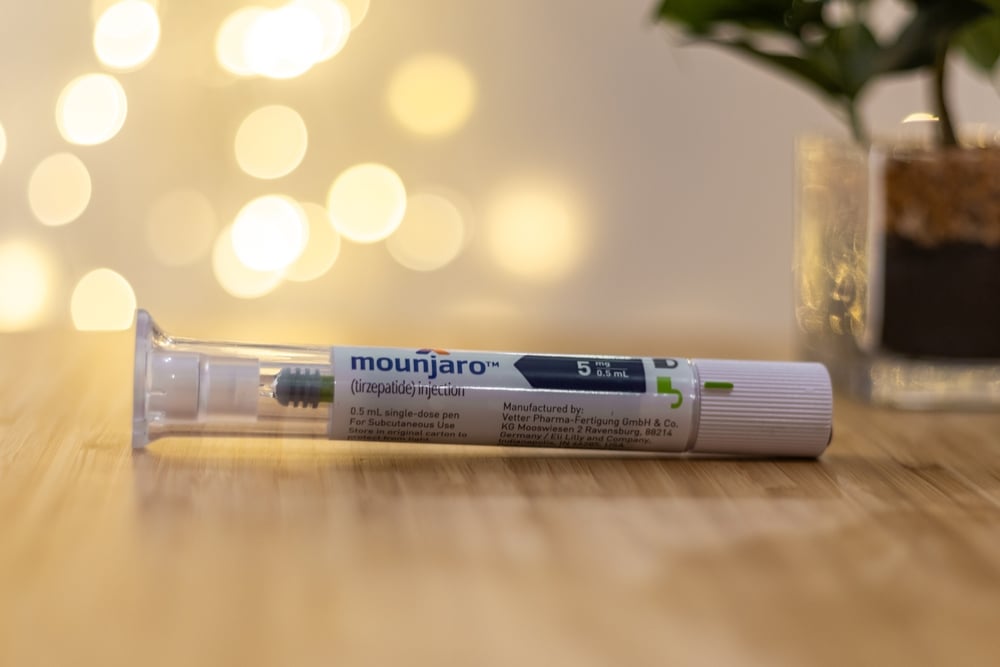
Core Insights - Eli Lilly's diabetes drug, Mounjaro, will be included in China's state-run health insurance scheme starting January 1, 2026, enhancing public accessibility [1][2] - The inclusion may lead to reduced selling prices for Mounjaro, which is a once-weekly injectable treatment that entered the Chinese market in January 2023 [3] - Eli Lilly is experiencing significant revenue growth driven by Mounjaro and Zepbound, with a reported 54% increase in revenue in Q3 2025 [5][6] Group 1 - Mounjaro's addition to China's national reimbursement list will improve accessibility for patients [2] - The move could potentially lower the selling prices of Mounjaro in the market [3] - Eli Lilly's diabetes drugs, including Mounjaro and Zepbound, are key contributors to the company's revenue growth [5] Group 2 - In Q3 2025, Eli Lilly reported a 54% revenue increase, largely due to the success of Mounjaro and Zepbound [6] - The company has seen strong initial stocking of Mounjaro in major markets such as China, Brazil, Mexico, and India [6] - Eli Lilly's strategic price cut for Zepbound aims to enhance accessibility in the U.S. market, further strengthening its competitive position [7]
中国医保谈判之后,美国医保也学会了“灵魂砍价”
新财富· 2025-12-08 08:05
Core Insights - The 2025 Medicare negotiation results indicate a significant and ongoing impact on the innovative drug industry, with expectations of continued price reductions rather than a one-time event [3][8] - The second round of negotiations confirmed that high discount rates will persist, reshaping the industry's operational landscape and investor expectations [8][20] Group 1: Medicare Negotiation Outcomes - The second round of negotiations involved 15 high-cost drugs, with price reductions reaching up to 85%, and 11 drugs seeing discounts over 50% [5][8] - Notable drugs affected include Ozempic, which saw a price drop from $959 to $274 per month, representing a 71% reduction, saving patients approximately $8,220 annually [19][20] - The consistency in high discount rates between the first and second rounds signals a shift towards a systematic approach to drug pricing reform [8][18] Group 2: Industry Implications - The innovative drug industry's business model is being fundamentally rewritten, with lifecycle values of mature drugs entering a "compression era" due to systematic price reductions [22][24] - The commercialization timeline for innovative drugs is being forced to accelerate, requiring companies to maximize revenue in the early years post-launch [24][26] - The valuation of innovative drugs is shifting from "story pricing" to "cash flow pricing," emphasizing immediate revenue generation over long-term high pricing [26][30] Group 3: Future Landscape - The second round of negotiations has clarified the future regulatory environment, reducing uncertainty and allowing companies to plan around stable policy parameters [29][30] - The focus of competition is shifting back to the core aspects of innovation, such as product quality, clinical differentiation, and commercialization capabilities [30][31] - The industry is entering a new phase characterized by efficiency, speed, and differentiation, which may lead to a healthier and more transparent market for truly valuable innovations [30][31]


Jim Cramer Prefers Buying Eli Lilly When People Are “Getting Antsy”
Yahoo Finance· 2025-12-08 05:32
Eli Lilly and Company (NYSE:LLY) is one of the stocks Jim Cramer discussed, along with the tech battleground. A caller asked Cramer about an optimal entry point into the stock, and he replied: “I think that people now are getting antsy and thinking that it’s really breaking down. That’s probably when I want to start buying. I think that this, we’re very close to the Medicare payment, and it also has, you know, new indication after new indication, new indication, new readout, new readout. Buy some here and ...
礼来(LLY.US)、强生(JNJ.US)与辉瑞(PFE.US)拓展中国市场:旗下创新药物纳入首版商保目录
智通财经网· 2025-12-08 04:16
Core Insights - Eli Lilly (LLY.US), Pfizer (PFE.US), and Johnson & Johnson (JNJ.US) have secured positions in China's first innovative drug catalog, opening new market channels and enhancing sales prospects for expensive therapies [1] - The inclusion of 19 innovative drugs in the medical insurance reimbursement list aims to alleviate the burden on the national insurance system while allowing pharmaceutical companies to sell at higher prices, thus improving profit margins [1] - The list is expected to expand the role of private insurance in funding innovative drugs, which currently holds a small market share in China [1][2] Group 1 - The drugs listed cover various diseases, including cancer, Alzheimer's, and rare genetic disorders, reflecting the growing demand for treatments due to China's aging population [1] - The average discount for the drugs has not been disclosed, but previous reports suggest a range of 15% to 50%, which is lower than the typical 60% discount required for inclusion in the National Reimbursement Drug List (NRDL) [2] - The selection process for the final list was competitive, with only a few drugs making it through from an initial pool of 24, indicating a cautious approach by regulators in the first year of implementation [2] Group 2 - Analysts suggest that the growth rate of commercial insurance sales may not match that of national insurance, as insurance companies need to establish communication with hospitals regarding reimbursement processes [3] - The initial catalog included both foreign and domestic pharmaceutical products, but the final list is relatively small and may not significantly disrupt the market landscape [3] - Projections indicate that the number of drugs in the catalog could increase to 300 by 2027, suggesting potential future growth in the market [3]
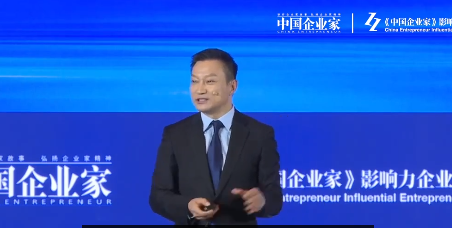
爱康张黎刚:企业家要年轻,第一大因素是要把体重管好
Xin Lang Cai Jing· 2025-12-08 03:59
Core Insights - The founder and CEO of Aikang Group, Zhang Ligang, emphasized the importance of weight management for entrepreneurs to appear younger, noting that over half of entrepreneurs are overweight [1][3] Group 1: Weight Management - Zhang highlighted that managing weight is the primary factor for entrepreneurs to maintain a youthful appearance [1][3] - He mentioned that there are now medications available for weight management, which can be effective if individuals lack the willpower to control their weight through diet and exercise [1][3] Group 2: Medications for Weight Management - Three specific medications were mentioned: Semaglutide, Eli Lilly's Tirzepatide, and the latest from Innovent, Ma Shidu [1][3] - These medications are recommended for individuals with a BMI over 24, especially if they have related conditions such as abnormal blood lipids or blood pressure [1][3]
速递|明年1月1日起,礼来替尔泊肽可使用医保报销!
GLP1减重宝典· 2025-12-08 03:10
Core Viewpoint - The article discusses the significant updates to China's National Medical Insurance Drug List, highlighting the inclusion of innovative drugs, particularly focusing on the GLP-1 receptor agonist, Tirzepatide, for the treatment of type 2 diabetes, which reflects the government's commitment to improving access to innovative therapies [5][7][9]. Summary by Sections National Medical Insurance Drug List Update - On December 7, the National Healthcare Security Administration announced a major update to the National Medical Insurance Drug List, adding 114 new drugs, including 50 innovative drugs [5]. - The success rate for drugs entering the negotiation and bidding process increased to 88%, up from 76% in 2024, indicating a more favorable environment for innovative drug approvals [5]. Inclusion of Tirzepatide - Tirzepatide injection, developed by Eli Lilly, has been officially included in the National Medical Insurance Drug List for adult patients with type 2 diabetes who do not achieve adequate blood sugar control with metformin and/or sulfonylureas [7]. - The new drug list will take effect on January 1, 2026, showcasing the clinical value of Tirzepatide and the government's focus on the accessibility of innovative drugs [7]. Impact on Diabetes Management - China has approximately 148 million adults with type 2 diabetes, with only about 50% achieving target blood sugar levels [9]. - The inclusion of Tirzepatide in the insurance list is expected to significantly enhance treatment access for patients, potentially improving long-term management and health outcomes for diabetes patients [9].
Eli Lilly's Mounjaro added to China's state insurance list for diabetes treatment
Reuters· 2025-12-08 02:45
Core Insights - Eli Lilly's drug Mounjaro will be included in China's state-run health insurance scheme starting January 1 for type 2 diabetes patients [1] Group 1 - Mounjaro is a popular drug developed by Eli Lilly [1] - The inclusion in the health insurance scheme indicates a significant step for Eli Lilly in expanding its market presence in China [1] - The decision was announced by the National Healthcare Security Administration through a website notice [1]