
Merck(MRK)

Search documents
Why Merck Is A Better Dividend Stock Than Gilead Sciences
Seeking Alpha· 2025-07-16 19:08
Group 1 - The last analysis of Merck & Co., Inc. (NYSE: MRK) stock was conducted on May 22, focusing on inventory and demand [1] - The analysis emphasized actionable investment ideas derived from independent research [1] Group 2 - The company has a track record of helping members outperform the S&P 500 and avoid significant losses during market volatility [2] - A trial membership is offered to assess the effectiveness of the company's investment methods [2]



Brokers Suggest Investing in Merck (MRK): Read This Before Placing a Bet
ZACKS· 2025-07-16 14:31
Core Viewpoint - The article discusses the reliability of brokerage recommendations, particularly focusing on Merck (MRK), and highlights the potential misalignment of interests between brokerage firms and retail investors [1][5][10]. Brokerage Recommendations for Merck - Merck has an average brokerage recommendation (ABR) of 1.92, indicating a consensus between Strong Buy and Buy, based on 25 brokerage firms [2]. - Out of the 25 recommendations, 13 are Strong Buy (52%) and 1 is Buy (4%) [2]. Limitations of Brokerage Recommendations - The article suggests that relying solely on brokerage recommendations may not be wise, as studies indicate limited success in guiding investors towards stocks with the best price increase potential [5]. - Brokerage firms often exhibit a strong positive bias in their ratings due to vested interests, leading to a disproportionate number of favorable ratings compared to negative ones [6][10]. Zacks Rank as an Alternative - Zacks Rank, a proprietary stock rating tool, categorizes stocks into five groups and is based on earnings estimate revisions, which have shown a strong correlation with near-term stock price movements [8][11]. - The Zacks Rank is distinct from ABR, as it is a quantitative model that reflects timely earnings estimates, while ABR may not be up-to-date [9][12]. Current Earnings Estimates for Merck - The Zacks Consensus Estimate for Merck's earnings has declined by 0.9% over the past month to $8.85, indicating growing pessimism among analysts regarding the company's earnings prospects [13]. - This decline in consensus estimates has resulted in a Zacks Rank of 4 (Sell) for Merck, suggesting caution despite the favorable ABR [14].
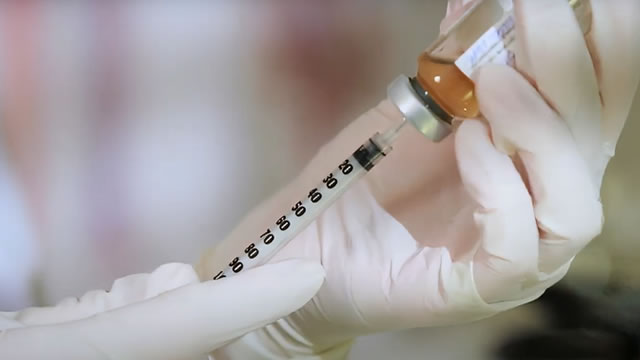
Amphista Therapeutics announces achievement of a research milestone in its collaboration with Merck triggering a milestone payment
GlobeNewswire News Room· 2025-07-16 11:00
Core Insights - Amphista Therapeutics has achieved a significant discovery research milestone in its collaboration with Merck, leading to a financial payment for the company [1][2] - The collaboration focuses on the development of novel, non-CRBN/VHL Targeted Glue™ degraders for oncology and immunology applications [1][2] Company Overview - Amphista Therapeutics specializes in next-generation Targeted Protein Degradation (TPD) medicines, aiming to transform the lives of patients with severe diseases such as cancer and neurodegenerative disorders [3] - The company utilizes its proprietary Eclipsys® platform to create unique, bifunctional Targeted Glue™ therapeutics, which offer improved drug-like properties compared to traditional CRBN and VHL-based agents [3] - Amphista was co-founded by Advent Life Sciences and is supported by notable investors including Forbion, Gilde Healthcare, Novartis Venture Fund, SV's Dementia Discovery Fund, and Eli Lilly [3]

Merck Starts Phase III Studies on Once-Monthly Pill for HIV Prevention
ZACKS· 2025-07-15 17:55
Core Insights - Merck has initiated two late-stage clinical studies for MK-8527, a once-monthly oral pill for HIV pre-exposure prophylaxis (PrEP) [1][8] - The studies aim to enroll nearly 9,000 participants and will compare MK-8527 with Gilead's daily oral PrEP pill, Truvada [2][8] - The initiation of these studies is backed by positive Phase II results showing similar adverse event rates between treatment and placebo [3] Company Developments - Merck is expanding its HIV portfolio, focusing on both prevention and treatment, with MK-8527 being a key component [6][10] - The FDA has accepted a regulatory filing for Merck's once-daily, two-drug, single-tablet regimen of doravirine/islatravir (DOR/ISL) for treating HIV-1, with a decision expected by April 28, 2026 [7] - Merck is also collaborating with Gilead on a once-weekly, two-drug, single-tablet regimen of islatravir/lenacapavir (ISL/LEN) [9][10] Competitive Landscape - Merck's growing HIV portfolio positions it to compete with Gilead, which currently leads the market with its PrEP medications, Truvada and Descovy [11] - If approved, MK-8527 could challenge Gilead's dominance in the PrEP market [11] - Gilead's recent approval of lenacapavir, a twice-yearly injectable for HIV prevention, adds to the competitive pressure in the HIV therapeutic space [13] Market Context - GSK is another significant player in the HIV market, with strong sales driven by products like Cabenuva, Apretude, and Dovato [14] - The competitive dynamics in the HIV space are intensifying as companies innovate and expand their product offerings [11][14]


默沙东(MRK.US)HIV小分子口服疗法3期试验启动
智通财经网· 2025-07-15 01:20
默沙东决定启动3期临床试验项目,依据是一项双盲、多中心2期临床试验(MK-8527-007)的结果。该 研究评估了MK-8527的安全性和药代动力学,共招募了350名年龄在18至65岁之间、HIV-1暴露风险较低 的受试者。这些受试者按2:2:2:1比例随机分组,接受每月一次口服MK-8527(3毫克、6毫克或12毫 克)或安慰剂,持续6个月。试验中,MK-8527各剂量组与安慰剂组的不良事件发生率相近,且实验室 检测(包括总淋巴细胞计数和CD4阳性T细胞计数)未见具有临床意义的变化。MK-8527及其活性形式 MK-8527-TP的药代动力学数据支持其作为每月一次口服PrEP选择的持续开发。 智通财经APP获悉,默沙东(MSD)(MRK.US)今日宣布启动EXPrESSIVE临床3期项目,评估其在研口 服每月一次小分子疗法MK-8527,用于HIV暴露前预防(PrEP)的安全性和有效性。其中, EXPrESSIVE-11(MK-8527-011)试验预计于2025年8月开始招募受试者,该试验旨在评估MK-8527在 HIV-1暴露风险较高人群中的安全性和有效性。而与盖茨基金会(Gates Foundatio ...
MRK's Buyout Spree to Broaden Product Portfolio: Can it Aid Growth?
ZACKS· 2025-07-14 15:25
Core Insights - Merck (MRK) is intensifying its acquisition strategy to enhance its development pipeline and broaden its product portfolio, with significant investments in strategic mergers and acquisitions over the past few years [1][6] Group 1: Recent Acquisitions - Merck announced a definitive agreement to acquire Verona Pharma (VRNA) for approximately $10 billion, adding the COPD treatment Ohtuvayre to its portfolio [2][12] - The addition of Ohtuvayre is expected to strengthen Merck's cardio-pulmonary pipeline due to its unique dual inhibition of PDE3 and PDE4, providing a competitive edge [3][12] - The transaction is anticipated to close in the fourth quarter of 2025, marking Merck's largest acquisition since the $10.8 billion acquisition of Prometheus Bioscience in 2023 [4] Group 2: Strategic Focus - Merck has been pursuing licensing deals with Chinese biotechs, including multi-billion-dollar agreements with Hansoh Pharma, LaNova Medicines, and Hengrui Pharma, to diversify its pipeline beyond oncology [5][6] - The company aims to reduce its dependency on the blockbuster PD-L1 inhibitor Keytruda, which is expected to lose patent exclusivity in 2028, while still maintaining strong sales until then [6] Group 3: Industry Trends - M&A activity in the pharma/biotech sector has increased significantly in 2025, with major companies seeking to diversify their revenue bases and acquire strategic assets [7] - Other notable acquisitions in the industry include Sanofi's agreement to acquire Blueprint Medicines for up to $9.5 billion, Eli Lilly's intent to acquire Verve Therapeutics for up to $1.3 billion, and AbbVie's acquisition of Capstan Therapeutics for nearly $2.1 billion [8][9][10] Group 4: Financial Performance - Year to date, Merck's shares have decreased by 16.2%, contrasting with a 0.3% increase in the industry [11] - Merck's shares currently trade at a price/earnings ratio of 8.98, which is lower than the industry average of 15.13 and its 5-year mean of 12.82, indicating attractive valuation [13] - The Zacks Consensus Estimate for Merck's 2025 earnings has declined from $8.94 per share to $8.85, and for 2026 from $9.77 to $9.66 over the past 60 days [14]
默沙东不是孤注一掷,健康元早已悄然落子:COPD吸入制剂新战局已启
Jin Rong Jie· 2025-07-14 08:06
Core Viewpoint - The acquisition of Verona Pharma by Merck for $10 billion highlights the significant value in the respiratory field, while Health元 has already established a comprehensive strategic layout that surpasses Verona in several key innovative directions [1][15][17]. Group 1: COPD Market Insights - COPD, known as the "silent killer," ranks among the top three causes of death globally [2]. - The disease is characterized by its slow progression and limited treatment options, leading to persistent symptoms in nearly half of the patients [3][5]. - Traditional treatments have not effectively controlled symptoms, necessitating a shift in focus towards chronic local inflammation rather than solely bronchial dilation [6][4]. Group 2: Health元's Strategic Innovations - Health元 is pursuing three innovative solutions for COPD: 1. An inhaled PDE4 inhibitor, aligning with Verona's approach to enhance safety and anti-inflammatory effects [7]. 2. A globally unique oral PREP inhibitor, which is currently in Phase II clinical trials [9][10]. 3. A new generation of inhaled corticosteroids (ICS) that optimizes structure and delivery to address traditional issues of efficacy and side effects [11][12]. - This multi-faceted strategy positions Health元 as a leader in the COPD innovation matrix, combining global uniqueness, cutting-edge mechanisms, and deep innovation in traditional areas [13][14]. Group 3: Market Positioning and Future Outlook - Health元's strategic foresight in recognizing the respiratory market as a future growth area has led to a robust pipeline of 12 drugs targeting various pathways, including TSLP, IL-4, PREP, PDE4, and β inhibitors [14]. - The recent acquisition by Merck signals a clear market trend towards respiratory innovation, particularly products that combine PDE mechanisms, inhalation delivery, and anti-inflammatory capabilities [15]. - Health元's proactive approach has transitioned it from a follower to a leader in the respiratory sector, positioning it well for future opportunities [16][17].


特朗普威胁200%医药关税,为何华尔街不在乎?
Hua Er Jie Jian Wen· 2025-07-14 01:25
Group 1 - The core point of the news is that President Trump has threatened pharmaceutical companies with a potential 200% tariff on imported drugs, but the market has reacted calmly due to the provided grace period for companies to adjust [1][2] - The grace period of "one to one and a half years" allows pharmaceutical companies ample time to stockpile and shift production, significantly reducing investor concerns [1][2] - Major pharmaceutical companies are already taking proactive measures, such as stockpiling drugs and increasing domestic production investments, indicating that industry confidence remains intact despite tariff threats [1][3] Group 2 - The grace period could extend until 2027, and companies may further extend their response time to 2028 through stockpiling, providing a strategic planning window for long-term adjustments [2] - The pharmaceutical industry is accelerating stockpiling, with hormone drug exports from Ireland to the U.S. valued at $36 billion this year, more than double last year's total [3] - Companies like Eli Lilly are investing heavily in U.S. manufacturing, with a $27 billion expansion plan, and tax incentives from Trump's "Big Beautiful Plan" are helping to mitigate the costs of establishing new facilities [3]

医药生物行业周报(7月第2周):创新药商保目录申报启动-20250714
Century Securities· 2025-07-14 01:01
Investment Rating - The report indicates a positive outlook for the pharmaceutical and biotechnology sector, with a focus on innovative drug companies [2][3]. Core Insights - The pharmaceutical and biotechnology sector saw a weekly increase of 1.82%, outperforming the CSI 300 index (0.82%) and the Wind All A index (1.71%). The market is currently focused on the expectations surrounding semi-annual reports and business development (BD) activities [8][9]. - The launch of the 2025 National Basic Medical Insurance and Commercial Health Insurance innovative drug directory is a significant development. This directory will include high-innovation drugs that provide substantial clinical value and patient benefits, which are not covered by basic medical insurance but recommended for commercial health insurance [3][13]. - The report highlights the importance of the commercial health insurance sector in the payment for innovative drugs, suggesting that the accessibility of high-priced innovative drugs is expected to improve, particularly in the areas of cell and gene therapy [3][13]. Market Weekly Review - The medical research outsourcing sector led the gains with a 9.29% increase, primarily driven by WuXi AppTec's positive semi-annual report announcement. Conversely, offline pharmacies and other biological products experienced declines of -1.29% and -1.55%, respectively [8][9]. - Notable stock performances included Frontier Biotech-U (41.4%), Mediso (38.9%), and Lianhuan Pharmaceutical (38.6%) leading the gains, while ST Unimed (-18.5%), Shenzhou Cell-U (-13.4%), and Shutai Shen (-11.6%) faced significant losses [11][12]. Industry News and Key Company Announcements - The report outlines several key industry events, including the approval of innovative drugs and strategic partnerships among major pharmaceutical companies, which are expected to enhance their market positions and product offerings [13][16][17]. - The report also mentions significant financial forecasts from various companies, indicating strong growth potential in the sector, with some companies projecting net profit increases of over 100% year-on-year [17][18].


医药行业周报:本周医药上涨1.8%,中方限制采购欧盟医疗器械,默沙东百亿美元获取COPD新药-20250713
Shenwan Hongyuan Securities· 2025-07-13 11:49
Investment Rating - The report rates the pharmaceutical industry as "Overweight," indicating a positive outlook for the sector compared to the overall market performance [2][30]. Core Insights - The pharmaceutical sector saw a weekly increase of 1.8%, outperforming the Shanghai Composite Index, which rose by 1.1% [3][4]. - The National Healthcare Security Administration officially launched the 2025 medical insurance catalog adjustment, introducing a commercial health insurance innovative drug catalog for the first time, focusing on high-innovation and clinically valuable drugs [10]. - China has imposed restrictions on the procurement of medical devices from the EU, affecting government purchases exceeding 45 million RMB [10]. - Merck announced a $10 billion acquisition of Verona Pharma, focusing on a new COPD drug, marking a significant transaction in the pharmaceutical sector [11]. Market Performance - The pharmaceutical and biotechnology index increased by 1.8%, ranking 16th among 31 sub-industries [3][4]. - The overall valuation of the pharmaceutical sector stands at 30.2 times PE for 2025E, ranking 6th among 31 primary industries [4][9]. Key Events - The adjustment of the medical insurance catalog officially commenced on July 10, 2025, with a submission period for eligible entities from July 11 to 20 [10]. - The Chinese government has taken measures to restrict the procurement of certain medical devices from the EU, impacting the competitive landscape [10]. - Merck's acquisition of Verona Pharma is a notable event, emphasizing the trend of large-scale business development transactions in the innovative drug sector [11]. Investment Analysis - The innovative drug sector has shown rapid growth in product revenue and licensing deals over the past three years, with significant business development transactions occurring this year [11]. - Companies to watch include Heng Rui Medicine, Bei Da Medicine, and WuXi AppTec, which are expected to benefit from the upcoming changes in the medical insurance catalog and the overall growth in the innovative drug market [11].

