
Nikon(NINOY)

Search documents
Nikon Z 24-70mm f/2.8 S II World's First with Internal Zoom Lens; Preorder NIKKOR Z 24-70mm f/2.8 S II, YouTube First Look Video and More Info at B&H
GlobeNewswire News Room· 2025-08-22 04:00
Core Insights - B&H announces the release of Nikon's second-generation mid-range Trinity zoom lens, the NIKKOR Z 24-70mm f/2.8 S II, which features an internal zoom mechanism and is positioned as a pro-caliber lens [1][2] Product Features - The new lens is shorter at 6.1 inches and weighs 4.6 ounces less than its predecessor, with fewer overall elements but optimized arrangement for increased resolution [2] - The minimum focusing distance has improved to 9.4 inches at the wide end and 13 inches at the telephoto end, with maximum magnification increased to 0.32x [3] - The autofocus mechanism has been redesigned with a "Silky Swift" voice coil motor system, resulting in a 40% reduction in scan times and a 60% improvement in focus tracking while zooming [4] Design and Usability - The lens includes customizable L-Fn buttons, a focus limiting switch for consistent minimum focusing distance, and a programmable Control Ring with an ON/OFF click button [5] - The lens hood features a filter adjustment window for 77mm thread filters, enhancing usability for video shooters [6][8] Optical Enhancements - The lens incorporates two extra-low dispersion and three aspherical elements, along with Meso Amorphous and ARNEO coatings to reduce ghosting and flare [3][8] - The internal zoom construction and improved weather-sealing make it suitable for various shooting conditions [8]


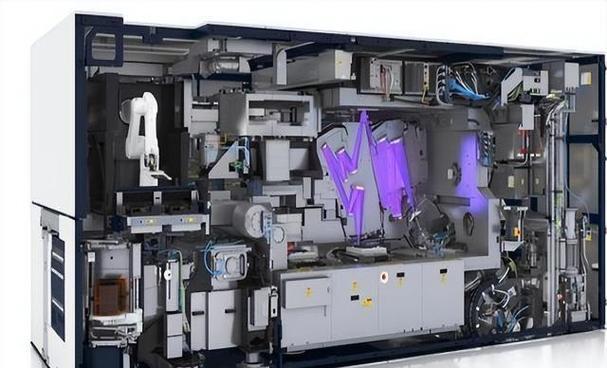
2亿一台嫌贵?佳能说我这十分之一!光刻机价格战要来了?
Xin Lang Cai Jing· 2025-07-28 13:06
Core Viewpoint - The competition in the lithography machine market is intensifying, with Canon's nanoimprint lithography (NIL) technology emerging as a cost-effective alternative to ASML's extreme ultraviolet (EUV) lithography, challenging ASML's dominance in the high-end market [1][10]. Group 1: ASML's Dominance - ASML currently holds a 90% market share in the EUV segment, selling machines for $200 million each, with buyers required to sign agreements prohibiting sales to China [4][5]. - Historically, ASML was not a leader in the lithography market, with Japanese companies Canon and Nikon dominating until the early 2000s when ASML pivoted to EUV technology [3][4]. Group 2: Canon's Strategy - Canon has developed NIL technology, which allows for direct imprinting of circuit patterns onto wafers, achieving 14nm line width suitable for 5nm chip production at a significantly lower cost, estimated to be one-tenth of ASML's EUV machines [5][6]. - The NIL technology has a lower energy consumption, reportedly 10% of that of EUV, making it an attractive option for manufacturers looking to reduce costs [6][10]. Group 3: Challenges and Improvements - Canon's NIL technology initially faced challenges with yield rates, which were around 60%, but improvements have raised this to over 90% through better mask materials [7][10]. - Canon is strategically targeting markets such as 3D NAND and CMOS image sensors, where precision requirements are lower, allowing for cost-effective production [7][9]. Group 4: Nikon's Approach - Nikon is not directly competing with ASML in the EUV space but is instead focusing on markets that ASML overlooks, such as the ArF lithography market and advanced packaging technologies [8][9]. - Nikon's return to the ArF market targets 65nm logic chips and CMOS sensors, offering competitive pricing and compatibility with existing facilities [8][9]. Group 5: Global Competition - Other companies globally are also developing alternatives to EUV, with innovations like laser-based X-ray lithography and self-assembling lithography, aiming to reduce costs significantly [10]. - The semiconductor industry is shifting towards a focus on cost-effectiveness rather than solely on advanced technology, indicating a potential shift in market dynamics [10][11]. Group 6: Conclusion - The lithography machine market is evolving, with multiple technologies coexisting, and the emphasis on cost-effectiveness may reshape the competitive landscape, challenging ASML's current supremacy [11].


光刻机输家,强势反击!
半导体芯闻· 2025-07-28 10:35
Core Viewpoint - The semiconductor lithography machine market is dominated by ASML, particularly in the EUV lithography segment, while Canon and Nikon, once industry leaders, are exploring new technologies to regain their competitive edge [1][2][3]. Group 1: Historical Context - Canon and Nikon were once the giants of the lithography machine industry, holding a significant market share in the 1980s and 1990s due to their advancements in step-and-repeat and scanning lithography technologies [2]. - The shift in industry dynamics was closely tied to technological choices, with Canon and Nikon falling behind due to misjudgments in the transition from DUV to EUV technology, allowing ASML to dominate the market [3]. Group 2: Canon's New Strategy - Canon is focusing on nanoimprint lithography (NIL) as a core development direction, which differs fundamentally from traditional optical lithography by directly imprinting semiconductor circuit patterns onto wafers [5][8]. - The launch of Canon's NIL equipment, FPA-1200NZ2C, achieved a minimum line width of 14 nanometers, with aspirations to reach 10 nanometers, indicating its potential in advanced chip manufacturing [5][12]. - Canon has integrated its optical and materials science expertise to enhance the precision and durability of NIL technology, aiming to improve yield rates in chip production [8][9]. Group 3: Market Positioning - Canon's NIL technology is positioned to compete in cost-sensitive markets, such as 3D NAND flash memory, where it can provide a cost-effective alternative to ASML's EUV machines [12][14]. - Collaborations with companies like Kioxia and DNP have been pivotal for Canon, focusing on practical applications of NIL technology and improving mask quality, which is crucial for pattern transfer accuracy [9][10]. Group 4: Nikon's Response - Nikon is also actively pursuing new technologies to regain its market position, including the development of a new generation of ArFi lithography machines compatible with ASML's ecosystem, expected to launch in the 2028 fiscal year [23][24]. - The new ArFi machines will feature innovative lens and stage designs to enhance optical performance and production efficiency, targeting the growing demand for advanced semiconductor manufacturing [23][24]. Group 5: Industry Innovations - Various companies are exploring disruptive technologies as alternatives to EUV, such as Inversion Semiconductor's laser wakefield acceleration technology and Lace Lithography's atomic lithography, which promise lower costs and energy consumption [34][35]. - The emergence of these technologies indicates a potential shift from a single-giant monopoly to a multi-technology landscape in the lithography sector, fostering competition and innovation [36][39].
光刻机输家的反击
半导体行业观察· 2025-07-24 00:46
Core Viewpoint - The semiconductor lithography machine market is dominated by ASML, particularly in the EUV lithography segment, while Canon and Nikon, once industry leaders, are exploring new technologies to regain their competitive edge [1][3][5]. Group 1: Historical Context - Canon and Nikon were once the giants of the lithography machine industry, holding a significant market share in the 1980s and 1990s due to their advancements in step-and-repeat and scanning lithography technologies [2]. - The shift in industry dynamics was closely tied to technological choices, with Canon and Nikon falling behind due to misjudgments regarding the transition from DUV to EUV technology, allowing ASML to emerge as the leader [3]. Group 2: Canon's New Strategies - Canon is focusing on nanoimprint lithography (NIL) as a core development direction, which differs fundamentally from traditional optical lithography by directly imprinting patterns onto wafers [7]. - The introduction of Canon's FPA-1200NZ2C device, capable of achieving a minimum line width of 14 nanometers, marks a significant advancement, with aspirations to reach 10 nanometers, thus entering the advanced chip manufacturing domain [9][13]. - Canon's collaborations with companies like Kioxia and DNP aim to enhance NIL technology, addressing challenges in mask quality and pattern transfer precision [10][11]. Group 3: Advantages and Challenges of Nanoimprint Technology - Nanoimprint technology offers significant advantages over EUV lithography, including lower costs and reduced energy consumption, making it competitive in cost-sensitive markets like 3D NAND flash memory [12][15]. - Despite its potential, challenges remain in ensuring stability and yield in large-scale production, as well as compatibility with existing production lines [17]. Group 4: Nikon's Strategic Moves - Nikon is also actively pursuing new technologies, including the development of a new generation of ArFi lithography machines, aiming to regain market share in the immersion lithography segment [25][26]. - The upcoming ArF lithography equipment is designed to be compatible with ASML's ecosystem, facilitating easier transitions for existing users [20]. Group 5: Industry Trends and Future Outlook - The exploration of alternative technologies to EUV by various companies, including Inversion Semiconductor and Lace Lithography, indicates a shift towards a more diversified lithography landscape [36][37]. - The competitive landscape is evolving, with Canon and Nikon seeking to establish themselves in niche markets while addressing the challenges posed by ASML's dominance [41].
Zoom Lens Market to Surpass USD 359.20 million by 2032, Driven by Growing Demand for High-Resolution Imaging | Report by SNS Insider
GlobeNewswire News Room· 2025-06-10 13:10
Core Insights - The Zoom Lens Market is projected to grow from USD 268.48 million in 2024 to USD 359.20 million by 2032, with a CAGR of 3.76% from 2025 to 2032 [1][7]. Market Growth Drivers - The growth of the Zoom Lens Market is driven by applications in surveillance, medical imaging, industrial automation, and transportation, with significant contributions from IoT and AI integration in surveillance systems [1]. - The U.S. market size is expected to increase from USD 63.29 million in 2024 to USD 72.15 million by 2032, growing at a CAGR of 1.70% [1]. Regional Outlook - North America held a 38.65% revenue share in 2024, leading the market due to advancements in surveillance and industrial automation [4]. - Asia Pacific is anticipated to grow at the fastest CAGR of 4.81% from 2025 to 2032, driven by consumer electronics and smart city initiatives in countries like Japan, China, and India [5]. Market Segmentation by Product Type - The Electric Zoom segment dominated the market in 2024 with a 62.87% revenue share, supported by demand in surveillance and broadcasting [8]. - The Manual Zoom segment is projected to grow at a CAGR of 5.29% from 2025 to 2032, appealing to budget-conscious users and hobbyists [9]. Market Segmentation by Application - The Security Monitoring segment held the largest market share at 32.82% in 2024, driven by the demand for high-resolution surveillance [10]. - The Industrial Automation segment is expected to grow at a CAGR of 5.22% by 2032, reflecting the increasing applications in machine vision and robotics [11]. Key Industry Players - Major players in the Zoom Lens Market include Young Optics, Fujifilm Holdings Corporation, IOT Lenses, Canon, Nikon, SONY, Tamron, CBC, Kenko, and Kowa [12].



光刻机锁死日本工厂运转?材料大国陷困局,氢能芯片能否弯道超车
Sou Hu Cai Jing· 2025-06-04 00:25
Group 1 - The article highlights Japan's precarious position in the semiconductor supply chain, particularly due to U.S. restrictions on exports of critical materials and technologies [1][3] - Japan is home to 23% of the world's semiconductor raw material factories, particularly in Kumamoto, which produces high-purity fluorinated polyimide essential for 3nm chips [1] - The U.S. has imposed conditions on Japan's exports, including the requirement for EUV lithography machines to have geofencing systems, effectively monitoring Japan's semiconductor capabilities [3] Group 2 - Japan's reliance on the U.S. for raw materials is increasing, with 43% of its high-purity rare earth production directed to North America, raising concerns about becoming a technology dependency nation [5] - Toshiba's 2023 financial report indicates a 12% drop in yield for silicon carbide chips due to a lack of domestic etching equipment, while Shin-Etsu Chemical faces rising wafer costs from using U.S. substitutes [6] - The average age of semiconductor engineers in Japan is 51, with a 38% decrease in young professionals over five years, indicating a talent crisis in the industry [6] Group 3 - Japan is exploring alternative technologies, such as quantum computing and hydrogen energy chips, as part of a strategic pivot in its semiconductor approach [8] - Panasonic has developed a miniaturized hydrogen production reactor, and advancements in hydrogen fuel cell technology have been made at the University of Tokyo [10] - Hitachi has created a "three-layer protection" verification system to enhance security in semiconductor material transport [11] Group 4 - Chinese manufacturers are benefiting from Japan's technological constraints, with new domestic etching machines utilizing expired Japanese patents and lower-cost rare earth extraction methods [13][14] - In 2023, Japan was compelled to relax 63 expired patent licenses, leading to a significant outflow of semiconductor talent to China [14] - The article suggests that the ongoing semiconductor conflict is a reflection of broader resource competition and emphasizes the need for Japan to rebuild its innovation ecosystem independently [16]


国际品牌怎么才能守住中国市场?
虎嗅APP· 2025-05-23 11:47
Core Viewpoint - The article discusses the competitive landscape between international and domestic brands in China, highlighting that international brands still hold significant market share despite the rise of domestic brands. The CBI500 list shows that international brands remain popular among Chinese consumers, indicating their strong market presence and consumer loyalty [1][3][18]. Group 1: International Brands' Market Position - The CBI500 list includes 156 international brands, with Apple ranking first, demonstrating the continued strength of international brands in the Chinese market [1][3]. - In sectors like beauty and sportswear, international brands dominate, with 8 out of the top 10 beauty brands being international and 70% of outdoor sports brands also being international [1][5]. - International brands maintain a competitive edge due to their technological advancements and established supply chains, which are difficult for domestic brands to replicate [5][9]. Group 2: Consumer Behavior and E-commerce Impact - The CBI500 list is based on real consumer behavior data from platforms like Taobao and Tmall, reflecting genuine consumer preferences and the ongoing enthusiasm for international brands [3][10]. - E-commerce has transformed the retail landscape in China, with international brands increasingly relying on platforms like Tmall to reach consumers, highlighting the importance of digital channels for market penetration [10][12]. - The rise of e-commerce has allowed domestic brands to compete more effectively, as they can quickly adapt to consumer needs and preferences without the constraints of traditional retail [11][22]. Group 3: Challenges and Adaptation of International Brands - International brands face challenges in adapting to the rapidly changing consumer landscape in China, necessitating a shift towards localization and understanding of local consumer demands [12][25]. - Brands like Adidas and Uniqlo have successfully implemented localization strategies, leveraging e-commerce data to enhance their product offerings and marketing approaches [15][16][14]. - Despite their technological advantages, international brands must improve their responsiveness to local consumer needs to maintain their market positions [25][26]. Group 4: Domestic Brands' Rise and Innovation - Domestic brands are increasingly moving from being mere followers to innovators, leveraging their understanding of local markets to create competitive products [20][21]. - Brands like Xiaomi and ICICLE have successfully introduced innovative concepts that challenge established international brands, indicating a shift in the competitive dynamics [20][21]. - The success of domestic brands in niche markets, such as small appliances, showcases their ability to quickly respond to emerging consumer trends and preferences [23][24]. Group 5: Future Outlook - The article suggests that the future of competition in the Chinese market will revolve around product innovation and understanding consumer emotions, with a focus on niche markets [22][26]. - International brands must enhance their local market insights and adapt their strategies to align with evolving consumer expectations to sustain their growth in China [26].



一生要出片的年轻人,买爆相机
36氪· 2025-05-14 14:26
Core Viewpoint - The article highlights the resurgence of the camera market in China, driven by the younger generation's desire for high-quality photography and self-expression, marking a shift from smartphones to dedicated cameras [4][18][23]. Group 1: Market Trends - In the first five months of 2024, China's camera shipment volume accounted for 23.4% of the global market, surpassing Europe and becoming the second-largest market after the Americas [4]. - The digital camera market in China is experiencing significant growth, with Nikon's sales revenue increasing by 14.2% and Canon's digital camera sales in China rising by over 30% year-on-year [23]. - The demand for cameras has led to instances of popular models selling out, with some requiring a lottery system for purchase [20][24]. Group 2: Consumer Behavior - Young consumers are increasingly investing in cameras, viewing them as a form of "emotional investment" rather than just a hobby, with individuals like Lin Yao and Qiao Shuai spending tens of thousands of yuan on equipment [10][13][41]. - Social media platforms, particularly Xiaohongshu, have seen a surge in content related to cameras, with over 17 million posts related to the topic, indicating a strong community interest [15][16]. - The perception of cameras has shifted from being seen as outdated to trendy, with younger consumers eager to share high-quality images on social media [18][28]. Group 3: Technological Advancements - Camera manufacturers are integrating AI technology to enhance user experience, with features like automatic editing and scene recognition becoming standard [31][32]. - The market is witnessing a trend towards high-end, professional-grade cameras, with younger consumers showing a preference for models priced between 5,000 to 10,000 yuan [26][27]. - The rise of action cameras, particularly those equipped with AI, is also notable, as they cater to the needs of younger consumers who prioritize portability and high-quality video recording [36][38]. Group 4: Industry Challenges - Despite the growth, the camera industry faces challenges such as competition from smartphones, supply chain risks, and the need to balance environmental concerns with commercial growth [42]. - The article suggests that the camera market's revival reflects broader trends in consumer behavior, cultural confidence, and technological innovation in China [41][42].

日本尼康公司股价下跌8.6%。
news flash· 2025-04-30 00:16
Core Viewpoint - Nikon's stock price has dropped by 8.6% [1] Company Summary - Nikon's recent stock performance indicates a significant decline, reflecting potential challenges the company may be facing in the market [1]
光刻机:自主可控核心环节,国产替代迫在眉睫(附46页PDF)
材料汇· 2025-04-22 15:01
点击 最 下方 "在看"和" "并分享,"关注"材料汇 光刻中的核心工具包括光掩膜、光刻机和光刻胶,分辨率、套刻精度、产能为光刻工艺中的关键参数,分辨率是指光刻机能清晰地在晶圆上投影出的最小特征尺 寸,可通过缩短波长、提高数值孔径、降低K1 工艺因子提高。 写在前面 (文末有惊喜) 一直在路上,所以停下脚步,只在于分享 包括: 新 材料/ 半导体 / 新能源/光伏/显示材料 等 添加 小编微信 ,遇见 志同道合 的你 正文 分辨率、套刻精度、产能为光刻机核心参数 光刻工艺是芯片制造流程中技术难度最大、成本最高、周期最长的环节,直接决定了芯片的最小线宽,定义了半导体器件的特征尺寸, 先进技术节点的芯片制造需 要60-90 步光刻工艺,光刻成本占比约为30%,耗费时间占比约为40-50% 。 套刻精度 是曝光显影后存留在光刻胶上的图形(当前层)与晶圆上已有图形(参考层)对准时能容忍的最大误差,可通过设备优化及材料与工艺协同提升,产能为 衡量光刻机生产效率的核心指标,可通过技术改进。 光源、照明系统、投影物镜为光刻机核心组件 光刻机是芯片制造的核心设备,光源系统、照明系统、曝光物镜系统为核心组件,光源为光刻提供能量 ...