Nissan Motor(NSANY)

Search documents
四十载伴NI行,日产中国40周年品牌之夜璀璨启幕
Qi Lu Wan Bao· 2025-10-17 04:05
Core Insights - Nissan celebrates its 40th anniversary in China, highlighting its commitment to the market and unveiling new products, including the N6 plug-in hybrid and the Tianlai Hongmeng cockpit [1][4][9] - The company emphasizes the importance of the Chinese market in its global strategy, aiming to redefine its value proposition through the "Re:Nissan" business plan [2][4] - Nissan's transformation in China is driven by local insights and innovation, with a focus on electric and intelligent vehicle development [2][4][17] Group 1: Product Launches and Innovations - The N6 is Nissan's first global plug-in hybrid sedan, featuring advanced hybrid technology and maintaining the brand's high standards of quality and reliability [7][9] - The Tianlai Hongmeng cockpit is the world's first fuel vehicle equipped with Huawei's HarmonyOS, aiming to set a new standard for intelligent fuel vehicles [7][9] - Nissan plans to introduce the Z NISMO model to the Chinese market next year, showcasing its commitment to performance and innovation [9] Group 2: Strategic Importance of the Chinese Market - Nissan's CEO highlights China's rapid development and technological leadership as a benchmark for the global automotive industry [2] - The partnership with Dongfeng Motor has been crucial for localizing products and accelerating innovation, contributing significantly to Nissan's growth in China [2][4] - The company aims to leverage its local team to enhance the development and export of new energy vehicles [2][4] Group 3: Brand Transformation and Youth Engagement - Nissan is undergoing a brand transformation towards being "young, innovative, and passionate," engaging with younger consumers through interactive experiences and fresh talent [13][15] - The company is focused on creating products that resonate with the lifestyle and aesthetic preferences of Chinese youth, integrating local insights into design [13][15] - Nissan's commitment to comfort, safety, and reliability will continue, with an emphasis on user participation in product development [15]

Nissan fuel pumps force second big recall this week
Yahoo Finance· 2025-10-16 22:35
Nissan Recall - Nissan is recalling over 173,000 U.S. vehicles due to a fuel pump issue that could cause stalling and increase crash risk, with an estimated 4.7% of the vehicles affected [1] - The recall includes inspections and repairs at no cost to owners, with notification letters to be mailed starting December 3 [2] - Earlier in the week, Nissan also recalled 19,077 Leaf EVs due to lithium-ion battery issues that could lead to fire risks [2][3] Ford Performance - Ford has reported a record-setting first half of 2025 despite facing significant losses from tariffs and challenges in its electric vehicle division [4] - The company expects to lose $2 billion on tariffs but has leveraged this into promotional opportunities, resulting in over 1.1 million U.S. sales in the first half [5] - Ford sold 540,522 more vehicles in the third quarter, marking an 8.2% year-over-year increase [5] Sales Trends - Ford sold 2.08 million vehicles in the U.S. last year, with a goal to surpass that number this year [6] - The company reported a 30.2% year-over-year increase in electric vehicle sales, driven by the Mustang Mach-E and F-150 Lightning [11] - Ford set a full-year recall record in just the first six months of the year, with 115 recalls as of September 24, surpassing General Motors' previous record [12]

日产发布新车规划 Z Nismo将在明年进入中国市场
2 1 Shi Ji Jing Ji Bao Dao· 2025-10-16 13:37
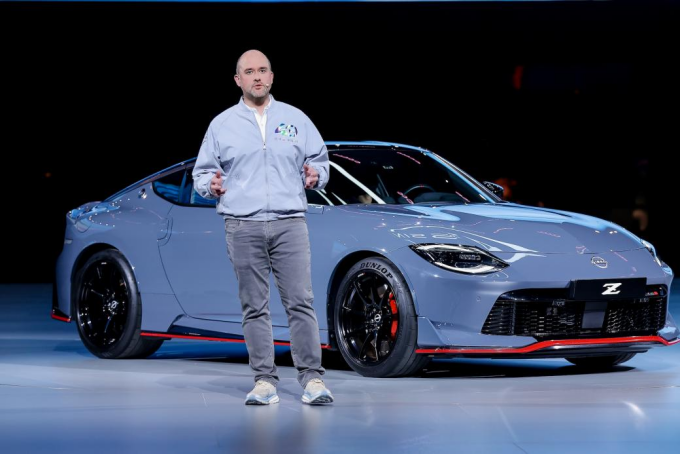
Core Insights - Nissan's CEO Iván Espinosa announced the launch of three new products in the Chinese market during the 40th anniversary brand night [2] Product Launches - The new products include the Dongfeng Nissan N6, which is set to launch in the fourth quarter, and a new version of the Tianlai equipped with Harmony OS cockpit [2] - Additionally, the Z Nismo model is expected to enter the Chinese market next year [2]
Nissan recalls 173K US vehicles over fuel pump issue that could stall engine
New York Post· 2025-10-15 20:04
Core Points - Nissan is recalling over 173,000 vehicles in the US due to a fuel pump issue that can lead to engine stalling and increased crash risk [1][3][4] - The recall affects specific models including the 2013-2021 NV200 Van, 2014-2017 and 2019 NV200 Taxi, and 2015-2018 Chevrolet City Express [1][3] - Approximately 4.7% of the recalled units, equating to about 8,145 vehicles, are estimated to have the defect [1] Technical Details - The issue arises from an incorrectly installed sensor harness that measures the fuel tank temperature, which may contact the fuel pump connector and cause wear [3][4] - This contact can lead to an electrical short, potentially resulting in a blown fuel pump fuse and unexpected engine stalling [4][6] - Drivers may notice an indicator light on the instrument cluster signaling a short circuit [6] Recall Process - Vehicle owners are advised to take their cars to a dealership for repairs, which may involve rerouting the sensor harness or replacing the fuel pump at no cost [8] - Notification letters to vehicle owners are expected to be sent by December 3, 2025 [8]


Nissan to recall more than 173,000 US vehicles over fuel pump issue
Reuters· 2025-10-15 07:19
Group 1 - Nissan is recalling 173,301 vehicles in the United States due to a potential issue with blown fuel pump fuses [1] - The blown fuses can cause engine stalling, posing a safety risk to drivers [1] - The recall highlights ongoing concerns regarding vehicle safety and reliability in the automotive industry [1]
汽车早报|理想汽车首个海外零售中心开业 Stellantis将在美国投资130亿美元
Xin Lang Cai Jing· 2025-10-15 00:37
Group 1: Automotive Market Trends - The total number of vehicles for trade-in is expected to exceed 12 million, driven by effective government policies that have significantly stimulated consumer activity in the automotive market, leading to new car sales worth approximately 1.7 trillion yuan [1] - In September, passenger car sales reached 2.859 million units, marking a year-on-year increase of 13.2%, with production and sales for the first nine months of the year showing growth of 13.9% and 13.7% respectively [1] - By 2025, China's automotive exports are projected to exceed 6.5 million units, with cumulative sales of new energy vehicles expected to surpass 16 million units [1] Group 2: Company Developments - Shandong Li Auto Battery Co., Ltd. was established with a registered capital of 300 million yuan, focusing on battery manufacturing and electric vehicle charging infrastructure [2] - Seres has increased its registered capital from approximately 1.509 billion yuan to about 1.633 billion yuan, reflecting an increase of around 8% [3] - The pre-sale price for the Alpha T5 extended-range version has been announced at 123,800 yuan, featuring a pure electric range of 215 km and a combined range of 1,215 km [4] - Xpeng Motors reported cumulative deliveries of 80,000 units for the P7+ model [5] Group 3: Sales Performance - Honda's terminal vehicle sales in China for September were 54,544 units, a year-on-year decline of 12.85%, with cumulative sales for the first nine months down 20.43% [6] - Nissan's sales in China for September reached 61,552 units, slightly up from 61,395 units in the same month last year [7] Group 4: Regulatory and Market Changes - The State Administration for Market Regulation has unconditionally approved Mitsubishi Motors' acquisition of shares in GAC Mitsubishi Motors Sales Co., Ltd. [8] - General Motors announced a $1.6 billion charge due to adjustments in electric vehicle production, anticipating a slowdown in EV adoption following recent government policy changes [9] - The average transaction price for new cars in the U.S. has surpassed $50,000 for the first time, reaching $50,080 in September, reflecting a 2.1% month-on-month increase and a 3.6% year-on-year increase [9] - Stellantis plans to invest $13 billion in the U.S. over the next four years to expand its business, marking the largest single investment in the U.S. since the company began operations there [9]




三大巨头或面临数亿罚单
汽车商业评论· 2025-10-14 23:08
Core Viewpoint - The UK automotive industry is facing a critical test as it approaches the implementation of mandatory zero-emission vehicle (ZEV) targets, with several manufacturers potentially facing significant fines due to low electric vehicle sales [4][6]. Group 1: Regulatory Framework - The UK ZEV mandate will begin in 2024, requiring automakers to increase the proportion of zero-emission vehicles sold each year, with specific targets set for passenger cars and light commercial vehicles [9]. - The target for passenger cars is set at 28% by 2025, with a long-term goal of 100% by 2035 [9]. - Non-compliance will result in fines, with passenger cars incurring a penalty of £15,000 per shortfall in quota, while light commercial vehicles will face a fine of £18,000 starting in 2025 [9][10]. Group 2: Current Market Dynamics - In September, the UK saw a record monthly registration of electric vehicles, with 72,779 units registered, marking a 23.3% market share [19][20]. - Despite the growth, the overall market share of electric vehicles remains below the regulatory target of 28% for the year [20]. - The light commercial vehicle segment registered 4,262 electric units in September, reflecting a 41.1% year-on-year increase, but still falling short of the 16% target [21]. Group 3: Company Performance and Compliance - Stellantis, Toyota, and Nissan are at higher risk of non-compliance, with Stellantis potentially short by 9,241 points, Nissan by 12,104 points, and Toyota by 6,820 points [16][17]. - In contrast, companies like Volkswagen, Renault, BMW, and Ford are closer to meeting their annual targets [16][17]. - Tesla, Volkswagen, and BMW are identified as having surplus electric vehicle credits, positioning them favorably in the compliance landscape [18]. Group 4: Industry Strategies and Challenges - Automakers are employing significant discounts and incentives, with over £6.5 billion provided to promote electric vehicle sales since the ZEV mandate was introduced [24]. - Companies are advocating for adjustments to the regulatory framework, citing challenges such as weak retail demand and insufficient charging infrastructure [25][26]. - The industry is concerned that if the cost of ownership does not improve, balancing penalties and discounts will become increasingly difficult as targets tighten in 2026 and 2027 [28].


“电车教父”安迪·帕尔默:增加关税是最愚蠢的事
Di Yi Cai Jing· 2025-10-14 08:35
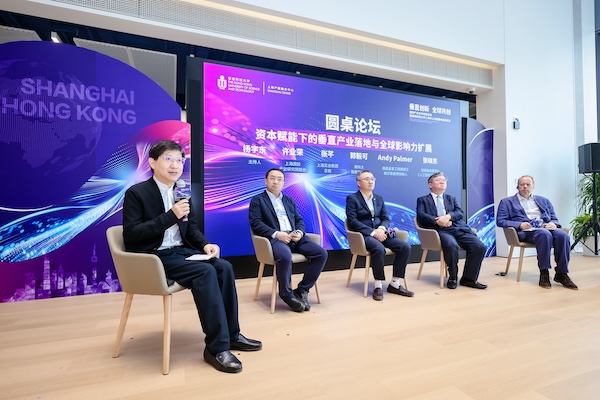
Core Viewpoint - The costs of tariffs and trade barriers are ultimately borne by consumers, which can hinder innovation in the automotive industry [4]. Group 1: Tariffs and Trade Barriers - The automotive industry is highly complex, involving around 100,000 parts and requiring timely delivery from thousands of suppliers, making tariffs detrimental to trade [3]. - The U.S. has increased tariffs on certain Chinese goods, including raising the import tariff on electric vehicles from 25% to 100% and on lithium-ion batteries from 7.5% to 25% [3]. - Starting November 1, 2025, a 25% tariff will be imposed on all medium and heavy trucks imported into the U.S. from other countries, further increasing costs for consumers [4]. Group 2: Globalization of the Automotive Industry - The rapid transformation of Chinese automotive companies has led to significant achievements in internationalization, but true globalization remains a challenge [5]. - Andy Palmer emphasizes the need for global cooperation in the automotive sector, arguing that increasing tariffs is counterproductive [2].
俄罗斯又拖全球车市后腿了
Zhong Guo Qi Che Bao Wang· 2025-10-14 02:09
Group 1 - Global automotive markets, except for Russia, showed growth in September and the first three quarters of the year, driven by various factors such as electric vehicle (EV) subsidies in the US and tax reforms in India [2] - In the US, electric vehicle sales surged before the expiration of a $7,500 subsidy, with Q3 sales exceeding 438,000 units, marking a record quarter and a market share of 10.5% [3][4] - Major automakers in the US reported increased sales, with Ford's sales up 8.2%, General Motors up 8%, and Hyundai up 13%, largely driven by electric vehicle demand [4] Group 2 - In Europe, the automotive market saw a slight increase in passenger car sales, with a total of 8.69 million units sold from January to August, a 0.4% year-on-year growth [6] - Chinese automakers, particularly BYD and SAIC, have become significant players in the European market, with BYD's sales skyrocketing by 280% [7] - The UK experienced its highest new car sales in September since 2015, driven by strong electric vehicle performance and government subsidies [8] Group 3 - India's automotive market showed resilience with a total of 3.8 million new vehicles sold in the first three quarters, a 2.3% increase year-on-year, supported by tax reforms [9][10] - The new GST 2.0 tax structure in India has significantly improved the affordability of small cars, boosting consumer confidence and sales [10] - In Japan, new car sales reached 3.465 million units in the first nine months, a 5% increase, although the market faced challenges in the latter part of the year [11][12] Group 4 - Brazil's automotive market reported a 2.9% increase in September sales, with a total of 1.91 million vehicles sold in the first nine months, driven by strong export performance [13][14] - The Brazilian government plans to reintroduce tariffs on electric and hybrid vehicles starting in 2024, aiming to stimulate local production [15] - Russian automotive sales plummeted by 23% in the first nine months, with a significant decline in new car sales due to geopolitical factors and rising costs [16][17]




Ford, Nissan Could Jointly Develop Japanese Automaker's Next Electric SUV, Stellantis Also In The Mix: Report - Ford Motor (NYSE:F)
Benzinga· 2025-10-08 07:44
Group 1 - Ford Motor Co. and Stellantis NV are in discussions with Nissan Motor Co. to develop a new electrified SUV, potentially an updated version of the Rogue SUV [1][2] - The partnership may involve the use of Nissan's e-power Hybrid powertrain for a new Hybrid crossover SUV, with possibilities for jointly developing all-electric vehicles [2][3] - Nissan is open to strategic partnerships that complement its core model development, but no formal agreements have been established yet [3] Group 2 - A fire at Novelis' aluminum plant in Oswego, New York, which is a key supplier for Ford, may disrupt production, prompting Ford to seek alternative supply channels [4] - Ford has allowed Nissan to utilize half of its battery assembly plant in Kentucky, a joint venture with SK On, and has invested over $5 billion to enhance domestic manufacturing capabilities [5] - Stellantis is planning a $10 billion investment in the U.S. to strengthen its market position, potentially reopening manufacturing plants and launching new models [6]