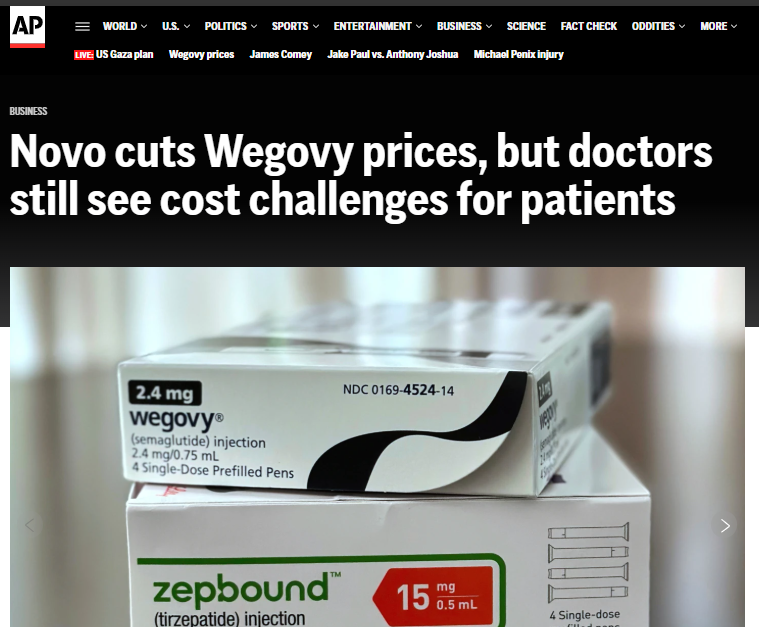
Novo Nordisk(NVO)

Search documents
X @Bloomberg
Bloomberg· 2025-11-19 13:17
Denmark is heading for its worst year of job losses since the Covid pandemic, as sweeping cuts at pharmaceutical giant Novo Nordisk drive a surge in redundancies across the country https://t.co/3klXYhDcew ...

Novo Nordisk (NVO) To Lower US Prices of its Injectable Wegovy Obesity Drug
Yahoo Finance· 2025-11-19 12:11
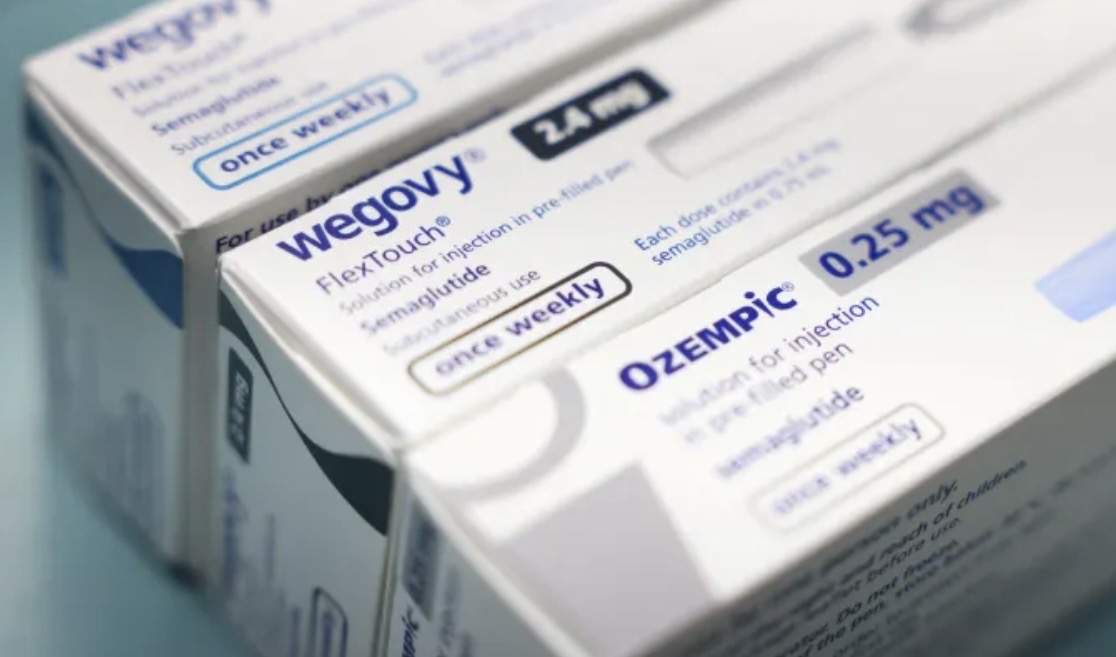
Novo Nordisk A/S (NYSE:NVO) is one of the Most Profitable Stocks to Buy Now. On November 17, Reuters reported that Novo Nordisk A/S (NYSE:NVO) will lower the US prices of its injectable Wegovy obesity drug. The price reduction for injectable Wegovy follows the company’s earlier announcement on November 6, where it agreed with the US Administration to lower drug prices beginning in 2026. However, the price reduction timeline was accelerated as Reuters on November 17 reported the company began cutting the ...
Can AI Drive Peloton's Comeback?
Yahoo Finance· 2025-11-18 19:23
分组1: Pfizer's Acquisition of Metsera - Pfizer has acquired Metsera for a sweetened offer of up to $10 billion, aiming to enter the competitive obesity treatment market [1][2] - Metsera has a pipeline of drug candidates targeting metabolic diseases, with key advantages in efficacy and tolerance, including the potential for once-monthly dosing [1][4] - This acquisition positions Pfizer to leverage its manufacturing and commercial infrastructure to accelerate the development of Metsera's drugs [1] 分组2: Competitive Landscape of GLP-1 Treatments - The GLP-1 treatment market is becoming increasingly competitive, with key players like Eli Lilly and Novo Nordisk leading the space [4][5] - Pfizer's entry into the GLP-1 market may provide opportunities for differentiation, but it faces challenges from more advanced candidates from competitors [4][5] - The pricing dynamics of GLP-1 treatments are critical, as lower prices could lead to increased competition and potentially lower margins for all players involved [3][5] 分组3: Telehealth and Direct-to-Consumer Dynamics - Telehealth companies like Hims and Hers have been significant demand sources for GLP-1 treatments, but their relationship with pharmaceutical companies is complex [6][8] - The direct-to-consumer approach is becoming essential for pharmaceutical companies to reach more customers, especially as they adapt to price sensitivity in the market [10] - Partnerships between telehealth companies and major pharmaceutical players may be key to navigating the evolving landscape of GLP-1 treatments [8][10] 分组4: Circle's Performance and USDC - Circle reported a 66% increase in revenue to $740 million, with USDC circulation up 108% to $73.7 billion, and net income more than tripling to $214 million [21][22] - USDC, co-created with Coinbase, has gained ground on Tether, with circulation doubling over the past year due to strategic partnerships [22] - Coinbase is generating more revenue from USDC than Circle, highlighting the financial dynamics between the two companies [23] 分组5: ARC Ecosystem and Future Potential - Circle's new ARC Public Testnet aims to create a layer one blockchain ecosystem, attracting major financial players like Deutsche Bank and Goldman Sachs [24] - The ARC network is designed to support compliance and reduce friction in transactions, making it appealing for institutional use [24] - The trend towards tokenization of financial assets is gaining momentum, with multiple players, including Circle, competing to advance this space [26][27]




减重药有望治疗“暴食症” ,厂商又找到新卖点
第一财经· 2025-11-18 15:45
Core Viewpoint - The competition in the weight-loss drug market is intensifying, with companies seeking new selling points and patient markets. Recent research on Eli Lilly's GLP-1 drug, tirzepatide, indicates its potential to temporarily reduce food cravings, which may inspire new developments in GLP-1 drugs [3][4]. Group 1: Research Findings - A recent study published in *Nature Medicine* shows that tirzepatide can temporarily lower food cravings in a patient, providing insights for the development of new GLP-1 drugs [3]. - The study monitored the brain activity of a patient with severe binge eating disorder, revealing that the drug initially suppressed signals of food craving in the brain's reward center, but this effect diminished after about five months [3][4]. - In contrast, other patients not treated with GLP-1 drugs exhibited typical increased activity in the reward center and frequent binge eating episodes [4]. Group 2: Market Implications - The findings may open new markets for GLP-1 drugs, as both Eli Lilly and Novo Nordisk are actively marketing these drugs directly to consumers in the U.S. [4]. - Novo Nordisk's concept of "food noise," which refers to uncontrollable and persistent thoughts about food, is highlighted as a significant factor affecting the mental health and weight loss progress of overweight or obese patients [4]. - An endocrinologist noted that while the original mechanism of GLP-1 drugs includes appetite suppression and delayed gastric emptying, the recent findings could pave the way for further research into their effects on the brain [4].

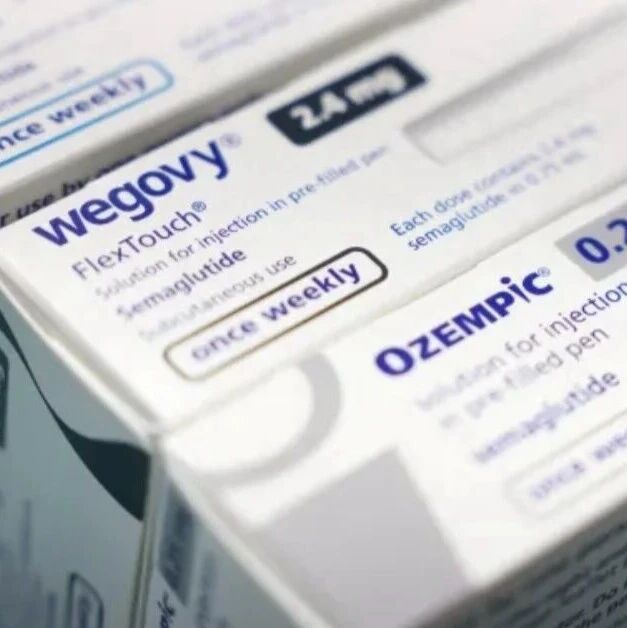
Novo Nordisk: A Rare Second Chance (NYSE:NVO)
Seeking Alpha· 2025-11-18 15:35
In early August 2025, I not only increase my position in Novo Nordisk ( NVO ) significantly. Following second quarter earnings I also published my last article about Novo Nordisk A/S ( NVO ) and arguedMy analysis is focused on high-quality companies, that can outperform the market over the long-run due to a competitive advantage (economic moat) and high levels of defensibility. Focused on European and North American companies, but without constraints regarding market capitalization (from large cap to small ...
Renault to produce two new Geely-based cars in Brazil
Reuters· 2025-11-18 15:33
Core Viewpoint - Renault Group is set to produce two new cars in Brazil in the second half of 2026, leveraging the platform of its Chinese partner Geely's vehicles, indicating a strategic expansion in a high-growth market [1] Company Expansion - The production of the new vehicles in Brazil marks Renault's continued investment in emerging markets, particularly in regions with significant growth potential [1] Partnership Strategy - The collaboration with Geely highlights Renault's strategy to utilize partnerships to enhance its product offerings and market presence in Brazil [1]


最低199美元 减肥药打起价格战
Bei Jing Shang Bao· 2025-11-18 14:43
Core Viewpoint - Novo Nordisk is lowering the price of its weight loss drug semaglutide in the U.S. to compete with Eli Lilly, indicating a shift in pricing strategies within the GLP-1 drug market [1][2]. Pricing Strategy - Novo Nordisk announced a 30% price reduction for its semaglutide products Wegovy and Ozempic, bringing the self-pay price down to $349 per month, with a limited-time offer of $199 for the first two months [2]. - This new pricing aligns with Eli Lilly's lower dosage Zepbound and is lower than its higher dosage option, enhancing Novo Nordisk's competitiveness against generic versions [2]. Market Dynamics - The popularity of GLP-1 receptor agonists like Zepbound and Wegovy is increasing, with clinical trials showing weight loss of 15%-22% [3]. - However, affordability remains a challenge, as about half of the users find it difficult to pay for these treatments, with monthly costs ranging from $1,000 to $1,350 [3]. Medicare Inclusion - A recent agreement between the White House, Eli Lilly, and Novo Nordisk will significantly reduce the prices of GLP-1 weight loss drugs, with Medicare beneficiaries expected to pay only $50 per month starting April [4]. - Novo Nordisk and Eli Lilly will sell their GLP-1 drugs directly to consumers at an average price of $350, aiming to reduce it to around $250 within two years [4]. Revenue Insights - Novo Nordisk reported third-quarter revenues of approximately DKK 74.98 billion (about $11.53 billion), a 5% year-over-year increase, with GLP-1 product revenues reaching DKK 174.58 billion (about $26.90 billion) [5]. - Eli Lilly's third-quarter revenue was approximately $17.59 billion, a 54% year-over-year increase, with GLP-1/GIP dual agonists generating over $10.1 billion [5]. Competitive Landscape - The GLP-1 market is transitioning from a duopoly between Eli Lilly and Novo Nordisk to a more competitive landscape, with a focus on technological advancements [7]. - The trend towards lower-priced weight loss drugs is expected to reshape industry competition, impacting smaller pharmaceutical companies' ability to enter the market [8][9]. Challenges for Smaller Firms - Smaller pharmaceutical companies may struggle due to reduced profit margins from low-priced oral GLP-1 drugs, potentially leading to project abandonment or mergers [9]. - Novo Nordisk and Eli Lilly have established a competitive advantage through their production capabilities and access to insurance channels, raising market entry barriers for smaller firms [9].
减重药有望治疗“暴食症” ,厂商又找到新卖点
Di Yi Cai Jing· 2025-11-18 11:28
Core Insights - The latest research on Eli Lilly's GLP-1 drug tirzepatide indicates potential benefits in reducing food cravings, which may inspire the development of new versions of weight loss medications targeting eating disorders [1][3] - Novo Nordisk's real-world study presented at the EASD 2025 conference showed that 46% of patients on semaglutide (Wegovy) reported a significant reduction in "food noise," which aligns with Eli Lilly's findings [3][4] - The competition between Eli Lilly and Novo Nordisk is intensifying as both companies seek to identify new selling points to attract consumers in the weight loss drug market [1][3] Group 1 - Eli Lilly's research involved monitoring brain activity in a patient with severe binge eating disorder, revealing a temporary suppression of food cravings during the initial months of treatment [3] - The study found that after approximately five months, the appetite suppression effect diminished, contrasting with untreated patients who exhibited increased brain activity related to food cravings [3][4] - The findings suggest that while only a few binge eating disorder patients benefited from tirzepatide, it opens avenues for future GLP-1 drug development aimed at treating eating disorders [1][3] Group 2 - Novo Nordisk's concept of "food noise" refers to uncontrollable and persistent thoughts about food, which negatively impact the mental health and weight loss efforts of overweight or obese patients [4] - The endocrine expert noted that GLP-1 drugs inherently suppress appetite and slow gastric emptying, contributing to weight loss, but the effects on brain activity had not been thoroughly studied before [4] - The recent findings from Eli Lilly's research may pave the way for more extensive studies, although the small sample size limits the generalizability of the results [4]
国金证券:GLP-1产品迭代驱动市场扩容 关注靶点、剂型及联合疗法研发进展
智通财经网· 2025-11-18 06:11
Core Insights - The GLP-1 market is experiencing rapid growth, with top two drugs projected to generate nearly $50 billion in sales by 2024, driven by frequent business development events and intensive research and development activities [1] - There is significant room for improvement in patient adherence and market penetration for existing GLP-1 drugs, with the next wave of drug iterations expected to accelerate market expansion [1][2] - The focus of current research includes target synergy and oral formulations, with an emphasis on the differentiated advantages in efficacy and adherence [3][4] Market Growth - The GLP-1 market is still in a rapid growth phase, with Novo Nordisk and Eli Lilly dominating the global market, increasing their revenue from approximately $2.9 billion in 2015 to about $49.4 billion in 2024, representing a 47% growth in sales for four key drugs [1] - The sales of Tirzepatide for weight loss and type 2 diabetes are expected to reach $3.381 billion and $5.199 billion respectively by Q2 2025, showing year-on-year growth of 68% and 172% [1] Patient Adherence and Market Penetration - The current penetration rate of GLP-1 drugs for type 2 diabetes is around 7%, while for obesity it is less than 1%, indicating substantial potential for growth [2] - Among the 115 million obese patients in the U.S., approximately 84 million do not have type 2 diabetes, ASCVD, or CKD, representing a significant target market for GLP-1 drugs [2] - The sales proportion of GLP-1 weight loss drugs is expected to increase from 14% to 37% in the coming years, indicating a trend towards greater market share [2] Research and Development Focus - The clinical value of new GLP-1 drugs is primarily assessed through efficacy and adherence, with a clear path for differentiation from Tirzepatide [3] - Key research directions include target synergy through combinations with other receptors (e.g., GCGR, GIPR) to achieve higher weight loss in shorter time frames [3] - Oral formulations are being prioritized to enhance drug penetration, with ongoing developments showing promising efficacy, although still trailing behind injectable forms [4] Innovative Approaches - Early clinical trials are exploring muscle gain and fat loss, with promising results indicating significant fat loss while maintaining muscle mass [4] - The first RNAi therapy targeting fat tissue expression genes is entering clinical research, showing potential for long-term weight management [4]

司美格鲁肽在美降价30%,外媒称患者负担能力是“持续的挑战”
Huan Qiu Wang· 2025-11-18 01:08
Group 1 - Novo Nordisk has initiated a price reduction for its weight loss drugs Wegovy and Ozempic in the U.S., lowering the out-of-pocket price to $349 per month from $499, a 30% decrease [1] - A limited-time offer allows U.S. patients to pay $199 per dose for the first two months of treatment until March 31, 2026 [1] - The company anticipates that approximately 40 million Americans will gain access to their medications through expanded coverage under Medicaid and Medicare [1] Group 2 - The popularity of obesity treatment drugs, such as Zepbound and Wegovy, has been increasing, with GLP-1 receptor agonists helping individuals lose between 15% to 22% of their body weight, and in some cases, up to 50 pounds or more [1] - Affordability remains a significant challenge for patients, with a recent KFF survey indicating that about half of those using these treatments find it difficult to pay for them [3] - Research from Vanderbilt University Medical Center suggests that when drug costs exceed $100 per month, individuals struggle to afford them [3]