Novo Nordisk(NVO)

Search documents
Novo Nordisk nominates Jan van de Winkel and Ramona Sequeira to board
Reuters· 2026-02-20 12:14
Group 1 - Novo Nordisk has nominated Jan van de Winkel and Ramona Sequeira to its board of directors, marking the first additions since a significant management shake-up in 2025 [1] - The company replaced its CEO and overhauled the board, appointing Lars Rebien Sorensen as board chairman, who also chairs the Novo Nordisk Foundation, consolidating power in a dual role [1] - Jan van de Winkel is the co-founder and CEO of Genmab, while Ramona Sequeira previously served as President of the Global Portfolio Division at Takeda Pharmaceutical Company Limited from 2022 to 2025 [1]



Airbus capable of developing a fighter alone, CEO says amid FCAS row
Reuters· 2026-02-20 12:12
Core Viewpoint - Airbus is prepared to participate in decisions regarding the potential division of the troubled Franco-German-Spanish fighter project, known as FCAS, into two separate warplanes, but the company is also capable of independently developing a fighter if necessary [1]. Group 1: Airbus's Position on FCAS - Airbus CEO Guillaume Faury stated that it is uncertain how a decision to split the FCAS project would affect the common elements between the two potential projects [1]. - The ongoing disputes between Airbus and Dassault Aviation have contributed to the challenges faced by the FCAS project [1]. Group 2: Industry Context - The comments from Airbus come amid broader discussions in the aerospace and defense industry regarding collaboration and competition among European defense contractors [1]. - The potential split of the FCAS project reflects the complexities and strategic considerations in developing advanced military technology in Europe [1].
X @Bloomberg
Bloomberg· 2026-02-20 11:16
While the Danish economy looks strong on paper, Danes are increasingly nervous about the labor market in light pharmaceutical giant Novo Nordisk’s move to axe 5,000 jobs in the country last year. https://t.co/R9obNAO2mJ ...
X @Bloomberg
Bloomberg· 2026-02-20 08:24
Denmark’s economy barely expanded at the end of last year as a slump in the pharmaceutical industry, dominated by Novo, weighed on overall growth https://t.co/cQjrd6AQF0 ...
Overlooked and Undervalued: Why Novo Nordisk Stock Deserves Attention
Yahoo Finance· 2026-02-19 21:05
Core Viewpoint - Novo Nordisk is currently undervalued despite a significant decline in stock price and weak guidance for 2026, presenting a potential opportunity for contrarian dividend investors [1]. Group 1: Company Challenges - Novo Nordisk has faced challenges in the GLP-1 market, particularly due to inability to meet demand and competition from Eli Lilly's more effective drugs [2][5]. - The company has provided weak guidance for 2026, anticipating a decline in revenue and earnings, partly due to a drug pricing agreement with the U.S. government [5]. Group 2: Competitive Position - Novo Nordisk was the first to market a pill version of its GLP-1 drug, which may help regain market share before Eli Lilly's pill launch, as consumers generally prefer pills over injections [6]. - The company is developing an updated version of its GLP-1 drug to enhance competitiveness against Eli Lilly and is adopting a more aggressive stance against generic competitors [7]. Group 3: Financial Metrics - Novo Nordisk's price-to-earnings ratio stands at 13.5, significantly lower than Eli Lilly's 45, indicating a potentially attractive valuation [8]. - The company offers a dividend yield of 3.7%, with a payout ratio of approximately 40%, suggesting strong support for its dividend [8].
Novo Nordisk Is Under Pressure - And Trading At A Discount
Seeking Alpha· 2026-02-19 14:02
Core Viewpoint - The article discusses Novo Nordisk (NVO) as presenting a rare investment opportunity after its stock price declined to approximately DKK 300, suggesting potential for long-term outperformance due to its competitive advantages and defensibility [1] Group 1: Company Analysis - Novo Nordisk is highlighted as a high-quality company capable of outperforming the market over the long run due to its economic moat and strong defensibility [1] - The analysis focuses on companies in Europe and North America, without restrictions on market capitalization, indicating a broad investment approach [1] Group 2: Analyst Background - The analyst has a Master's Degree in Sociology with a focus on organizational and economic sociology, and a Bachelor's Degree in Sociology and History, providing a unique perspective on market analysis [1]
礼来最新研究公布
Xin Lang Cai Jing· 2026-02-19 08:48
Core Viewpoint - Eli Lilly's weight loss drug tirzepatide shows potential in treating obesity with comorbid autoimmune diseases, particularly psoriasis, as demonstrated in a recent study [2][7]. Group 1: Study Results - A late-stage study involving 274 psoriasis patients indicated that the combination of tirzepatide and the existing biologic drug, etanercept, outperformed etanercept alone in efficacy [2][7]. - Approximately 27.1% of patients receiving the combination therapy achieved complete clearance of psoriasis and a 10% weight reduction after 36 weeks, compared to only 5.8% in the etanercept-only group [4][9]. Group 2: Market Competition - Eli Lilly and its main competitor, Novo Nordisk, are engaged in intense competition across multiple markets for new indications of weight loss therapies, which could expand the patient base [4][9]. - Recently, tirzepatide received approval from the National Medical Products Administration in China for use as a monotherapy for adult patients with type 2 diabetes (T2DM) [4][9]. Group 3: Inventory and Approvals - Eli Lilly is preparing for the launch of its oral weight loss drug, with pre-launch inventory reaching $1.5 billion, a significant increase from $550 million the previous year [5][9]. - In Europe, Novo Nordisk's weight loss drug semaglutide 7.2mg received approval, providing more treatment options for doctors and patients [5][9].

礼来最新研究公布 医药巨头角逐减重药新高地
Di Yi Cai Jing· 2026-02-19 06:58
Group 1 - The core point of the article highlights the competitive landscape between Eli Lilly and its main competitor Novo Nordisk in the development of new weight loss therapies, particularly focusing on the potential of Eli Lilly's drug tirzepatide for treating obesity in patients with autoimmune diseases [1] - A late-stage study involving 274 psoriasis patients showed that the combination of tirzepatide and the existing biologic drug, etanercept, resulted in better outcomes than etanercept alone, with approximately 27.1% of patients achieving complete psoriasis clearance and a 10% weight reduction after 36 weeks [1] - The study indicates the potential of weight loss drugs in treating obesity-related comorbidities, as most obese patients have at least one weight-related comorbidity [1] Group 2 - The expansion of new indications for tirzepatide means a broader patient base, as it recently received approval from the National Medical Products Administration in China for use in adult patients with type 2 diabetes (T2DM) as a monotherapy [2] - In the European market, Novo Nordisk's weight loss drug semaglutide at a higher dosage of 7.2mg has also received approval, providing more treatment options for doctors and patients [2] - Eli Lilly is preparing for competition in the oral weight loss drug market, with pre-launch inventory for its oral weight loss medication reaching $1.5 billion, a significant increase from $550 million in the same period last year [2]
EU Approves Novo Nordisk's Higher-Dose Wegovy for Obesity Patients
ZACKS· 2026-02-18 15:45
Core Insights - Novo Nordisk has received European Commission approval for a new 7.2 mg once-weekly maintenance dose of Wegovy for adults with obesity, providing an additional treatment option for patients needing further weight reduction after the 2.4 mg dose [1][5] Group 1: Approval and Treatment Options - The 7.2 mg dose can be prescribed as three 2.4 mg injections during a single weekly session, with a regulatory application submitted for a dedicated 7.2 mg single-dose pen [2] - Wegovy is now available in all 27 EU member states in various strengths, including the newly approved 7.2 mg dose, and is already marketed in the UK [3] Group 2: Efficacy and Study Results - The phase III STEP UP study indicated that patients receiving the 7.2 mg dose achieved an average weight loss of 20.7% over 72 weeks, compared to 17.5% with the 2.4 mg dose [6][5] - Approximately 33.2% of patients on the 7.2 mg dose lost at least 25% of their weight, with most weight loss attributed to fat mass reduction while maintaining muscle function [7] Group 3: Safety and Tolerability - The safety profile of the 7.2 mg dose is consistent with the 2.4 mg dose, with common side effects being mild to moderate [8] Group 4: Market Context - Novo Nordisk shares have decreased by 9.9% over the past six months, contrasting with the industry's growth of 27.4% [4]
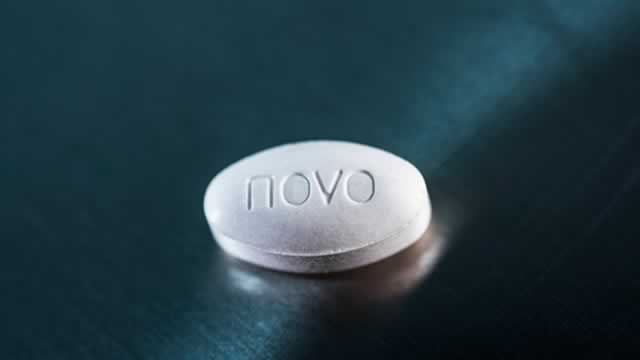
Novo Nordisk: The Possible Upside
Seeking Alpha· 2026-02-17 17:36
Group 1 - The article discusses the stock price decline of Novo Nordisk A/S, a provider of obesity treatments, following a previous analysis titled "Consider The Counterfactual" published in November 2025 [1] - Manika, a macroeconomist with over 20 years of experience, emphasizes the generational investment opportunities in the green economy through her profile Long Term Tips [LTT] and her investing group Green Growth Giants [1]