
SoftBank(SFTBY)

Search documents
SoftBank in Talks to Buy Data-Center Investor DigitalBridge
Yahoo Finance· 2025-12-05 23:17
Core Viewpoint - SoftBank Group Corp. is negotiating to acquire DigitalBridge Group Inc., aiming to leverage the growing demand for digital infrastructure driven by AI advancements [1][3]. Group 1: Acquisition Details - SoftBank is in talks to take DigitalBridge private, with discussions ongoing and no guarantee of a finalized deal [1][3]. - DigitalBridge's shares experienced a significant increase of 45%, closing at $14.12, resulting in a market value of $2.58 billion [2]. Group 2: DigitalBridge Overview - DigitalBridge, led by CEO Marc Ganzi, manages approximately $108 billion in assets, with a portfolio that includes various digital infrastructure operators [4]. - The company has been underperforming, with shares down 13% prior to the recent surge [2]. Group 3: Market Context and Analyst Insights - The acquisition aligns with SoftBank's strategy to capitalize on the increasing demand for computing capacity essential for AI applications [3]. - Analyst Ric Prentiss from Raymond James noted that a larger asset manager would benefit from acquiring DigitalBridge, suggesting that the company would consider selling at a significantly higher price [5]. Group 4: SoftBank's Previous Ventures - SoftBank has a history of engaging in asset management acquisitions, including the purchase of Fortress Investment Group for over $3 billion in 2017 [6]. - The company announced a $500 billion project called Stargate to build data centers in the US, although progress has been slower than anticipated due to location disagreements [7].
12月6日隔夜要闻:SpaceX估值升至8000亿美元 奈飞收购华纳兄弟探索公司 经济学家料美...
Xin Lang Cai Jing· 2025-12-05 23:03
Company - Netflix is acquiring assets from Warner Bros. Discovery, which has raised concerns about potential antitrust issues, as highlighted by Senator Warren who described the deal as an "antitrust nightmare" [3] - SpaceX is in talks to sell shares, with its valuation rising to $800 billion, indicating strong investor interest and confidence in the company's future prospects [2] - Meta is planning to cut spending on the metaverse, with Reality Labs potentially facing layoffs as early as January, reflecting a shift in focus and resource allocation [3] - Citigroup's price-to-book ratio has reached 1 for the first time in seven years, narrowing the gap with other major Wall Street banks, suggesting improved market confidence in the bank's valuation [3] - SoftBank is negotiating to acquire DigitalBridge, a data center investment company, which could enhance its portfolio in the technology infrastructure sector [3] Industry - The U.S. Treasury Secretary praised the Dell family for their support of the "Trump account" plan, indicating potential implications for the tech industry and its relationship with government policies [3] - The Swiss government is considering easing some capital regulations for UBS, which may impact the banking sector's operational flexibility and capital management strategies [3] - The U.S. is relaxing fuel economy standards for automobiles, receiving support from traditional automakers like Ford, which could influence the automotive industry's regulatory landscape and competitive dynamics [3]



Friday's Final Takeaways: Retailer Stocks & China Tech Soars
Youtube· 2025-12-05 22:00
Market Overview - Gold futures experienced a slight decline, dropping 0.4% for the week, as confidence in a Federal Reserve rate cut remains high, with prices hovering around $4,230 [1] - Silver reached a record high of $59.32, closing the week up 4% and showing a year-to-date increase of approximately 100% [3][2] Retail Sector Performance - Strong retail earnings were reported from companies such as American Eagle, Ulta, Dollar Tree, Dollar General, and Victoria's Secret, indicating positive momentum heading into the holiday season [3][4] - Consumer sentiment showed a slight uptick in December, although it remains negative year-over-year despite increased spending trends observed during the holiday shopping period [4] Technology Sector Insights - SoftBank's CEO Masayoshi Son is reportedly collaborating with the Trump administration to develop AI infrastructure, funded by Japanese government investments [6] - Shares of More Freds, a Chinese GPU maker, surged over 400% on its debut in Shanghai, raising over $1.1 billion, highlighting China's push for self-sufficiency in chip manufacturing [7] - Foxconn reported a revenue of $27 billion in November, marking a 26% year-over-year increase, and is expected to see 14% growth in the next quarter, emphasizing its role as a major Apple supplier and Nvidia partner [8] Upcoming Events - The Federal Reserve's December FOMC meeting is anticipated, with an 87% probability of an interest rate cut, amid signs of a slowing economy and persistent inflation [10] - Notable earnings reports are expected from companies like Broadcom, Oracle, Adobe, Costco, and Lululemon, with analysts closely monitoring consumer behavior and market trends [12][15][16]
DigitalBridge may be worth $25-$35/share in a sale - analyst (DBRG:NYSE)

Seeking Alpha· 2025-12-05 18:51
Core Viewpoint - DigitalBridge (DBRG) is potentially valued between $25 billion to $35 billion in light of reports that Softbank (OTCPK:SFTBY) is in discussions to acquire the company [1][3]. Group 1 - Softbank (SFTBTY) is reportedly in talks to acquire DigitalBridge (DBRG) [3].
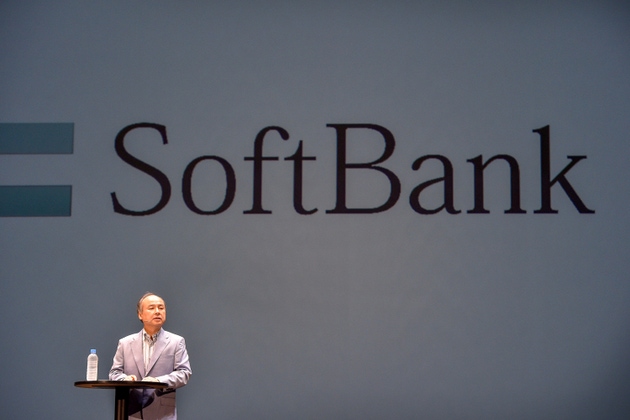
SoftBank CEO Masayoshi Son working on plan to Trump-branded U.S. industrial parks: WSJ
Youtube· 2025-12-05 12:06
Group 1 - SoftBank's CEO Masayoshi Son is reportedly working on a plan to assist the Trump administration in enhancing American manufacturing capacity [1] - The initiative involves creating factory clusters in the United States, utilizing hundreds of billions of dollars pledged by the Japanese government as part of a recent trade deal with America [1] - The proposed industrial parks would be built on federal land and would be owned by the US government upon completion [1] Group 2 - The factories are intended to produce data center equipment and eventually AI chips [2] - President Trump has expressed support for Masayoshi Son's proposal [2]

韩国总统与孙正义会谈 就AI与半导体进行商讨
Di Yi Cai Jing· 2025-12-05 11:36
(文章来源:第一财经) 据报道,韩国总统李在明5日在总统府与软银集团(SBG)董事长兼社长孙正义举行会谈。双方就人工 智能(AI)和半导体领域的合作以及基础设施投资进行商讨。李在明把韩国跻身"全球三大AI强国"列为 国家目标,正致力于吸引海外投资。李在明表示:"韩日之间AI合作至关重要,期待孙董事长发挥桥梁 作用。"孙正义强调,今后应集中推进的技术是"(超越人类能力的)超级人工智能"。 ...
氪星晚报|Visa或将把欧洲总部迁至伦敦金丝雀码头;软银孙正义与白宫商讨高科技工厂计划细节
3 6 Ke· 2025-12-05 10:53
Major Companies - Chasing Technology has been selected for the 2025 "Brands That Matter" global list by Fast Company, being the only domestic brand on the list due to its localized innovation and user experience improvements [1] - Chasing Technology's products cover various categories including high-end smart home appliances, smart cars, smart kitchen appliances, smart cleaning devices, outdoor smart devices, and personal care products [1] - The company's sweeping robot products hold the number one market share in 22 countries and regions globally, including Germany, France, and Singapore [1] Investment and Financing - Hengxuan Technology's next-generation low-power, high-performance wearable chip, BES6000, is expected to enter the sample delivery phase in the first half of next year [7] - The BES2800 chip has been widely applied in low-power smart hardware markets such as smartwatches and smart glasses [7] - Zhongke Qiancheng has recently completed several million yuan in angel round financing, with funds primarily aimed at product improvement and technology research and development [8] - Aoluo Pharmaceutical has successfully completed a $100 million Series A financing round, with funds to accelerate its differentiated pipeline layout focusing on unmet clinical needs in immunology, inflammation, and oncology [9] New Products - CATL has launched the world's only "ship-shore-cloud" zero-carbon shipping and smart port integrated solution, achieving full-chain integration from onboard power systems to shore-based energy supply networks and cloud-based intelligent management [10] - Gaode has released the "AI Parking Radar," the first real-time perception function for road parking spaces in the country, providing users with a new smart parking experience [11] - Lenovo has officially launched the "Lenovo AI Factory" solution to help enterprises transition from traditional "computing centers" to efficient "AI factories," along with the release of a new generation of high-end AI server based on Intel® Xeon® 6 processors [12]





孙正义与白宫磋商大计:拟动用美日协定承诺资金建高科技园区
Feng Huang Wang· 2025-12-05 08:35
Group 1 - The core idea of the news is that SoftBank, led by founder Masayoshi Son, is collaborating with the Trump administration to establish "Trump Industrial Parks" across the U.S., focusing on manufacturing components for artificial intelligence infrastructure [1][2] - The funding for the project will come from a commitment made by the Japanese government during U.S.-Japan trade negotiations, with an investment of $550 billion aimed at strategic industries, including energy and semiconductors [1][3] - The initial concept of a $1 trillion "industrial city" in Arizona has been revised to a series of smaller industrial parks due to feasibility concerns regarding water and power supply [2][3] Group 2 - Other Japanese companies, such as Toshiba and Murata, are expected to participate in the project, providing expertise in data center infrastructure manufacturing [3] - Son has increased his stake in SoftBank from 33.74% to 34.73%, indicating a strengthening of his position within the company [5] - SoftBank aims to position itself as a leader in the upcoming revolution in artificial intelligence and robotics, having missed early investment opportunities in generative AI [4][5]
价值数千亿美元!软银拟在美建设“特朗普工业园区”
Guo Ji Jin Rong Bao· 2025-12-05 08:27
Core Insights - SoftBank Group CEO Masayoshi Son is collaborating closely with Trump to establish the "Trump Industrial Park" in the U.S., focusing on AI-related hardware production [1][2] - The project, valued at several hundred billion dollars, is expected to begin funding as early as early 2026, with Japan committing $550 billion for strategic industries under a recent trade agreement [2][3] Group 1 - The industrial park project, internally dubbed "Crystal Paradise," has evolved over the past six months, initially proposed as a trillion-dollar industrial city in Arizona, akin to a U.S. version of Shenzhen [3] - The first phase of construction will be fully funded by the Japanese government, which has committed to investing in energy, semiconductor manufacturing, and shipbuilding [2][3] - The facilities built will be owned by the U.S. federal government, with the U.S. entitled to 90% of the profits after Japan recoups its investment [2] Group 2 - Son has been building relationships with Trump since before his return to the White House, previously pledging to invest $100 billion in the U.S. over four years [2] - The project aligns with Trump's "revitalization of American industry" plan, and discussions about further details are ongoing [2][3] - The government is exploring the use of federal land for the project, with discussions focusing on land usage proportions, funding sources, energy supply, and necessary permits [3]
软银CEO孙正义及相关实体持有的软银股份比例为34.7%
Ge Long Hui A P P· 2025-12-05 01:12
Group 1 - The core point of the article is that SoftBank CEO Masayoshi Son and related entities have increased their ownership stake in SoftBank to 34.7%, up from a previously reported 33.7% [1] - Masayoshi Son and related entities continue to hold 495.9 million shares of the company [1]