Sandisk Corporation(SNDK)

Search documents
A股盘前播报 | 国办发文!消费迎重磅催化 AI推动存储需求爆棚!闪迪(SNDK.US)盘后股价狂飙
智通财经网· 2026-01-30 00:49
Group 1: Industry Insights - The State Council issued a work plan to accelerate the cultivation of new growth points in service consumption, aiming to optimize and expand service supply, enhance service consumption quality, and support high-quality economic development [1] - The demand for storage driven by AI has surged, with SanDisk reporting a 61% year-on-year revenue increase and a 672% rise in net profit for Q2, significantly exceeding Wall Street expectations [2] - Gold and silver experienced significant volatility, with silver dropping over 8% and gold retreating by up to $500 due to profit-taking, despite earlier reaching historical highs [3] Group 2: Company Performance - SanDisk's data center business revenue grew by 64% compared to Q1, reflecting the strong demand for data storage as AI applications expand [2] - Century Huatong expects a net profit of 5.55 billion to 6.98 billion yuan for 2025, representing a year-on-year increase of 357% to 475% [14] - Shenghe Resources anticipates a net profit of 790 million to 910 million yuan for 2025, marking an increase of 281.28% to 339.20% year-on-year [14] Group 3: Market Trends - The market is expected to focus on performance lines, with significant growth anticipated in sectors such as computing communication, lithium batteries, and energy storage [8] - The Ministry of Culture and Tourism issued over 360 million yuan in consumption vouchers, aiming to transition consumption from "restorative growth" to "endogenous expansion" [12] - The commercial aerospace sector in China is entering a phase of accelerated development, with expectations of a technological closure and capital premium by 2026 [11]
AI存储需求无止境!Sandisk(SNDK.US)发布“碾压式”业绩指引,超越市场预期近两倍
Zhi Tong Cai Jing· 2026-01-30 00:41
Core Viewpoint - Sandisk reported significantly better-than-expected Q2 FY2026 results, leading to a nearly 15% surge in stock price after hours, driven by strong revenue and earnings growth [1] Financial Performance - Q2 revenue reached $3.03 billion, a year-over-year increase of 61.2%, surpassing the expected $2.69 billion [1] - Earnings per share (EPS) were $5.15, exceeding the market expectation of $3.54 [1] - Adjusted gross margin was reported at 51.1%, well above the anticipated 42% [1] Business Segment Performance - Data center revenue surged 64% quarter-over-quarter to $440 million [1] - Edge computing revenue grew 21% to $1.678 billion [1] - Consumer business revenue increased by 39% to $907 million [1] Future Outlook - Sandisk expects Q3 adjusted EPS to be between $12 and $14, significantly higher than the consensus estimate of $5.11 [1] - Revenue growth is projected to be robust, ranging from $4.4 billion to $4.8 billion [1] Strategic Partnerships - Sandisk extended its joint venture agreement with Kioxia in Yokkaichi, Japan, until 2034 to ensure stable NAND flash supply, with a payment of $1.165 billion for long-term supply rights [2] - The Yokkaichi plant is a key global production site for 3D NAND, reflecting confidence in long-term collaboration and supply chain synergy [2] CEO Insights - The CEO highlighted the company's agility in leveraging a superior product mix and accelerating enterprise SSD deployment, emphasizing the role of their products in driving AI and global technology [2]
Cold Feet Over AI Spending Brings Nasdaq Down
ZACKS· 2026-01-30 00:40
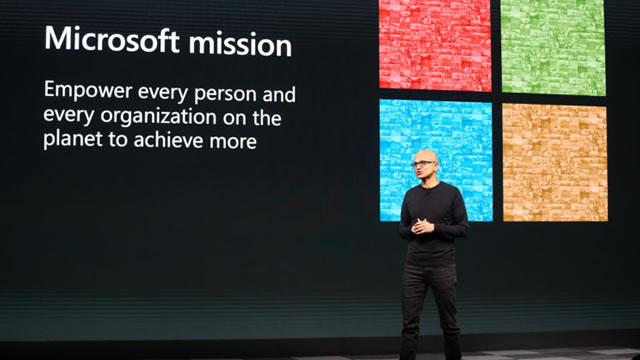
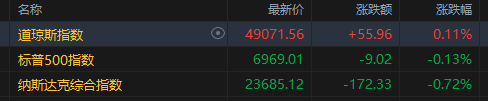
Market Overview - Major indexes closed off session lows, with the Dow up +55 points (+0.11%) and the S&P 500 down -0.13%. The Nasdaq fell -172 points (-0.72%) before recovering somewhat [1] Microsoft (MSFT) - Microsoft experienced a significant sell-off due to higher-than-anticipated AI spending and OpenAI exposure, resulting in a market cap loss of -$430 billion in one day. Despite beating earnings expectations for fiscal Q2, the outlook on AI spending appears riskier [2][8] Meta Platforms (META) - In contrast to Microsoft, Meta Platforms saw a +10.4% increase in stock price, benefiting from its AI investments in advertising and marketing, which are yielding gains in the social media space [3] Apple (AAPL) - Apple outperformed expectations in its fiscal Q3 report, with earnings of $2.84 per share surpassing the $2.65 consensus. Revenues reached $143.76 billion, exceeding expectations and showing a +16% year-over-year increase. iPhone sales rose +23% year-over-year to $85.27 billion, driven by a +38% surge in China sales [4][5] Visa (V) - Visa reported earnings of $3.17 per share, beating estimates by three cents, with revenues of $10.9 billion, a +15% increase from the previous year. However, concerns about future growth arise from proposed caps on credit card rates [6] SanDisk (SNDK) - SanDisk posted a remarkable earnings beat of $6.20 per share compared to the anticipated $3.54, with revenues of $3.03 billion. The company provided optimistic next-quarter earnings guidance of $12-14 per share, significantly higher than the Zacks consensus of $5.36. SanDisk's Data Center business saw a +64% growth quarter over quarter [7]




Sandisk's eye-popping earnings forecast helps justify 1,400% stock surge
MarketWatch· 2026-01-29 23:12
Core Insights - The storage maker's revenue guidance was nearly 60% higher than Wall Street consensus [1] - Profit guidance from the company was more than double what analysts had anticipated [1]

美股三大指数收盘涨跌不一,存储股闪迪盘后狂飙
Feng Huang Wang· 2026-01-29 22:57
Market Overview - Microsoft shares dropped nearly 10%, significantly impacting the software sector and contributing to a decline in major U.S. stock indices, although the Dow Jones managed to close slightly up by 0.11% [1][2][4] - The S&P 500 index fell by 0.13% to 6969.01 points, while the Nasdaq Composite index decreased by 0.72% to 23685.12 points, with both indices experiencing larger intraday declines of 1.5% and 2.6% respectively [1][2] Company Performance - Microsoft reported a slowdown in cloud business growth from 40% to 39%, with a gross margin of approximately 68%, marking a three-year low. This led to a 9.99% drop in its stock price [4] - Other software companies such as ServiceNow, Salesforce, Oracle, and SAP also experienced declines in their stock prices, with drops of 9.94%, 6.09%, 2.19%, and 15.2% respectively [4] - The iShares Expanded Tech-Software Sector ETF (IGV) fell by 4.94%, entering a technical bear market with a 22% decline from recent highs [4] Technology Sector Insights - Rob Williams, Chief Investment Strategist at Sage Advisory, noted that while artificial intelligence (AI) has driven economic growth, it has also raised valuation concerns in the stock market. He emphasized the need for tech giants to report "explosive" earnings to boost market sentiment [6] - Meta Platforms saw a stock increase of 10.4% after announcing continued investment in AI, while Apple reported better-than-expected quarterly revenue, leading to a post-market stock rise of over 3% [6] Notable Stock Movements - Major tech stocks showed mixed performance: Nvidia rose by 0.52%, Alphabet (Google) increased by 0.71%, while Amazon, Broadcom, and Tesla saw declines of 0.53%, 0.75%, and 3.23% respectively [7][8] - The Philadelphia Semiconductor Index rose by 0.16%, reaching a new historical high, with notable gains from companies like Lam Research and KLA Corporation [7] Earnings Reports - Apple reported first-quarter revenue of $143.76 billion, a 16% year-over-year increase, exceeding expectations of $138.4 billion. iPhone revenue was $85.27 billion, up 23% from the previous year [10] - SanDisk's second-quarter revenue was $3.03 billion, surpassing the expected $2.67 billion, while Western Digital also reported better-than-expected earnings [11][12]
Sandisk Corporation(SNDK) - 2026 Q2 - Earnings Call Transcript
2026-01-29 22:32
Financial Data and Key Metrics Changes - Revenue for the second quarter was $3,025 million, up 31% quarter-over-quarter and 61% year-over-year, exceeding guidance of $2,550 million-$2,650 million [16] - Non-GAAP gross margin for the second quarter was 51.1%, up from 29.9% in the prior quarter, driven by higher pricing and unit cost reductions [16][17] - Non-GAAP EPS for the second quarter was $6.20, up from $1.22 in the prior quarter, reflecting higher than expected revenue and lower costs [17] Business Line Data and Key Metrics Changes - Data center revenue was $440 million, up 64% sequentially, driven by increased demand for enterprise SSDs [16][8] - Edge revenue was $1,678 million, up 21% sequentially, with demand exceeding supply due to AI adoption [16][9] - Consumer revenue was $907 million, up 39% quarter-over-quarter, with a shift towards premium products [16][10] Market Data and Key Metrics Changes - The NAND market is experiencing structural evolution driven by AI, leading to higher demand across all end markets [12][13] - The data center market is expected to become the largest market for NAND by 2026, with significant growth in exabyte demand [21][70] - Pricing across segments is moving in tandem, with NAND flowing to the most attractive markets [85] Company Strategy and Development Direction - The company is transitioning to multi-year agreements with customers to ensure supply certainty and better align planning cycles [5][6] - Continued investment in R&D and capital expenditures is essential to support innovation and meet long-term demand [11][19] - The focus remains on disciplined execution and strategic partnerships to maximize value creation across diversified customer segments [15][19] Management's Comments on Operating Environment and Future Outlook - Management noted that customer demand is expected to remain well above supply beyond calendar year 2026, necessitating careful allocation planning [11] - The company anticipates a reset of margins at a structurally higher level, driven by innovation and investment in technology [22] - Management expressed optimism about the evolving market dynamics and the increasing importance of NAND in AI infrastructure [21][70] Other Important Information - The company closed the quarter with $1,539 million in cash and cash equivalents and $603 million in debt, with a net cash position of $936 million [18] - An agreement was reached with Kioxia to extend the Yokkaichi joint venture through December 31, 2034, ensuring continued product supply [19] - Guidance for the third quarter expects revenue between $4.4 billion and $4.8 billion, with non-GAAP gross margin projected between 65% and 67% [20] Q&A Session All Questions and Answers Question: How are you thinking about long-term agreements? - Management acknowledged the pros and cons of long-term agreements, emphasizing the need for confidence in sustained demand and attractive pricing [24][30] Question: Any plans to add supply given the current undersupply situation? - Management indicated that supply plans are in place, and they are focused on meeting customer demand while ensuring profitability [25][35] Question: Can you quantify incremental demand for NAND related to AI infrastructure? - Management noted that exabyte demand in the data center is forecasted to grow significantly, driven by AI, with high 60s exabyte growth expected for 2026 [47] Question: How should we think about capital return plans, particularly around share repurchases? - Management stated that the priority is to continue investing in the business and reducing debt, with capital return plans to be evaluated at the right time [49] Question: Can you provide an update on the product roadmap to meet new performance requirements? - Management highlighted ongoing innovation in high-performance products and the development of new technologies to meet the demands of AI [87][89]
Sandisk Corporation(SNDK) - 2026 Q2 - Earnings Call Transcript
2026-01-29 22:32
Financial Data and Key Metrics Changes - Revenue for the second quarter was $3,025 million, up 31% quarter-over-quarter and 61% year-over-year, exceeding guidance of $2,550-$2,650 million [16] - Non-GAAP gross margin for the second quarter was 51.1%, up from 29.9% in the prior quarter, and above guidance of 41%-43% [16] - Non-GAAP EPS for the second quarter was $6.20, up from $1.22 in the prior quarter, exceeding guidance of $3.00-$3.40 [17] Business Line Data and Key Metrics Changes - Data center revenue was $440 million, up 64% sequentially, reflecting strong demand driven by AI workloads [16][8] - Edge revenue was $1,678 million, up 21% sequentially, with demand exceeding supply due to AI adoption [16][9] - Consumer revenue was $907 million, up 39% quarter-over-quarter, with a shift towards premium products [16][10] Market Data and Key Metrics Changes - The NAND market is undergoing structural evolution driven by AI, with data center expected to become the largest market for NAND in 2026 [12][21] - Higher demand for NAND in data centers is impacting other markets, leading to overall growth across segments [13] - The company anticipates continued strong demand well above supply beyond calendar year 2026 [11] Company Strategy and Development Direction - The company is transitioning to multi-year agreements with customers to ensure supply certainty and better align planning cycles with demand [5][6] - Focus on disciplined execution through the BiCS8 transition, supporting average long-term bit growth in the mid to high teens [11] - Continued investment in R&D and capital expenditures to support advanced semiconductor technologies [11][19] Management's Comments on Operating Environment and Future Outlook - Management noted that the NAND industry is becoming more durable and structurally attractive with higher average returns [6] - The company expects margins to reset at a structurally higher level, delivering fair returns on innovation and investment [22] - Management expressed optimism about the evolving business practices in the data center market, which is becoming increasingly strategic [70] Other Important Information - The company closed the quarter with $1,539 million in cash and cash equivalents and $603 million in debt, with a net cash position of $936 million [18] - An agreement was reached with Kioxia to extend the Yokkaichi joint venture through December 31, 2034, ensuring continued product supply [19] - For the third quarter, the company expects revenue between $4.4-$4.8 billion and non-GAAP gross margin between 65% and 67% [20] Q&A Session All Questions and Answers Question: How are you thinking about long-term agreements? - Management acknowledged the pros and cons of long-term agreements, emphasizing the need for confidence in demand and pricing stability [24][30] Question: Any plans to add supply given the current undersupply situation? - Management indicated that supply plans are in place, and they are focused on meeting customer demand while ensuring profitability [25][35] Question: Can you quantify incremental demand for NAND related to AI infrastructure? - Management noted that data center exabyte growth is forecasted to be high 60s for 2026, driven largely by AI [47] Question: How should we think about capital return plans, particularly around share repurchases? - Management stated that the priority is to continue investing in the business and reducing debt, with capital return plans to be evaluated at the right time [48] Question: Can you provide an update on the product roadmap to meet new performance requirements? - Management highlighted ongoing innovation in high-performance products and the introduction of new technologies to meet AI demands [87]
Sandisk Corporation(SNDK) - 2026 Q2 - Earnings Call Transcript
2026-01-29 22:30
Financial Data and Key Metrics Changes - Revenue for the second quarter was $3,025 million, up 31% quarter-over-quarter and 61% year-over-year, exceeding guidance of $2,550-$2,650 million [15] - Non-GAAP gross margin for the second quarter was 51.1%, up from 29.9% in the prior quarter, and above guidance of 41%-43% [15] - Non-GAAP EPS for the second quarter was $6.20, up from $1.22 in the prior quarter, exceeding guidance of $3.00-$3.40 [16] Business Line Data and Key Metrics Changes - Data center revenue was $440 million, up 64% sequentially [15] - Edge revenue was $1,678 million, up 21% sequentially [15] - Consumer revenue was $907 million, up 39% quarter-over-quarter [15] Market Data and Key Metrics Changes - The NAND market is experiencing structural evolution driven by AI, with data center demand significantly increasing [11] - Bids were up 22% year-over-year and low single digits quarter-over-quarter [15] - The company expects the data center to become the largest market for NAND in 2026 [20] Company Strategy and Development Direction - The company is transitioning to multi-year agreements with customers to ensure supply certainty and better align planning cycles with demand [4] - Focus on disciplined execution and innovation in NAND technology to support long-term demand and profitability [10] - Continued investment in R&D and capital expenditures to maintain competitive advantage in the NAND market [18] Management's Comments on Operating Environment and Future Outlook - Management noted that customer demand is expected to remain well above supply beyond calendar year 2026 [10] - The company anticipates a structural shift in the NAND market that will reduce cyclicality and create higher long-term margins [11] - Management expressed optimism about the evolving business practices in the data center market, which is becoming increasingly strategic [70] Other Important Information - The company generated $843 million in adjusted free cash flow, representing a 27.9% free cash flow margin [17] - The Yokkaichi joint venture with Kioxia has been extended through December 31, 2034, ensuring continued product supply [18] - The company plans to maintain capital expenditure plans while supporting mid- to high-teens bit growth through the BiCS8 transition [12] Q&A Session Summary Question: How are you thinking about long-term agreements given the rapid price increases? - Management acknowledged the pros and cons of long-term agreements and emphasized the need for confidence in sustained demand to justify such agreements [24][29] Question: What are your plans regarding supply-demand balance and potential supply additions? - Management indicated that they are focused on aligning supply with long-term demand and are cautious about increasing capital spending without visibility into sustained demand [25][34] Question: Can you quantify incremental demand for NAND related to AI infrastructure? - Management noted that they are seeing significant increases in exabyte demand in the data center, projecting high 60s exabyte growth for 2026, primarily driven by AI [47] Question: What is the breakdown between TLC and QLC in the Enterprise SSD opportunity? - Management stated that the current mix is predominantly TLC, with QLC products expected to contribute to growth once they begin shipping [42] Question: How do you view the urgency of customers committing to NAND supply? - Management expressed that there is a growing urgency among customers, particularly in the data center market, to secure supply commitments for the future [68]
闪迪Q2营收30.3亿美元
Mei Ri Jing Ji Xin Wen· 2026-01-29 22:05
每经AI快讯,1月30日消息,闪迪第二财季营收30.3亿美元;第二财季经调整每股收益6.2美元;预计第 三财季营收44-48亿美元;预计第三财季经调整每股收益12-14美元。 ...
Mortgage rates hover around lowest level in three years, Sandisk stock soars on earnings
Youtube· 2026-01-29 21:53
Market Overview - The stock market closed mostly lower, with the Dow managing to finish slightly in the green, while the NASDAQ experienced its worst day in several months [1][2][3] - The S&P 500 ended with a minor loss of about 13 basis points, while the Russell 2000 small-cap index was also slightly down [3] Company Performance - Microsoft saw a significant drop, down approximately 10% at its lows, marking its worst performance in several months [4] - Tesla also declined by 3%, while Meta's stock rose by 10%, contributing to a strong performance in the communication services sector [4][5] - SanDisk reported a revenue of $3.03 billion, exceeding expectations of $2.68 billion, and its earnings per share came in at $620, significantly higher than the expected $344 [22][23] - SanDisk's stock has surged over 90% year-to-date, driven by high demand for memory products in the AI sector [24][25] Sector Analysis - The communication services sector reached a record high, while technology was the worst-performing sector, down 1.6%, primarily due to poor performance in software stocks [5][6] - The software industry faced widespread declines, with companies like SAP down 15% and Atlassian down 10% [6][7] - In the semiconductor space, companies like Lamb Research and KLA saw gains of about 3.5%, indicating a mixed performance within the sector [7] Geopolitical Impact on Oil - Crude oil prices rose to their highest levels since September, influenced by President Trump's threats of military action against Iran, which has led to a risk premium in the oil market [11][12] - Analysts noted that the market is not currently pricing in a full-scale conflict but is reacting to operational signals and geopolitical tensions [12][13] Housing Market Insights - US mortgage rates are holding steady at 6.1%, the lowest in three years, but housing affordability remains a challenge due to high home prices [44][45] - The "lock-in effect" is causing homeowners with low-rate mortgages to keep their homes off the market, contributing to tight inventory levels [48][50] - New home listings have increased, but they are still 20% below pre-pandemic levels, indicating a slow recovery in housing supply [50][56] Future Outlook - Analysts expect continued high demand for memory products, particularly in AI infrastructure, but caution against potential oversupply in the future as production ramps up [39][42] - The housing market may see improvements in inventory levels, but significant policy changes at the state and local levels are needed to address long-term supply issues [52][56]