IBI3001

Search documents
狂揽1357亿美元,谁是2025中国创新药出海“最贵”十单?
3 6 Ke· 2026-01-26 01:08
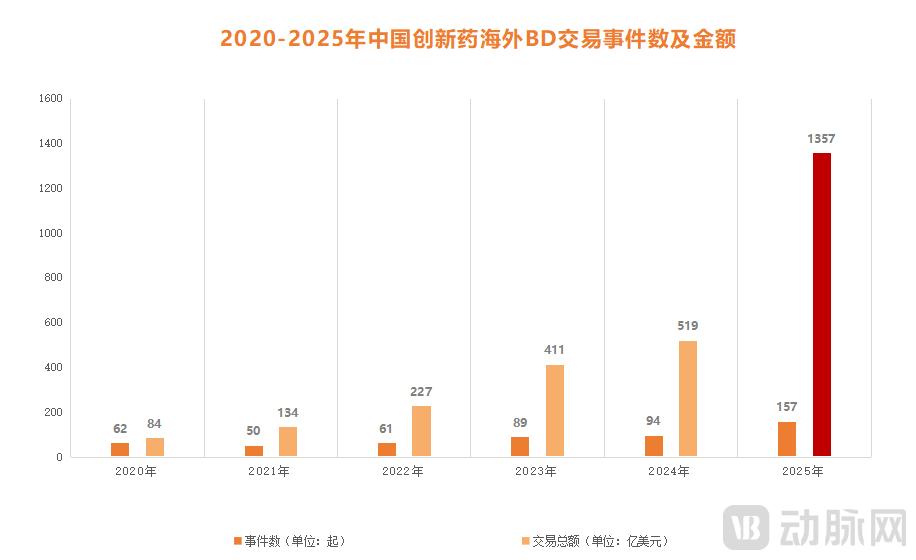
Core Insights - In 2025, China achieved a record high in overseas business development (BD) transactions for innovative drugs, with 157 deals totaling $135.655 billion, including an upfront payment of $7 billion [1][3][16] - The year 2025 marked a significant shift in the BD landscape, transitioning from a "1.0 era" of simple asset sales to a "2.0 era" characterized by deeper partnerships and higher value creation [5][16] Transaction Overview - The top three BD transactions in 2025 included a $13 billion deal between Qide Pharma and Biohaven & AimedBio, a $12.5 billion deal between Hengrui and GSK, and a $11.4 billion deal between Innovent Biologics and Takeda [2][11] - China accounted for 49% of the global total for BD transactions in 2025, surpassing the United States for the first time [2][11] Financial Metrics - The total upfront payments for BD transactions in China reached $7 billion in 2025, nearly doubling from $4.1 billion in 2024, with individual transaction upfront payment ratios increasing to approximately 5.2%-6.7% [7][16] - Milestone payments also saw significant activity, with at least 10 transactions triggering milestone payments in 2025, indicating a trend towards more structured financial agreements [9][16] Therapeutic Areas and Pipeline Stages - Oncology remained the primary focus of BD transactions, accounting for 51.4% of deals, although other areas such as immunology and metabolic diseases gained traction, rising to 34.1% [11][13] - The distribution of pipeline stages showed a shift towards later-stage projects, with 22% of transactions involving Phase III or marketed products, reflecting a preference for assets with established clinical data [13][16] Collaboration Models - The "Co-Co" model, which emphasizes joint development and commercialization, emerged as a new strategic direction in 2025, complementing traditional "License-out" and "NewCo" models [15][16] - This evolution in collaboration models indicates a trend towards deeper partnerships, allowing for shared risks and rewards, and enhancing the overall value proposition of BD transactions [15][16] Future Outlook - The demand for Chinese innovative drugs is expected to remain strong in 2026, driven by the approaching patent cliffs and increasing global competition, suggesting continued activity in BD transactions [21][22] - The industry is anticipated to further mature, focusing on quality and value in BD transactions, with an emphasis on long-term collaboration and mutual benefits [21][22]


2025中国创新药出海一年狂揽1356亿美元,2026年能否持续?
Jing Ji Guan Cha Wang· 2026-01-01 02:55
Core Insights - The surge in BD (business development) transactions in China's innovative pharmaceutical sector is a reflection of the industry's maturation and increasing global recognition, with 2025 marking a significant year for License-out agreements [3][4][5] Group 1: BD Transactions Overview - In December 2025, several Chinese pharmaceutical companies, including Ganli Pharmaceutical and Heng Rui Medicine, announced significant BD agreements, indicating a trend towards increased collaboration and innovation in the sector [2] - The total value of BD transactions for Chinese innovative drugs reached $135.655 billion in 2025, with upfront payments totaling $7 billion, marking a historical high in both transaction volume and value [3] - The number of BD transactions involving Chinese companies and top multinational corporations (MNCs) increased from 3 in 2015 to 35 in 2025, highlighting the growing interest from global players [3] Group 2: Market Dynamics and Future Outlook - The BD transaction boom is expected to continue into 2026, with industry experts predicting sustained high activity levels, although the focus may shift from quantity to value [5][14] - The NewCo model, which allows for "technology equity + capital cooperation," is emerging as a new pathway for Chinese pharmaceutical companies to engage in international markets, although its prevalence may decrease in 2026 [14][15] - The overall trend indicates a shift from isolated transactions to a more collaborative ecosystem, where companies leverage partnerships to enhance their global market presence [16][20] Group 3: Transaction Structures and Strategies - The structure of BD transactions is evolving, with companies increasingly engaging in co-development and co-commercialization agreements, allowing for shared risks and benefits [10][11] - The pricing of BD transactions is becoming more rational, with companies focusing on the clinical value and market potential of their products, which influences upfront payment amounts [19][18] - Legal and advisory services are becoming integral to BD transactions, reflecting the increasing complexity and importance of these deals in the pharmaceutical landscape [17]


创新药出海第一大单正式生效,国产药能否领跑新一代肿瘤疗法?
Xin Lang Cai Jing· 2025-12-05 11:24
Core Viewpoint - The strategic collaboration between Innovent Biologics and Takeda Pharmaceutical has officially commenced, marking a significant milestone in China's innovative drug industry with a potential deal value of up to $11.4 billion, setting a record for Chinese innovative drugs going global [1][3]. Group 1: Collaboration Details - Innovent Biologics will receive an upfront payment of $1.2 billion, which includes a $100 million strategic equity investment and up to $10.2 billion in milestone payments [1]. - The collaboration focuses on the global development and commercialization of next-generation immuno-oncology (IO) and antibody-drug conjugate (ADC) therapies, specifically IBI363 and IBI343, along with early-stage project IBI3001 [1][7]. - IBI363 is recognized as one of the fastest-developing PD-1/IL-2 products globally, with ongoing clinical trials, including a pivotal Phase III study for squamous non-small cell lung cancer [6][10]. Group 2: Market Position and Financial Performance - Innovent Biologics has become one of the largest biopharmaceutical companies in China since its establishment in 2011, with a diverse product portfolio covering oncology, autoimmune diseases, metabolism, and ophthalmology [10]. - The company reported a revenue of 5.953 billion yuan in the first half of the year, a 50.6% year-on-year increase, and achieved profitability with a profit of 834 million yuan [11]. - As of the end of July, Innovent had over 14 billion yuan in cash reserves, positioning itself well for future growth and development [10].

中国银河证券:维持信达生物(01801)“推荐”评级 综合管线领域突破第二增长曲线
智通财经网· 2025-11-14 07:27
Core Viewpoint - China Galaxy Securities reports that Innovent Biologics (01801) has become a leading biopharma company in China, excelling in innovative drug R&D, production, and commercialization, particularly in the oncology sector, which is expected to drive growth [1] Group 1: Financial Projections - The company is projected to achieve revenues of 11.891 billion, 14.836 billion, and 20.029 billion yuan for the years 2025, 2026, and 2027 respectively, with net profits of 0.824 billion, 1.378 billion, and 2.059 billion yuan for the same years [1] Group 2: Strategic Partnership with Takeda - On October 22, 2025, Innovent Biologics entered a global strategic partnership with Takeda Pharmaceutical to accelerate the global rollout of next-generation IO and ADC therapies, including IBI363, IBI343, and IBI3001, with an upfront payment of 1.2 billion USD and potential milestone payments totaling up to 11.4 billion USD [1] Group 3: Development of IBI363 - Innovent will co-develop IBI363 with Takeda, sharing development costs at a 40/60 ratio, and profits in the U.S. market will also be split 40/60, with Takeda leading the development [2] - IBI363 has shown promising data at the 2025 ASCO meeting, with a cORR of 36.7%, mPFS of 9.3 months, and a 12-month OS rate of 70.9%, with a global Phase III clinical plan set to launch soon [2] Group 4: Rights Granted for IBI343 and IBI3001 - Innovent has granted Takeda exclusive rights to IBI343 outside of Greater China, with potential milestone payments and high-tier sales sharing [3] - Takeda will focus on the global development of IBI343, particularly in first-line gastric and pancreatic cancer, while IBI3001's rights outside Greater China are also available for Takeda to exercise in the future [3]

中国银河证券:维持信达生物“推荐”评级 综合管线领域突破第二增长曲线
Zhi Tong Cai Jing· 2025-11-14 07:24
Core Viewpoint - Xinda Biopharma has established itself as a leading player in China's biopharmaceutical sector, particularly in the oncology field, and is expected to continue its growth trajectory with new strategic partnerships and product developments [1] Group 1: Strategic Partnership - On October 22, 2025, Xinda Biopharma entered into a global strategic collaboration with Takeda Pharmaceutical to accelerate the global rollout of next-generation IO and ADC therapies, involving three products: IBI363, IBI343, and IBI3001 [1] - The collaboration includes an upfront payment of $1.2 billion (including a $100 million premium for strategic equity investment) and potential milestone payments, with a total deal value reaching up to $11.4 billion [1] Group 2: Product Development and Commercialization - Xinda will co-develop IBI363 with Takeda, sharing development costs at a 40/60 ratio and splitting profits from commercialization in the U.S. market similarly [2] - IBI363 has shown promising data at the 2025 ASCO conference, with a cORR of 36.7%, mPFS of 9.3 months, and a 12-month OS rate of 70.9% for immune-resistant NSCLC, with a global Phase III clinical plan set to launch soon [2] Group 3: ADC Product Rights - Xinda granted Takeda exclusive rights to IBI343 outside of Greater China, which includes potential milestone payments and high-tier percentage sales sharing [3] - IBI343 is currently undergoing Phase III clinical trials for gastric cancer in China and Japan, and has completed global Phase I/II trials for PDAC [3] - Additionally, Xinda has granted Takeda an option for early pipeline IBI3001 outside of Greater China, which could yield option fees, milestone payments, and high-tier sales sharing if exercised [3]
三季净赚49亿美元,医药巨头辉瑞,100亿美元收购Metsera
3 6 Ke· 2025-11-11 01:38
Core Insights - The surge in BD transactions has catalyzed the domestic innovative drug market, driven by multinational corporations (MNCs) eager to replenish their pipelines amid declining market performance post-2025 [1][2] - Major MNCs like Pfizer, Novo Nordisk, and Merck have experienced significant stock price declines, with Novo Nordisk's stock dropping over 65% in the past year [1] - Pfizer's acquisition of Metsera for $10 billion highlights the competitive landscape for blockbuster products, particularly in the weight loss drug sector [1][3] Group 1: MNC Market Dynamics - MNCs are facing a fundamental shift in pricing logic as single blockbuster products lose their competitive edge, leading to intensified competition for global best-selling products [1][2] - The U.S. price reductions for weight loss drugs, such as a drop from $1,350 to an average of $350 for Novo Nordisk's semaglutide, indicate a strategic "price for volume" trade-off [2] - The total value of BD transactions involving Chinese innovative drugs reached $75 billion by August 2023, accounting for 36% of global transactions, with projections of 18% for 2024 [2] Group 2: Pfizer's Strategic Moves - Pfizer's Q3 2025 earnings report showed a revenue of $16.65 billion, a 6% decline year-on-year, but better than analyst expectations, with adjusted net profit at $4.949 billion, down 18% [3] - The company has terminated 11 research projects across various therapeutic areas, indicating a strategic refocus [4] - Pfizer's successful acquisition of Metsera may position it favorably in the weight loss market, potentially revitalizing the global pharmaceutical industry and presenting opportunities for domestic innovative drug companies [5]

跨国药企进博会“秀肌肉”,在华建厂买创新药
3 6 Ke· 2025-11-05 12:34
Core Insights - The 8th China International Import Expo (CIIE) opened in Shanghai on November 5, 2023, with the theme "Open Up to Create New Opportunities, Collaborate to Share a New Future," attracting participation from 155 countries and regions, with over 4,108 foreign enterprises exhibiting, marking a new high in scale [1][3] Industry Developments - Multinational pharmaceutical companies are increasingly establishing R&D centers in China, with Astellas announcing its first innovation R&D center in Beijing on October 27, 2023, complementing its existing centers in Tokyo, San Francisco, Boston, Chicago, and Cambridge [3][4] - Major pharmaceutical companies like AstraZeneca and Boehringer Ingelheim have announced new investment plans in China, with AstraZeneca planning to invest $2.5 billion (approximately 18 billion RMB) and Boehringer Ingelheim over 5 billion RMB [4][5] - The trend of multinational companies acquiring innovative drug assets in China is accelerating, with companies like Takeda and Pfizer making significant investments to secure innovative drug assets, setting new records for business development (BD) transaction volumes in the Chinese innovative drug market [4][5] Market Positioning - China is evolving from a passive consumer market to a global innovation hub for multinational pharmaceutical companies, participating deeply in the entire process from R&D to production and sales [5][6] - By 2024, over 20% of the top 100 life sciences research institutions in the Nature Index will be in China, and the number of clinical trials initiated in China is expected to approach 2,000, reflecting a significant increase in China's innovation capabilities [6][7] Collaborative Trends - The number of multinational pharmaceutical companies establishing R&D centers in China has surged, with at least eight companies announcing new centers in October 2023 alone, including Eli Lilly, Pfizer, Bayer, and AstraZeneca [8][9] - Eli Lilly has invested over 20 billion RMB in China, focusing on a full industry chain layout from R&D to commercialization, and plans to continue expanding its local collaborations [10][11] Investment and Business Development - The total amount of innovative drug licensing agreements from China has surpassed $100 billion, with significant growth in transaction volumes and values, indicating a robust BD trend in the Chinese pharmaceutical market [15][16] - Notable transactions include Pfizer's $12.5 billion upfront payment for a breakthrough drug and Takeda's recent collaboration with Innovent Biologics involving a potential total deal value of up to $11.4 billion [16][17] Future Outlook - The trend of multinational companies seeking innovative resources in China is expected to continue, driven by the need to fill revenue gaps due to patent expirations in the U.S. and Europe [18][19] - The influence of Chinese biotech on the global market is growing, with projections indicating that by 2040, 35% of FDA-approved innovative drugs may originate from China [19]


美元基金重新“杀”回中国创新药
3 6 Ke· 2025-11-05 02:10
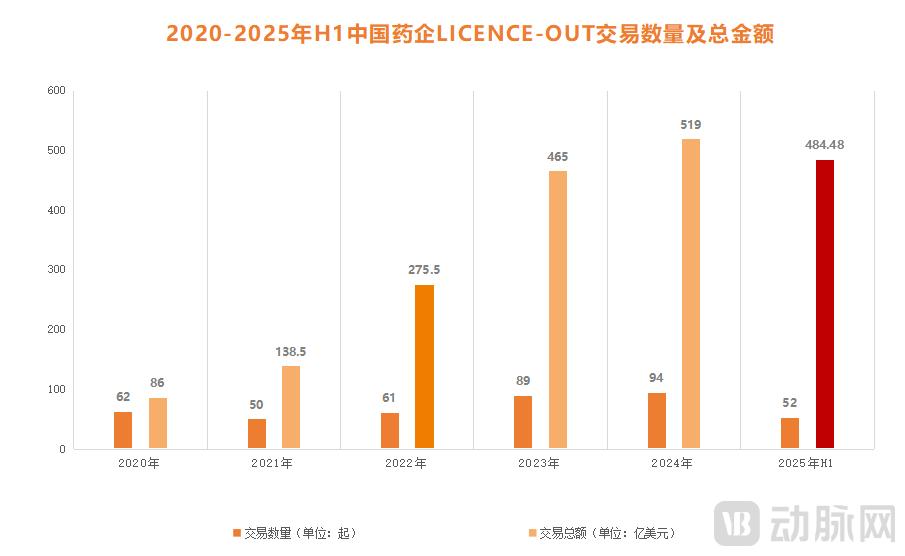
Core Insights - The article highlights the resurgence of US dollar funds in the Chinese innovative drug market, with significant investments and licensing deals indicating a renewed interest in this sector [1][4][5]. Group 1: Investment Trends - In 2025, Heng Rui Medicine completed a licensing agreement with Braveheart Bio for the HRS-1893 project, with an upfront payment of $65 million and a total deal value of up to $1.013 billion, marking the fourth business development (BD) deal for Heng Rui this year, totaling over $15 billion [1]. - In the first half of 2025, the total value of outbound licensing deals for Chinese innovative drugs reached $48.448 billion, nearing the total for the entire year of 2024, with over 80% of these deals involving US dollar funds [4]. - The return of US dollar funds to the Chinese innovative drug market is characterized by a shift from direct investments to more strategic BD transactions, focusing on specific drug pipelines and products rather than entire companies [13][14]. Group 2: Market Dynamics - The article notes that from 2024 to 2030, major pharmaceutical companies in the US and Europe will face a revenue gap of approximately $360 billion due to patent expirations, prompting them to seek acquisitions in the Chinese innovative drug sector to fill this void [9]. - The quality of Chinese innovative drugs has significantly improved, with over 1,250 new drugs entering the research phase in 2024, closely approaching the number in the US [11]. - The competitive landscape has intensified, with not only US dollar funds but also European, Middle Eastern, and East Asian capital increasingly targeting Chinese innovative drug assets, leading to heightened competition for quality investments [12]. Group 3: Strategic Shifts - US dollar funds are transitioning from a broad investment strategy to a more focused approach, emphasizing "certainty first" in their investment decisions, which includes a preference for assets with clear international market potential [13][14]. - The NewCo model is gaining traction, allowing for deeper collaboration between US dollar funds and Chinese innovative drug companies, sharing risks and benefits more equitably [15][16]. - The article suggests that the current environment presents a strategic opportunity for Chinese innovative drug companies to leverage US dollar fund investments while maintaining a focus on original innovation and enhancing the value of their drug pipelines [23][24].
Takeda(TAK) - 2026 Q2 - Earnings Call Presentation
2025-10-30 10:00
Financial Performance - FY2025 H1 revenue decreased by 69% to JPY 22195 billion[21], a 39% decrease at CER[21] - FY2025 H1 core operating profit decreased by 112% to JPY 6392 billion[21], an 88% decrease at CER[21] - FY2025 H1 adjusted free cash flow increased by 1123% to JPY 5254 billion[21] - Growth & Launch Products increased by 53% at CER in H1[18, 24] - The company maintains broadly flat revenue guidance at CER[18, 36] Pipeline Update - Rusfertide and oveporexton are on track to file within FY2025[18] - Zasocitinib Ph3 psoriasis data is expected in H2[18] - Mezagitamab Ph1b IgAN data show durable eGFR over 18 months[18] - A partnership with Innovent Biologics to bolster the oncology pipeline[18] Oncology Partnership - Takeda entered into a license and collaboration agreement with Innovent Biologics for rights to IBI343 and IBI363, and an exclusive option to license rights to IBI3001, in each case worldwide outside of mainland China, Hong Kong, Macau and Taiwan[12] - IBI363 has demonstrated encouraging data across multiple solid tumor types, with a confirmed objective response rate (cORR) of 367% in sqNSCLC (IO-Refractory) and a median overall survival (mOS) of 153 months at 1/15 mg/kg[80] - IBI343 has shown robust monotherapy activity and a favorable safety profile, with a cORR of ~30% in 2L Pancreatic Cancer (CLDN182 1+/2+/3+ ≥60% expression) and an mOS of 121 months[94]
信达生物达成百亿美元BD 股价为何下行?
BambooWorks· 2025-10-30 02:26
Core Insights - The article discusses a historic business development agreement between Innovent Biologics and Takeda Pharmaceutical, valued at $11.4 billion, setting a record for single-license deals in China's innovative drug sector [1][2]. - Despite the significant deal, the market reaction has been lukewarm, with Innovent's stock price declining after the announcement, reflecting broader valuation pressures in the biopharmaceutical sector [2][6]. Summary by Sections Agreement Details - Innovent Biologics has entered a global strategic collaboration with Takeda involving three investigational products, with a total deal value of $11.4 billion, including a $1.2 billion upfront payment [2][4]. - The upfront payment includes a $100 million strategic equity investment from Takeda, priced at a 20% premium to the average closing price over the previous 30 trading days [2]. Product Pipeline - The most significant asset in this deal is IBI363, a first-in-class PD-1/IL-2 bispecific antibody fusion protein, which is currently in multiple registration clinical trials, including a global Phase III trial for small cell lung cancer [4][6]. - Innovent has adopted a "Co-Co" model for IBI363, sharing global development costs with Takeda at a ratio of 60% for Takeda and 40% for Innovent, allowing for joint commercialization in the U.S. market [4][6]. Market Concerns - There are concerns regarding the "Co-Co" model, as Innovent will still bear 40% of the overseas development costs, which may lead to significant cash outflows compared to a traditional licensing model [6]. - However, this model allows Innovent to participate deeply in global clinical trial design and execution, which is crucial for its long-term growth strategy [6]. Financial Performance - Innovent reported a revenue of 5.95 billion yuan for the first half of 2025, a 50.6% year-on-year increase, with a net profit of 834 million yuan, indicating improving cash flow [7]. - The company's current price-to-sales ratio is approximately 11 times, compared to 7.5 times for another major player, BeiGene, suggesting a premium valuation for Innovent [7].