Uber(UBER)

Search documents
软件和支付类股下跌 此前Citrini就人工智能风险发文
Xin Lang Cai Jing· 2026-02-23 16:14
Core Insights - DoorDash and American Express led declines in software and payment stocks, respectively, following a report from Citrini Research discussing hypothetical scenarios of AI's impact on the market and global economy [1] Group 1: Stock Performance - DoorDash's stock fell by 6.3% [1] - Uber's stock decreased by 3.8% [1] - Salesforce's stock dropped by 5.3% [1] - ServiceNow's stock declined by 4.3% [1] Group 2: Payment Stocks - Mastercard's stock fell by 3.65% [1] - Visa's stock decreased by 3.0% [1] - American Express's stock dropped by 7.5% [1] - First Capital Financial's stock declined by 6.4% [1] - Apollo Global Management's stock fell by 5.0% [1] - Blackstone's stock decreased by 7.4% [1] - KKR's stock dropped by 7.5% [1]


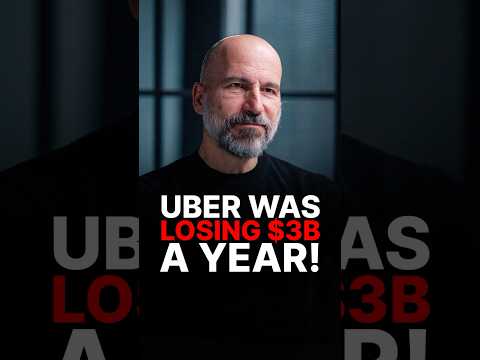
UBER WAS LOSING $3B A YEAR! 🤯
The Diary Of A CEO· 2026-02-23 14:19
You come to Uber, you're going to work your ass off. And if you're not performing, we're going to let you know. >> But do you ever worry that they might not be able to deal with the truth.>> Then they can leave because the most important skill in life is the skill of working hard. And when you see the top athletes, Ronaldo, Michael Jordan, of course they're talented. But the thing that's different about them is they work their asses off.And that's a learned skill. That's not something you're born with. You ...

Uber CEO: I Have To Be Honest, AI Will Replace 9.4 Million Jobs At Uber!
The Diary Of A CEO· 2026-02-23 08:01
You come to Uber, you're going to work your ass off. And if you're not performing, we're going to let you know. >> But do you ever worry that they might not be able to deal with the truth.>> Then they can leave because the most important skill in life is the skill of working hard. And when you see the top athletes, Ronaldo, Michael Jordan, of course they're talented. But the thing that's different about them is they work their asses off.And that's a learned skill. That's not something you're born with. You ...

Life360 Board Director Sells Nearly 8k Shares as Company Expands Partnership with Uber
The Motley Fool· 2026-02-22 23:49
Core Insights - Life360 has expanded its partnership with Uber, allowing users to link accounts for better coordination of rides, which is expected to enhance user experience and engagement [10] - The company has shown strong stock performance, with a 54% increase in 2025, despite a 27% decline in 2026 [8][11] - Life360 completed the acquisition of Nativo, aiming to leverage its resources for increased ad revenue and partnership opportunities [9] Transaction Summary - Charles J. Prober sold 7,930 shares for approximately $389,000 on February 13, 2026, following an option exercise [1][2] - Post-transaction, Prober holds 105,456 shares valued at $5.20 million based on the closing price on the same day [2] - The sale aligns with Prober's recent trading activity, reflecting a systematic disposition pattern [4] Company Overview - Life360 reported a total revenue of $459.03 million and a net income of $29.68 million for the trailing twelve months [6] - The company has 455 employees and has experienced a 5.61% price change over the past year as of February 22, 2026 [6] - The stock is currently trading at $50.66, with a market capitalization of $4.0 billion [4] Strategic Developments - Life360 plans to utilize Nativo's capabilities to enhance its advertising strategy, capitalizing on its user base of 50 million monthly users [9] - The integration with Uber is expected to roll out in the coming months, further solidifying Life360's position in the location-based services market [10] - The company specializes in location-based safety solutions, offering a suite of services for real-time tracking and digital security [12]


Record IPOs Are Back: Why Retail Investors May Be Walking Into A Trap
Yahoo Finance· 2026-02-22 16:32
Core Insights - The transition from private to public markets often reveals discrepancies between optimistic narratives and actual financial discipline, leading to disappointing outcomes for investors [1][2][10] Group 1: IPO Dynamics - WeWork's failure to complete the traditional IPO process highlights the importance of governance and cash management in public market success [1] - Uber's post-IPO performance illustrates the gap between ambitious growth narratives and the accountability required in public markets, resulting in stock prices trading below the offering price for two years [2] - The unicorn boom periods in 2015 and 2021 saw inflated private valuations that public markets struggled to justify, emphasizing the risk of overvaluation based on user growth rather than sustainable economics [3] Group 2: Market Sentiment and Investor Behavior - Current IPO activity is characterized by a resurgence in capital market confidence, but this enthusiasm should prompt caution among retail investors, as heavy issuance often indicates sellers are comfortable distributing risk [5][6] - Retail investors tend to focus on initial price movements and oversubscription as indicators of quality, but the IPO process can distort these perceptions, leading to misjudgments about long-term value [7][11] - The quality of companies going public can vary significantly with market sentiment, raising questions about the durability and capital allocation discipline of new entrants [12] Group 3: Evaluating New Listings - Investors should scrutinize management incentives, capital allocation strategies, and balance sheet resilience when evaluating new IPOs to assess the likelihood of sustainable growth [13] - Understanding the timing of insider sales can provide insights into the motivations behind an IPO, with favorable conditions often driving issuance rather than purely positive market sentiment [14] - Record IPO activity may benefit capital markets but does not guarantee positive outcomes for retail investors, suggesting a need for patience and careful observation post-listing [15][16]
Uber's CEO Just Delivered Disappointing News for Tesla Stock Investors
The Motley Fool· 2026-02-22 16:30
Core Insights - The transportation industry is experiencing a significant shift towards autonomous vehicle (AV) technology, with electric vehicles gaining market share, primarily led by Tesla [1] - Investors may need to recalibrate their expectations for Tesla, especially in light of comments from competitors regarding the future of AVs [2] Group 1: Tesla - Tesla's current market cap stands at $1.5 trillion, with a price-to-earnings ratio of 382, indicating high investor expectations [8] - The company aims to launch a global robotaxi fleet to generate high-margin, recurring revenue, but faces numerous technical, regulatory, and safety challenges [6][7] - As of the end of last year, Tesla's robotaxis were operational in limited areas, suggesting that significant progress is still required to meet ambitious AV goals [7] Group 2: Uber - Uber is the leader in the ride-hailing market, boasting 202 million monthly active users and completing 3.8 billion trips in Q4 [4] - The CEO of Uber, Dara Khosrowshahi, predicts that by 2029, the company will be the largest facilitator of AV trips globally, although he cautions that AVs will remain a small part of the rideshare market for years [5] - Uber's partnerships and extensive user base provide a competitive advantage, allowing it to scale quickly in the AV space [9] - Khosrowshahi envisions a hybrid system of AVs and driver-enabled rides, which aligns with fluctuating demand and benefits Uber's business model [10]

Bill Ackman Bought Only 1 New Stock. Here’s Why the Billionaire is Bullish on Meta
Yahoo Finance· 2026-02-21 15:54
Core Viewpoint - Bill Ackman, through Pershing Square Capital Management, has made significant investments in Meta Platforms, indicating a bullish outlook on the company's future growth potential, particularly in the context of its advertising revenue and AI initiatives [4][5][6]. Investment Strategy - Ackman's investment strategy involves taking large, concentrated positions in high-quality businesses, often supported by deep research [2][3]. - In Q4, Ackman exited his position in Chipotle Mexican Grill and increased his stake in Amazon by approximately 65%, now holding about 9.6 million shares [3]. Meta Platforms Investment - Pershing Square acquired around 2.7 million shares of Meta Platforms, valued at approximately $1.8 billion, making it the fund's fifth-largest holding, accounting for about 11% of the total $15.5 billion portfolio [5][8]. - The investment in Meta was opportunistic, occurring after a significant drop in the stock price due to concerns over AI-related capital expenditures [5]. Financial Performance - Meta generated $200 billion in revenue in 2025, reflecting a 22% year-over-year growth, primarily driven by its Family of Apps segment [7][8]. - The Reality Labs division, which focuses on wearables and metaverse projects, incurs losses that account for about 25% of overall profits [7]. Advertising and AI Impact - Meta's AI-driven ad ranking system has proven to be highly effective, delivering four times more revenue impact compared to simply increasing ad load [8]. - The company is currently trading at 22 times forward earnings, indicating a valuation that reflects its growth potential [8].



Say Hello to the Tech Superstar That's Staring at a Multi-Trillion-Dollar Opportunity (Hint: It's Not a "Magnificent Seven" Stock)
The Motley Fool· 2026-02-21 09:00
Core Insights - The CEO of Uber has addressed investor concerns regarding the potential risks posed by autonomous vehicles (AVs), emphasizing the significant opportunities they present for the company [4][11] - Uber is currently positioned as a dominant player in the AV market, with plans to expand its operations to 15 cities by year-end [7][9] Company Overview - Uber's market capitalization stands at $152 billion, with a current stock price of $73.87 and a gross margin of 32.89% [6][7] - The company has 202 million active users, which provides a critical advantage through a powerful network effect [10] Market Dynamics - The introduction of AVs is expected to unlock a multi-trillion-dollar opportunity for Uber, despite current AVs representing only 0.1% of global ride-hailing trips [4][9] - The expansion of AV supply is anticipated to increase the total market, as seen in cities like Atlanta and Austin [8] Competitive Landscape - Uber's advantages include global scale, deep demand density, and sophisticated marketplace technology, which differentiate it from competitors in the AV space [5] - The company faces competition from market leaders like Tesla and Waymo, but its established infrastructure and experience in matching trips provide a competitive edge [3][5]

UBER vs. LYFT: Which Ride-Hailing Stock Is Better Placed Post Q4?
ZACKS· 2026-02-20 15:36
Core Insights - Uber Technologies has adopted an aggressive global expansion strategy while diversifying its business model, moving beyond ride-sharing to include Uber Eats and Uber Freight, positioning itself as a comprehensive transportation and delivery ecosystem [1] - Lyft has focused primarily on ride-sharing within the United States, limiting its exposure to faster-growing sectors like delivery services and international markets, which allows for resource allocation to enhance its core offering [2] Uber's Performance - Uber reported fourth-quarter 2025 earnings per share of 71 cents, missing the Zacks Consensus Estimate of 79 cents and reflecting a 77.8% year-over-year decline [5] - Total revenues for Uber reached $14.3 billion, slightly exceeding the Zacks Consensus Estimate of $14.2 billion, with a year-over-year increase of 20.1% [5] - The Mobility segment saw revenues increase by 19% year over year to $8.2 billion, driven by a recovery in travel demand post-pandemic [6] - Gross bookings from the Mobility segment rose 19% year over year to $27.4 billion [7] - The Delivery segment's revenues grew 29% year over year, with gross bookings increasing 26% to $25.4 billion [8] - Despite the earnings miss, Uber has a strong earnings surprise record, having outpaced estimates in three of the past four quarters [9] - Uber's stock declined 7% following the earnings release due to concerns over its earnings guidance and investments in affordable mobility offerings [10][13] - Over the past six months, Uber's shares have underperformed the Zacks Internet-Services industry, primarily due to competition in the autonomous vehicle space [14] Lyft's Performance - Lyft reported a loss per share of 20 cents for the fourth quarter of 2025, missing the Zacks Consensus Estimate of earnings of 32 cents, while revenues of $1.59 billion also fell short of expectations [17] - Gross bookings for Lyft increased 19% year over year to $5.1 billion, marking the 19th consecutive quarter of double-digit growth [19] - Lyft's board authorized a $1 billion share repurchase program, indicating a shareholder-friendly approach [20] - Despite the earnings miss, Lyft's stock has performed better than Uber's over the past six months [20] Valuation Comparison - Lyft is trading at a forward sales multiple of 0.76X, significantly lower than Uber's 2.55X, indicating a more attractive valuation [23] - Lyft holds a Value Score of A compared to Uber's C, suggesting a more favorable investment profile [23] Conclusion - Both companies are experiencing growth in gross bookings, but Lyft's favorable valuation, recent buyback announcement, and better price performance position it as a more attractive investment compared to Uber [24]


Uber: Market Is Likely Pricing It Wrong By Ignoring Its Platform Moat
Seeking Alpha· 2026-02-20 15:13
Group 1 - The market sentiment regarding Uber Technologies, Inc. has become increasingly pessimistic concerning its prospects in the autonomous driving sector, which is critical for determining long-term industry leaders [1] - The article emphasizes the importance of identifying attractive risk/reward opportunities in the context of Uber's performance and market position [1] - The focus is on stocks with strong growth potential and those that have been significantly beaten down, suggesting that Uber may fall into the latter category [1]