Walmart(WMT)

Search documents
Stock market today: S&P 500, Nasdaq rise, continuing rebound after Wall Street's volatile week
Yahoo Finance· 2026-02-09 14:32
Market Overview - US stocks experienced a positive turn on Monday, with the S&P 500 rising approximately 0.5% and the Nasdaq Composite gaining nearly 1%, while the Dow Jones Industrial Average remained above 50,000 for the first time [1] - Wall Street is currently debating the impact of AI disruptions on software companies, highlighted by a significant drop in shares of Monday.com, which fell as much as 22% due to disappointing revenue and profit guidance [2][12] Company Earnings and Performance - Cleveland-Cliffs stock dropped 19% after the steel producer's fourth-quarter revenue of $4.3 billion fell short of estimates of $4.5 billion, with a net loss per share of $0.44, which was better than the expected loss of $0.60 [5][6][7] - Monday.com reported adjusted earnings per share of $1.04, exceeding estimates of $0.92, but its first-quarter revenue guidance of $338 million to $340 million was below expectations of $342 million, leading to a 15% drop in stock price [19][20][21] - Kroger's stock surged over 8% after announcing the appointment of former Walmart executive Greg Foran as CEO, aiming to capture market share following a blocked acquisition [9][10] Economic Data and Trends - Investors are awaiting the delayed January jobs report from the Bureau of Labor Statistics, with a focus on potential signs of weakness in the labor market following a disappointing ADP payroll update [4] - Gold futures rose above $5,000 an ounce, while Bitcoin fell below $69,000 after experiencing significant volatility [3][26][27] Strategic Developments - STMicroelectronics announced a multiyear, multibillion-dollar deal with Amazon to supply chips for its data centers, resulting in an 8% increase in STMicroelectronics' stock [13][14][15] - QuantumScape's stock rose 14% following the launch of its "Eagle Line" battery production factory in San Jose [28]


深圳人又被“拿捏”了?首店又爆火,这个巨头的“深度打法”懂人心
Nan Fang Du Shi Bao· 2026-02-09 14:16
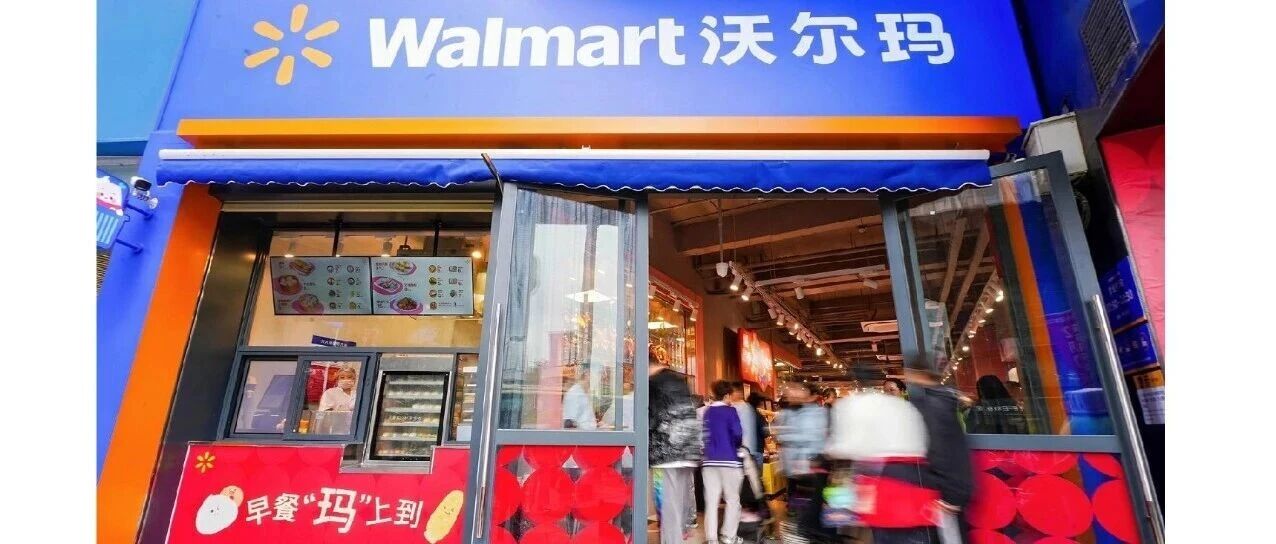
深圳福田的打工人最近又多了个宝藏打卡地!沃尔玛和小红书联名的全国首家玛薯社区店一开业就挤爆 了,春节采买的人潮一波接一波,香菜味酸奶、星球坚果薄脆、获奖瑰夏黑咖啡这些联名款被疯抢, 500㎡的小店藏着"一日五餐"的所有美好,步行就能实现品质生活自由。 谁能想到,曾经的"大卖场巨头"沃尔玛,如今把社区店玩出了新花样?"玛薯"一月双店落地的速度、刷 爆社媒的联名品、家门口就能享受到的全球好货,这波操作不仅让深圳人直呼"太懂我",更让行业看清 了沃尔玛的转型逻辑:不追盲目扩张的"广度",而做深耕细作的"深度"与"厚度",这才是抓住消费者心 智的终极密码。 逛"哭"深圳打工人!这家社区店也太懂生活了 福田花样年的这家玛薯社区店,刚开业就成了社区"顶流",周边居民,不管是双职工家庭还是单身白 领,来了就不想走,逛上一圈才发现:沃尔玛把"城市大众中产的日常需求"摸得透透的。 玛薯社区店的爆火,不是偶然,而是沃尔玛深耕社区的必然结果。在零售行业还在盲目拼门店数量、拼 覆盖范围的当下,沃尔玛却喊出了"服务好一个社区的温度与深度,远比盲目扩张覆盖一百个地址更有 长期价值"的口号,这种"反内卷"的打法,藏着硬核的商业智慧。 50 ...
Take the Zacks Approach to Beat the Markets: Hershey's, Fastenal, Kennametal in Focus
ZACKS· 2026-02-09 14:05
Market Overview - The S&P 500 and Nasdaq Composite declined by 0.1% and 1.9% respectively, while the Dow Jones Industrial Average increased by 2.5% last week, indicating a mixed performance across major indexes [1] - The divergence in market performance was attributed to a rotation in investor preferences rather than overall market weakness, with rising Treasury yields making high-valuation growth stocks less appealing [1] Sector Performance - Optimism regarding economic resilience led to increased buying in cyclically sensitive and defensive sectors, with industrials benefiting from infrastructure and manufacturing strength, financials gaining from higher yields, and energy rising with firmer oil prices [2] - This shift underscores a focus on earnings stability and tangible cash flows among investors [2] Zacks Research Performance - Kennametal Inc. (KMT) shares surged by 44.8% since being upgraded to a Zacks Rank 1 (Strong Buy) on December 8, outperforming the S&P 500's 0.7% increase [3] - Inventiva S.A. (IVA) also saw a return of 42.4% since its upgrade to Zacks Rank 1 on the same date [4] - An equal-weight portfolio of Zacks Rank 1 stocks outperformed the equal-weight S&P 500 index by 7 percentage points, returning 17.81% compared to 10.85% for the index [4] Zacks Recommendations - Clearway Energy, Inc. (CWENA) and Pursuit Attractions and Hospitality, Inc. (PRSU) saw share increases of 16.7% and 5.4% respectively since their upgrades to Outperform on December 10 and December 11 [6] - The Zacks Recommendation system aims to predict stock performance over the next 6 to 12 months, based on trends in earnings estimate revisions [7] Focus List and Portfolios - Celanese Corporation (CE) gained 32.9% over the past 12 weeks since being added to the Zacks Focus List, while Intellia Therapeutics, Inc. (NTLA) returned 29% over the same period [9] - The Zacks Focus List portfolio returned 22.1% in 2025, outperforming the S&P 500 index's 17.9% gain [10] - The Earnings Certain Admiral Portfolio (ECAP) returned -1.67% for 2025, underperforming the S&P 500 index's 17.9% gain, but had a return of 16.26% in 2024 compared to the S&P 500's 24.89% [14] Dividend Portfolio Performance - Illinois Tool Works Inc. (ITW) and Fastenal Company (FAST) returned 19.6% and 16.8% respectively over the past 12 weeks, benefiting from investor interest in quality dividend stocks amid market volatility [16] - The Earnings Certain Dividend Portfolio (ECDP) returned -0.6% for 2025, underperforming the Dividend Aristocrat ETF's 6.8% gain [17] Top 10 Stocks Performance - Monolithic Power Systems (MPWR) increased by 31.4% since January 5, 2026, compared to the S&P 500 Index's 1.1% increase [20] - The Top 10 portfolio has produced a cumulative return of 2,472.7% since 2012, significantly outperforming the S&P 500 index's 561.6% return [21]





瑞穗银行:将沃尔玛(WMT.N)目标价从125美元上调至137美元。
Jin Rong Jie· 2026-02-09 12:01
本文源自:金融界AI电报 瑞穗银行:将沃尔玛(WMT.N)目标价从125美元上调至137美元。 ...
2026年,沃尔玛怎么就变得这么好逛?
经济观察报· 2026-02-09 11:15
Core Insights - Walmart's transformation is not a single-channel or product breakthrough, but a comprehensive upgrade achieved through systematic engineering around the core demands of urban middle-class families, involving channel adjustments, product development, and ecological cooperation [1][19]. Group 1: Partnership and Store Innovations - Recently, Walmart partnered with Xiaohongshu to launch the "Mashi" series of new stores, opening two locations in Shenzhen within a month, focusing on community scenarios and offering over 2,000 selected products for daily meals [2]. - The first "Mashi Community Store" in Shenzhen's Futian District continues the core model of Walmart's community stores, emphasizing a shopping experience that integrates online and offline channels to create a consumption loop from "discovery to experience to purchase" [2][4]. Group 2: Market Trends and Consumer Needs - According to Nielsen's report, the Chinese retail market is entering a critical restructuring phase, where growth will depend on the ability to meet consumers' "relevant" product and emotional needs rather than just foot traffic or price subsidies [4]. - Walmart's strategy of "customer first" aligns with this trend, leading to deep transformations in product offerings and shopping experiences to meet the evolving demands of consumers [4]. Group 3: Channel Strategy and Community Stores - Walmart's community stores, typically around 500 square meters, are strategically located within a 10-minute walking radius of residential areas to cater to the daily meal needs of local residents [7][10]. - The company has invested nearly a year in testing and refining the key dimensions of community store locations, sizes, and product selections to create a "10-minute walking life circle" for customers [10][11]. Group 4: Product Differentiation and Brand Strategy - Walmart's private label "Wojixian" focuses on providing differentiated value through its brand philosophy of "simple and fresh," emphasizing simple ingredients, fresh raw materials, and a clean ingredient list to meet the health-conscious demands of urban middle-class families [15][16]. - The brand has launched over a thousand new products in the past year, gaining widespread consumer recognition, and aims to reduce decision-making costs for consumers by ensuring high-quality standards throughout its supply chain [16][19]. Group 5: Consumer-Centric Transformation - The transformation of Walmart highlights a shift in retail industry competitiveness from scale and price advantages to value and experience, while still recognizing the importance of price in rational consumer behavior [19]. - The key takeaway from Walmart's transformation is the necessity of centering all efforts around consumer needs, indicating that transformation should not discard past advantages but rather reshape and upgrade them in line with consumer demands [19].
Walmart’s decade of change with Doug McMillon
Yahoo Finance· 2026-02-09 09:00
Core Insights - Walmart has experienced significant growth in customer reach and financial performance under Doug McMillon's leadership, with net sales increasing by approximately 43% and net income by 21% from fiscal year 2014 to 2025 [2] Group 1: Customer and Employee Metrics - In fiscal year 2025, Walmart reported approximately 270 million weekly customers and 2.1 million associates, with a slight decrease in store units to 10,771 compared to 2014 [1] - In 2014, Walmart served 250 million customers weekly with about 2.2 million associates and 10,942 stores [1] Group 2: Financial Performance - Walmart's net sales for fiscal year 2014 were about $473 billion, with a net income of $16.7 billion [2] - By fiscal year 2025, these metrics had grown significantly, reflecting the company's strategic initiatives and investments [2] Group 3: Leadership and Strategic Changes - Doug McMillon emphasized the importance of technology and e-commerce during his tenure, leading to a cultural shift within Walmart [7][20] - McMillon's leadership was characterized by a commitment to change and innovation, particularly in the face of evolving retail dynamics [3][5] Group 4: Technology and E-commerce Investments - Walmart's capital expenditures on technology and e-commerce increased from approximately $2.5 billion in 2014 to about $14.6 billion in 2025, representing around 60% of total expenditures [12] - E-commerce sales surged from over $10 billion in 2014 to $121 billion in 2025, marking a 1,110% increase [10] Group 5: Acquisitions and Experimentation - Notable acquisitions under McMillon included the investment in Flipkart in 2018 and the $3 billion acquisition of Jet.com in 2016, which were aimed at enhancing Walmart's e-commerce capabilities [15][17] - While some acquisitions did not yield clear benefits, they provided valuable insights and talent that contributed to Walmart's transformation [19]
两个"小时工"CEO,撑起沃尔玛半边天
Sou Hu Cai Jing· 2026-02-09 03:50
Core Insights - Walmart has appointed John Furner as the new CEO, succeeding Doug McMillon, marking a significant leadership transition within the company [2][8] - Both Furner and McMillon began their careers as hourly workers at Walmart, reflecting the company's culture of promoting from within [2][10] - Under McMillon's leadership, Walmart transformed from a traditional retailer to a technology-driven growth company, achieving significant revenue growth and market expansion [10][12] Group 1: John Furner's Background and Vision - John Furner has deep ties to Walmart, having started as an hourly worker in 1993 and gradually rising through various positions, including CEO of Sam's Club and Walmart U.S. [5][6] - His leadership style emphasizes listening to frontline employees and addressing operational challenges, which has earned him widespread recognition [5][6] - As CEO, Furner plans to invest $8 billion over three years to upgrade the supply chain, aiming for a 95% accuracy in automated replenishment and increasing international revenue to 28% [7][12] Group 2: Doug McMillon's Achievements - Doug McMillon led Walmart through a transformative period, focusing on employee investment and digital transformation, which significantly improved employee satisfaction and customer experience [10][12] - Under his tenure, Walmart's total revenue exceeded $681 billion, a 43% increase since 2014, and the company saw a 312% rise in stock price [12] - McMillon expanded Walmart's international presence and initiated a digital strategy that integrated online and offline sales, resulting in the first profitable year for online business in 2025 [11][12] Group 3: Walmart's Market Position and Future - Walmart's market capitalization surpassed $1 trillion, driven by e-commerce growth, advertising revenue, and investments in AI technology [15][17] - The company transitioned its stock listing from the NYSE to NASDAQ to align with its technology-driven growth strategy [15] - AI is positioned as a core engine for Walmart's long-term development, with significant investments in supply chain automation and customer service enhancements [15][16]

为何外企纷纷下场竞速即时零售
Jing Ji Ri Bao· 2026-02-08 21:51
展望未来,在中国提振消费政策效应加速显现、消费结构持续优化升级、新型消费场景进一步涌现等共 同作用下,中国市场的消费潜力、活力还将不断释放,那些真正融入中国、深耕中国、依托中国的外资 企业,将在这片充满机遇的热土上收获长期价值,共享发展红利。 (文章来源:经济日报) 值得关注的是,沃尔玛近日成为全球首家市值突破1万亿美元的零售商,体现出零售业拥抱新技术新业 态的重要性。沃尔玛股价过去1年上涨近26%,达到万亿美元市值的重要里程碑背后,是其在过去5年持 续加码电商与新业务布局,不断提升配送效率与库存周转。以沃尔玛中国为例,其电商销售额占比已经 超50%,近八成数字订单能够实现"小时达"。在业绩方面,中国市场表现尤为突出,持续领跑其他区域 市场,这是沃尔玛业务增长的主要驱动力。 中国市场已经成为外资企业技术迭代、模式创新的战略支点。一方面,中国消费市场规模不断迈上新台 阶,超大规模市场优势逐步显现。2025年,中国社会消费品零售总额规模超过50万亿元,比上年增长 3.7%,网上零售额比上年增长8.6%。另一方面,中国市场创新活力不断提升,以即时零售、直播带货 等为代表的消费新业态新模式蓬勃发展,成为新增长动能。对 ...
Walmart surprises shoppers with bold new restaurant offering
Yahoo Finance· 2026-02-08 16:07
Core Insights - McDonald's has significantly reduced its presence in Walmart stores, closing about 200 locations in 2020, with over half of those being in Walmart [2][3] - Walmart is evolving its food offerings by introducing sushi bars in select locations, aiming to enhance customer perception and compete with regional grocers [5][6] Group 1: McDonald's Presence in Walmart - McDonald's closed approximately 200 restaurants in 2020, with around 100 of those located inside Walmart stores [2] - The decline of McDonald's locations within Walmart has continued, with only about 150 remaining out of over 1,000 that once existed [3] Group 2: Walmart's New Food Offerings - Walmart's new Supercenter in Jacksonville, Florida, features a sushi bar as part of its next-generation store design [5][8] - The introduction of sushi aims to improve Walmart's foodservice offerings and compete with regional grocers known for higher quality prepared foods [6][7] - Walmart plans to remodel and build 150 Supercenter locations to incorporate features like the sushi bar seen in Jacksonville [14] Group 3: Sushi Market Trends - Sushi has become increasingly popular in the U.S., with market research estimating around 16,800 to 17,400 sushi restaurant establishments by 2025 [11] - Sales volumes of sushi at U.S. retailers have increased by over 50% in the past four years, with dollar sales rising approximately 72% [14] - Walmart's sushi offerings include fresh sushi made daily at Sam's Club locations under the Member's Mark brand, emphasizing community involvement [10][9]
The Bond Market Is Flashing a Clear Warning About the Fed: 3 Stocks to Buy
The Motley Fool· 2026-02-08 07:55
Core Viewpoint - The bond market is signaling a potential rise in inflation, which may influence the Federal Reserve's decisions, particularly following President Trump's nomination of Kevin Warsh as the next Fed chair [1][3]. Bond Market Insights - Shorter-duration U.S. Treasury bond yields have decreased, while longer-dated yields have increased, resulting in a bear steepening yield curve [2]. Investment Opportunities 1. Berkshire Hathaway - Berkshire Hathaway is well-positioned to handle increased market volatility under Warsh's leadership, with a record cash position of approximately $382 billion, primarily in short-term U.S. Treasuries [5][6]. - The company can continue to earn attractive yields on its Treasury holdings if short-term rates remain steady while long-term rates rise [6]. - Berkshire's insurance businesses could benefit from higher long-term yields, as they invest collected premiums in bonds [9]. 2. Vertex Pharmaceuticals - Vertex Pharmaceuticals is an exception to the negative impact of rising long-term bond yields on growth stocks, as it generates significant cash flow and does not require borrowing for operations [10]. - The company had a cash stockpile of $12 billion as of September 30, 2025, providing financial stability [10]. - Vertex's unique position in the cystic fibrosis market and potential drug approvals could drive stock performance, independent of broader market conditions [12][13]. 3. Walmart - Walmart is recognized as a safe haven during market volatility, benefiting from increased consumer focus on spending due to rising long-term Treasury yields [14]. - The company could see increased foot traffic as consumers seek lower prices amid inflationary pressures, despite potential cost increases [16].