Walmart(WMT)

Search documents
FDA警告沃尔玛等售卖涉肉毒杆菌中毒风险婴儿配方奶粉
Xin Lang Cai Jing· 2025-12-16 09:05
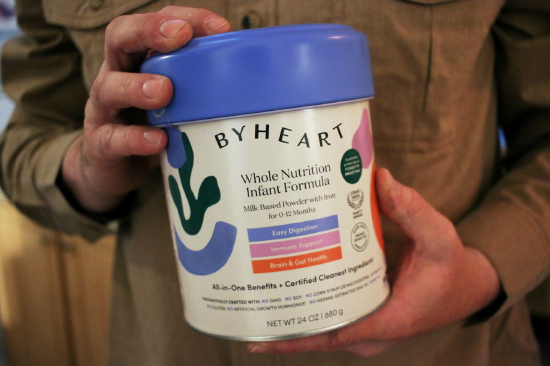
Core Viewpoint - The FDA has issued stern warning letters to major retailers including Walmart and Target for failing to properly recall baby formula linked to a botulism outbreak, with Kroger and Albertsons also criticized for continuing to sell the affected product [2][3][4]. Group 1: FDA Warnings and Retailer Actions - The FDA has confirmed that the baby formula in question is linked to at least 51 suspected or confirmed cases of infant botulism across 19 states as of December 10 [2][4]. - Target has been criticized for inadequate response measures, continuing to promote the affected formula even after the recall was initiated [2][3]. - The FDA emphasized that all four retailers, including Walmart, Target, Kroger, and Albertsons, failed to provide evidence of corrective actions taken after multiple communications [2][3]. Group 2: Impact of the Outbreak - The CDC has described the severity of the outbreak as "unprecedented," marking the first large-scale infant botulism outbreak in the U.S. [3][8]. - Symptoms of infant botulism can include difficulty eating, loss of head control, swallowing and breathing difficulties, and a weak cry, with a potential incubation period of several weeks [9][10]. Group 3: Retailer Responses - Walmart stated it would formally respond to the FDA's warning and has taken steps to limit the sale of the affected product after receiving the recall notice [10]. - As of now, Target, Kroger, and Albertsons have not provided comments regarding the situation [10].


界面新闻揭晓2025年度跨国公司中国区CEO榜单:巴斯夫、菲婷丝、赛诺菲等10位大中华区/中国区CEO上榜
Xin Lang Cai Jing· 2025-12-16 08:08
Core Insights - The article highlights the 2025 Super CEO list, which recognizes outstanding leaders across various industries who drive financial growth and shareholder returns while maintaining personal reputation [1] - China's actual foreign investment utilization is projected to decline to $116.24 billion in 2024, a 28.8% decrease year-on-year, marking the second consecutive year of decline after reaching a peak in 2022 [2] - Despite the decline, China remains the fourth-largest recipient of foreign direct investment globally, accounting for 7.7% of total global FDI in 2024 [2] Group 1: Foreign Investment Trends - The decline in China's foreign investment is attributed to a combination of global economic conditions, policy adjustments, domestic economic transformation, and changes in international competition [2] - The number of newly established foreign-invested enterprises in China is expected to reach 59,080 in 2024, a 9.9% increase year-on-year, indicating a positive trend despite the drop in investment amount [2] Group 2: Government Initiatives - The Chinese government is actively promoting policies to expand openness, including the "2025 Action Plan for Stabilizing Foreign Investment," which outlines 20 measures to enhance investment promotion and support foreign enterprises [3] - The 8th China International Import Expo showcased 4,108 companies from 138 countries, with an intention to transact $83.49 billion, a 4.4% increase from the previous year, highlighting China's commitment to global economic integration [3] Group 3: CEO Highlights - The article features notable CEOs leading multinational companies in China, such as: - Lou Jianfeng from BASF, who emphasizes green transformation and local investment despite a slight decline in sales [20] - Seto Onobu from FineToday, focusing on local innovation and sustainable practices, contributing to 40% of the company's global sales [21] - Dong Wei from Nike, who is steering the brand through challenges with a focus on local innovation and community engagement [22] - Schwann from Sanofi, who is enhancing local production capabilities with a significant investment in a new insulin production facility [23] - Yin Zheng from Schneider Electric, who is driving technological innovation and sustainable practices in response to market challenges [24] - Zhu Xiaotong from Tesla, who is adapting sales strategies to penetrate lower-tier markets [25] - Zhu Xiaojing from Walmart, who has successfully transformed the company into a leading omnichannel retailer in China [26] - Xiao Song from Siemens, who is implementing a "China Accelerate 2.0" strategy to enhance local R&D and production [27] - Liu Wenjuan from Starbucks, who is leveraging local insights to drive growth and enhance customer engagement [28] - Yang Xiaoping from Charoen Pokphand Group, who is focusing on green transformation and digitalization in the Chinese market [29]



寻汇SUNRATE正式推出沃尔玛全球电商支付解决方案 ,助力卖家赢在全球
Huan Qiu Wang Zi Xun· 2025-12-16 06:31
来源:美通社 新加坡2025年12月16日 /美通社/ -- 全球支付与财资管理服务商寻汇SUNRATE今日宣布,正式在沃尔玛 全球电商推出支付解决方案,跨境卖家可通过寻汇SUNRATE账户直接收取平台销售款项,解锁更高 效、安全且具成本优势的跨境增长新机遇。 寻汇SUNRATE创立于2016年,致力于为全球企业提供安全、高效的全球支付与财资管理解决方案。依 托自主研发的强大技术引擎、广泛的支付网络与定制化API方案,寻汇SUNRATE助力企业在190+国家 及地区开展业务。 合规可信,安全收付:寻汇SUNRATE持有中国人民银行颁发的《支付业务许可证》及全球多个国家及 地区的支付牌照,严格遵循跨境合规要求。 汇率透明,成本优化:卖家可享受公开透明的汇率,有效防范货币波动对收款的影响。同时,寻汇 SUNRATE提供极具竞争力的提现与转账手续费,资金管理更具可控性与可预测性。 极速入驻,轻松开店:通过寻汇SUNRATE晨曦计划-「全球开店」,沃尔玛卖家可加速完成店铺申请, 最快1个工作日即可完成审批,快人一步开启跨境销售。 寻汇SUNRATE联合创始人Joshua Bao表示:"此次推出沃尔玛全球电商支付解决方 ...
US FDA sends warning letters to Walmart, Target for selling recalled baby formula
Reuters· 2025-12-15 18:54
Core Viewpoint - The U.S. Food and Drug Administration (FDA) has issued warning letters to four major retailers for selling baby formula associated with a bacterial illness outbreak in infants, despite prior advisories [1] Group 1: Regulatory Actions - The FDA's warning letters highlight ongoing concerns regarding the safety of baby formula products in the market [1] - The retailers involved have been identified as continuing to sell products linked to the outbreak, raising questions about compliance with health regulations [1] Group 2: Health Implications - The bacterial illness outbreak has significant implications for infant health, necessitating immediate action from both retailers and regulatory bodies [1] - The situation underscores the importance of stringent safety measures in the baby formula industry to protect vulnerable populations [1]
NFWF Announces $3.6 Million in Grants from Walmart's Acres for America Program
Globenewswire· 2025-12-15 15:00
Core Insights - The National Fish and Wildlife Foundation (NFWF) announced $3.6 million in grants through the Acres for America program, aimed at permanently protecting over 145,000 acres of wildlife habitat across five states, leveraging a total conservation impact of $59.6 million with matching funds [1][2][5] Group 1: Program Overview - The Acres for America program has been a significant public-private partnership for over two decades, focusing on large landscape conservation, wildlife population support, and enhancing public recreational access [2][3] - Walmart's commitment to the program began in 2005 with an initial investment of $34.5 million, which has since expanded to a total of over $73 million, contributing to the protection of more than 2 million acres across the U.S. [4][5] Group 2: Specific Projects Funded - In Florida, a 4,636-acre tract will be conserved to connect with over 87,000 acres of protected land, benefiting various wildlife species and enhancing public recreation opportunities [7] - In Maine, 78,000 acres of forestland will be conserved, which includes vital habitats for brook trout and migratory birds, alongside recreational opportunities [7] - In Michigan, an 8,850-acre property will be conserved, ensuring sustainable management for timber and wildlife habitats [7] - In North Carolina, 12,000 acres of mountainous forestland will be acquired for public ownership, focusing on habitat management and water quality protection [7] Group 3: NFWF Impact - Since its inception, NFWF has funded 131 projects through the Acres for America program, generating a total conservation impact exceeding $1 billion [5] - NFWF has supported over 23,300 projects with a total conservation impact of $11.3 billion since its founding in 1984 [8]

Nasdaq-100 Shake-Up: Walmart Misses Out As Seagate, Alnylam Pharma Join While Lululemon Exits - Alnylam Pharmaceuticals (NASDAQ:ALNY), Biogen (NASDAQ:BIIB)
Benzinga· 2025-12-15 11:01
Core Viewpoint - The Nasdaq-100 Index is undergoing its annual reconstitution, adding six new companies and removing six others, effective December 22 [1]. Group 1: Companies Added to the Index - The six companies being added to the Nasdaq-100 Index are Alnylam Pharmaceuticals, Ferrovial SE, Insmed Inc., Monolithic Power Systems, Seagate Technology Holdings, and Western Digital Corp [2]. Group 2: Companies Removed from the Index - The six companies being removed from the index include Biogen Inc., CDW Corporation, GlobalFoundries Inc., Lululemon Athletica Inc., ON Semiconductor Corporation, and The Trade Desk, Inc [3]. Group 3: Performance of Newly Added Companies - Seagate Technology Holdings and Western Digital Corp. have seen significant stock price increases due to rising demand for storage products driven by the AI boom, with Seagate's stock up 232.96% and Western Digital's up 277.04% year-to-date [3]. - Alnylam Pharmaceuticals reported an adjusted earnings of $2.90 per share in Q3, a turnaround from a loss of $0.50 a year ago, with quarterly sales increasing by 149% year-over-year to $1.25 billion, surpassing the consensus estimate of $977.79 million; the stock has surged 70.17% year-to-date [4]. Group 4: Performance of Removed Companies - Lululemon Athletica Inc. has experienced a stock decline of 44.95% year-to-date, despite reporting a solid Q3 earnings beat and raising its full-year forecast; the company saw a 2% dip in North American revenue but strong international growth with a 33% increase in revenue and 18% rise in comparable sales [6]. Group 5: Related Market Movements - Walmart missed inclusion in the Nasdaq-100 due to a late switch to Nasdaq, moving from the New York Stock Exchange after the qualification deadline [5]. - The Nasdaq reconstitution follows the S&P 500's quarterly rebalance, with Carvana, CRH Plc, and Comfort Systems USA set to join the S&P 500, while LKQ Corp, Solstice Advanced Materials, and Mohawk Industries are being removed [7].


Merchants assail card fees pact
Yahoo Finance· 2025-12-15 10:07
Core Viewpoint - Merchant groups are opposing a settlement aimed at resolving long-standing litigation regarding interchange fees set by Visa and Mastercard, claiming it grants excessive legal immunity to these networks [1][4]. Group 1: Settlement Details - The settlement proposed would reduce posted credit interchange rates by ten basis points for five years and impose a 1.25% rate for standard consumer cards over an eight-year period [4]. - Merchants would gain the right to refuse certain higher-cost Visa and Mastercard-branded credit cards, deviating from the networks' "honor all cards" policy, and would be allowed to impose surcharges on specific cards [4]. Group 2: Merchant Objections - Merchants, including major organizations like the National Restaurant Association and Walmart, argue that the settlement resembles a previously rejected agreement and does not enforce significant changes in how interchange fees are determined [2][3]. - The objections highlight concerns over the temporary nature of the fee caps and the lack of fundamental reforms in the fee-setting process, which they believe undermines antitrust laws [3][4]. Group 3: Legal and Class Action Implications - The settlement is criticized for providing Visa and Mastercard with immunity from future litigation regarding their fees, which some merchants argue perpetuates an antitrust violation [4]. - Walmart has requested the court to decertify the class action, allowing large merchants to opt out or redefine the class to exclude them, claiming that the settlement primarily benefits a smaller subgroup of merchants [5].


How Walmart became a go-to store for wealthy Americans
Yahoo Finance· 2025-12-15 10:00
Core Insights - Walmart's recent earnings call highlighted a significant shift in its customer base, with a focus on affluent households seeking value and quality [1][2][3] - The company reported that approximately 75% of its share gains are now coming from households earning over $100,000, indicating a demographic shift in its customer profile [3] - Strong performance was noted across various categories, including fashion, home, automotive, and health-and-wellness, driven by financially comfortable shoppers [4] Customer Demographics - The shift towards higher-income households has become evident, with these customers increasingly viewing Walmart as a primary shopping destination rather than a fallback option [3] - Membership in Sam's Club has risen by 9% in the most recent quarter, reflecting the growing appeal of the brand among affluent consumers [3] Sales Performance - The company experienced double-digit growth in pickup and delivery services, further indicating a shift in shopping behavior among its customer base [3] - Online sales in categories such as toys, electronics, and apparel grew by over 40% year over year, showcasing a broader assortment being sought by customers [4] Strategic Focus - Executives emphasized the importance of catering to a broader set of customers, which is expected to lead to higher margins and greater profitability [4] - The company's leadership expressed confidence that this demographic shift represents a pivotal moment for Walmart's business model [4]
经济学人:人工智能如何颠覆购物
美股IPO· 2025-12-15 00:24
Core Viewpoint - The article discusses how artificial intelligence (AI), particularly chatbots, is transforming the shopping experience, with a significant number of consumers planning to use AI for holiday shopping in 2023, indicating a shift towards AI-assisted retail [3][5]. Group 1: Consumer Trends - Approximately two-thirds of consumers in developed countries and 80% of individuals aged 18 to 24 plan to use AI for shopping during the holiday season [5]. - McKinsey predicts that by 2030, global shopping transactions through AI agents could reach between $3 trillion to $5 trillion [5]. Group 2: Retailer Responses - Retailers are adapting to the rise of AI in shopping, with some, like Walmart, embracing AI tools for direct purchases, while others, like Amazon, are resistant to AI interference in customer interactions [6][7]. - Walmart's website reportedly sees 4% of its traffic from recommendations, with one-third of that coming from Chat GPT [7]. Group 3: AI Integration Challenges - Retailers face challenges in integrating external AI tools with their data, leading to a preference for proprietary shopping assistants over third-party options [9]. - Amazon's CEO criticized third-party shopping agents for lacking personalized service and accurate delivery estimates [9]. Group 4: Advertising and Consumer Perception - The integration of advertising into AI shopping tools may affect consumer perceptions of objectivity, potentially leading to dissatisfaction [10]. - Brands are actively seeking to influence AI recommendations, with a shift from search engine optimization to "generative engine optimization" [10][11]. Group 5: The Role of Physical Stores - As AI disrupts online shopping, the importance of physical stores may increase, providing opportunities for brands to enhance their image through in-person interactions [11]. - A Shopify survey indicated that 75% of respondents value interpersonal interactions while shopping, highlighting the enduring appeal of physical retail experiences [11].


Here's How Many Shares of Walmart You'd Need for $500 in Yearly Dividends
The Motley Fool· 2025-12-14 23:51
Core Insights - Walmart is a leading global retailer with over 10,000 locations across 19 countries and has been publicly traded since October 1970 [1] Financial Performance - Walmart's current annual dividend is $0.94 per share, translating to a quarterly payout of $0.235 [2] - To achieve $500 in annual dividend income, an investor would need to own 532 shares, costing approximately $61,457 at the current stock price of $115.52 per share [2] - Walmart has increased its annual dividend for 52 consecutive years, qualifying it as a Dividend King [4] - The current dividend yield is 0.80%, which is lower than the S&P 500 average and its own 1.34% average yield over the past five years [4] Market Data - As of the latest market data, Walmart's stock price is $116.70, with a market capitalization of $930 billion [5] - The stock has a day's range of $115.06 to $116.94 and a 52-week range of $79.81 to $116.95 [6] - The average trading volume is 18 million, with the current volume at 619,000 [6] Investment Rationale - Investing in Walmart is seen as a commitment to a company with strong financials, a significant economic moat, and resilience against economic challenges, particularly appealing for dividend-focused investors [6]