
农业银行

Search documents
银行存贷差走阔意味着什么?
GF SECURITIES· 2026-02-26 15:12
Investment Rating - The report provides a "Buy" rating for the banking sector, indicating an expectation that stock prices will outperform the market by more than 10% over the next 12 months [54]. Core Insights - Recent high growth in bank deposits has led to market interpretations of banks being "asset deficient." However, this interpretation is challenged by the contractual nature of banking operations, where deposits and loans are derived simultaneously [4][12]. - The widening of the loan-to-deposit spread (LDR) is influenced by six key factors: cash withdrawal demand, reserve requirements, interbank lending, bond investment scale, bond issuance, and bank capital [4][14]. - The increase in net bond financing is a significant factor contributing to the widening of the loan-to-deposit spread. Two scenarios are identified: when bond financing costs are lower than loan rates, and when non-bank entities reduce their borrowing, leading to a return of funds to banks [4][35]. - From January 2025 to January 2026, the loan-to-deposit spread widened by 11.4 trillion CNY, with new bond investments contributing 16.6 trillion CNY and market bond net financing at 20.6 trillion CNY [4][45]. - In January 2026, net bond investment increased by 1.9 trillion CNY, while total market bond net financing was only 1.4 trillion CNY, indicating a negative contribution of -9.68% from bond financing to the loan-to-deposit spread [4][45]. Summary by Sections Section 1: Implications of Widening Loan-to-Deposit Spread - The loan-to-deposit spread for large banks increased from 15.8 trillion CNY in January 2025 to 21.8 trillion CNY in January 2026, while for medium-sized banks, it rose from 16.5 trillion CNY to 23.5 trillion CNY [12]. - The decline in loan-to-deposit ratios for large banks from 89.1% to 86.5% and for medium-sized banks from 88.3% to 84.7% reflects a shift in asset allocation demands [12]. Section 2: Factors Influencing Loan-to-Deposit Spread - The six factors affecting the loan-to-deposit spread include: 1. Cash withdrawal demand 2. Reserve situation 3. Interbank lending to non-banking entities 4. Scale of bond investments 5. Bond issuance 6. Bank capital [4][14]. - The report emphasizes that the relationship between bond financing and loans must differentiate between government and non-government bonds, as the issuance of government bonds does not affect the loan-to-deposit spread [4][35]. Section 3: Analysis of Recent Changes in Bank Assets and Liabilities - The report details the contributions of various factors to the loan-to-deposit spread, including a -47% contribution from bank funds exiting the balance sheet and a 173% contribution from the substitution effect of bonds for loans [4][45]. - The analysis of January 2026 data shows that non-bank funds returning to banks contributed 25.9% to the loan-to-deposit spread, while interbank net assets contributed 43.3% [4][45].



继续降!部分银行代理贵金属业务杠杆已降至1倍
Di Yi Cai Jing· 2026-02-26 14:31
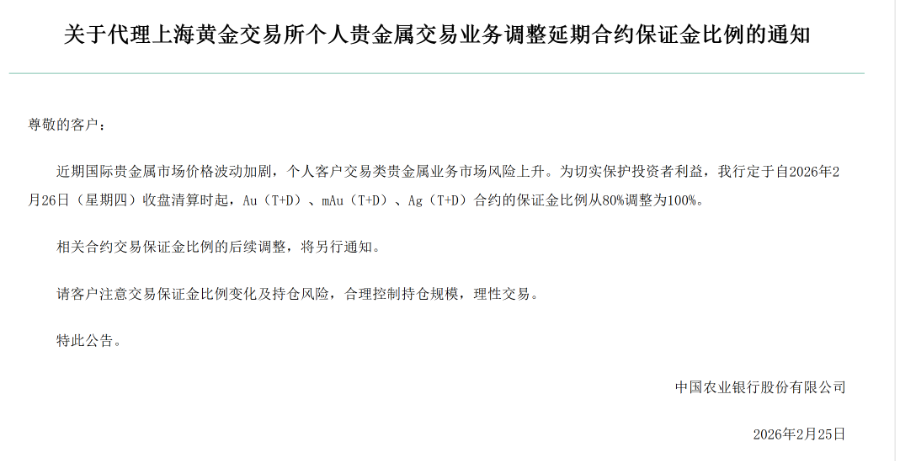
Core Viewpoint - The recent fluctuations in gold and silver prices have prompted banks to increase margin requirements for precious metal trading, effectively reducing leverage to 1 for many institutions [1][4]. Group 1: Margin Adjustments by Banks - Agricultural Bank announced an increase in margin requirements for gold and silver contracts from 80% to 100% due to heightened market risks [2]. - Industrial and Commercial Bank also raised its margin requirements for various gold and silver contracts to 100%, following a previous increase from 60% to 80% [2]. - Other banks, including China Construction Bank and Bank of China, have similarly raised their margin requirements, with some reaching 100% [4]. Group 2: Regulatory and Compliance Actions - Banks are not only increasing margin requirements but are also cleaning up existing business, including the closure of accounts with no activity and the reduction of trading channels [1][6]. - Some banks, like Postal Savings Bank, have announced the cessation of related business, with plans for forced liquidation of positions if clients do not act by specified deadlines [8]. Group 3: Market Context and Risk Management - The Shanghai Gold Exchange recently adjusted margin levels downward, yet banks have chosen to increase their margin requirements, indicating a cautious approach to risk management amid volatile market conditions [3][4]. - The tightening of margin requirements reflects a broader trend of banks reducing exposure to precious metals trading, particularly for new accounts and positions [6][7].



去杠杆!工行、农行上调个人贵金属延期合约保证金比例
2 1 Shi Ji Jing Ji Bao Dao· 2026-02-26 14:17
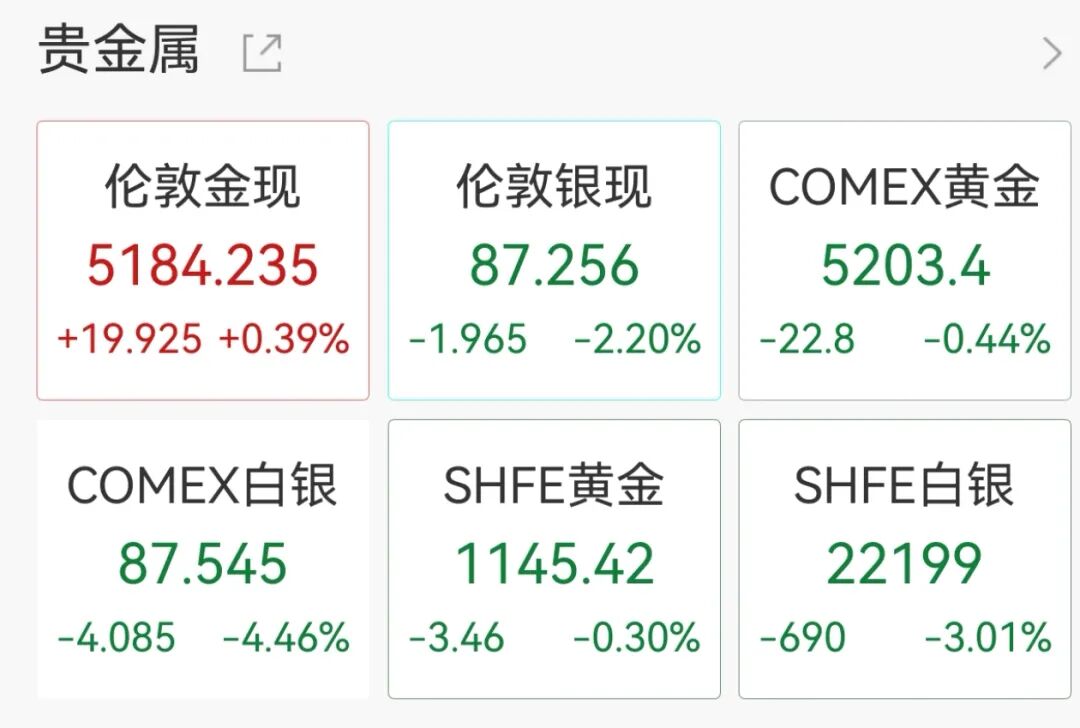
Core Viewpoint - Major Chinese banks, including Industrial and Agricultural Banks, have raised the margin requirement for personal precious metals deferred business from 80% to 100% in response to increased market volatility and rising personal investment interest in precious metals [1][4]. Group 1: Market Conditions - International precious metal prices have been fluctuating at high levels, with London spot gold reaching $5,205.472 per ounce on February 26 [1]. - The domestic futures market for gold and silver also opened significantly higher on the first trading day of the Year of the Horse, indicating a continued rise in market sentiment [1]. Group 2: Bank Actions - Agricultural Bank announced the margin increase effective from February 26, citing heightened market risks associated with personal trading in precious metals [1]. - Industrial Bank followed suit, implementing the same margin adjustment for various gold and silver contracts starting February 27 [4]. Group 3: Contract Types - The contracts affected include Au (T+D), mAu (T+D), Ag (T+D), and others, which represent different types of deferred trading products for gold and silver [7][8]. - The adjustment in margin requirements is expected to reduce leverage in trading, promoting more rational investment behavior among clients [8]. Group 4: Historical Price Trends - Since 2025, precious metal prices, particularly gold, have surged, with a nearly 65% increase in the annual price of London gold [8]. - In 2026, gold prices continued to rise, surpassing $5,500 per ounce, attracting a large number of personal investors and amplifying market risks [8]. Group 5: Industry Response - Prior to the margin increase, several banks had begun to tighten their personal precious metal trading operations, with some banks announcing the closure of related business functions [9]. - For instance, Postal Savings Bank announced the cessation of its personal precious metal business effective January 12, 2026 [9].

银行业2025年四季度监管数据总结:利润增速回正,息差连续两季度企稳
GF SECURITIES· 2026-02-26 14:05
Investment Rating - The industry investment rating is "Buy" [2] Core Viewpoints - The banking industry has shown a recovery in profit growth, with net profit for commercial banks increasing by 2.33% year-on-year in 2025, reflecting a quarter-on-quarter improvement of 2.35 percentage points [13][14] - The overall asset growth of commercial banks continued, with total assets increasing by 9.01% year-on-year as of Q4 2025, while loan growth slightly decreased to 7.26% year-on-year [29][30] - Net interest margin stabilized for two consecutive quarters at 1.42%, with expectations for a gradual recovery in 2026 [54] Summary by Sections Performance - The net profit of commercial banks increased by 2.33% year-on-year in 2025, with state-owned banks, joint-stock banks, city commercial banks, and rural commercial banks showing growth rates of 2.25%, -2.84%, 12.87%, and 4.57% respectively [13][14] - The return on equity (ROE) and return on assets (ROA) for commercial banks were 7.78% and 0.60%, reflecting a year-on-year decline of 0.33 percentage points and 0.03 percentage points respectively [13] Scale - Total assets of commercial banks grew by 9.01% year-on-year as of Q4 2025, with state-owned banks showing a growth rate of 10.78% [29][30] - Loan growth for commercial banks was 7.26% year-on-year, with city commercial banks experiencing a counter-cyclical increase in loan growth [29][30] Interest Margin - The net interest margin for commercial banks was stable at 1.42%, with a year-on-year decline of 10.50 basis points [54] - Expectations for 2026 indicate potential downward pressure on net interest margins in Q1, but a gradual recovery is anticipated thereafter [54] Asset Quality - The non-performing loan ratio for commercial banks was 1.50%, showing a quarter-on-quarter decrease of 2.00 basis points, while the provision coverage ratio was 205.21% [54] Capital - The core Tier 1 capital adequacy ratio for commercial banks was 10.92%, reflecting a quarter-on-quarter increase of 0.05 percentage points [54]


保证金比例上调至100%!金价迅猛上涨,工行、农行紧急出手
2 1 Shi Ji Jing Ji Bao Dao· 2026-02-26 13:56
Core Viewpoint - The international precious metals market continues its strong performance post-Spring Festival, with London spot gold reaching $5,205.472 per ounce on February 26, 2023, following a series of rebounds [1] Group 1: Market Trends - The prices of international precious metals are experiencing sustained high volatility, attracting increased personal investment interest [1] - The recent price movements indicate a robust demand for gold, as evidenced by the significant price levels achieved [1] Group 2: Regulatory Actions - Industrial and Agricultural Banks have announced an increase in the margin ratio for personal precious metals deferred business from 80% to 100% [1] - This adjustment in margin requirements effectively reduces the leverage level in trading, promoting more rational investment behavior among clients [1] - The change means that a contract valued at 1 million yuan, which previously required 800,000 yuan in margin (approximately 1.25 times leverage), now requires the full 1 million yuan (1 time leverage) [1] Group 3: Risk Management - The increase in margin requirements is a proactive measure by financial institutions to mitigate potential risks during a period of historical high prices and increased market volatility [1] - This action aligns with the implementation of investor suitability management practices [1]
上调至100%!金价迅猛上涨,工行、农行紧急出手
2 1 Shi Ji Jing Ji Bao Dao· 2026-02-26 13:55
Core Viewpoint - Major banks in China, including Industrial and Agricultural Banks, have raised the margin requirement for personal precious metals deferred business from 80% to 100% to mitigate risks associated with increased market volatility in precious metals [1][3][5]. Group 1: Market Conditions - The international precious metals market has shown strong performance, with spot gold prices rebounding to over $5,200 per ounce as of February 26, 2026, indicating a continued upward trend [1]. - The price of gold has surged nearly 65% throughout 2025, with prices exceeding $5,500 per ounce in 2026, attracting a significant number of individual investors and amplifying market risks [8]. Group 2: Bank Actions - Agricultural Bank announced on February 25, 2026, that it would increase the margin requirement for various precious metals contracts to 100% starting from the market close on February 26, 2026, citing heightened market risks [3]. - Industrial Bank followed suit, adjusting the margin for personal clients' contracts to 100% effective February 27, 2026, as a proactive measure to protect investors [5]. Group 3: Contract Types - The contracts affected by the margin increase include Au (T+D), mAu (T+D), and Ag (T+D), which represent different types of gold and silver deferred contracts, allowing investors to choose between immediate or deferred delivery [7][8]. - The adjustment in margin requirements effectively reduces the leverage for trading, moving from a leverage of approximately 1.25 times to 1 time, thereby encouraging more rational investment behavior among clients [8]. Group 4: Industry Trends - Prior to the margin increase, several banks had begun to tighten their personal precious metals trading operations, with some banks announcing the closure of related business functionalities for clients without positions or debts [9]. - The tightening of margin requirements and the closure of certain trading functionalities reflect a broader trend among financial institutions to manage risks in a volatile market environment [9].
“年前取钱过年,年后存钱理财”,银行力推“资产配置礼”
Xin Lang Cai Jing· 2026-02-26 10:21
Core Insights - After the Spring Festival, banks are experiencing a surge in deposits as individuals and businesses return funds to the banking system, creating a significant growth period for deposits [2][10] - To capitalize on this influx, many banks are shifting their marketing strategies from traditional deposit attraction to asset management, launching campaigns like "Asset Allocation Gifts" to enhance retail AUM (Assets Under Management) [2][5] Group 1: Marketing Strategies - Recent marketing activities by banks focus on "asset allocation" rather than solely increasing deposit interest rates, with various banks offering rewards linked to the increase in financial assets held by customers [3][11] - For example, Ping An Bank's "Asset Allocation Surprise" campaign rewards customers for increasing their holdings of recommended financial products within a week [3][11] - Agricultural Bank of China's "Asset Enhancement Gift" program incentivizes customers to increase their average financial assets, with rewards based on the amount of increase [4][12] Group 2: Industry Trends - The first quarter is viewed as a critical period for banks to achieve strong performance for the year, leading to a preference for "asset allocation gifts" over simple interest rate hikes due to the low and declining deposit rates [5][13] - The shift towards asset management is driven by the need to enhance non-interest income and to adapt to the challenges posed by market interest rate liberalization [6][14] - Banks are increasingly focusing on retail AUM as a strategy to deepen customer relationships and prevent funds from flowing to other financial institutions or capital markets [6][14] Group 3: Customer Engagement - Banks face the challenge of retaining funds after promotional activities end, emphasizing the need for long-term customer relationship management rather than short-term marketing tactics [7][15] - Recommendations for banks include enhancing the professionalism of asset allocation services, improving customer education, and developing a tiered customer management system to provide differentiated products and services [7][15] - Strengthening digital operations and focusing on brand reputation are also crucial for maintaining customer loyalty beyond promotional incentives [7][15]


博菲电气:1000万元闲置募集资金现金管理到期赎回,获收益0.62万元
2 1 Shi Ji Jing Ji Bao Dao· 2026-02-26 09:56
Group 1 - The company announced the redemption of a structured deposit product from Agricultural Bank of China, with a principal amount of 10 million yuan [1] - The cash management income from this redemption amounted to 0.62 million yuan [1] - The redeemed principal and income have been returned to the special account for raised funds, indicating no impact on the progress of investment projects or normal operations [1]
上市银行分红金额瞩目,占比超72%!板块基本面向好底气足
Mei Ri Jing Ji Xin Wen· 2026-02-26 07:33
Group 1 - Recent attention has been drawn to cash dividends from listed banks, with 19 banks announcing mid-term dividends totaling 262.733 billion yuan, accounting for 72.08% of all cash dividends from listed companies on the Shanghai and Shenzhen stock exchanges [1] - The fundamental performance of the banking sector is continuously improving, with industry growth turning positive, providing strong dividend support, particularly from state-owned banks and city commercial banks [1] - The stability and sustainability of bank stock performance recovery are generally viewed positively by industry institutions, with a shift in investment logic from "pro-cyclical" to "weak-cyclical" [1] Group 2 - As of 15:00, the China Securities Bank Index (399986) fell by 0.21%, with component stocks showing mixed performance, while the bank ETF Huaxia (515020) decreased by 0.18%, priced at 1.64 yuan [1] - Over a longer time frame, the Huaxia Bank ETF has seen a cumulative increase of 0.80% over the past month, with the lowest comprehensive fee rate among ETFs tracking the China Securities Bank Index [1] - The current market conditions may present a good opportunity for investment in bank ETFs, including the linked funds A class (008298), C class (008299), and D class (024642) [1]
金融“贷”来湘野春声
Jin Rong Shi Bao· 2026-02-26 05:12
湘江潮涌,南岳含翠。在湖南衡阳的广袤乡野间,金融活水正精准灌溉着特色产业的沃土,滋养着千万 农户的致富梦想。作为服务"三农"的主力军,农业银行衡阳分行持续将金融动能引向田间地头、车间农 舍,"贷"动产业升级,"贷"出乡村活力,让湘野大地焕发出勃勃生机,在推进农业农村现代化、促进城 乡融合发展的新时代征程上,书写着农行人的使命与担当。 金融筑基 让种粮大户无"后顾之忧" "以前我们是靠天吃饭,如今是靠技术吃饭。"站在田埂上,耒阳市灶市的种植大户罗环指着新建的育秧 中心说。罗环一家四口以水稻种植为生,随着种植规模逐步扩大,传统耕作方式已难以为继。为提升生 产效率、增强抗灾能力、改善粮食品质与产量,他计划进行一场"产业升级",建设育秧中心与烘干中 心,引进新型育秧技术,搭建智能温控大棚。然而,前期土地流转和基础设施建设已耗尽家中积蓄,面 对后续庞大的升级工程,流动资金短缺成为摆在面前的现实难题。 正当罗环为资金发愁之际,长期与他保持紧密联系的农行衡阳分行主动伸出援手。自2024年起,罗环及 其合作社社员的个人账户、粮食销售收入、农资款项等主要资金流均通过农行衡阳分行结算,双方建立 了坚实的信任基础。更让罗环感到意外 ...