启明医疗

Search documents
心律管理业务注入心通医疗内情:微创系与高瓴赌约大限将至?
Hua Er Jie Jian Wen· 2025-07-17 10:32
Core Viewpoint - MicroPort Medical (0853.HK) is shifting from its previous strategy of spin-offs to focus on mergers and restructuring, specifically planning to merge its cardiac rhythm management business with its subsidiary, HeartLink Medical (2160.HK) [1][2]. Group 1: Merger Announcement - On July 17, MicroPort Medical announced the plan to merge its cardiac rhythm management business with HeartLink Medical, aiming to establish a cardiac product platform and share international marketing and sales channels [2]. - The merger proposal is currently non-binding and uncertain, with MicroPort Medical advising shareholders and potential investors to act cautiously when trading its securities [3]. Group 2: Financial Implications - Following the announcement, MicroPort Medical and HeartLink Medical saw stock price increases of 6.6% and 7.21%, respectively [4]. - If the merger proceeds successfully, HeartLink Medical's performance could significantly improve, as it currently faces challenges with a projected revenue of 362 million RMB and a net loss of 49 million RMB for 2024 [4]. - In contrast, MicroPort Medical's cardiac rhythm management business is already substantial, with expected revenue of 221 million USD (approximately 1.588 billion RMB) for 2024, and strong overseas market performance contributing over 80% of its revenue [4]. Group 3: Strategic Considerations - The integration of the cardiac rhythm management business into HeartLink Medical could enhance the latter's financial performance [5]. - The primary entity responsible for the cardiac rhythm management business is MicroPort Heart Rhythm Management Co., which had previously planned an IPO but has not progressed since May 2023 [6]. - The merger may be influenced by a contractual obligation to investors, as MicroPort Medical had agreed to redeem shares if the cardiac rhythm management business did not go public by July 17, 2025, with a market cap of at least 1.5 billion USD [7][8]. Group 4: Previous Transactions - This is not the first time HeartLink Medical has acquired assets from MicroPort Medical; in August of the previous year, it purchased real estate from MicroPort Medical for approximately 360 million RMB [9]. - The acquisition of significant assets by HeartLink Medical, which is not yet profitable and requires funding for research and development, raises questions about the feasibility and valuation of such transactions [10][11].
依托创新重塑国内TAVR市场格局,探寻沛嘉医疗-B(09996)“跑赢大盘”背后的核心逻辑
智通财经网· 2025-07-17 06:10
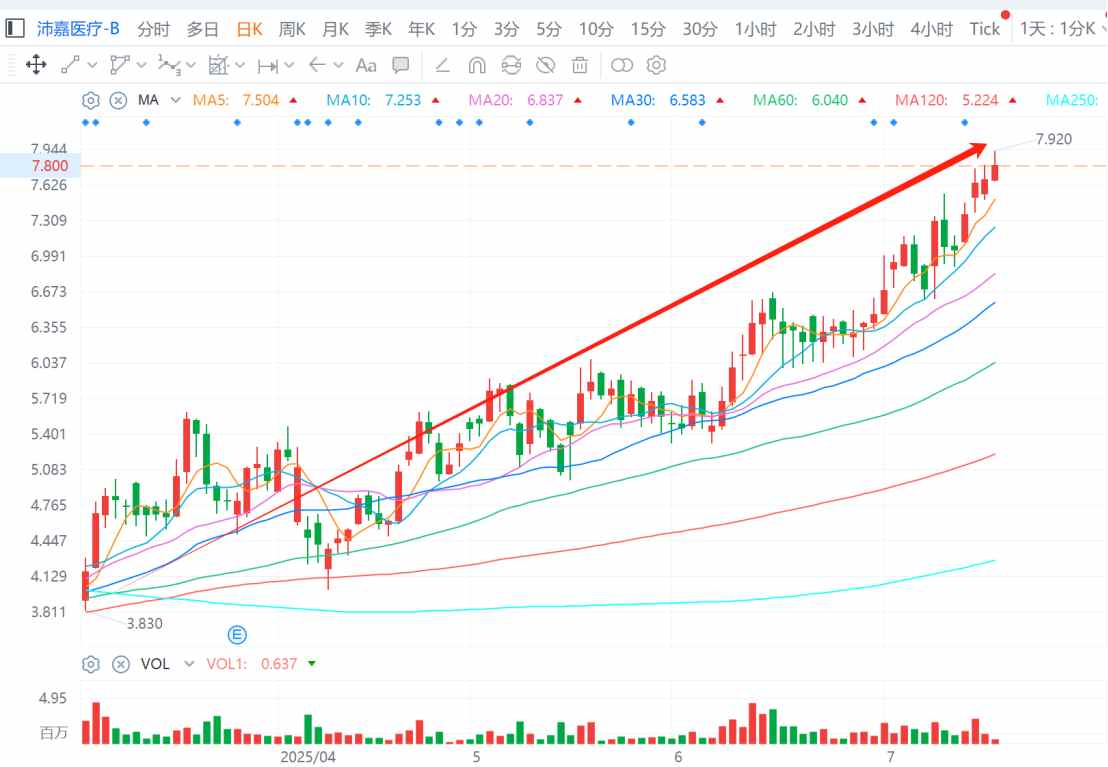
Core Viewpoint - The Hong Kong innovative medical device sector has seen significant growth this year, with the Hang Seng Healthcare Index rising over 50% year-to-date, driven by profit recovery and valuation adjustments [1][3]. Group 1: Market Dynamics - The National Medical Products Administration (NMPA) has announced ten measures to support the innovation and development of high-end medical devices, further enhancing long-term investment expectations for innovative medical device companies [1][3]. - The current investment environment is warming, leading to increased focus on the validation of innovative technologies and their commercial potential [3][9]. Group 2: Company Performance - Peijia Medical (09996) has experienced a stock price increase of over 95% year-to-date, significantly outperforming the index and bringing its market capitalization to around HKD 5 billion [1][3]. - The company has established itself as a leading brand in the Chinese transcatheter aortic valve replacement (TAVR) market, with a market share increase from 5% in 2021 to over 25% currently [4][10]. Group 3: Product Development and Innovation - Peijia Medical is advancing its product pipeline, with its second-generation TAVI product nearing market approval and its third-generation product expected to enter the market in the first half of next year [4][10]. - The company has a robust pipeline that includes innovative technologies such as non-glutaraldehyde cross-linked valves and shockwave calcification reconstruction technology, positioning it well against competitors [10][12]. Group 4: Market Potential - The TAVR market in China is projected to grow significantly, with an expected compound annual growth rate (CAGR) of 36.6% from 2021 to 2030, reaching approximately 109.5 billion yuan by 2030 [9][11]. - The current TAVR penetration rate in China is only 5.7% of the global total, indicating substantial growth potential for the market [11]. Group 5: Future Outlook - Peijia Medical aims to solidify its position as the leading TAVR brand in China by expanding its product offerings and increasing market share to 25-30% by 2025 [4][12]. - The company is also pursuing international expansion, with plans to apply for CE certification for its products and engage in global clinical studies [12][13].

中信建投 医药每周谈
2025-07-07 00:51
Summary of Key Points from Conference Call Records Industry Overview - The conference call discusses the **domestic medical device industry**, highlighting advancements in various companies and their innovative products. Key Companies and Their Innovations 1. **Peijia Medical** - The shockwave balloon technology shows a **30%-50% efficacy** in early clinical trials for treating aortic valve calcification [1] - The transcatheter aortic valve replacement product **Mona Q** has enrolled **9 patients** in the global Fame clinical trial, with no deaths or strokes reported during long-term follow-up. It has received **IDE clinical approval** in the U.S. and is expected to advance to U.S. clinical trials within the year [2][4] 2. **Jianxi Technology** - The tricuspid valve replacement product has completed clinical registration trials in Europe with a **97% success rate** and is expected to receive CE certification by **2025** [1][3] 3. **Xenon Medical** - The self-expanding intracranial drug-eluting stent has a **restenosis rate of only 1.7%-1.87%** and a **100% surgical success rate**. Approval is anticipated this year, with a market exclusivity period of **1.5 to 2 years** [1][6][7] 4. **HeartTech Medical** - Leading market share in domestic occluder products with a series of **four generations of biodegradable occluders**. The aortic valve product has been approved for commercialization since Q1 [1][8] 5. **Qiming Medical** - Four TAVI products have been approved and marketed in over **ten countries**. New TAVI products are under development, with expectations for a tricuspid valve replacement product to be approved in Europe by **2027** [1][9] Market Trends and Future Outlook - The medical device sector is expected to see a **catalyst for growth** in the second half of the year due to potential equipment upgrades, particularly in **3.0T MRI and 64-slice CT** products [2][17] - Companies like **Huitai Medical** are projected to have strong performance due to new product launches and market expansion [11][23] Competitive Strategies - Domestic medical device companies are enhancing their international competitiveness through: - **Patent breakthroughs** and early clinical trials [4] - Focusing on less crowded market segments for differentiation [4] - Collaborations with international firms to leverage global networks for faster commercialization [5] Financial Performance Expectations - Companies such as **Huitai Medical** and **Mingrui Medical** are expected to show strong growth in the second half of the year, despite some companies facing short-term pressures due to high bases from previous years [10][11][15] - The **IVD sector** is experiencing pressure from policy changes, but improvements are anticipated in the latter half of the year as companies adjust pricing strategies [28] Regulatory and Policy Impact - The medical industry is facing challenges from **DRG cost control policies** and increased compliance requirements, impacting overall performance and cash flow [33] Conclusion - The domestic medical device industry is poised for growth with innovative products and strategic collaborations, despite facing regulatory challenges and market competition. Companies are actively seeking to enhance their international presence and capitalize on emerging market opportunities.





医药行业周报:特朗普行政令引发市场波动,互联网医疗板块本周领跑-20250518
Haitong Securities International· 2025-05-18 15:18
Investment Rating - The report maintains an "Outperform" rating for multiple companies in the healthcare sector, including JD Health, WuXi Biologics, Alibaba Health, and others, while China National Pharmaceutical Group is rated "Neutral" [1]. Core Insights - The Hang Seng Healthcare Index rose by 0.6% during the week of May 12-16, 2025, outperforming the Hang Seng Index by 8.6 percentage points year-to-date, with a total increase of 25.0% since the beginning of the year [4][30]. - The internet healthcare sector led gains with a 7.7% increase, while other sectors like CXO/research services and pharmaceutical distribution also saw positive growth [5][31]. - The report highlights that despite external volatility, China's pharmaceutical industry is expected to benefit from domestic policy support for innovation and improving procurement conditions [5][31]. Summary by Sections Weekly Performance Review - The Hang Seng Healthcare Index increased by 0.6%, while the Hang Seng Index rose by 2.1% during the specified week [4][30]. - Year-to-date, the Hang Seng Healthcare Index has outperformed the Hang Seng Index by 8.6 percentage points, with a total increase of 25.0% [4][30]. Sub-sector Performance - Internet healthcare saw a significant increase of 7.7%, followed by CXO/research services at 2.6% and pharmaceutical distribution at 1.3% [5][31]. - The pharmaceutical and biotech sectors faced initial pressure due to an executive order from Trump aimed at reducing prescription drug prices, but valuations recovered by the end of the week [5][31]. Market Dynamics - Trump's executive order on May 12 requires pharmaceutical companies to align U.S. drug prices with those in other developed countries, aiming for "most favored nation" pricing [7][34]. - The report suggests that the impact of this order on Chinese pharmaceutical companies will be limited, as most do not generate direct revenue from the U.S. market [15].
首家港股!归创通桥成功“摘B”
思宇MedTech· 2025-05-13 08:51
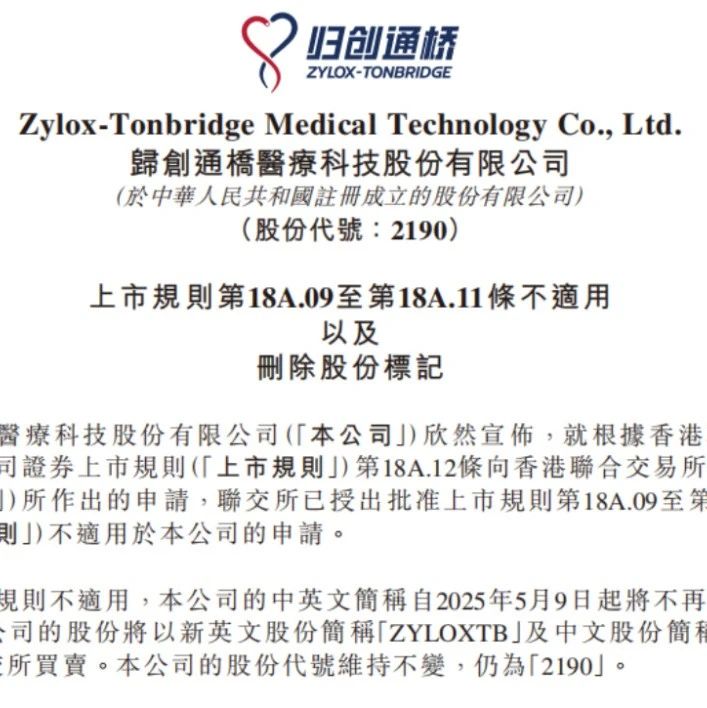
Core Viewpoint - Guichuang Tongqiao Medical Technology Co., Ltd. has successfully removed the "B" mark from its stock code, becoming the first 18A high-value consumable medical device company in Hong Kong to achieve this milestone, indicating its growth and profitability recognition by the capital market [3][4]. Financial Performance - In 2024, Guichuang Tongqiao achieved a revenue of 780 million RMB, representing a year-on-year growth of 48.3% [4][8]. - The net profit for the year surpassed 100 million RMB, marking the company's first annual profit [4][8]. - The gross profit margin was recorded at 71.6%, slightly down from the previous year due to price reductions from centralized procurement and proactive pricing strategies to gain market share [8]. - The net cash flow from operating activities reached 174 million RMB, an increase of 76.83% year-on-year [8]. Product Development and Market Position - The company has continuously invested in R&D, leading to successful bids for core products in multiple provincial and national procurement rounds in 2024 [4]. - Key products include the Tongqiao Silver Snake intracranial support catheter and ZYLOX Penguin iliac vein stent, which have gained significant market traction [4][9]. - Guichuang Tongqiao focuses on peripheral vascular intervention and neurointervention consumables, with leading products in the treatment of lower limb artery occlusive disease and deep vein thrombosis [9]. Industry Landscape - The 18A high-value consumables sector in Hong Kong has become increasingly competitive since the first listing of a medical device company under this category in December 2019 [7]. - Companies like Xianruida Medical and Peijia Medical are also emerging in this space, focusing on differentiated competition in peripheral vascular, neurointervention, and heart valve segments [7][9]. - The market is characterized by rapid technological advancements and commercialization efforts, with several companies achieving profitability and significant revenue growth [7][9]. Company Overview - Established in 2012, Guichuang Tongqiao specializes in the R&D, production, and sales of neurovascular and peripheral vascular intervention medical devices [10]. - The company aims to provide high-quality and affordable treatment solutions for cardiovascular disease patients through innovative medical device products [10]. - As of now, Guichuang Tongqiao has developed a product pipeline of 66 items, with 47 products approved for market release by NMPA, and its marketing network covers over 3,000 hospitals in China [10].
特朗普签署《降低医疗成本行政令
Haitong Securities International· 2025-04-20 13:30
Investment Rating - The report assigns an "Outperform" rating to multiple companies in the Hong Kong healthcare sector, indicating an expected total return over the next 12-18 months that exceeds the relevant market benchmark [1][19][25]. Core Insights - The report highlights President Trump's executive order aimed at lowering prescription drug prices through various measures, including optimizing federal healthcare programs and enhancing regulatory transparency [4][6]. - Key aspects of the executive order include standardizing negotiation timelines for drug prices, promoting competition through accelerated approvals for generics and biosimilars, and increasing transparency in pharmacy benefit manager (PBM) fees [7][4]. Summary by Sections Investment Focus - Companies rated "Outperform" include JD Health, WuXi Biologics, Alibaba Health, and many others, reflecting a positive outlook for the healthcare sector in Hong Kong [1]. Policy Developments - The executive order includes provisions for negotiating drug prices after a uniform timeline of 13 years for both small-molecule and large-molecule drugs, which aims to balance innovation incentives [4][7]. - The order also emphasizes the need for Congressional cooperation for full implementation, suggesting a prolonged timeline for these changes [6]. Market Trends - The report notes the importance of monitoring the evolution of U.S. tariff policies and domestic demand as they relate to the pharmaceutical industry [3]. - It also discusses the recovery of domestic consumption demand policies, which could positively impact the healthcare sector [3].



空仓一个月,这批新基金冲进去了!
券商中国· 2025-04-09 00:21
Core Viewpoint - Several newly established funds that had remained inactive for a month began to build positions on April 7, indicating a shift in market sentiment towards fundamentals and performance-driven strategies [3][6]. Group 1: Fund Activity - Multiple new fund products, which had maintained a net value of zero fluctuation for a month, started to show a net value change of approximately 1% to 2% on April 7, coinciding with market adjustments [3]. - The Guangfa Tongyuan Return Fund, established on March 6, raised 18.91 billion units in just two days, making it the largest actively managed equity fund issued this year [4]. - The Kai Stone Yuanxin Mixed Fund and the Nanhua Fengli Quantitative Stock Selection Fund also began buying stocks on April 7 after a month of maintaining near-zero net value fluctuations [5]. Group 2: Market Dynamics - The market adjustment on April 7 catalyzed a transition from concept-driven to performance-driven strategies, with a strong rebound observed on April 8 [6]. - Stocks in the medical device sector, particularly those with domestic brand advantages, became key targets for institutional investment, with significant price increases noted on April 8 [7]. - Companies with a focus on domestic markets, such as Hui Tong Da Network, emphasized their lack of overseas business to mitigate investor concerns regarding external risks [7]. Group 3: Investment Opportunities - Fund managers expressed confidence in long-term market positioning, highlighting investment opportunities in sectors like technology, consumer goods, and healthcare [9]. - The market's response to policy measures and the potential for domestic consumption stimulus were seen as factors that could support stock market stability and growth [11]. - The domestic medical device and pharmaceutical sectors are viewed as attractive investment areas, particularly in light of rising costs for imported products [12].
新机会!“关税反制”或引发这一赛道反击
券商中国· 2025-04-05 23:26
基金经理在关税反击战中,已开始对一个长期杀跌、公募低配严重的高科技、高价值赛道虎视眈眈。 在医药赛道的公募资金持仓持续提升背景下,科技含量更高的医疗器械赛道却反遭头部基金经理舍近求远拥抱 美股巨头,在国内市场面临着美股巨头们强势竞争的A股、港股的医疗器械公司,即便四年连跌后亦往往只有 少数小型公募产品实施百万元、数十万元的低配持仓,有医疗科技主题基金经理对此无奈的表示"很多机构已 经放弃这个板块的持仓"。 然而,随着国产替代、关税反击以及AI算法拥抱高端医疗器械设备研发,高价值、高技术投入以及刚性需求 的医疗器械设备,势必成为公募挖掘产业变革的又一潜力赛道,具备技术突破与成本优势的国产器械赛道可能 面临着公募低配后的估值反击。 外资份额垄断优势,公募舍近求远重仓 美股 寻找赛道安全边际的公募基金,或在国产替代趋势和"关税反制"中寻觅到核心受益者,以图改变持仓策略上舍 近求远的现状。 在股票市场已形成科技是核心要素的背景下,2025年4月10日12时01分,中国将正式对原产于美国的所有进 口商品加征34%的关税,使得商业价值含金量高、技术投入门槛强、长期被外资品牌 " 卡脖子 " 的高端医疗器 械行业迎来黄金机 ...

启明医疗(02500) - 2024 - 年度业绩
2025-03-28 13:40
Financial Performance - Total revenue for the year ended December 31, 2024, was RMB 470,833,000, a decrease of 4.2% compared to RMB 491,373,000 in 2023[3] - Gross profit for the same period was RMB 367,746,000, down 5.5% from RMB 389,205,000 in 2023[3] - The company reported a net loss of RMB 717,373,000 for the year, a slight improvement of 1.6% compared to a loss of RMB 729,056,000 in 2023[3] - Non-IFRS commercial profit increased significantly by 112.6% to RMB 97,670,000, with a commercial profit margin of 20.7% compared to 9.3% in the previous year[3] - The company reported an adjusted non-IFRS EBITDA loss of RMB 253,671,000, an improvement of 45.6% compared to a loss of RMB 465,959,000 in 2023[3] - Other income decreased to RMB 33,999 thousand in 2024 from RMB 57,427 thousand in 2023, a decline of 40.7%[27] - The group reported a pre-tax loss attributable to equity holders of RMB 714,307,000 in 2024, compared to a loss of RMB 703,754,000 in 2023, indicating a slight increase in losses[41] - The company recognized a full impairment loss of RMB 73.6 million on its investment in Opus, reflecting significant uncertainty regarding its ongoing viability[101] - The impairment loss on intangible assets was fully recognized at RMB 62.0 million, compared to RMB 15.8 million in 2023, reducing the carrying amount to zero[103] - The net impairment loss on financial assets increased to RMB 21.4 million, up from a reversal of RMB 2.2 million in 2023, primarily due to provisions for other receivables[106] Research and Development - Research and development expenses decreased to RMB 341,185,000 from RMB 524,915,000, reflecting a reduction of 35%[6] - The company invested RMB 341.2 million and RMB 524.9 million in R&D for the years ending December 31, 2024, and December 31, 2023, respectively[74] - Research and development costs for the year ended December 31, 2024, were RMB 341.2 million, a reduction of 35.0% from RMB 524.9 million in the previous year[95] - The company is focused on optimizing its R&D pipeline to enhance efficiency and accelerate clinical progress in core areas[49] - The company has established three R&D centers in Hangzhou, Israel, and California to enhance global collaboration and innovation efficiency[72] Market Expansion and Product Development - The company plans to focus on market expansion and new product development to drive future growth[2] - The company has established a product pipeline consisting of ten innovative devices targeting heart valve diseases, including four commercialized TAVR products and several in clinical trials[52] - The company aims to continuously innovate and meet the growing demands of patients through the application of new technologies and materials[48] - The company is exploring potential mergers and acquisitions to enhance its product portfolio and market reach[160] - The company plans to expand its market presence in the United States and Europe, targeting a 25% increase in market share by 2025[160] Financial Position and Liquidity - The company’s cash and cash equivalents decreased to RMB 298,036,000 from RMB 774,396,000, indicating a significant reduction in liquidity[10] - Total non-current assets decreased to RMB 2,447,290,000 from RMB 2,805,647,000, a decline of 12.7%[10] - Total current liabilities decreased significantly to RMB 361,749 thousand from RMB 805,168 thousand in 2023, a reduction of 55.1%[24] - The company reported a total asset net value of RMB 440,731 thousand, down from RMB 802,899 thousand in 2023, a decrease of 45%[24] - The total borrowings of the group as of December 31, 2024, were RMB 283.0 million, down from RMB 705.9 million as of December 31, 2023[120] - The capital debt ratio as of December 31, 2024, was 16.7%, a decrease from 28.3% as of December 31, 2023[120] - The net current assets of the group as of December 31, 2024, were RMB 440.7 million, a decrease of 45.1% from RMB 802.9 million as of December 31, 2023[121] Corporate Governance and Compliance - The company is committed to maintaining compliance with corporate governance codes and has adhered to all mandatory provisions during the reporting period[137] - The audit committee has reviewed the financial information for the year ending December 31, 2024, and discussed internal controls and financial reporting matters with the independent auditor[145] - The company has not engaged in the purchase, sale, or redemption of any of its listed securities during the year ending December 31, 2024[139] Employee and Operational Changes - As of December 31, 2024, the company has a total of 691 employees, down from 865 employees as of December 31, 2023[132] - The company is implementing cost reduction and efficiency enhancement measures to significantly reduce losses in its valve membrane business[136] Future Outlook - The company plans to focus on its core heart valve business and has begun to divest from the healthcare industry park project due to changes in the real estate market[104] - The group anticipates increased cash flow from operations due to the growth of existing commercial product sales and the launch of new products[119] - The company aims to achieve a 30% reduction in production costs through new manufacturing technologies by 2024[160]
600289,35天31涨停!
Zheng Quan Shi Bao Wang· 2025-03-13 08:42
Group 1: Market Overview - The A-share market experienced fluctuations with the North Securities 50 index down by 3.07% and the Sci-Tech 50 index down by 2.11%, while over 3,800 stocks declined, leading to a slight decrease in trading volume to 1.65 trillion yuan [1] - The coal, medical beauty, and electricity sectors showed relative strength, while humanoid robots, broadcasting, storage chips, and wireless earphones faced significant declines [1] - ST stocks continued to perform strongly, with *ST Xintong achieving a new high since January 2018, recording 31涨停 in 35 trading days [1] Group 2: Sector Performance - The coal industry saw a net inflow of over 3.3 billion yuan from major funds, while the banking and public utilities sectors each received over 2 billion yuan [1] - The power sector maintained strong performance, with the index rising for three consecutive days and trading volume exceeding 28.2 billion yuan, marking a new high for the year [2] - The artificial intelligence data center is expected to drive significant growth in electricity demand, with projections indicating that by 2026, global data center electricity consumption will reach between 620 billion and 1.05 trillion kilowatt-hours [2] Group 3: Company-Specific News - Qi Ming Medical, which had been suspended for over 15 months, saw its stock plummet by 66.37% upon resuming trading due to unauthorized fund transfers by former executives [3] - Qi Ming Medical acknowledged the challenges posed by the suspension and has undertaken a systematic restructuring of its organizational framework to enhance governance and internal controls [3] - The company has established a management committee to improve internal supervision and ensure timely market disclosures regarding significant matters [3]