成都银行

Search documents
普惠小微与房地产贷款边际回暖
Xiangcai Securities· 2025-07-27 12:24
Investment Rating - The industry investment rating is maintained at "Overweight" [7][10]. Core Insights - The report highlights a marginal recovery in inclusive microfinance and real estate loans, with overall credit growth aligning with expectations. Corporate loans are the main driver of credit growth, while technology sector loans are particularly strong [9][31]. Summary by Sections 1. Industry Performance - As of the end of Q2 2025, the total balance of RMB loans reached 268.56 trillion yuan, reflecting a year-on-year growth of 7.1%. Corporate loans increased by 8.6% to 182.47 trillion yuan, with short-term loans and bill financing growing faster than medium- and long-term loans [7][28]. - Household loans totaled 84.01 trillion yuan, growing by 3%, with operating loans up by 5.4% and consumption loans (excluding housing) up by 6% [30]. 2. Loan Growth Dynamics - Medium- and long-term loans in the industrial and infrastructure sectors continue to grow rapidly, supporting stable credit expansion. Industrial medium- and long-term loans reached 26.27 trillion yuan, up 10.7%, while infrastructure-related loans grew by 7.4% to 43.11 trillion yuan [30]. - Inclusive microfinance loans reached 35.57 trillion yuan, with a year-on-year growth of 12.3%. Loans to technology SMEs grew by 22.9%, significantly above the average [8][30]. 3. Real Estate Loan Trends - Real estate loan growth is recovering, primarily due to a narrowing decline in personal housing loans. The balance of development loans was 13.81 trillion yuan, up 0.3%, while personal housing loans totaled 37.74 trillion yuan, with a decline of only 0.1% [8][30]. 4. Future Outlook - The report anticipates that structural tools and support for micro-enterprise financing will continue to drive loan demand. Policies supporting housing fund loans are expected to aid the recovery of the real estate market, while consumer finance services are likely to strengthen personal loan issuance [9][31]. 5. Investment Recommendations - With supportive fiscal policies and financing arrangements, bank credit supply is expected to remain relatively stable. The report suggests focusing on "high dividend + regional growth" strategies for bank stocks, particularly large state-owned banks and quality regional banks with dividend growth potential [10][33].
又一银行公告!10名董监高,集体增持!
券商中国· 2025-07-27 02:17
Core Viewpoint - The management team of Shanghai Bank has collectively increased their holdings in the bank's A-shares during a recent price dip, indicating confidence in the bank's future performance and potential investment opportunities in the banking sector [1][2][9]. Group 1: Management Actions - A total of 10 executives, including the party secretary and the president, purchased 440,000 shares of Shanghai Bank between July 23 and July 25, with a total expenditure estimated between 4.6024 million and 4.708 million yuan [1][3]. - The share purchase price ranged from 10.46 yuan to 10.7 yuan per share, and the executives committed to holding these shares for two years [3][4]. - The party secretary, Gu Jianzhong, bought 100,000 shares, while other executives, including the president and vice presidents, also made significant purchases [4][5]. Group 2: Market Context - The A-share banking sector has seen a continuous rise in stock prices, with many banks reaching historical highs this year [2]. - Despite the overall upward trend, Shanghai Bank's stock experienced a decline of 8.66% from July 7 to July 25, prompting the management's buying action during this correction period [8][9]. - The bank's performance in the first quarter of 2025 showed a revenue of 13.597 billion yuan, a year-on-year increase of 3.85%, and a net profit of 6.292 billion yuan, up 2.30% [5]. Group 3: Broader Industry Trends - Other banks, such as Lanzhou Bank and Jiangsu Bank, have also seen management and institutional shareholders actively increasing their stakes this year [10][12]. - However, several banks have faced challenges in executing their announced buyback plans due to market volatility and price limits, leading to delays or cancellations [15][16]. - The banking sector has attracted significant capital inflows, with various institutional investors increasing their holdings, reflecting a strong interest in bank stocks despite recent price fluctuations [17][18].



我投资了银行股5年,选择了“体面分手”!
雪球· 2025-07-26 04:03
Core Viewpoint - The article discusses the author's investment journey in bank stocks over five years, highlighting the use of a unique metric called "市赚率" (Market Earnings Ratio) to identify undervalued stocks and make investment decisions [3][8]. Investment Strategy - The author developed the Market Earnings Ratio (PR) formula as PR = PE / ROE / 100, inspired by Warren Buffett's investment philosophy [3]. - The author adjusted the target price for H-shares from 1.0 PR to 0.8 PR due to liquidity and dividend yield concerns [3]. - A correction factor (N) was introduced based on dividend payout ratios, with different coefficients for varying payout levels [3]. Historical Performance - In 2020, the author successfully identified and invested in Postal Savings Bank H-shares, which were undervalued with a correction market earnings ratio of 0.4 PR [4]. - In 2021, after recognizing the high provision coverage of Postal Savings Bank, the author recalculated PE and ROE, leading to a significant increase in stock price [5]. - In 2022, after a management change, the author invested in China Merchants Bank H-shares, which also became undervalued [6]. - In 2023, China Merchants Bank H-shares saw a price doubling, but the author realized the mistake of considering high provisions as hidden profits, leading to a reevaluation of investment strategies [6]. Current Market Analysis - By 2024, the author decided to completely liquidate Postal Savings Bank H-shares and increased holdings in China Merchants Bank H-shares, reflecting a strategic shift based on market conditions [7]. - As of 2025, the average valuations for major banks were noted, with the author choosing to exit positions due to perceived overvaluation in the banking sector [8]. - The article emphasizes that the Market Earnings Ratio aligns with discounted cash flow (DCF) valuation principles, suggesting a potential upward adjustment in reasonable valuations due to low interest rates [8].

银行板块盘初拉升,宁波银行涨超5%
news flash· 2025-07-25 01:38
银行板块盘初拉升,宁波银行(002142)涨超5%,常熟银行(601128)、江苏银行(600919)、杭州 银行(600926)、成都银行(601838)多股上扬。 ...

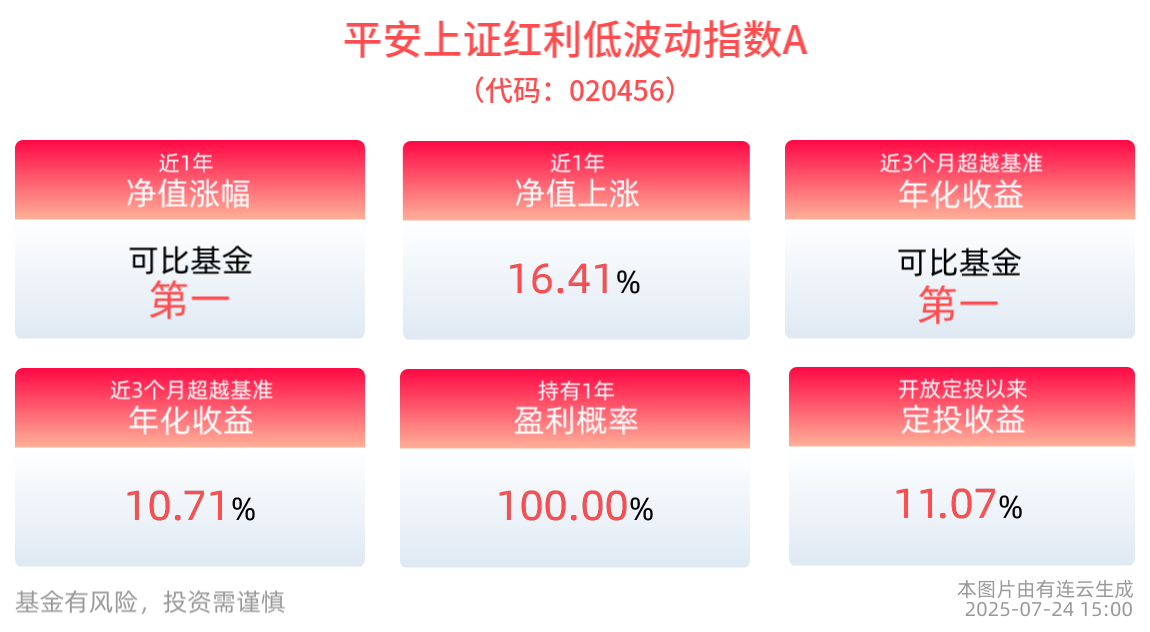
宁波银行中报超预期,哑铃配置策略中上红低波投资机会凸显
Xin Lang Cai Jing· 2025-07-25 01:22
Core Viewpoint - Ningbo Bank's mid-year report shows a revenue growth rate of 7.9% and a profit growth rate of 8.2%, both improving by over 2% compared to Q1 2025, indicating a stable and positive overall performance [3] Financial Performance - Revenue and profit growth rates have improved quarter-on-quarter, with core Tier 1 capital also showing a quarter-on-quarter improvement [3] - The non-performing loan ratio remains stable, reflecting a solid financial position [3] - The bank has reversed the downward trend in provisions and the phenomenon of profit growth lagging behind revenue growth [3] Fund Performance - As of July 24, 2025, the Ping An SSE Dividend Low Volatility Index A Fund has seen a net inflow of 4.618 billion yuan over three of the last five trading days, averaging a daily net inflow of 924 million yuan [3] - The fund's financing net purchases reached 1.13 billion yuan in the past week, with a latest financing balance of 78.049 billion yuan [3] - The fund's trading congestion level is at 20.98%, lower than 79.02% historically, indicating less trading activity [3] Historical Returns - The Ping An SSE Dividend Low Volatility Index A Fund has a maximum monthly return of 11.16% since inception and an average monthly return of 3.98% [4] - The fund has a one-year Sharpe ratio of 1.15, ranking it in the top half among comparable funds [4] - The maximum drawdown for the fund this year is 5.35%, with a relative benchmark drawdown of 0.44% [4] Fund Management - The fund was established on April 23, 2024, and aims to minimize tracking deviation and error against its benchmark [5] - The current fund managers, Qian Jing and Bai Guiyao, have achieved a return of 14.96% since the fund's inception [5] - The fund's top ten holdings include companies like COSCO Shipping, Chengdu Bank, and Industrial Bank, accounting for a total of 17.41% of the fund [5][7]
海天股份: 关于为子公司提供担保的进展公告
Zheng Quan Zhi Xing· 2025-07-24 16:20
Summary of Key Points Core Viewpoint - The company has approved a financing guarantee of up to 2.31 billion yuan for its subsidiaries to support their operational needs and expand financing channels [1][6]. Group 1: Guarantee Overview - The company held a board meeting on December 19, 2024, approving a financing guarantee for subsidiaries not exceeding 231 million yuan [1]. - A guarantee contract was signed with Chengdu Bank on July 24, 2025, for a total of 20 million yuan for two wholly-owned subsidiaries [1][6]. - The guarantee amount does not exceed the limit approved by the shareholders' meeting and is within the effective period [1]. Group 2: Subsidiary Information - New Jin Haitan Water Co., Ltd. has a registered capital of 10.1 million yuan and total assets of 141.67 million yuan as of December 31, 2024 [2]. - Lezhi Haitan Water Co., Ltd. has a registered capital of 11.45 million yuan and total assets of 65.74 million yuan as of December 31, 2024 [4]. Group 3: Guarantee Details - The company provided a joint liability guarantee of 10 million yuan for New Jin Haitan and another 10 million yuan for Lezhi Haitan, both for financing from Chengdu Bank [5][6]. - The guarantee covers all debts, including principal, interest, and related costs, for a period of three years from the debt fulfillment date [5][6]. Group 4: Necessity and Reasonableness of Guarantee - The guarantee is aimed at meeting the daily operational funding needs of the subsidiaries, aligning with the company's overall development strategy [6]. - The company maintains effective monitoring of the subsidiaries' operations and credit status to ensure manageable risk [6]. Group 5: External Guarantee Situation - As of the announcement date, the company has a total external guarantee balance of 2.27 billion yuan, accounting for 82.66% of the latest audited net assets [3][6]. - All external guarantees are provided to subsidiaries, with no overdue guarantees reported [6].

通达股份: 关于注销募集资金专户的公告
Zheng Quan Zhi Xing· 2025-07-23 16:14
Fundraising Overview - The company raised a total of RMB 589,711,887.81 through a non-public offering of 74,906,367 shares at a price of RMB 8.01 per share, approved by the China Securities Regulatory Commission [1][2] - The total number of shares issued was 133,156,830, with a nominal value of RMB 1 per share [1] Fund Management and Usage - The company established a management system for the use of raised funds, which was approved by the board in 2008 and revised multiple times, most recently in 2021 [1] - A tripartite supervision agreement was signed with the sponsor and a bank, along with quadripartite agreements for specific subsidiaries [2] Project Completion and Fund Allocation - The company decided to conclude the "Flexible Assembly R&D and Production Base Project" and permanently allocate the remaining funds of RMB 100 million to supplement working capital for daily operations [2][3] - All fundraising projects from the 2020 non-public offering have been completed, and all related special accounts have been closed [3]

上证西部大开发龙头企业指数上涨0.2%,前十大权重包含伊利股份等
Jin Rong Jie· 2025-07-23 15:59
Core Viewpoint - The A-share market showed mixed performance with the Shanghai Western Development Leading Enterprises Index rising by 0.2% to 6529.57 points, with a trading volume of 62.957 billion yuan [1] Group 1: Index Performance - The Shanghai Western Development Leading Enterprises Index increased by 4.75% over the past month and 3.46% over the past three months, but has decreased by 2.45% year-to-date [1] - The index is composed of leading companies from various secondary industries in selected regions, providing a reference for investors interested in China's regional economic development [1] Group 2: Index Holdings - The top ten weighted companies in the index are: Shaanxi Coal and Chemical Industry (15.2%), Kweichow Moutai (14.42%), Yili Industrial Group (14.27%), Seres (13.44%), TBEA (6.64%), Chengdu Bank (4.23%), Chongqing Rural Commercial Bank (3.33%), Sichuan Changhong (3.06%), Northern Rare Earth (2.83%), and Sichuan Road and Bridge (2.77%) [1] - The index's holdings are entirely composed of companies listed on the Shanghai Stock Exchange [1] Group 3: Industry Composition - The industry composition of the index includes: Consumer Staples (29.48%), Discretionary Consumer (16.92%), Energy (16.30%), Industrials (14.69%), Materials (12.04%), Financials (7.96%), Utilities (1.53%), Healthcare (0.76%), Information Technology (0.15%), Communication Services (0.14%), and Real Estate (0.02%) [2] - The index samples are adjusted biannually, with adjustments occurring on the next trading day after the second Friday of June and December [2]






“退名单”平台成信贷新风口,多家银行政务类贷款占比超四成
Xin Lang Cai Jing· 2025-07-23 13:02
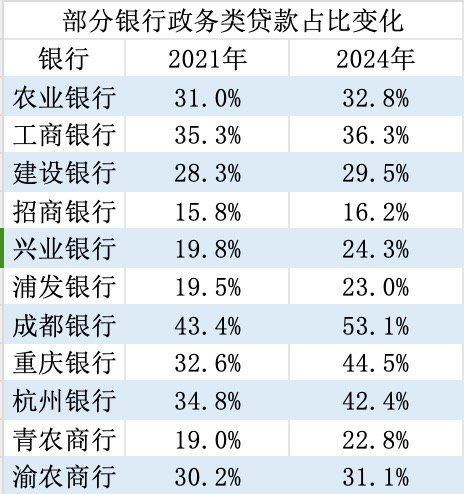
Core Viewpoint - Since 2022, the real estate market has been adjusting, leading to a contraction in real estate loans, while government-related loans have been on the rise, particularly in city commercial banks where the proportion of government loans has exceeded 40% in some cases [1][6] Group 1: Loan Market Dynamics - The "exit list" platform has emerged as a new growth point for bank credit, allowing financing platforms that have exited the list to operate as market entities without financing restrictions [2][3] - Government-related loans have seen a significant increase, compensating for the decline in real estate loans, with banks focusing on infrastructure projects and local government financing [6][10] - The exit of financing platforms from the list is part of a broader reform, with over 7,000 platforms expected to be reduced, which may lead to increased credit demand in the market [3][4] Group 2: Bank Strategies and Performance - Different types of banks have varying strategies for government-related loans, with state-owned banks focusing on major national and provincial projects, while city commercial banks target county-level projects [7][9] - City commercial banks have seen a significant increase in the proportion of government-related loans, with some banks like Chengdu Bank exceeding 53% [7][10] - The capital market has responded positively to banks with a high proportion of government loans, with notable increases in market value for banks like Chengdu Bank and Hangzhou Bank [10]
25Q2银行板块持仓数据点评:资金增配银行股,主动型基金青睐低估值股份行和高成长性城商行
Orient Securities· 2025-07-23 10:42
Investment Rating - The report maintains a "Positive" outlook on the banking industry [6] Core Insights - Active equity funds have increased their holdings in A-share banks, with a total of 4.90% of their heavy positions in the banking sector as of Q2 2025, up by 1.14 percentage points from Q1 2025 [10][12] - Passive funds have also seen an increase, with their heavy positions in A-share banks rising to 11.15%, an increase of 2.02 percentage points [10][19] - The report highlights a preference for low-valuation joint-stock banks and high-growth city commercial banks among active funds [12] Summary by Sections Active Equity Funds - As of Q2 2025, active equity funds held 4.90% of their heavy positions in banks, with a total of 49.17 billion shares, an increase of 6.64 billion shares from Q1 2025 [10][12] - The market value of these holdings reached 640.78 billion yuan, up by 135.08 billion yuan [10][12] - The top five stocks favored by active funds include China Merchants Bank (1.01%), Jiangsu Bank (0.54%), Ningbo Bank (0.51%), Hangzhou Bank (0.45%), and Chengdu Bank (0.41%) [10][12] Passive Equity Funds - Passive funds increased their holdings to 71.47 billion shares, a rise of 16.23 billion shares from Q1 2025 [10][19] - The market value of these holdings reached 1,332.61 billion yuan, an increase of 288.32 billion yuan [10][19] - Key stocks with significant inflows include China Merchants Bank and Industrial Bank, while Bank of China and Qingdao Bank saw reductions in holdings [10][19] Investment Recommendations - The report suggests focusing on two main investment lines: 1. High-dividend banks in anticipation of a potential reduction in insurance premium rates, recommending stocks like China Construction Bank, Industrial and Commercial Bank of China, and Chongqing Rural Commercial Bank [10][12] 2. Strong-performing small and medium-sized banks, with recommendations for Industrial Bank, CITIC Bank, Nanjing Bank, Jiangsu Bank, and Hangzhou Bank [10][12]