
Neuralink

Search documents
医疗与消费周报:脑机接口产业:技术突破加速,商业化普及在即-20250708
Huafu Securities· 2025-07-08 09:22
Group 1 - The report highlights that the medical index has shown positive returns across six sub-industries, indicating a strong performance in the healthcare sector [1][2] - The brain-computer interface (BCI) industry has evolved over the past fifty years, with significant investments from multiple countries over the last decade, transitioning from the application stage to the commercialization stage, aiming for effective application solutions within the next ten years [2][8] - BCI technology is recognized as a strategic field crucial for economic and social development, with its advancement expected to help the country gain a competitive edge in future industrial technology [2][9] Group 2 - The global brain-computer interface market has grown from $1.2 billion in 2019 to nearly $2 billion in 2023, with a compound annual growth rate (CAGR) exceeding 13% during this period [8][9] - In China, the BCI market size was approximately 1 billion yuan in 2020, increasing to about 1.73 billion yuan in 2023, representing 12.5% of the global market [9][11] - The report indicates that the BCI industry in China is still in its nascent stage, with investment events primarily concentrated in the angel round and earlier stages, highlighting a significant drop in investment amounts due to the overall economic environment [11][12] Group 3 - The report discusses the challenges in the industrial application of BCI technology, including technical and commercialization hurdles, with the need for substantial investment and a long payback period [14] - It emphasizes the importance of policy support, increasing enterprise numbers, and sustained funding to foster the development of BCI industry clusters and innovative research institutions [14] - The report notes that the medical technology sector is witnessing a push for innovation, with the National Medical Insurance Administration focusing on integrating cutting-edge technologies into healthcare services [27][28]
马斯克公布Neuralink新动作,微美全息(WIMI.US)加速脑机接口产业多场景布局
Zhong Guo Chan Ye Jing Ji Xin Xi Wang· 2025-07-08 03:08
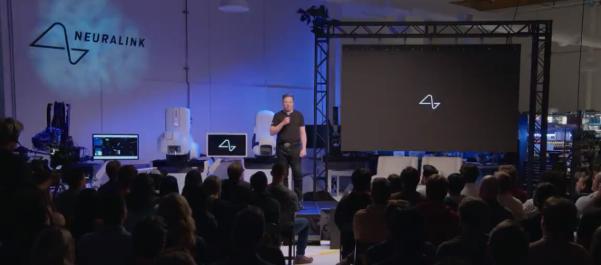
Core Insights - Neuralink has showcased its latest research and product development direction through a one-hour video, highlighting significant advancements in brain-machine interface technology [1] Company Developments - Neuralink plans to implant devices in the speech cortex by Q4 2025 to decode silent "intent speech" [2] - By 2026, the number of electrodes in implanted chips will increase to 3,000, and the first participant in the "blindsight" project will join, which aims to help the blind regain vision [2] - Neuralink raised $650 million in its latest funding round, bringing its valuation to over $10 billion [2] - Currently, Neuralink has seven participants in trials, including a spinal cord injury patient who will connect to Tesla's humanoid robot, Optimus, for complex operations [2] - Elon Musk envisions devices with hundreds of thousands to millions of channels to address all known neurological diseases and unlock human brain potential [2] Industry Trends - The brain-machine interface technology is considered one of the most disruptive technologies of the 21st century, with significant breakthroughs leading to rapid market growth [3] - The industry is on the brink of an explosion, with applications extending beyond healthcare into education, industrial production, entertainment, sports, and home management [3] - Companies like WIMI Hologram have applied for hundreds of brain-machine interface patents and are integrating this technology with humanoid robots and AI models [5] - WIMI is establishing R&D centers in collaboration with universities to drive breakthroughs in flexible electrode implantation and wireless transmission [5] - The technology is moving towards commercialization, with potential applications in fatigue monitoring for drivers, mental health assessments, and optimizing training for athletes [6]

计算机行业“一周解码”:脑机接口技术新突破,看好人形机器人运动控制瓶颈解决
Bank of China Securities· 2025-07-07 11:08
Investment Rating - The industry investment rating is "Outperform the Market," indicating that the industry index is expected to perform better than the benchmark index in the next 6-12 months [30]. Core Insights - Neuralink has publicly demonstrated its brain-computer interface (BCI) technology on humans, which is expected to address the motion control bottleneck in humanoid robots [1][11]. - The U.S. government has lifted export restrictions on certain electronic design automation (EDA) tools to China, which may ease the high-end chip development interruption risk for domestic companies [1][13]. - Apple's first foldable iPhone has entered the prototype testing phase, which could disrupt the high-end foldable market currently dominated by Samsung and Huawei [1][15]. Summary by Sections Industry Developments - Neuralink's BCI technology has shown the feasibility of direct thought-to-digital action, potentially transforming human-computer interaction methods [11][12]. - The lifting of EDA tool export restrictions is seen as a temporary easing in the U.S.-China high-tech competition, allowing Chinese companies to resume using essential design tools [13][14]. - Apple's entry into the foldable smartphone market is anticipated to rapidly capture high-end market share, compelling Android manufacturers to innovate and lower prices [15]. Company Dynamics - Hengsheng Electronics has repurchased 183,800 shares, accounting for 0.0097% of its total share capital, with a total expenditure of approximately 5.03 million yuan [3][21]. - Chuangye Heima plans to acquire 100% equity of Bansintong, which will become a wholly-owned subsidiary post-transaction [3][21].
脑机接口一百年
3 6 Ke· 2025-07-07 10:56
Core Insights - The article discusses the advancements in brain-computer interface (BCI) technology, highlighting Neuralink's recent breakthroughs and the historical context of BCI development [1][17][21]. Historical Development - The exploration of brain-machine interfaces began in the early 20th century, with Hans Berger capturing brain waves in 1924, which laid the groundwork for future research [4][6]. - The term "brain-computer interface" was first introduced in 1973 by Jacques Vidal, marking a significant milestone in the field [7][14]. - The first successful application of BCI technology occurred in 1988 with the development of the P300 speller, allowing paralyzed patients to communicate using brain waves [10][14]. Technological Advancements - Neuralink has developed a system that utilizes flexible electrodes implanted in the brain, significantly reducing damage compared to traditional rigid electrodes [19][21]. - As of June 2025, Neuralink has successfully implanted its N1 chip in seven patients, enabling them to control devices using their thoughts [21][28]. - The article outlines three main types of BCIs: invasive, semi-invasive, and non-invasive, each with its own advantages and challenges [24][26]. Current Applications and Future Prospects - BCI technology is transitioning from clinical applications for severe physical disabilities to commercial uses, such as brain-controlled games and health monitoring [28]. - The article emphasizes the potential for BCI technology to enhance human capabilities, but also raises concerns about accessibility and ethical implications [32][30]. Challenges Ahead - Despite advancements, BCI technology faces challenges such as immune responses to implants, the complexity of decoding brain signals, and the need for efficient data transmission [30][32]. - Ethical concerns regarding privacy and the potential for socioeconomic disparities in access to BCI technology are highlighted as significant issues for the future [32][30].
X @Elon Musk
Elon Musk· 2025-07-06 22:51
User Experience & Impact - Neuralink technology enabled a person with ALS to enjoy the 4th of July fireworks with their family, an experience previously lost due to the disease [1] - The user expressed that Independence Day 2025 was a particularly meaningful experience due to Neuralink's technology [2] Technology & Application - Neuralink's technology restored an experience for a person with ALS, suggesting potential applications in improving the quality of life for individuals with disabilities [1]
What You Need to Know About Neuralink’s Telepathy Update
CNET· 2025-07-06 12:15
Technology & Product Development - Neuralink is developing "Telepathy," a BCI aiming for mind-to-mind communication, currently in U S trials [2][3][4] - The technology faces challenges in mapping variable brain signals and achieving neural compatibility for brain-to-brain information transmission [6][8] - Neuralink has optimized surgical robots to minimize risks associated with brain implants, but further research is needed [9] Ethical & Safety Concerns - Brain implants carry risks of infections, long-term side effects, and potential brain damage [9] - Privacy and security are concerns, particularly regarding who will have access to thoughts transmitted via Telepathy [10] Trial & Application - U S trials involve participants with motor-related and neurological conditions, such as ALS or paralysis [4] - Participants in trials are successfully controlling computers through thought alone, regaining abilities to speak or perform tasks [4][5]

脑虎科技创始人彭雷:脑机接口设计的核心难点
Jing Ji Guan Cha Wang· 2025-07-06 04:43
彭雷表示,脑机接口需要从大脑中获取神经信号,这些信号主要来源于大脑的神经元活动。根据脑信号采集的方式,可分为侵入式、非侵入式、半侵入式脑 机接口。 彭雷介绍,侵入式脑机接口需要通过手术将电极植入大脑内部,这种接口可以获取到更高质量、更精确的神经信号,在一些需要高精度控制的应用中具有优 势;非侵入式脑机接口是通过在头皮表面放置电极来采集神经信号;半侵入式脑机接口通常需要将电极植入头皮下、贴合硬脑膜。 7月4日,2025亚布力中国企业家论坛第十一届创新年会上,脑虎科技创始人兼董事长彭雷表示,脑机接口是一个典型的交叉学科。其研发的核心难点是在最 大限度利用大脑的同时,最低限度地损伤大脑。 据了解,脑机接口是一种在人脑或动物大脑与外部设备之间建立的直接通信通路。它通过读取大脑的神经信号,并将其转换为可被计算机或其他外部设备识 别和处理的指令,从而实现大脑与外部设备之间的直接交互。 彭雷称,"脑机接口就是打开大脑,直接采集这些神经元放电的信号。本质上,侵入式、非侵入式、半侵入式脑机接口都是为了记录人脑中800亿个神经元放 电的过程"。 彭雷认为,脑机接口设计的复杂度在于,要将非常细的东西插入大脑皮层,同时不能损坏大脑皮 ...
马斯克一场发布会:瘫痪和盲人有救了,超级人类要来了?
老徐抓AI趋势· 2025-07-05 05:29
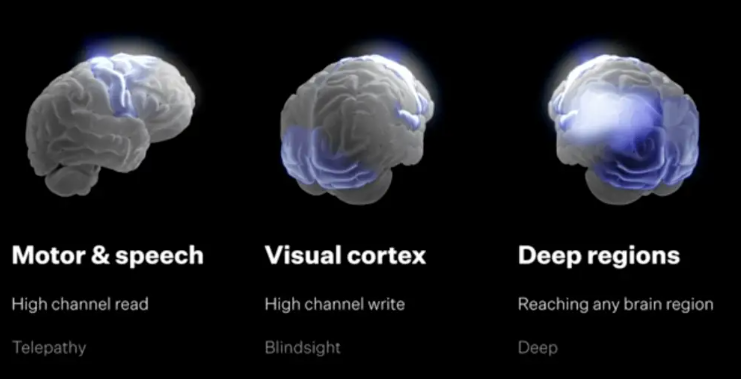
Core Viewpoint - Neuralink's brain-computer interface (BCI) technology is making significant strides, enabling paralyzed and ALS patients to control computers and robotic limbs using their thoughts, with ambitious future plans for enhancing human capabilities and integrating with AI [3][12][29]. Group 1: Neuralink's Achievements - The latest demonstration showcased that patients can control computers and play video games using only their thoughts, marking a significant breakthrough in BCI technology [3][12]. - A user named Noland, who became paralyzed at 22, successfully controlled a computer cursor and broke previous records for BCI users after receiving the implant [14]. - Another user, Alex, was able to control a robotic arm to draw and write, demonstrating the practical applications of the technology [23]. Group 2: Future Plans - Neuralink has a three-step plan: 1. The first product, Telepathy, aims to enhance output capabilities, allowing users to control devices with their thoughts, with a goal to enable speech through thought by next quarter [31]. 2. The second product, BlindSight, is set to launch in 2026, focusing on input capabilities to help blind individuals perceive the world by directly feeding visual signals to the brain [32]. 3. The third product, Deep, aims for full brain interconnectivity and deep integration with AI by 2028, potentially transforming human-AI relationships [35]. Group 3: Implications for Society - The advent of BCI technology could lead to a new class of "superhumans," with high achievers and wealthy individuals potentially opting for implants for their children at birth [36]. - The technology is expected to create significant societal changes, with both opportunities and challenges arising from its widespread adoption [36].

用意念操控世界,离我们还有多远
2 1 Shi Ji Jing Ji Bao Dao· 2025-07-04 12:16
Core Insights - Brain-computer interface (BCI) technology is evolving, allowing users to control devices using their thoughts, with applications in healthcare and consumer markets [1][4][5] Group 1: Types of Brain-Computer Interfaces - There are three types of BCI installation methods: invasive, non-invasive, and semi-invasive [2][3] - Invasive BCIs involve implanting chips in the brain, providing strong signals but with high safety requirements [2] - Non-invasive BCIs use special helmets to read brain waves, offering safety and convenience but potentially less accurate signals [2] - Semi-invasive BCIs involve minimally invasive sensors close to the brain, balancing precision and risk [2] Group 2: Applications and Market Potential - Invasive BCIs are primarily used in high-end research and specific clinical treatments, such as helping amputees control prosthetic limbs [4] - Non-invasive BCIs have significant potential in neuro-rehabilitation and consumer markets, aiding stroke patients and enabling gaming experiences [4] - Companies like Neuralink lead in invasive BCI technology, with reported success in enhancing the lives of individuals with disabilities [5] - Chinese companies are also making strides, with strong growth in both invasive and non-invasive BCI technologies [5] Group 3: Cost and Accessibility - The National Medical Insurance Administration in China has indicated that BCI technologies could become more accessible as they mature [6] - Pricing for invasive procedures is comparable to high-end smartphones, while non-invasive adaptations are even more affordable [8] Group 4: Challenges and Future Outlook - There are significant challenges to overcome in BCI technology, including improvements in electrodes, chips, and algorithms [10] - Safety concerns regarding biocompatibility, long-term stability, and data privacy must be addressed [11] - The future of BCI technology may lead to widespread adoption, transforming how users interact with devices and enhancing the dignity and freedom of individuals with disabilities [13]
新风口!脑机接口概念股频现暴涨
Shen Zhen Shang Bao· 2025-07-03 16:49
Group 1 - The brain-computer interface (BCI) sector has seen significant advancements since 2025, with related stocks experiencing substantial increases, such as Saily Medical up 165.37% and Innovative Medical up 92.46% as of July 3 [1] - The A-share BCI sector has an overall increase of 49.1% this year, indicating a strong market sentiment towards this industry [1] - Policy support has been a driving force, with cities like Beijing and Shanghai launching five-year action plans for BCI development, aiming to cultivate innovative enterprises and achieve clinical application of BCI products by 2030 [1][2] Group 2 - The establishment of China's first BCI industrial cluster in Shanghai marks a significant step in the domestic BCI landscape, with the new facility expected to be operational within the year [2] - The stock market has reacted positively, with multiple BCI-related stocks experiencing consecutive gains, such as Saily Medical and Jihua Group achieving three consecutive trading limits [2] - The BCI theme index in A-shares has risen by 4.96% over the past month, reflecting ongoing investor interest [2] Group 3 - Companies are increasingly engaging with investors regarding BCI developments, with Chengyitong announcing a dual-track strategy in invasive and non-invasive BCI technologies [3] - Chengyitong plans to release three prototypes of neuro-rehabilitation devices integrating BCI technology by July 2024 [3] - Other companies, such as Chengdu Huamei and Pulite, are also exploring BCI applications, focusing on signal processing hardware and high-performance materials, respectively [3]


