星尘智能

Search documents
最近面向具身科研级的硬件好像越来越多了......
具身智能之心· 2025-10-14 00:02
Core Insights - The article discusses the importance of profitability strategies in the robotics industry, particularly focusing on research scenarios as a common theme among companies [1] - It highlights the competitive landscape where traditional robotics manufacturers are transitioning while new companies are emerging, emphasizing the significance of differentiated competition [1] - The article identifies various educational scenarios for the deployment of robotics, suggesting that education is a promising area for industry exploration and development [1] Group 1: Community and Collaboration - The community has established a closed-loop system covering multiple fields such as industry, academia, job seeking, and Q&A exchanges [3] - It has compiled over 30 technical routes to assist users in finding benchmarks, reviews, and learning paths, significantly reducing search time [4] - The community invites industry experts to engage in discussions, providing insights into the latest developments and challenges in the field [4] Group 2: Research and Learning Resources - The community offers a comprehensive collection of open-source projects, datasets, and mainstream simulation platforms related to embodied intelligence [13][19] - It provides detailed learning routes for beginners and advanced researchers, covering various aspects of embodied intelligence and robotics [8][10] - The community has compiled a list of well-known robotics companies and research institutions, facilitating networking and collaboration opportunities [19][22] Group 3: Technical Insights - The article outlines various technical topics such as data collection, multi-sensor fusion, and the development of visual language models [5] - It discusses the significance of simulation platforms and the challenges associated with real-to-sim and sim-to-real transitions in robotics [10][14] - The community emphasizes the importance of tactile perception and collaborative sensing in advancing robotic capabilities [12][14]


报名|锦秋小饭桌x地瓜精酿馆第二弹:机器人派对@深圳
锦秋集· 2025-10-13 09:19
Core Insights - Jinqiu Fund, with a 12-year history as an AI Fund, focuses on long-term investment strategies, actively seeking groundbreaking technologies and innovative business models in general artificial intelligence startups [1][33]. Event Overview - The event titled "Jinqiu Dinner Table x Digua Craft Brewery" will take place on October 17, 2025, at Shenzhen Moli Camp AI Ecological Community [2][7]. - The event aims to foster discussions on the "mechanical awakening" era and encourage participants to share insights and ideas [4][29]. Investment Focus - Jinqiu Fund supports cutting-edge players in embodied intelligence, having invested in companies such as Digua Robotics, Yushu Technology, Stardust Intelligence, Lexiang Technology, and Inks [3][33]. Event Highlights - The event will feature interactive robot showcases, encouraging attendees to bring their robots for a limited seating of 30 to ensure high-quality exchanges [13][29]. - There will be an open mic session for participants to present their projects and needs, facilitating connections with potential partners [19][29]. - The atmosphere will promote informal discussions, focusing on the next explosive scenarios in robotics, allowing for natural idea flow and relationship building [23][29]. About Digua Robotics - Founded in 2015, Digua Robotics is a leading provider of general hardware and software platforms for robotics, aiming to become the "Wintel of the robotics era" [26][36]. - The company offers a multi-tier intelligent computing platform ranging from 5 to 128 TOPs, covering various robotic applications [37]. About the Gravity Program - The Gravity Program (D-Robotics Gravity Program) is an initiative by Digua Robotics designed to support robotics startups through a free membership system, aiming to empower a thousand companies and influence millions of consumers in the next five years [27][38].

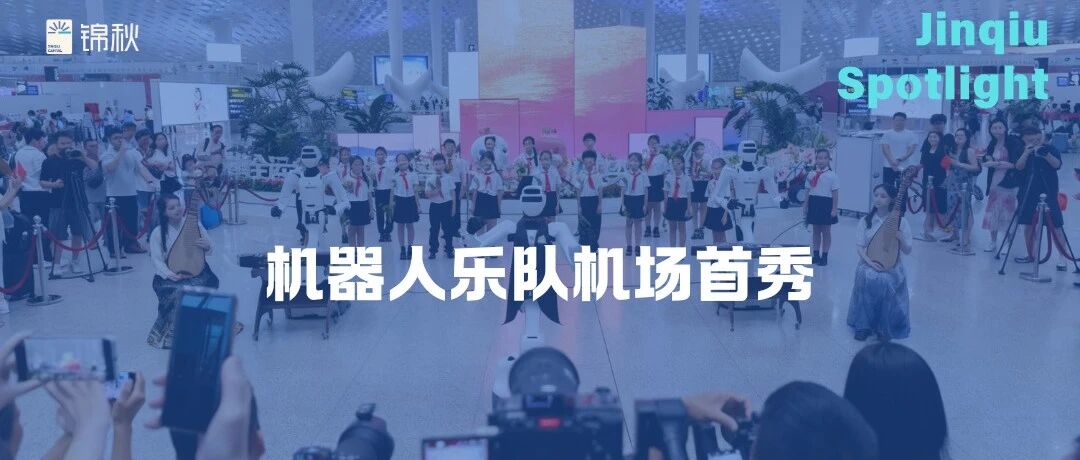
锦秋基金被投星尘智能小央机器人乐队亮相深圳机场迎国庆中秋 | Jinqiu Spotlight
锦秋集· 2025-10-04 01:02
Core Insights - Jinqiu Fund leads the Series A financing for Stardust Intelligence and continues to invest in Series A+ financing, focusing on breakthrough technologies and innovative business models in the AI sector [2] - Stardust Intelligence is recognized as the pioneer in rope-driven AI robots, utilizing a unique design that mimics human tendon movement, enabling high expressiveness and safety in complex operations [2] - The Astribot S1 robot has been applied across various fields, including research, commercial services, entertainment, and industry, accelerating the commercialization of robotics [2] Group 1 - The collaboration between CCTV and Stardust Intelligence resulted in the first performance of a humanoid robot band at Shenzhen Airport, showcasing the integration of technology and art [4][7] - The performance featured a robot conductor and musicians, demonstrating precision and emotional engagement, enhancing the travel experience for passengers [4][6] - This event exemplifies the potential of humanoid robots in public cultural services, breaking traditional performance boundaries and creating impactful cultural products [4][7] Group 2 - The Shenzhen Airport's initiative reflects the city's commitment to exploring embodied intelligence in service applications, merging advanced technology with human experiences [7] - The event not only highlighted Shenzhen's innovation in the robotics industry but also aimed to provide travelers with a unique and memorable experience during the holiday season [7][10] - The airport is open to further collaborations with local companies to explore AI applications across various operational scenarios, enhancing passenger experiences [7]
锦秋基金被投星尘智能ControlVLA入选顶会CoRL | Jinqiu Spotlight
锦秋集· 2025-09-28 04:08
Core Viewpoint - Jinqiu Fund leads the A-round financing of Stardust Intelligence, focusing on long-term investments in groundbreaking AI startups, particularly in the field of general artificial intelligence [1][3]. Group 1: Company Overview - Stardust Intelligence is recognized as the pioneer of rope-driven AI robots, utilizing a unique design that mimics human tendon movement, allowing for high expressiveness and safety in complex operations [1][3]. - The company's Astribot S1 robot has been applied across various sectors, including research, commercial services, entertainment, and industrial applications, accelerating the commercialization of robotics [1][3]. Group 2: Technological Innovation - The ControlVLA framework, developed in collaboration with the Beijing General Artificial Intelligence Research Institute, addresses the challenges of adapting pre-trained VLA models to real-world tasks with limited data [2][3]. - ControlVLA's key innovations include a mechanism for object-centric representation, a ControlNet-style fine-tuning architecture, and a dual attention structure, significantly improving data efficiency and decision-making accuracy [2][3]. Group 3: Performance Metrics - ControlVLA achieves a success rate of 76.7% with only 10-20 demonstration samples across eight real-world tasks, outperforming traditional methods that require significantly more samples [2][12]. - The framework demonstrates robust performance in unseen objects and backgrounds, maintaining stable performance even in long-sequence decision-making tasks [2][12]. Group 4: Market Implications - The advancements presented by ControlVLA lower the deployment barriers for robotics in various real-world scenarios, making it a significant step towards practical applications of embodied intelligence [3][49]. - By reducing the need for extensive training data, ControlVLA enhances the feasibility of deploying robots in diverse environments, which is crucial for the future of automation and AI integration [3][49].

这个具身智能领域的黄埔军校,正在做这些事情......
具身智能之心· 2025-09-26 10:42
Core Viewpoint - The article emphasizes the development and enhancement of a community focused on embodied intelligence, aiming to provide resources, support, and networking opportunities for individuals interested in this field. Group 1: Community Development - The community is working on improving hardware solutions and addressing user feedback regarding product quality and pricing [2] - There is an ongoing effort to streamline community resources and reduce gaps in information, with plans to present improved content after the holiday [2] - The community has established a mechanism for job referrals, connecting members with potential employers in the embodied intelligence sector [5][13] Group 2: Educational Resources - The community has compiled over 30 technical routes for members, facilitating easier access to benchmarks, reviews, and learning paths [6] - Various forums and live sessions are organized to discuss advancements in the embodied intelligence industry, covering topics such as robot simulation and data collection [6] - A comprehensive list of open-source projects and datasets related to embodied intelligence is available, aiding members in their research and development efforts [29][35] Group 3: Networking and Collaboration - The community includes members from prestigious universities and leading companies in the field, fostering collaboration and knowledge sharing [13] - Members are encouraged to engage with industry leaders and peers to discuss job opportunities and academic advancements [17][80] - The community aims to cultivate future leaders in the industry by providing a platform for technical exchange and professional growth [12]

CoRL 2025最新工作!ControlVLA:机器人看10遍就会,“通智大脑”能力再升级!
具身智能之心· 2025-09-25 09:54
Core Insights - The article discusses the development of ControlVLA, a novel framework that allows robots to learn complex tasks with minimal human demonstrations, achieving a success rate exceeding 75%, which is nearly four times higher than traditional methods [1][10][15]. Group 1: Research Background - Robots face significant challenges in performing tasks in real-world scenarios, especially with limited demonstrations. Existing few-shot learning methods often rely on simulation-enhanced data or pre-built modules, which struggle with the gap between simulation and reality [7][8]. - Recent advancements in Vision-Language-Action (VLA) models show promise in enhancing robot performance across multiple tasks and environments, but adapting these models efficiently to specific tasks in data-scarce situations remains a challenge [8][9]. Group 2: ControlVLA Framework - ControlVLA integrates pre-trained VLA models with object-centric representations to facilitate efficient few-shot fine-tuning for robot operation tasks. The framework employs a ControlNet-style architecture to maintain the rich prior knowledge of VLA models while focusing on task-critical objects [9][10]. - The workflow of ControlVLA consists of three main steps: 1. Pre-training a large-scale VLA model on diverse operation datasets to learn conditional distributions from visual and language instructions to action spaces [12]. 2. Extracting object-centric representations from demonstration videos to capture geometric and positional features of relevant objects [12]. 3. Fine-tuning the model using a dual attention mechanism that incorporates object information while preserving the pre-trained strategy [12]. Group 3: Experimental Results - The research team tested ControlVLA on the Astribot S1 robot, demonstrating its ability to efficiently complete both short-term and complex long-term tasks with only 10-20 demonstration data points [14][15]. - In experiments involving eight real-world tasks, ControlVLA achieved an overall success rate of 76.7%, significantly surpassing the traditional method's success rate of 20.8% [15][19]. - For long-sequence tasks, ControlVLA maintained an average success rate of 60%, approximately three times better than existing best methods, showcasing its capability to reduce error accumulation during task execution [19][24]. Group 4: Generalization and Cost Efficiency - ControlVLA demonstrated robust generalization capabilities, maintaining a success rate of 60%-70% when tested with unseen objects and new backgrounds, indicating its adaptability in dynamic environments [24][26]. - The framework allows for substantial reductions in the cost of collecting real operation demonstrations, as evidenced by achieving an 80% success rate in the OrganizeToy task with only 20 demonstration data points, while other methods required 100 data points to reach similar performance [21][26].

GPT-5与Transformer共同发明人Lukasz Kaiser重磅加盟,2025全球机器学习技术大会全日程官宣!
Tai Mei Ti A P P· 2025-09-18 08:23
Core Insights - The development of computing and connectivity is cyclical, with "Computing 2.0" entering an accelerated phase, and AGI expected to emerge around 2035 [1] - The 2025 Global Machine Learning Technology Conference will be held on October 16-17 in Beijing, featuring top scholars and industry leaders to explore the infinite possibilities of the AI era [1] Event Highlights - Lukasz Kaiser, a key figure in the development of large models and co-inventor of GPT-5, will discuss the historical, current, and future aspects of reasoning models at the conference [2][4] - Li Jianzhong, director of the Singularity Intelligence Research Institute, will present insights on large model technology and its impact on computing, development, and interaction paradigms [4] Expert Participation - The conference will feature numerous industry leaders discussing the latest developments and commercialization challenges in large model technology [5] - Notable speakers include former OpenAI researchers and experts from leading tech companies, sharing breakthroughs and insights in AI technology [5][13] Agenda Overview - The agenda includes various sessions on topics such as efficient screening of large models, uncertainty modeling, and multi-modal applications in AI [8][9] - The second day will continue with discussions on AI governance, foundational infrastructure, and the latest advancements in embodied intelligence and software development paradigms [10][11] Industry Collaboration - The conference aims to foster collaboration among global AI industry participants, promoting innovation and exploring paths for industry upgrades [16][17] - It serves as a platform for effective communication and cooperation among enterprises, developers, and researchers in the AI field [17]

人形机器人“订单狂欢”?机器人主题掀涨停潮!机器人ETF基金(159213)涨近3%,资金跑步进场!如何理解人形机器人行情?
Xin Lang Cai Jing· 2025-09-18 03:00
Group 1 - The core viewpoint of the articles highlights the resurgence of the robotics sector in the A-share market, with significant investments flowing into robotics ETFs and notable orders for humanoid robots from both domestic and international companies [1][2][3] - The Robot ETF (159213) has seen a nearly 3% increase, marking its fourth consecutive rise, with a net subscription of 3 million shares during the trading session [1] - Tesla has signed a letter of intent with PharmAGRI to deploy up to 10,000 Optimus Gen3+ humanoid robots in various operational areas, indicating strong demand for humanoid robots in the market [1][3] Group 2 - The investment landscape for the robotics sector is characterized by two phases: thematic investment and industrial trend investment, with the current phase being identified as an early stage of industrial trend investment [2] - The report from Huatai Securities indicates that the market's confidence in humanoid robots is growing, with expectations for rapid penetration rates already factored into current valuations [2] - Major players in the humanoid robotics market are transitioning from shallow commercialization to deeper market engagement, with challenges remaining in mass production and practical application [3][6] Group 3 - The articles mention significant orders in the humanoid robotics sector, including a 2.5 billion yuan contract for the Walker S2 humanoid robot, setting a new record for single orders in the global humanoid robotics industry [1][3] - The current landscape shows that while there are many companies involved in humanoid robotics, few have achieved a commercial closed loop, with most focusing on small-scale strategic collaborations and data collection [6] - The anticipated market for humanoid robots is expected to expand from government and educational applications to broader commercial markets, with the potential for significant growth in consumer applications [6][8]


中国人形机器人“订单狂欢”?行业经不起猛火快炒
Guan Cha Zhe Wang· 2025-09-16 12:24
Core Insights - The domestic humanoid robot industry has experienced a surge in orders since September, with significant contracts being signed, indicating a growing market [1][3] - However, underlying challenges and technical barriers suggest that the industry is not yet mature, despite the apparent order frenzy [3][4] Group 1: Order Trends - On September 2, Xingchen Intelligent signed a contract for a thousand industrial robots with Xiangong Intelligent, marking the first large-scale order in the domestic humanoid robot sector [1] - Shortly after, UBTECH secured a 250 million yuan contract for humanoid robots, setting a new record for a single order in the global humanoid robot market [3][6] - In the first half of 2025, over 83 publicly disclosed humanoid robot projects in China totaled nearly 330 million yuan, with UBTECH, Yushutech, and Zhiyuan Robotics capturing 60% of the market share [3][11] Group 2: Industry Challenges - The industry faces significant technical disputes, particularly in the field of embodied intelligence, with two main technical routes being debated: "video synthesis + 3D reconstruction" and "end-to-end 3D generation" [4] - The current state of technology in the robot sector is still in a divergent phase, and premature investment in a single technical route is cautioned against until clearer signals of convergence emerge [4][5] Group 3: Market Dynamics - The competition for orders is intensifying, with both leading and mid-tier players participating in a "order grabbing war" [6] - UBTECH's humanoid robots are described as "order harvesters," having recently set records for both the highest single order and total order amounts [6][8] - The delivery of contracts is cautious, often starting with small batches to validate performance in real-world scenarios before scaling up [11]

中国具身智能的技术一号位们
自动驾驶之心· 2025-09-16 03:34
Core Viewpoint - The article highlights the rapid development and commercialization of embodied intelligence, emphasizing the competitive landscape among global teams and the importance of technological breakthroughs in the field [4][5]. Group 1: Industry Overview - The last two years have seen significant advancements in hardware, data collection, and algorithms, leading to the expansion of embodied intelligence beyond laboratory settings [4]. - Embodied intelligence has become a recognized core direction for commercialization globally, with various teams competing intensely in this space [4]. - The next generation of technological breakthroughs will focus on general embodied intelligence and scene-adaptive learning [4]. Group 2: Key Players in Embodied Intelligence - **Yushu Technology**: Founded by Wang Xingxing, the company specializes in quadruped robots and has developed multiple models, including Laikago and AlienGo. Wang has over 10 years of experience in robot development and holds over 100 patents [8]. - **Xinghai Map**: Co-founded by Zhao Xing, the company focuses on embodied intelligence and multimodal learning, contributing to the development of the first mass-produced autonomous driving model based on large models [12][13]. - **Galaxy General**: Founded by Wang He, the company is dedicated to embodied intelligence and humanoid robots, with significant research contributions in 3D vision and robot learning [18]. - **Zhiyuan Robotics**: Led by Luo Jianlan, the company focuses on high-precision assembly tasks using reinforcement learning, achieving a 100% success rate in real-world applications [23]. - **Variable Robotics**: Co-founded by Wang Hao, the company aims to integrate large models with embodied intelligence, launching the WALL-A model, which is the largest operational model globally [26]. - **Zhuji Power**: Founded by Zhang Wei, the company is developing full-size humanoid robots and has launched the W1 commercial robot, with plans for mass production of humanoid robots by 2025 [30]. - **Stardust Intelligence**: Founded by Lai Jie, the company focuses on creating AI robots for household use, achieving breakthroughs in embodied intelligence data acquisition [32]. - **Cloud Deep**: Founded by Zhu Qiuguo, the company specializes in humanoid and quadruped robots, with a strong emphasis on self-research and development of core components [34]. - **Qianxun Intelligence**: Founded by Han Fengtao, the company has developed the Moz1 humanoid robot, which features advanced control capabilities and has raised over 1 billion yuan in funding [38]. - **Physical Intelligence**: Co-founded by Sergey Levine, the company focuses on creating advanced AI models for robots, achieving significant funding milestones and technological advancements [40][41]. - **Figure AI**: Founded by Brett Adcock, the company has developed humanoid robots for commercial applications, with significant advancements in collaborative robot control [44][45]. Group 3: Future Outlook - The article concludes that the vision and persistence of technology leaders are crucial for advancing the industry, with various paths being taken towards a flexible, adaptive, and highly interactive future in embodied intelligence [54][55].