MediaTek

Search documents
人工智能供应链,甲骨文资本支出、OpenAI 专用集成电路(ASIC)、台湾半导体展-Asia-Pacific Technology -AI Supply Chain Oracle capex, OpenAI ASIC, SEMICON Taiwan
2025-09-17 01:51
Summary of Key Points from the Conference Call Industry Overview - The conference call primarily discusses the **AI semiconductor supply chain**, focusing on companies like **Oracle**, **Nvidia**, **Broadcom**, and **TSMC** [1][2][3][4]. Core Insights and Arguments 1. **Oracle's Revenue Backlog**: Oracle announced a significant revenue backlog, which positively impacted Nvidia and its supply chain stocks, including TSMC and KYEC. The company expects its fiscal year 2026 capital expenditures (CapEx) to be around **$35 billion**, primarily for revenue-generating equipment [2][11]. 2. **AI ASIC Demand**: Broadcom reported **$10 billion** in revenue from a fourth customer, identified as OpenAI, indicating strong demand for AI ASICs. This revenue is based on server racks, with less than 100% revenue capture noted [2][9]. 3. **TSMC's Moore's Law 2.0**: TSMC's Deputy Co-COO discussed the transition to Moore's Law 2.0, emphasizing the importance of system integration over mere chip scaling. This shift is expected to enhance the production timelines for Nvidia's Rubin GPU chip, projected to enter mass production in **2Q26** [3][20]. 4. **Cloud CapEx Growth**: The global cloud CapEx is expected to reach **$582 billion** in 2026, reflecting a **31% year-over-year growth**, which is significantly higher than the consensus estimate of **16%** [12][13]. 5. **AI Server CapEx**: The implied AI server CapEx is projected to grow by approximately **70% year-over-year** in 2026, driven by increased spending on short-lived assets [13]. Additional Important Insights 1. **Stargate Project**: A joint venture between OpenAI, Softbank, and Oracle aims to develop infrastructure for next-gen AI, with indications of strong engagement in the supply chain, particularly in server racks [9]. 2. **Chip Consumption**: The consumption of Blackwell chips is expected to reduce inventory risks in the AI semiconductor supply chain, with **28,000 GB200 NVL72 racks** translating to around **2 million units** of chip consumption [10]. 3. **Market Dynamics for KYEC**: KYEC's target price was raised from **NT$158 to NT$188** due to expected strong revenue growth from AI CapEx hikes and market share gains in ASIC and chip probing [71][72]. 4. **CPO Technology**: The adoption of Co-Packaged Optics (CPO) technology is anticipated to start production in **2H26**, with discussions on its coexistence with copper cables [24]. Conclusion The conference call highlighted a robust outlook for the AI semiconductor industry, driven by significant investments from major players like Oracle and Nvidia. The transition to Moore's Law 2.0 and the expected growth in cloud CapEx and AI server CapEx indicate a strong demand trajectory for AI-related technologies and infrastructure.


大中华区半导体展望投资者报告-Investor Presentation Greater China Semiconductors Outlook
2025-09-16 02:03
Summary of the Investor Presentation: Greater China Semiconductors Outlook Industry Overview - **Industry Focus**: Semiconductors in Greater China - **Overall Industry View**: Attractive [2][4] Key Insights - **Top Investment Picks**: - **AI Segment**: TSMC (Top Pick), Winbond (Top Pick), Alchip, Aspeed, MediaTek, KYEC, ASE, FOCI, Himax, ASMPT [4] - **Non-AI Segment**: Novatek, OmniVision, Realtek [4] - **China Wafer Fabrication Equipment (WFE)**: NAURA Tech, AMEC, ACMR [4] - **Specialty Semiconductors**: Silergy, SG Micro, SICC, Yangjie [4] - **Market Dynamics**: - AI cannibalization may impact recovery in the second half of 2025 due to tariff costs [4] - A decline in semiconductor inventory days historically signals positive stock price appreciation [4] - The demand for AI semiconductors is expected to accelerate due to generative AI, influencing various verticals beyond the semiconductor industry [4] - Tech deflation is anticipated to stimulate demand for technology products [4] Financial Metrics and Valuation - **Valuation Comparison**: - TSMC's current price is 1,255.0 TWD with a target of 1,388.0 TWD, indicating an 11% upside [5] - UMC's current price is 41.1 TWD with a target of 48.0 TWD, indicating a 17% upside [5] - SMIC's current price is 63.0 HKD with a target of 40.0 HKD, indicating a -37% downside [5] - **P/E Ratios**: - TSMC: 27.7 (2024), 21.4 (2025e), 18.4 (2026e) [5] - UMC: 10.9 (2024), 15.6 (2025e), 11.5 (2026e) [5] - **EPS Growth**: - TSMC: 40% (2024), 29% (2025e), 17% (2026e) [5] - UMC: -23% (2024), -30% (2025e), 35% (2026e) [5] Supply Chain and Production Insights - **China's GPU Supply**: - The self-sufficiency ratio for domestic GPUs was 34% in 2024, expected to reach 82% by 2027 [26] - Local GPU revenue could grow to RMB 287 billion by 2027, driven by SMIC's leading node capacity [31] - **Capex Forecast**: - The top six companies' capital expenditures are forecasted to grow 62% YoY to RMB 373 billion [24] Additional Considerations - **AI Demand**: The DeepSeek technology is expected to drive inference AI demand, raising questions about the sufficiency of domestic GPU supply [4][21] - **Market Trends**: The semiconductor stock index has shown an upward trend, with non-AI semiconductor growth at only 10% YoY in 2024 [9][14] This summary encapsulates the critical insights and financial metrics from the investor presentation, highlighting the semiconductor industry's current landscape and future outlook in Greater China.
2025 年台湾国际半导体展_3.5D 先进封装、共封装光学及更多测试_ SEMICON Taiwan 2025_ 3.5D advanced packaging, co-packaged optics and more testing
2025-09-15 13:17
Summary of Key Points from the Conference Call Industry Overview - The conference focused on the semiconductor industry, particularly advancements in AI chips, heterogeneous integration, advanced packaging, and optical interconnect technologies, reflecting the growing importance of these areas in the market [2][3][20]. Core Findings 1. **TSMC's Capacity Expansion**: TSMC is expected to expand its CoWoS capacity to 100kwpm by the end of 2026, up from 70kwpm at the end of 2025, driven by robust demand for Cloud AI GPUs and ASICs [3]. 2. **AI Computing Demand**: AI computing requirements have surged by 10x in the past year, necessitating advancements in chip scaling, memory, and interconnect technologies [3]. 3. **3.5D Advanced Packaging**: The event highlighted significant discussions around 3.5D advanced packaging, which is anticipated to become mainstream for high-performance computing, improving cost structures and product design speeds [3]. 4. **Heterogeneous Integration**: The trend towards co-packaged optics (CPO) is gaining traction, with expectations for power consumption to be optimized by 2028, allowing for the replacement of copper in AI server integrations [3]. 5. **Testing Innovations**: The complexity of die and package designs is increasing the need for more rigorous testing at the wafer/die level to identify yield issues early [3]. Stock Recommendations - Top stock picks in the Greater China semiconductor sector include TSMC, ASE, MediaTek, Alchip, and Aspeed, all rated as "Buy" due to their structural AI opportunities [4]. Additional Insights - **Optical Interconnects**: Nvidia's advancements in networking infrastructure, particularly with its Spectrum-X CPO solution, promise significant power savings and improved signal integrity [12]. - **AI Data Center Power Consumption**: The power consumption of AI data centers is projected to rise dramatically, with examples like Meta's Hyperion data center expected to consume 2GW by 2030 [16]. - **Challenges in Advanced Packaging**: The industry faces challenges in transitioning to panel-level packaging and CoWoP technologies, which require overcoming technical hurdles related to system design and materials [30][39]. Emerging Technologies - **Silicon Photonics**: TSMC's COUPE platform aims to enhance integration of optics and electrical signaling, addressing bandwidth bottlenecks in computing performance [12]. - **GaN Technology**: GaN is highlighted for its efficiency and potential in powering AI applications, with Texas Instruments and Infineon leading developments in this area [36][38]. Conclusion - The semiconductor industry is at a pivotal point, driven by AI advancements and the need for innovative packaging and integration solutions. Companies like TSMC, Nvidia, and MediaTek are positioned to capitalize on these trends, while challenges in testing and power consumption remain critical areas for development [3][4][16][20].
2026 年半导体展望-2026 年人工智能加速器模型的更新
2025-09-04 01:53
Summary of Key Points from the Conference Call Industry and Company Overview - The conference call primarily discusses the semiconductor industry, focusing on companies such as nVidia, Broadcom, and MediaTek, with an emphasis on AI accelerator models and TPU projects. Core Insights and Arguments nVidia's Rubin Chip - nVidia's new Rubin chip is expected to launch in the second half of 2026, although the timing may be later than market expectations [2] - The compute power of the Rubin chip is projected to increase to 2300w from 1800w, leading to potential upgrades in specifications and components [2] - The adoption of Jentech's Micro channel lid is anticipated to occur earlier than expected, with an ASP for this component estimated to be 3-4 times higher than current solutions [2] - Chip testing for the Rubin chip is expected to increase, with a projected growth of 70-80% in chip testing dollar content compared to the previous BW chip [2] Broadcom's CoWoS Allocation - Broadcom has revised its 2026 CoWoS allocation to 180k, aligning with previous positive forecasts [3] - The company is expected to see strong TPU momentum in the second half of 2025 and the first half of 2026, but a slowdown is anticipated in the second half of 2026 due to MediaTek's TPU project entering mass production [3] - The ASP for the V7 TPU is expected to reach US$10-12k, while the V6e is around US$4-5k [3] MediaTek's TPU Project - MediaTek is on track to achieve its US$1 billion revenue target for the TPU project in 2026, which includes NRE revenue [4] - The ASIC revenue from this project is likely to exceed earlier estimates of US$500-600 million [4] Additional Important Information - The conference highlights the competitive landscape in the semiconductor industry, particularly regarding AI accelerators and TPU projects, indicating a dynamic environment with significant growth potential [2][3][4] - The insights provided suggest a positive outlook for companies involved in the supply chain of nVidia's Rubin chip, particularly KYEC and Advantest, due to increased testing requirements [2] - The overall sentiment in the semiconductor sector appears optimistic, with expectations of continued growth driven by advancements in AI technology and related hardware [3][4]
As AI Becomes Increasingly Physical, Consider THNQ
ETF Trends· 2025-09-03 13:43
Core Insights - AI investing has significantly driven portfolio performance, particularly benefiting major tech firms, but true AI investment requires more than just investing in these firms [1] - The emergence of physical AI applications, particularly in robotics, presents a larger investment opportunity beyond traditional data center investments [2] Group 1: AI and Robotics - NVIDIA's recent earnings call highlighted the growth of its robotics platform, indicating that robotics will be a long-term demand driver for its data center business due to higher computational needs [3] - CEO Jensen Huang emphasized that AI and robotics represent multitrillion-dollar growth opportunities for NVIDIA [4] Group 2: Supporting Ecosystem - A broader ecosystem of tech enablers, including companies like Taiwan Semiconductor, AMD, and Qualcomm, is capitalizing on AI opportunities across various sectors [4] - THNQ ETF includes companies such as Cloudflare, Snowflake, MongoDB, and Elastic, which operate in Network & Security, Big Data Analytics, and Cloud Providers segments [4] Group 3: THNQ ETF Performance - THNQ ETF has returned 18.9% year-to-date, outperforming both its category and segment averages of 14% and 14.8% respectively [8] - THNQ charges a 68 basis point fee and tracks an index that includes firms generating significant revenue from AI, categorized into infrastructure and application sectors [7] Group 4: Notable Acquisitions - Palo Alto Networks has proposed acquiring Cyberark for $25 billion, enhancing its security offerings across network, cloud, and endpoint security [5] - This acquisition positions Palo Alto Networks to provide a comprehensive security platform for a future with billions of connected devices [6]


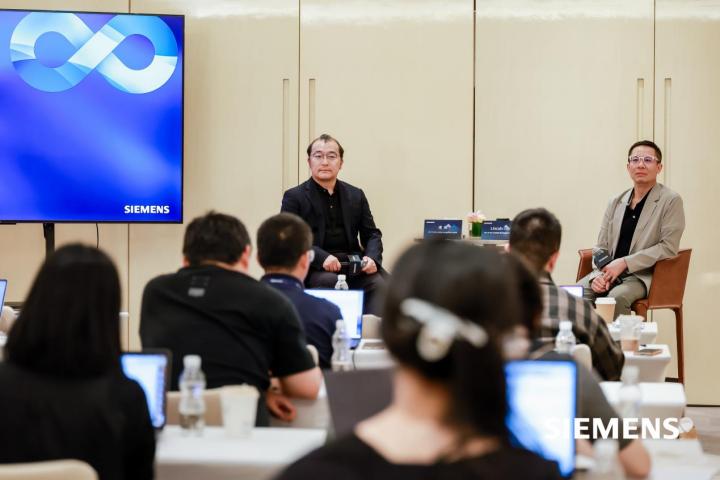
万亿赛道新变局:西门子EDA以AI重塑半导体设计边界
Guan Cha Zhe Wang· 2025-09-03 04:30
Group 1 - The core viewpoint of the article emphasizes the transformation of traditional luxury automotive brands like Mercedes into software-centric companies, reflecting the broader changes in the semiconductor industry driven by AI and software [1][4][6] - Siemens EDA's annual technology summit highlighted the industry's challenges, including project delays and declining first-pass success rates, while projecting semiconductor industry revenue to reach $1 trillion to $1.2 trillion by 2030, with transistor counts exceeding 1 trillion [4][6] - The introduction of "software-defined, AI-empowered, chip-enabled" strategies by Siemens EDA signifies a profound insight into industry trends, with a notable emphasis on the increasing importance of AI in Electronic Design Automation (EDA) [4][7] Group 2 - The concept of "software-defined" in the semiconductor industry indicates a shift from hardware-centric approaches to software-driven differentiation, necessitating a change in design methodologies to incorporate software considerations early in the design process [6][9] - AI's role in EDA is characterized by its industrial-grade applications, focusing on five key features: verifiability, usability, universality, robustness, and accuracy, which are essential for ensuring reliable chip design [7][8] - Siemens EDA's development of a comprehensive digital twin system aims to support the entire digital ecosystem, integrating various design and verification processes across multiple domains, thereby enhancing the overall design and production lifecycle [9][10]
台湾科技:调研反馈,先进封装和测试行业情绪因乐观结果后移-Taiwan Technology_ Marketing feedback_ Sustained AI optimism with rising sentiment towards advanced packaging and testing industry
2025-08-28 02:12
Summary of Key Points from the Conference Call Industry Overview - The focus of the conference call was on the Taiwan technology sector, particularly the semiconductor industry, with a strong emphasis on AI and advanced packaging technologies [1][2][7]. Core Company Insights TSMC (Taiwan Semiconductor Manufacturing Company) - TSMC is viewed as one of the most underappreciated AI stocks, currently trading at approximately 17x FY26 P/E, which is lower than other global AI names [2][16]. - TSMC's share price has increased by 12% year-to-date, but it has underperformed compared to peers like SK Hynix (+52%) and Nvidia (+31%) [2]. - The company is expected to achieve a revenue growth of 20% in 2026, following a robust 34% growth in 2025, driven by advancements in 2nm/3nm nodes and higher pricing for advanced nodes [2][16]. - TSMC's capital expenditure (capex) is projected to be moderate at $40 billion in 2025 and $42 billion in 2026, with a significant increase to $50 billion in 2027 due to capacity constraints [3][5]. MediaTek - MediaTek faces divergent views from hedge funds, with long-short funds expressing negativity due to a lack of near-term catalysts and lukewarm smartphone demand [6]. - Despite setbacks in the TPU project timeline, long-only investors remain optimistic about MediaTek's potential in the $45 billion ASIC market [6]. - The tape-out timing of MediaTek's TPU project is a critical monitoring point for investors [6]. ASE Technology - ASE is perceived as an AI laggard, with limited AI revenue contribution expected to be in the high single digits for 2025 [9][10]. - ASE is ramping up its advanced packaging capacity, with projections for significant capacity increases in the coming years [8]. - Investors are cautious due to ASE's reliance on mass-market consumer demand and a slower-than-expected recovery in gross margins [9]. Advanced Packaging and Testing Industry - The adoption of chiplet designs is driving demand for advanced packaging solutions, with CoWoS capacity expected to expand significantly from 2025 to 2027 [7][11]. - The testing industry is gaining traction, with companies like MPI and WinWay expected to benefit from higher average selling prices (ASP) and increased market share [12][13]. Other Important Insights - There is a notable investor interest in CoWoS equipment names, particularly GPTC and All Ring, following recent share price corrections [11]. - The overall sentiment towards the semiconductor industry is optimistic, particularly regarding AI and advanced packaging, despite some concerns about growth prospects in 2026 [1][11]. - Key risks for the companies discussed include weaker-than-expected end demand, competition, and execution challenges [17][20][22]. Conclusion - The Taiwan technology sector, particularly in semiconductors, is experiencing a shift towards AI and advanced packaging, with TSMC, MediaTek, ASE, and testing companies positioned to capitalize on these trends. However, investors remain cautious due to potential risks and varying growth outlooks across different companies.
全球科技-人工智能供应链 2025 年下半年生产;安卓 AI 手机;AI 工厂分析更新-Global Technology -Correction AI Supply Chain H20 Production; Android AI Phone; AI Factory Analysis Updates
2025-08-27 01:12
Summary of Key Points from the Conference Call Industry Overview - The conference call primarily discusses the **AI semiconductor industry**, focusing on **NVIDIA** and its supply chain dynamics, particularly regarding the **H20 chip** and its implications for the broader market. Core Insights and Arguments 1. **NVIDIA's H20 Chip Production**: - NVIDIA is expected to halt H20 chip production due to China's restrictions on purchases, despite receiving US government approval to resume sales. The CEO emphasized that the H20 chip does not have security backdoor access [2][12] - The forecast for H20 GPU modules has been cut, and server assembly for H20 HGX servers has been halted [2] 2. **Demand for Alternative Chips**: - There is emerging interest from Chinese customers in NVIDIA's B40 chip, which uses GDDR7 instead of HBM, with a forecast of 2 million units demand this year and 5 million next year [2] 3. **AI Factory Token Output Analysis**: - The potential annual profits of a 100MW AI Factory at a price of $0.2 per million tokens have been refined, incorporating new trends in AI inference and adjustments in networking bandwidth assumptions [3] - At a price of $0.3 per million tokens, most chips running Llama 4 400B with MoE can generate profit, including AMD's older generation chip MI300 [3] 4. **AI Inference Demand Growth**: - Monthly token output processed by major cloud service providers (CSPs) indicates strong growth in AI inference demand, with China's token consumption reaching 30 trillion daily by June 2025, a 300x increase from early 2024 [14] - Google processed over 980 trillion tokens in July 2025, doubling from May 2025 [14] 5. **NVIDIA's Market Position**: - NVIDIA's GB200 NVL72 pod continues to show performance dominance in AI inference, driven by its computing power and robust software ecosystem [48] - The company is expected to be conservative regarding supply and China-related variables, with significant revenue potential from China still uncertain [12] 6. **Profitability Estimates for AI Factories**: - A 100MW AI factory could generate approximately $1.28 billion in annual revenue and $722 million in profit at $0.2 per million tokens, with profit margins around 52% [51] - At $0.3 per million tokens, the annual revenue could rise to $1.91 billion with profits of $1.36 billion, yielding a profit margin of approximately 68% [51] Other Important Insights - **Technological Developments**: - The Tensor G5 chip used in Google's Pixel 10 is manufactured using TSMC's 3nm process, indicating advancements in smartphone technology [4][19] - Google introduced several AI features in its new Pixel 10 lineup, which may influence the smartphone market in China and trigger a replacement cycle in 2026 [19] - **Market Sentiment**: - There is a shift towards more optimistic sentiment regarding AI semiconductors, with some analysts projecting October revenue for the sector at $52.5 billion, with potential upside [11] - **Challenges and Limitations**: - The research acknowledges limitations in estimating real-world performance versus theoretical models, emphasizing the dynamic nature of AI inference workloads and the complexities involved in quantifying various performance metrics [58] This summary encapsulates the key points discussed in the conference call, highlighting the current state and future outlook of the AI semiconductor industry, particularly focusing on NVIDIA and its competitive landscape.
全球科技-人工智能供应链 2025 年下半年生产情况;安卓人工智能手机;人工智能工厂分析更新-Global Technology -AI Supply Chain H20 Production; Android AI Phone; AI Factory Analysis Updates
2025-08-26 01:19
Summary of Key Points from the Conference Call Industry Overview - The conference call primarily discusses the **AI Supply Chain** and **semiconductor industry**, focusing on **NVIDIA** and its H20 chip dynamics, as well as developments in AI factory economics and smartphone technology from **Google**. Key Insights on NVIDIA and H20 Chip - **NVIDIA's H20 Chip Production**: NVIDIA is considering halting H20 chip production due to China's restrictions on purchases. The CEO confirmed that NVIDIA has received US government approval to resume sales of the H20 chip, despite security concerns raised by China [2][9]. - **Market Dynamics**: Joe Moore's report indicates that NVIDIA's guidance for October does not include revenue from China GPUs, forecasting a total of **US$52.5 billion**. However, there is potential upside as some analysts predict revenues could reach **US$55 billion** [2][8]. - **Chinese Market Interest**: Despite the challenges, there is emerging interest from Chinese customers in NVIDIA's B40 chip, with a forecast of **2 million units** demand this year and **5 million units** next year [2]. AI Factory Economics - **Token Output Analysis**: The analysis of a **100MW AI Factory** suggests potential annual profits at different token price points. At **US$0.2 per million tokens**, the factory could generate approximately **US$1.16 billion** in revenue and **US$608 million** in profit, while at **US$0.3**, revenue could rise to **US$1.74 billion** with profits of **US$1.19 billion** [34][48]. - **Performance of AI Processors**: The report highlights that NVIDIA's GB200 NVL72 pod continues to outperform competitors in terms of computing power and networking capabilities [45]. The analysis also includes performance estimates for AMD's MI300X and MI355X platforms, noting improvements in networking bandwidth [29][30]. Google Pixel 10 Launch - **New Smartphone Features**: Google launched the **Pixel 10**, featuring the **Tensor G5 chip** manufactured by TSMC's **3nm process**. The phone includes advanced AI capabilities such as real-time translation and enhanced camera features [4][16]. - **Market Impact**: The introduction of the Pixel 10 is expected to influence the smartphone market in China, potentially triggering a replacement cycle in **2026** [4][16]. AI Demand and Token Processing - **Growing AI Inference Demand**: Monthly token processing by major cloud service providers (CSPs) indicates a significant increase in AI inference demand, with China's token consumption reaching **30 trillion daily** by June 2025, a **300x increase** from early 2024 [11]. - **CSP Performance**: Google processed over **980 trillion tokens** in July 2025, doubling from **480 trillion** in May 2025, indicating robust growth in AI applications [11]. Additional Considerations - **Supply Chain Management**: NVIDIA's management emphasized their ongoing efforts to adapt their supply chain to current market conditions, particularly in light of the uncertainties surrounding the Chinese market [2][9]. - **Profitability of AI Inference**: The analysis concludes that AI inference remains a highly profitable business, with all processors analyzed capable of generating positive profits under the current pricing assumptions [44]. Conclusion - The conference call provided a comprehensive overview of the current state of the AI semiconductor industry, highlighting NVIDIA's strategic challenges and opportunities, the economic potential of AI factories, and the impact of new product launches from Google. The insights suggest a cautiously optimistic outlook for the sector, driven by increasing demand for AI capabilities and innovative technologies.
ASTS vs. QCOM: Which Connectivity Stock Has Better Growth Potential?
ZACKS· 2025-08-21 15:11
Core Insights - AST SpaceMobile and Qualcomm are key players in the mobile connectivity sector, with AST SpaceMobile focusing on a global cellular broadband network in space and Qualcomm providing high-performance chip designs for various applications [1][2] AST SpaceMobile - AST SpaceMobile has launched its first five commercial satellites, known as Bluebird, which feature the largest commercial communications arrays at 693 square feet, providing non-continuous service across the U.S. with over 5,600 cells in the low-band spectrum [4] - The company plans to deploy 45 to 60 additional satellites by Q1 2026 and holds a patent portfolio of over 3,650 patents related to direct-to-cell satellite technology [4] - Partnerships with major carriers like AT&T and Verizon aim to enhance cellular coverage and eliminate dead zones in the U.S. [5] - AST SpaceMobile anticipates a staggering 1261% sales growth for 2025, although it faces challenges from macroeconomic conditions and competition from companies like SpaceX's Starlink [8][6] Qualcomm - Qualcomm is positioned for long-term revenue growth, driven by strong 5G adoption and a diversified revenue stream, with projected sales growth of 12.3% and EPS growth of 15.9% for 2025 [9][12] - The company has expanded its Snapdragon portfolio with new gaming chipsets and is focusing on AI integration across its product lines [9][10] - Qualcomm's operations in the automotive sector are also growing, with advancements in connected vehicles and digital cockpit solutions [10] - Despite facing competition from Intel in the AI PC market and challenges in the premium smartphone segment, Qualcomm's EPS estimates have been trending upward [11][12] Comparative Analysis - AST SpaceMobile has outperformed Qualcomm in price performance over the past year, gaining 32% compared to Qualcomm's decline of 8% [14] - From a valuation perspective, Qualcomm's shares trade at a price/sales ratio of 3.75, significantly lower than AST SpaceMobile's 67.77, indicating a more attractive valuation for Qualcomm [15] - Long-term earnings growth expectations are 26.1% for AST SpaceMobile versus 7.1% for Qualcomm, suggesting that AST SpaceMobile may be a better investment option despite its less favorable valuation metrics [20]