软件定义

Search documents
前九号产品副总创业全地形车,获高瓴、云时、云沐千万美元融资丨早起看早期
36氪· 2026-03-27 00:16
Core Viewpoint - ModMax, a developer of smart electric all-terrain vehicles, has recently completed seed and angel round financing totaling tens of millions of dollars, aimed at product development, team building, and initial brand expansion in overseas markets [6]. Market Overview - The global all-terrain vehicle market is projected to reach approximately $11.95 billion to $21 billion by 2024, with North America accounting for nearly half of the market share [6]. - The market has been dominated by major players such as Polaris, BRP, Honda, and Yamaha, with the top four companies holding a market concentration of up to 97% in specific segments [6]. Challenges and Innovations - Traditional fuel-powered all-terrain vehicles face challenges due to high noise levels, maintenance costs, and emission restrictions, which limit user experience in specific scenarios [6]. - ModMax aims to redefine the category not merely by converting fuel engines to electric but by adopting a modular product design that enhances flexibility and adaptability for various user scenarios [7]. Technological Approach - The company has developed an intelligent control algorithm to manage torque effectively in extreme off-road conditions, allowing for both silent operation in agricultural settings and powerful performance in competitive environments [7]. - ModMax's modular design allows users to customize their vehicles for different activities, promoting a shift from "mechanically defined" to "software-defined" products [7]. Market Strategy - The electric all-terrain vehicle is positioned to appeal to a broader consumer base, moving from niche professional users to mainstream consumers, leveraging the benefits of electric mobility [8]. - ModMax aims to create a unique market space through innovative pricing strategies and enhanced user experiences, capitalizing on the advantages of China's electric vehicle supply chain [8]. Team and Expertise - The founder, Lin Ji, has a strong background in product development, having previously led successful projects at Ninebot and Segway, with a team experienced in launching innovative products [8]. - The core team comprises members from leading tech companies, bringing expertise in creating new categories and successful products [8]. Investor Insights - Investors express confidence in ModMax's potential to redefine the all-terrain vehicle market through modular architecture and intelligent control algorithms, highlighting the team's capability to understand user needs and market dynamics [10][11]. - The convergence of smart technology and outdoor lifestyle is seen as a significant opportunity for growth in the all-terrain vehicle sector [10].


对话智能房车 Pebble 创始人杨秉锐:怎么用苹果的方式造房车?
晚点Auto· 2026-02-05 06:19
Core Viewpoint - Pebble is the first company to mass-produce and deliver smart RVs, aiming to revolutionize the RV industry by integrating advanced technology and user-friendly features into their products [1][2]. Group 1: Company Overview - Pebble's first product, Pebble Flow, is a fully electric trailer RV equipped with a 45kWh battery and dual motor system, allowing it to operate autonomously and significantly improving user experience [2][5]. - The company has already delivered hundreds of units and is experiencing positive user feedback, particularly regarding its automated features like the Magic Hitch [5][6]. - Pebble aims to establish itself as a high-end brand before expanding into the mass market, similar to Tesla's strategy with its Model S/X [3][10]. Group 2: Market Context - The RV market in the U.S. is valued at approximately $25 billion annually, with only about 10% of American households owning an RV, indicating significant growth potential [3][14]. - Competition is increasing with new entrants like Lightship and KEPLO, but Pebble's first-mover advantage and established user base position it favorably in the market [3][10]. Group 3: Product Features and Innovations - Pebble Flow features a unique design that allows for easy towing and parking, with automated systems that reduce the time and effort required for setup [6][9]. - The RV is designed with a focus on energy efficiency, utilizing a high-voltage battery system that allows for extended use without the need for frequent recharging [7][15]. - The interior design maximizes space efficiency, with multifunctional areas that enhance usability without compromising comfort [9][8]. Group 4: Competitive Advantage - Pebble's team possesses a strong internal drive and commitment to product excellence, which contributes to its rapid production and delivery capabilities [13][30]. - The company leverages a global supply chain, sourcing components from China while maintaining assembly in the U.S., which enhances efficiency and cost-effectiveness [16][17]. - Pebble's focus on user experience and addressing common pain points in traditional RVs sets it apart from competitors who may not prioritize these aspects [6][19]. Group 5: Future Plans - The company plans to expand its product line and develop a comprehensive maintenance network across the U.S. by 2026, while also exploring new product innovations [31][30]. - Pebble's long-term vision is to create a scalable living platform centered around energy and smart technology, moving beyond just selling RVs [31].

2026年汽车行业展望:稳内需主基调明确,出口贡献确定性增长亮点
Bank of China Securities· 2025-12-16 06:06
Investment Rating - The report maintains a positive outlook on the automotive industry, indicating a stable demand-driven growth trajectory for 2026, with expectations for government policies to further stimulate consumption [4][12]. Core Insights - The automotive market is expected to experience a "door-opening" effect in 2026, despite a slowdown in retail sales due to high base effects and the conclusion of local consumption subsidies [2][3]. - The report highlights a significant increase in passenger vehicle exports, with a year-on-year growth of 48.7% in November, indicating a strong potential for continued growth in 2026 [8][9]. - The introduction of advanced driver-assistance systems (ADAS) is anticipated to enhance consumer demand, with L2 features becoming more accessible in lower-priced vehicles [10]. - The automotive industry is entering a phase of systematic restructuring, focusing on quality and service over price competition, which is expected to drive high-quality development [11]. Summary by Sections Market Outlook - The automotive market in 2026 is projected to be driven by domestic demand, with government policies aimed at optimizing consumption incentives [4][5]. - The report anticipates that the "two new" subsidy policies will continue, shifting from broad-based incentives to more targeted support for high-value durable goods [4][5]. Export Growth - November saw a record high in passenger vehicle exports, with a total of 624,000 units, reflecting a robust growth trend that is expected to persist into 2026 [8][9]. - The report notes that the export of new energy vehicles has surged, accounting for 47% of total passenger vehicle exports, indicating a strong international market presence [8]. Technological Advancements - The report emphasizes the role of smart technology in driving new consumer demand, with advancements in ADAS expected to lower costs and improve accessibility for consumers [10]. - The integration of humanoid robots with intelligent driving systems is seen as a new growth point for automotive companies, expanding the market into various sectors [10]. Industry Restructuring - The automotive industry is undergoing a deep restructuring phase, with a focus on eliminating inefficient competition and promoting technological innovation [11]. - Regulatory measures are being implemented to ensure compliance with pricing standards, which is expected to enhance market stability and encourage high-quality development [11].
为什么储能不会是下一个光伏
3 6 Ke· 2025-11-20 01:58
Core Viewpoint - The acquisition of Precision Energy by Longi Green Energy raises concerns about whether energy storage will become the next "photovoltaic" industry, especially given the historical price drops and competitive pressures seen in both sectors [1][3][19]. Industry Comparison - Energy storage has not experienced the same level of widespread losses across the entire industry as seen in photovoltaics, with leading companies maintaining strong profit margins despite competitive pressures [3][4][5]. - For instance, CATL's energy storage cell gross margin remains around 27%, while Sungrow's system gross margin is close to 40% [3][4]. - Tesla, despite not manufacturing cells or inverters, has consistently achieved over 30% gross margin on its energy storage systems [5]. Market Dynamics - The energy storage market is showing signs of "de-photovoltaicization," indicating a divergence in the paths of the two industries [6]. - The fundamental differences between energy storage systems and photovoltaic components lie in their risk profiles and operational complexities, with energy storage being a high-risk, non-linear, and highly integrated system [7][8]. Operational Challenges - Energy storage systems require more intensive maintenance compared to photovoltaic systems, which can lead to operational failures if not managed properly [9][10]. - Reports indicate that at least 20% of energy storage plants are underperforming, highlighting potential operational risks as the industry matures [9]. Technological Evolution - The shift towards software-defined energy storage systems is crucial, as the integration of advanced algorithms and management strategies can significantly enhance performance and longevity [13][16]. - Companies that can effectively manage data and operational strategies will have a competitive edge, making price competition less relevant [17]. Future Outlook - The industry must avoid a return to price wars that could undermine the value of energy storage as a high-end system asset [20]. - The focus should be on capturing "invisible value" through differentiation in technology and operational excellence rather than merely competing on hardware prices [20].



2025中国汽车工程学会年会暨创新技术展10月开幕
Zhong Guo Qi Che Bao Wang· 2025-10-09 02:50
Core Insights - The 32nd China Society of Automotive Engineers Annual Conference and Exhibition (SAECCE2025) will be held from October 22 to 24 in Chongqing, focusing on the release of the "Energy-saving and New Energy Vehicle Technology Roadmap 3.0" and addressing industry hot topics [1][6] Group 1: Major Systemic Transformations in the Automotive Industry - The automotive industry in China is undergoing a comprehensive transformation driven by low-carbon, electrification, and intelligence, marking a shift in five major systems: technology, innovation, product, industry, and market [2] - The technology system has evolved from a mechanical engineering focus to a new paradigm integrating low-carbon, electrification, and intelligence, with vehicles becoming super intelligent mobile terminals [2] - The innovation system has transitioned from linear "chain R&D" to a networked structure empowered by AI, enhancing efficiency across the entire process from demand insight to product definition [2] Group 2: Product and Market Dynamics - The product system is shifting from primarily fuel vehicles to new energy vehicles, with sales projected to reach 12.866 million units in 2024, and market penetration increasing from 0.3% in 2014 to 40.9% [3] - The market system is transitioning from reliance on domestic growth to global expansion, with exports reaching 4.292 million vehicles in the first eight months of 2025, a 13.7% increase year-on-year, and new energy vehicle exports growing by 87.3% [3] Group 3: Highlights of the Conference - The conference will feature over 130 activities focusing on six major technology areas, with participation expected to exceed 10,000 attendees, including representatives from 200 exhibiting companies [4] - The event will emphasize the integration of AI in automotive applications, showcasing its role in transforming vehicles into "embodied intelligent agents" [5] - An international committee will be established to enhance global collaboration, with multiple international forums planned to elevate the conference's international profile [5]
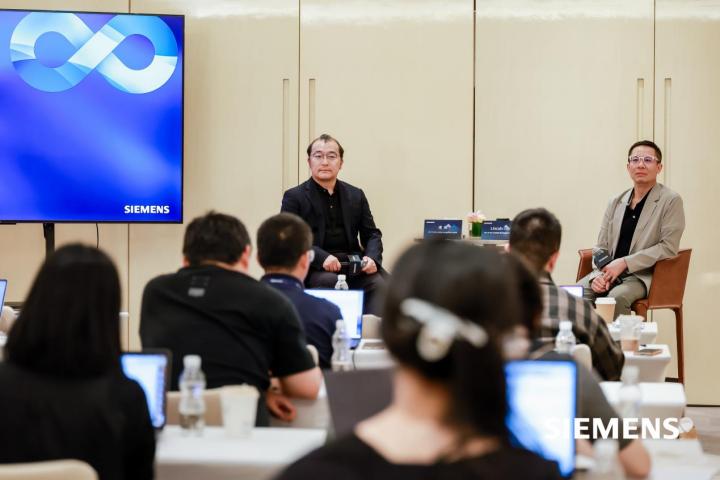
万亿赛道新变局:西门子EDA以AI重塑半导体设计边界
Guan Cha Zhe Wang· 2025-09-03 04:30
Group 1 - The core viewpoint of the article emphasizes the transformation of traditional luxury automotive brands like Mercedes into software-centric companies, reflecting the broader changes in the semiconductor industry driven by AI and software [1][4][6] - Siemens EDA's annual technology summit highlighted the industry's challenges, including project delays and declining first-pass success rates, while projecting semiconductor industry revenue to reach $1 trillion to $1.2 trillion by 2030, with transistor counts exceeding 1 trillion [4][6] - The introduction of "software-defined, AI-empowered, chip-enabled" strategies by Siemens EDA signifies a profound insight into industry trends, with a notable emphasis on the increasing importance of AI in Electronic Design Automation (EDA) [4][7] Group 2 - The concept of "software-defined" in the semiconductor industry indicates a shift from hardware-centric approaches to software-driven differentiation, necessitating a change in design methodologies to incorporate software considerations early in the design process [6][9] - AI's role in EDA is characterized by its industrial-grade applications, focusing on five key features: verifiability, usability, universality, robustness, and accuracy, which are essential for ensuring reliable chip design [7][8] - Siemens EDA's development of a comprehensive digital twin system aims to support the entire digital ecosystem, integrating various design and verification processes across multiple domains, thereby enhancing the overall design and production lifecycle [9][10]