宝洁公司

Search documents
封关、“零关税”,头部进口美妆迎巨变?
3 6 Ke· 2025-07-24 00:51
Core Viewpoint - The establishment of the Hainan Free Trade Port, with its full closure set for December 18, 2025, is expected to significantly impact the cosmetics industry by expanding the range of zero-tariff products and enhancing the operational environment for international beauty brands [1][12][14]. Group 1: Policy Impact - The zero-tariff product range will expand from approximately 1,900 to about 6,600 tax items, increasing the proportion of zero-tariff products to 74%, a rise of nearly 53 percentage points [6][10]. - The "one line" and "two lines" regulatory framework will allow for free flow of goods, capital, and personnel within Hainan, while controlling the flow of goods to mainland China [4][5][10]. - Consumers in Hainan will be exempt from import tariffs but will still need to pay consumption tax and value-added tax, with the possibility of full tax exemption for purchases within the duty-free limit [6][10]. Group 2: Market Dynamics - Hainan has been a key market for luxury and beauty products, with 2023 imports of beauty and skincare products reaching 16.678 billion yuan [12]. - Major international brands like L'Oréal, Estée Lauder, and Shiseido have established a strong presence in Hainan, viewing it as a strategic market for growth [14][15][20]. - The competitive landscape may shift as both international and domestic beauty brands vie for market share in Hainan's duty-free environment, potentially benefiting local brands [21][22]. Group 3: Business Opportunities - The reduction in operational costs due to zero tariffs is expected to enhance profit margins for international beauty brands, making Hainan an attractive location for investment [14][20]. - Local companies, such as Jingrun Pearl, are already capitalizing on the new policies, with significant cost savings projected from the import and processing of goods [10][11]. - The anticipated influx of foreign investment and talent into Hainan is expected to further stimulate the cosmetics market and enhance its global competitiveness [11][12].




综述|美国关税政策“回旋镖”伤及美企和消费者
Xin Hua She· 2025-07-23 05:38
Group 1 - The core viewpoint of the articles is that the U.S. government's tariff policies are negatively impacting American businesses and consumers, acting like a "boomerang" that ultimately harms the economy [1][2] - Major U.S. companies, including General Motors, reported significant financial losses due to tariff policies, with GM's second-quarter losses amounting to $1.1 billion and a 35.4% year-on-year drop in net profit to $1.9 billion [1] - Stellantis indicated that it could face a net loss of $2.7 billion in the first half of the year due to tariffs, highlighting the financial strain on the automotive sector [1] Group 2 - Retail giant Walmart has raised prices on essential goods due to tariff impacts and warned of potential price increases for back-to-school items starting this month [2] - Amazon has also increased prices on low-cost items such as deodorants and protein shakes, reflecting the broader trend of rising consumer prices [2] - A report from Yale University estimates that the tariffs will lead to a 2.1% increase in domestic price levels, costing each American household approximately $2,800, with low-income families facing three times the disposable income loss compared to wealthier households [2]


全球资产配置热点聚焦系列之三十一:2023和2024年夏天风险资产动荡复盘
Shenwan Hongyuan Securities· 2025-07-23 02:45
Group 1 - The report highlights that the global stock market experienced a rapid rebound in Q2 2023, with US and German stocks reaching historical highs, but there are concerns about potential significant pullbacks in Q3 due to high sentiment and valuation levels [6][8][10] - The rebound since April 2023 is primarily attributed to the recovery of expectations following Trump's TACO, with PE valuation recovery being a major contributor, alongside a decline in ERP and upward revisions in EPS [6][8] - The report notes that the liquidity shock in US Treasury bonds in summer 2023 led to significant pressure on risk assets, with the issuance scale exceeding market expectations and Fitch downgrading US debt ratings [8][10] Group 2 - In summer 2024, a rise in unemployment triggered recession expectations, leading to a reversal of carry trades and liquidity shocks in the market, with the US CPI falling below expectations and impacting bond yields [16][19] - The report indicates that the potential economic recession pressure is a major concern for the market, with the performance of tech stocks and consumer stocks being closely monitored [16][19] - The report emphasizes that the AI industry's revenue is meeting expectations, but traditional business performance is slowing down, affecting profit margins [16][19] Group 3 - The report identifies three potential risks for global risk assets in the second half of 2025, including the gradual realization of previously ignored tariff impacts, the rising risk of interest rates due to fiscal expansion, and the uncertainty stemming from Trump's policy shifts [21][22][32] - The microeconomic impacts of tariffs are expected to become more evident in corporate earnings reports, particularly regarding how companies manage the costs associated with tariffs [22][25] - The report discusses the implications of fiscal expansion in the US and Japan, highlighting the potential for increased fiscal deficits and the challenges posed by reliance on short-term debt financing [32][34]


Let this rotation play out, the stocks rallying have been down for days and weeks, says Jim Cramer
CNBC Television· 2025-07-22 23:42
[Music] Hey, I'm Kramer. Welcome to Mad Money. Welcome to Crane America.Other people make friends. I'm just trying to make you some money. My job is not just to entertain to educate, teach you.So call me 1800 743C. Tweet me at Jim Kramer. Sometimes you get these days where it feels like the market has returned to some semblance of what you're used to when things get shaky.I mean, these are the days when J&J will reign supreme or merc makes a comeback or Proctor and Gamble has a big run or with crypto taking ...

Philip Morris Q2 Earnings Review And An (Un)-Expected Tailwind
Seeking Alpha· 2025-07-22 16:22
Group 1 - The article emphasizes the advantages of a dividend-focused value investment strategy, highlighting capital preservation and steady income growth as key benefits [1] - The author discusses a diversified dividend stock portfolio that prioritizes high-quality value stocks, which are expected to provide meaningful growth and long-term safety [1] Group 2 - The author has disclosed a beneficial long position in the shares of PM and PG, indicating a personal investment interest in these companies [2] - The article is presented as a personal opinion and does not constitute investment or tax advice, emphasizing the author's status as a private investor [3]


2025年吉林省315曝光产品专项监督抽查结果公布
Zhong Guo Zhi Liang Xin Wen Wang· 2025-07-22 08:57
Summary of Key Points Core Viewpoint - The Jilin Provincial Market Supervision Administration conducted a special supervision inspection of products exposed during the 315 event, revealing a 2.94% non-compliance rate among the sampled products, with two batches of portable disposable underwear failing the quality test [2]. Group 1: Inspection Results - A total of 68 batches of products from 47 manufacturers and sellers were inspected [2]. - Only 2 batches of products (portable disposable underwear) were found to be non-compliant, resulting in a non-compliance rate of 2.94% [2]. - The non-compliant products have been handed over to local market supervision departments for legal processing [2]. Group 2: Product Compliance - The majority of products inspected, including various brands of sanitary napkins, adult diapers, and baby diapers, were found to be compliant with quality standards [3][4][5]. - Specific brands such as "月舒日记", "护舒宝", and "高洁丝" had all their inspected products pass the quality tests [3][4]. - The inspection covered a wide range of products, including personal hygiene items and electrical cables, with most items meeting the required standards [4][5].




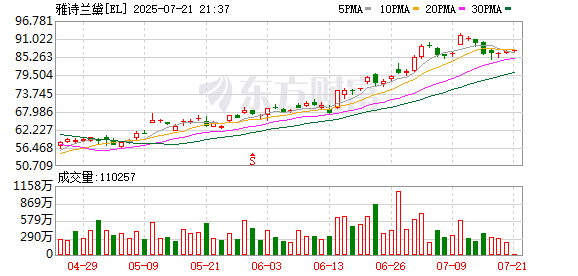
雅诗兰黛求解数字化
Bei Jing Shang Bao· 2025-07-21 13:36
Group 1 - Estée Lauder is launching a new online retail initiative by appointing Aude Gandon as the first Chief Digital and Marketing Officer, effective August 1 [2] - Aude Gandon has extensive experience in brand strategy and data analysis, having previously worked at Nestlé, Google, and LVMH [2] - The company is focusing on the integration of digital and physical worlds to attract younger consumers, who are currently leading beauty trends [2] Group 2 - In the third quarter of fiscal year 2025, Estée Lauder reported net sales of $3.55 billion, a 10% year-over-year decline, with net profit dropping over 50% [3] - The online channel and fragrance business are key growth drivers, with organic sales in the online channel achieving mid-single-digit growth [3] - Estée Lauder is restructuring its business into eight clusters based on product categories to enhance brand positioning and expedite new product launches [3] Group 3 - The importance of online channels is highlighted by the success of domestic beauty brands in China, with brands like Proya and Betaini achieving significant online revenue growth [4] - Other international brands, such as L'Oréal and Procter & Gamble, are also investing heavily in digital transformation, with L'Oréal reporting that 62% of its sales in China came from online channels in 2024 [5]
MCI: A Great Fund For The Long Term, But Has Outrageously High Premium
Seeking Alpha· 2025-07-20 12:30
Group 1 - The primary goal of the "High Income DIY Portfolios" Marketplace service is to provide high income with low risk and capital preservation for DIY investors [1] - The service offers vital information and portfolio/asset allocation strategies aimed at creating stable, long-term passive income with sustainable yields [1] - The portfolios are specifically designed for Income-Investors, including retirees or near-retirees, and include seven portfolios: 3 buy-and-hold, 3 rotational portfolios, and a 3-Bucket NPP Model Portfolio [1] Group 2 - The portfolio offerings include two High-Income portfolios, two Dividend Growth Investing (DGI) portfolios, and a conservative NPP strategy portfolio characterized by low drawdowns and high growth [1]

10 Magnificent S&P 500 Dividend Stocks Down Over 10% to Buy and Hold Forever
The Motley Fool· 2025-07-20 09:01
Core Viewpoint - The article highlights S&P 500 dividend stocks that have experienced significant price declines, presenting them as attractive buying opportunities for long-term investors due to their strong fundamentals and consistent dividend growth. Group 1: Overview of Dividend Stocks - Dividend stocks are powerful wealth compounders, with the S&P 500 index showing over 300% growth in the past 25 years, and total returns exceeding 550% when including reinvested dividends [1] - The article identifies 10 S&P 500 dividend stocks that are currently trading at least 10% below their all-time highs, suggesting they are good buys for long-term holding [2] Group 2: Individual Stock Analysis - **Johnson & Johnson**: Down 11.5%, yield 3.4%, generated $95 billion in free cash flow over five years, returning 60% to shareholders, and has increased dividends for 62 consecutive years [4] - **ExxonMobil**: Down 11.6%, yield 3.7%, generated $55 billion in cash flow from operations in 2024, with a 42-year streak of dividend increases, and focusing on boosting cash flows post-acquisition of Pioneer Natural Resources [5] - **Procter & Gamble**: Down 14%, yield 2.7%, restructuring operations to target mid- to high-single-digit core earnings per share growth, and has increased dividends for 69 consecutive years [6][7] - **NextEra Energy**: Down 19%, yield 3.3%, operates the largest electric utility in America and is the largest producer of wind and solar energy, with over 20 years of dividend increases [8] - **Chevron**: Down 19%, yield 4.8%, has increased dividends for 38 consecutive years, and recently acquired Hess in a $53 billion deal [10] - **American Water Works**: Down 24%, yield 2.4%, serves over 14 million customers, targeting 7% to 9% annual dividend growth [11][13] - **Realty Income**: Down 29%, yield 5.6%, pays monthly dividends and has increased them for 110 consecutive quarters, owning over 15,000 properties [14] - **Oneok**: Down 29%, yield 5%, has a network of pipelines spanning 60,000 miles, targeting 3% to 4% annual dividend growth [15] - **Nucor**: Down 30%, yield 1.7%, America's largest steel company, has increased dividends for 52 straight years, and aims to return at least 40% of earnings to shareholders [16] - **Medtronic**: Down 33%, yield 3.3%, world's largest medical device manufacturer with $33.5 billion in revenue, plans to divest its diabetes business, and is close to becoming a Dividend King [18]


Warren Buffett Says Buy This S&P 500 Index Fund. It Could Soar by 139%, According to a Top Wall Street Analyst
The Motley Fool· 2025-07-18 07:55
Core Insights - Warren Buffett transformed Berkshire Hathaway from a struggling textile company into a holding company worth over $1 trillion, with a portfolio of $288 billion in publicly traded stocks and securities [1] - An investment of $500 in Berkshire stock in 1965 would have grown to $22.3 million by the end of 2024, highlighting Buffett's exceptional stock-picking ability [2] - Buffett recommends that average investors consider buying an ETF that tracks a diversified index like the S&P 500, rather than trying to replicate his investment success [2] Investment Opportunities - The Vanguard S&P 500 ETF is highlighted as a low-cost investment option, with an expense ratio of 0.03%, significantly lower than the industry average of 0.75% [9] - Wall Street analyst Tom Lee predicts a 139% increase in the S&P 500 by 2030, suggesting that investors in the Vanguard ETF could see substantial returns over the next five years [3][10] - The S&P 500 index is highly diversified, consisting of 500 companies across 11 sectors, with Information Technology being the largest sector at 33.4% [6][8] Market Analysis - The S&P 500 includes major companies like Nvidia, Microsoft, and Apple, which together have a combined market value of $10.9 trillion [6] - The index has consistently reached new highs since its inception in 1957, despite experiencing corrections and bear markets, indicating a strong long-term growth potential [15] - Lee's predictions for the S&P 500 include targets of 5,200 to 6,300 for 2024, with a long-term forecast of reaching 15,000 by 2030 [11][13] Sector Breakdown - The S&P 500 sectors and their weightings include: - Information Technology: 33.4% (Nvidia, Microsoft, Apple) - Financials: 13.9% (Berkshire Hathaway, JPMorgan Chase, Visa) - Consumer Discretionary: 10.4% (Amazon, Tesla, McDonald's) - Communication Services: 9.5% (Alphabet, Meta Platforms, Netflix) - Health Care: 9.3% (Eli Lilly, Johnson & Johnson, UnitedHealth Group) - Industrials: 8.6% (GE Aerospace, Uber Technologies, Boeing) - Consumer Staples: 5.4% (Walmart, Costco, Procter & Gamble) - Energy: 3.1% (ExxonMobil, Chevron, Kinder Morgan) - Utilities: 2.4% (NextEra Energy, Vistra Corp, American Electric Power) - Real Estate: 2% (Prologis, American Tower Corporation, Equinix) - Materials: 1.9% (Linde Plc, Sherwin-Williams, Newmont Corporation) [7][8] Investment Strategy - Companies must have a market capitalization of at least $22.7 billion and positive earnings over the last four quarters to be included in the S&P 500, ensuring high-quality investments [8] - The demographic shift with millennials and Gen Z entering their peak earning years is expected to positively impact the S&P 500 [14]