
荣耀

Search documents
新荣耀5周年,CEO李健发文:感谢用户、团队与伙伴
Sou Hu Cai Jing· 2025-11-17 08:15
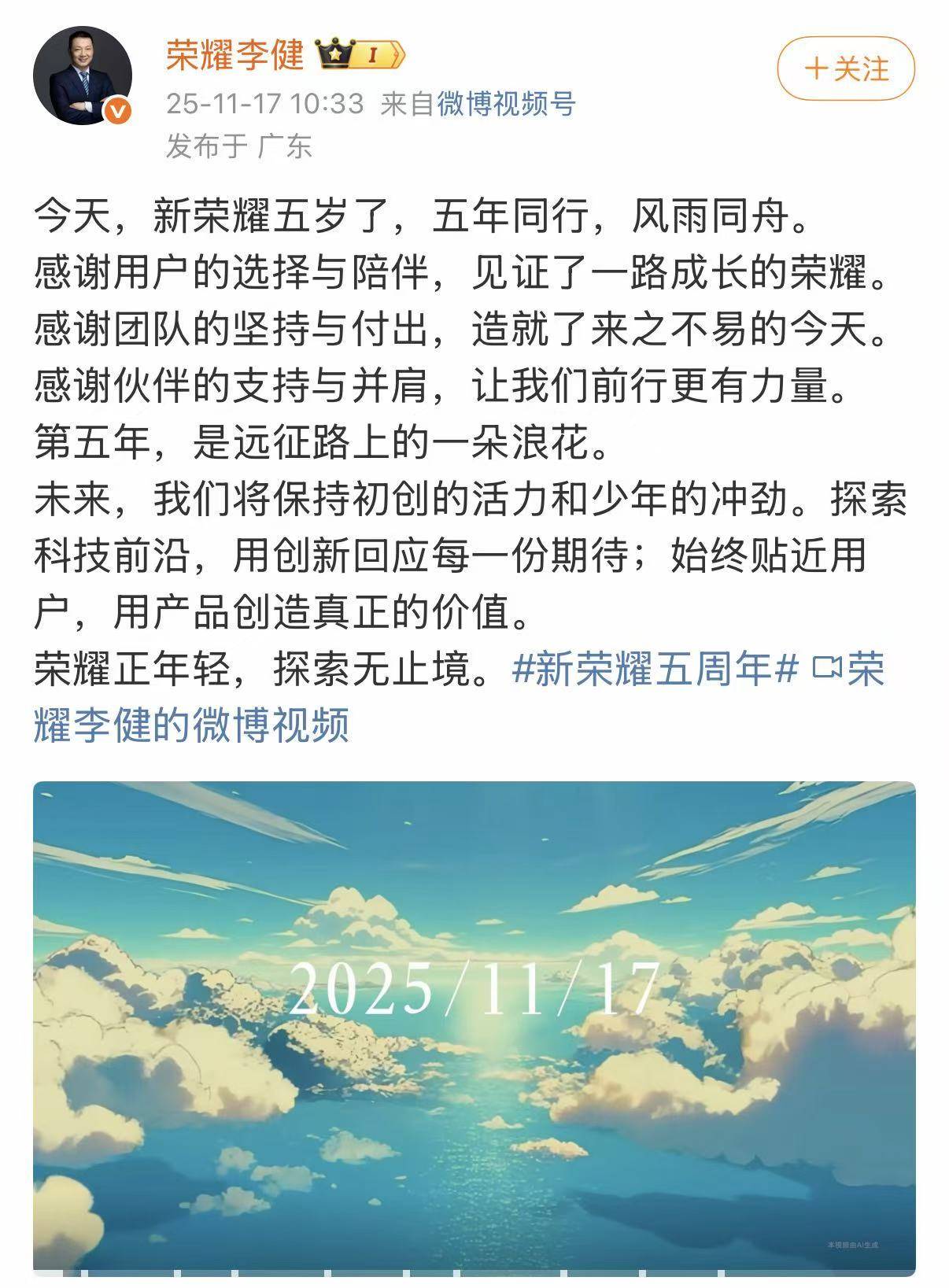
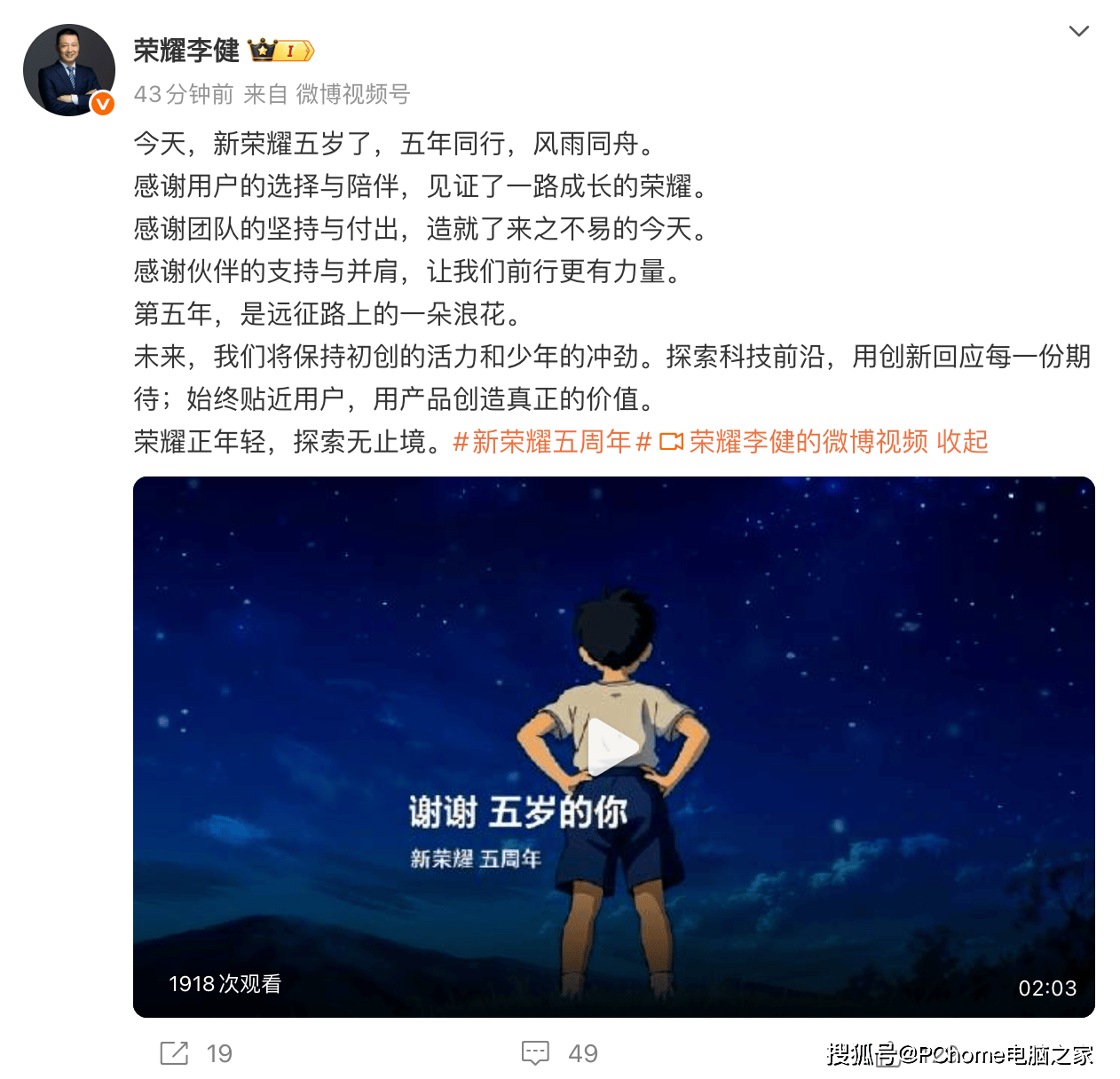
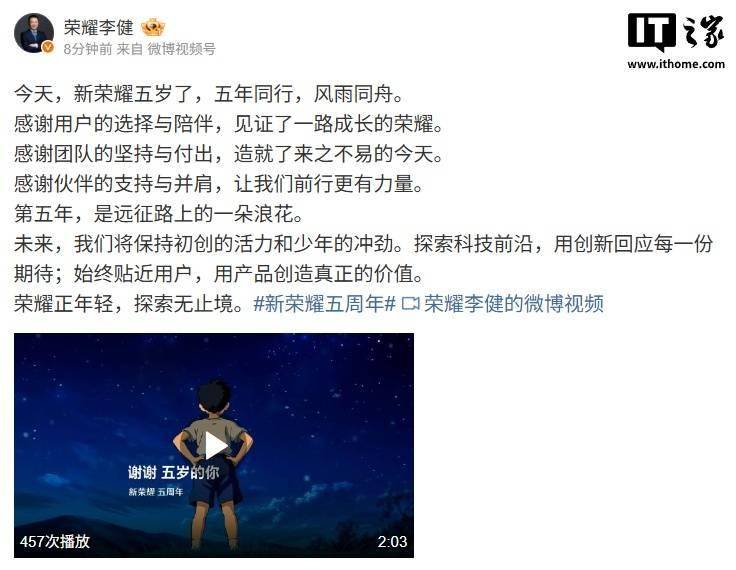
. 4 本视频曲A - DR I I F 8 图 今日,荣耀CEO李健发文庆祝新荣耀5周年,并对用户、团队、伙伴表示感谢: "第五年,是远征路上的一朵浪花。未来,我们将保持初创的活力和少年的冲劲。探索科技前沿,用创新回应每一份期待;始终贴近用户,用产品创造真正 的价值"。 ...

IDC:三季度中国平板电脑市场出货量为849万台 同比增长10.9%
智通财经网· 2025-11-17 05:52
Core Insights - The Chinese tablet market saw a shipment volume of 8.49 million units in Q3 2025, representing a year-on-year growth of 10.9% [1] - The consumer market experienced a year-on-year growth of 12.3%, while the commercial market faced a decline of 4.2% [1] Market Performance - Huawei maintained the top position in the market with a share of 32.1%, despite a decrease of 4.6% from the previous year [4] - Apple ranked second with a market share of 24.2%, down 2.1% year-on-year, but showed stable growth in shipments [4][5] - Xiaomi held the third position with a market share of 10.7%, launching new products to enhance its market presence [4][5] - Lenovo's market share rose to 10.5%, with significant growth in both consumer and commercial segments [4][6] - Honor ranked fifth with a market share of 8.1%, continuing to see double-digit year-on-year growth [4][6] Product Innovations and Strategies - Huawei's product iteration in the consumer market, including the MatePad Mini, has strengthened its position as a productivity tool [4][5] - Apple benefited from back-to-school promotions and price reductions on e-commerce platforms, with the iPad Air and iPad Pro series seeing increased shipment proportions [5] - Xiaomi's new product launches, including the Pad 8 Pro and Redmi Pad 2, aimed at expanding its market from mid-range to entry-level segments [5][6] - Lenovo's Y700 series and new releases in the mainstream segment contributed to its growth in both consumer and commercial markets [6] - Honor's introduction of the MagicPad 3 and GT 2 Pro targeted the young consumer demographic while enhancing its competitive edge in the education sector [6] Market Outlook - The growth rate of the Chinese tablet market is expected to slow down towards the end of the year due to the diminishing effects of the "national subsidy" policy [7] - Future growth will depend on product innovation and ecosystem development as market dynamics change [7]




荣耀CEO李健发文庆祝新荣耀5周年:感谢用户、团队与伙伴
Sou Hu Cai Jing· 2025-11-17 04:14
Core Insights - Honor celebrates its fifth anniversary, expressing gratitude towards users, team members, and partners for their support and contributions [3] - The company aims to maintain its youthful energy and innovative spirit while focusing on technology and user-centric product value [3] Company Development - Honor became independent from Huawei in November 2020, initially facing challenges such as a market share drop to 3% and supply chain disruptions [4] - Within a year, the company rebuilt its entire industry chain and established a smart manufacturing production line in 211 days [4] - The launch of the Honor 50 in 2021 achieved over 500 million yuan in sales within the first minute, helping to reverse its market position [4] - In 2021, Honor partnered with Qualcomm and began its overseas expansion [4] - From 2022 to 2023, the company introduced high-end products like the Magic V foldable phone and became the top smartphone vendor in China by shipment volume in Q3 2023 [4] - In 2024, Honor plans to change its official domain and release the MagicOS 9.0 system [4] - By 2025, the company will advance its AI PC strategy and open global flagship stores, continuing to expand its ecosystem and solidifying its market position in China [4]
手机厂商不拼性能卷生态:参数已死,体验当立?
3 6 Ke· 2025-11-17 03:45
Core Viewpoint - The smartphone industry is undergoing a significant transformation, shifting focus from hardware specifications to imaging capabilities, ecosystem connectivity, and AI-driven experiences as key competitive factors in a stagnant market [1][2][27]. Group 1: Flagship Model Releases and Imaging Competition - Major smartphone manufacturers, including Apple, Xiaomi, Vivo, Honor, and OPPO, have launched their flagship models in the latter half of 2025, intensifying market competition [3][4]. - The emphasis on imaging and ecosystem applications has replaced traditional hardware specifications as the main selling points of flagship devices [4][6]. - Apple’s iPhone 17, despite some criticism regarding its materials, highlights advancements in AI processing and imaging capabilities, aiming to enable users to capture professional-quality photos [4][5]. Group 2: AI and Ecosystem Connectivity - AI technology is now integrated into daily user experiences, enhancing functionalities such as night photography, portrait optimization, and image stabilization [7][8]. - Manufacturers are focusing on creating a seamless ecosystem where smartphones serve as the central hub for various smart devices, enhancing user experience and encouraging brand loyalty [9][10]. - The interconnectedness of devices, such as OPPO's "super connectivity" features and Vivo's smart home integration, aims to provide a more cohesive user experience [10][11]. Group 3: Market Dynamics and Growth Strategies - The smartphone market is experiencing stagnation, with IDC reporting a slight decline in shipments, necessitating manufacturers to seek new growth avenues [12][13]. - The average smartphone replacement cycle in China has extended from 24 months in 2020 to 36 months in 2024, increasing pressure on manufacturers to innovate [14]. - Companies are prioritizing ecosystem development to retain users and create new revenue streams, with Xiaomi reporting significant income from its IoT and lifestyle products [17][18]. Group 4: Rise of Domestic High-End Phones - Domestic brands like OPPO and Vivo are gaining market share in the high-end segment, with their combined market share increasing from 19% to 38% in the 4000-5999 yuan price range [22]. - Despite the growth of domestic brands, there are concerns regarding product quality and customer service, which could hinder their acceptance in the high-end market [24][26]. - The shift in consumer perception towards domestic high-end phones reflects a search for balance between price and brand value, challenging Apple's dominance [22][24]. Group 5: Conclusion - The smartphone market is transitioning from a focus on hardware specifications to an emphasis on ecosystem integration and user experience, prompting manufacturers to rethink growth strategies [27]. - The ability to deliver seamless experiences across devices will be crucial for companies to thrive in a competitive landscape, driving the industry towards higher quality development [27].
第二十七届高交会闭幕,意向成交与投融资额超1700亿元 45万人次入场 5000项新品发布
Shen Zhen Shang Bao· 2025-11-17 03:30
Core Insights - The 27th China International High-tech Achievements Fair (CIHTAF) concluded with over 450,000 attendees, a 13% increase year-on-year, showcasing more than 5,000 new products and results, and facilitating 1,023 supply-demand matches and investment projects with a total intention amount exceeding 170 billion yuan [1] Group 1: Exhibition Highlights - Over 90% of the physical exhibits featured "high, precision, and cutting-edge" technologies, with more than 20% being debut products [2] - Major state-owned enterprises and leading companies, including China Aerospace, CNOOC, and BYD, presented advanced technologies and innovations [2] - The event showcased various cutting-edge technologies such as AI painting, eVTOL manned flying vehicles, and the world's first "imaging" MRI [2] Group 2: Regional Innovation and Collaboration - The fair introduced a "Regional Economic Technology Innovation Achievements Zone" to highlight regional advancements in clean energy, digital economy, and high-end equipment [3] - Over 30 universities and research institutions presented innovative technologies, including advanced processor chips and robots for early lung cancer screening [3] Group 3: International Participation and Trade Facilitation - The event attracted 1,036 procurement teams from over 120 countries, including Germany, the USA, and Russia, enhancing international technology cooperation [4] - The "136" plan emphasized transaction effectiveness, with 10% international buyers, 30% provincial buyers, and 60% from other provinces, establishing a vital link for global high-tech cooperation and results transformation [4]
新荣耀5周年,CEO李健向用户、团队、伙伴致谢
Sou Hu Cai Jing· 2025-11-17 03:11
Core Insights - Honor celebrates its 5th anniversary, expressing gratitude to users, team, and partners for their support and contributions [1] - The company emphasizes its commitment to innovation and user-centric product development in the future [1] Company Background - Huawei announced the complete sale of Honor's business assets on November 17, 2020, due to challenges in sustaining industrial technology elements and significant pressure on consumer business [3] - The buyer of Honor's assets was Shenzhen Zhixin New Information Technology Co., Ltd [3] - Post-transaction, Huawei holds no shares in Honor and does not participate in its management or decision-making [4]
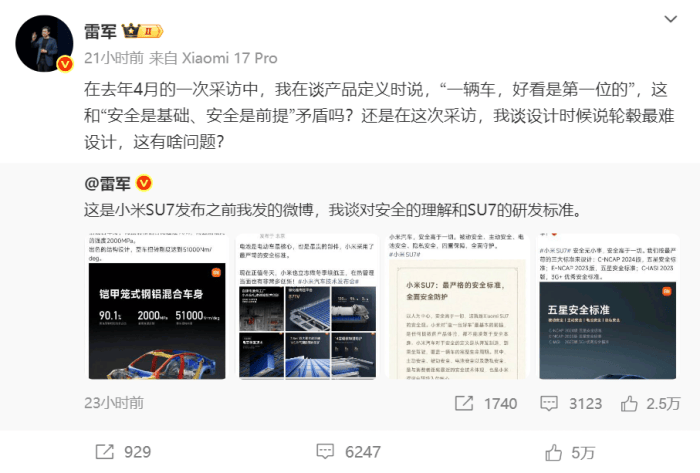
面对断章取义、歪曲抹黑,雷军不忍了,连续发出两大灵魂拷问
Sou Hu Cai Jing· 2025-11-17 02:54
Core Viewpoint - Xiaomi's CEO Lei Jun emphasizes the importance of safety in the development of Xiaomi's vehicles, particularly the SU7 model, while also asserting that aesthetics and safety are not mutually exclusive [3][5]. Group 1: Safety and Design - Lei Jun reiterates that a car's attractiveness and safety are both essential, and there is no need to view them as opposing factors [5]. - He highlights the challenges in automotive design, specifically mentioning the difficulty of designing wheels, which has been misinterpreted in public discourse [5][8]. Group 2: Public Perception and Response - There is a persistent bias against Xiaomi in public opinion, with critics often distorting the company's messages and actions [8]. - Lei Jun's frustration with the ongoing misrepresentation of Xiaomi has led him to respond more assertively to negative comments, marking a shift from his typically calm demeanor [8][9]. Group 3: Historical Context - The last time Lei Jun publicly confronted criticism was during the launch of the REDMI Note7 in January 2019, where he directly addressed competitors like Huawei and Honor [9][11]. - He expressed that Xiaomi has faced significant criticism since its inception, and his recent comments reflect a breaking point after years of enduring negative narratives [11].
3天1700亿元! 从高交会成绩单 看科技创新的“中国机遇”
Shang Hai Zheng Quan Bao· 2025-11-16 23:34
Core Insights - The 27th China International High-Tech Achievements Fair (CIHTAF) concluded in Shenzhen, attracting over 450,000 attendees from more than 120 countries, marking a 13% year-on-year increase in attendance [1] - The event showcased over 5,000 new products and achievements, with more than 1,023 supply-demand matches and investment projects signed, resulting in an intended transaction and investment amount exceeding 170 billion yuan [1][2] Industry Highlights - The fair highlighted China's strong momentum in high-tech innovation, with record transaction and investment amounts reflecting robust technological advancements [2] - Key exhibition areas included artificial intelligence, semiconductors, consumer electronics, new energy vehicles, and low-altitude economy, featuring cutting-edge products and solutions [2] - Over 90% of the physical exhibits were categorized as "high, precision, and advanced" technologies, showcasing rapid iterations in the robotics industry [2][3] Notable Exhibits - The event featured significant innovations in the renewable energy sector, including a "dual-rotor floating wind turbine" from Mingyang Smart Energy, which attracted interest from both domestic and international buyers [3] - The biopharmaceutical sector also gained attention, with innovative drug projects for treating depression showcased by Hong Kong Chinese University, drawing inquiries from numerous investors [3] Innovation and Collaboration - The fair brought together diverse innovation forces, including state-owned enterprises, private companies, and research institutions, resulting in the release of over 5,000 new products and achievements [4] - Major state-owned enterprises presented advanced technologies, while leading companies like BYD, Tencent, and Huawei showcased groundbreaking products, including the world's first "imaging" MRI [4][5] Academic Contributions - Over 30 universities and research institutions, including Tsinghua University and Peking University, presented significant technological advancements, such as advanced processor chips and high-throughput peptide synthesizers [5] Global Engagement - The event facilitated global procurement and investment matchmaking, attracting 1,036 international procurement teams and over 3,000 investment institutions, including major firms like JPMorgan and Sequoia Capital [7] - Notable interest was shown from international clients in robotics and quantum computing, with many expressing strong purchasing intentions for innovative products [7]
3天1700亿元,中国科技创新在深圳燃爆全球
2 1 Shi Ji Jing Ji Bao Dao· 2025-11-16 23:30
Core Insights - The 27th China International High-tech Achievements Fair concluded successfully in Shenzhen, attracting over 450,000 attendees from more than 120 countries, marking a 13% year-on-year increase [1] - The event showcased over 5,000 new products and achievements, with 1,023 supply-demand matches and investment projects signed, totaling over 170 billion yuan in intended transactions and financing [1][5] - More than 90% of the physical exhibits featured advanced technologies and products, highlighting China's innovative capabilities in various sectors [1] Group 1: Major Exhibitors and Innovations - Leading companies such as BYD, Tencent, Huawei, and Honor presented cutting-edge technologies, including the HarmonyOS ecosystem and AI innovations, which attracted significant attention [2] - Over 20% of the physical exhibits were debut products, including the Avant Robotics Gen1 inspection robot and the Avant Hub autonomous operation platform, which demonstrated significant efficiency improvements in various applications [3] - Bern Optical introduced the world's first variable thickness ultra-thin glass and an AI digital twin system for coating design, showcasing advancements in optical materials and manufacturing techniques [4] Group 2: International Participation and Market Impact - The fair emphasized practicality and transaction facilitation, with international, domestic, and provincial buyers accounting for 10%, 30%, and 60% of attendees, respectively [4] - A total of 1,036 purchasing groups from countries like the UK, Russia, Canada, and India participated, alongside over 3,000 domestic and international investment institutions, including major firms like JPMorgan and Sequoia Capital [4]
3天1700亿元,中国科技创新在深圳燃爆全球
21世纪经济报道· 2025-11-16 23:26
Core Insights - The 27th China International High-tech Achievements Fair (CIHTAF) concluded successfully in Shenzhen, attracting over 450,000 attendees from more than 120 countries, marking a 13% year-on-year increase [1] - The event showcased over 5,000 new products and achievements, with 1,023 supply-demand matches and investment projects signed, totaling over 170 billion yuan in intended transactions and financing [1] Group 1: Event Highlights - The fair featured 22 major exhibition areas, including aerospace technology, artificial intelligence, semiconductors, consumer electronics, and commercial aerospace, highlighting cutting-edge international technology and China's high-level innovation [1] - Over 90% of the physical exhibits were categorized as "high, precision, and advanced" technologies and products [1] - Major state-owned enterprises like China Aerospace Science and Technology Corporation and China National Offshore Oil Corporation presented advanced manufacturing technologies [1] Group 2: Innovative Products - More than 20% of the exhibits were debut products, including the Avant Robotics Gen1 inspection robot and the Avant Hub intelligent inspection platform, which demonstrated significant operational efficiency improvements [3] - The Avant Robotics Gen1 robot achieved a 42% increase in traffic efficiency, a 35% reduction in average delay time, and an 18% decrease in carbon emissions in pilot areas [3] - Bern Optical introduced an AI digital twin system for coating design and the world's first variable thickness ultra-thin glass, showcasing advancements in optical materials and manufacturing techniques [4][5] Group 3: Business Engagement - The fair emphasized practicality and transaction facilitation, with 10% of buyers from international markets, 30% from provincial markets, and 60% from local markets [5] - A total of 1,036 purchasing groups from countries like the UK, Russia, Canada, and India attended, along with over 3,000 domestic and international investment institutions, including major firms like JPMorgan and Goldman Sachs [5]
