华熙生物

Search documents
华熙生物发布《关于网络不实信息的严正声明》
news flash· 2025-07-26 07:12
Core Viewpoint - Huaxi Biological issued a statement regarding the dissemination of false information on online platforms, asserting that the content is fabricated and distorts facts, with some involving political rumors [1] Group 1 - The company identified that the false information was published on overseas websites [1] - The nature of the false information is described as extremely malicious [1] - The individual responsible for the misinformation, identified as Li, previously served as the marketing director at Huaxi Xinyu Investment Co., Ltd. for 18 months [1]

2025年颈霜行业词条报告
Tou Bao Yan Jiu Yuan· 2025-07-25 11:53
Investment Rating - The report does not explicitly provide an investment rating for the neck cream industry Core Insights - The neck cream industry focuses on skincare for the neck area, aiming to moisturize, reduce neck lines, enhance firmness, and prevent premature aging. The market is experiencing strong demand due to increased awareness of anti-aging and the rise of niche markets, driven by market education and media influence. Future growth will be propelled by personalized and diversified functional demands, technological innovation, and product iteration [4][10][15]. Industry Definition - Neck cream refers to skincare products specifically designed for the neck area, aimed at moisturizing the skin, reducing neck lines, enhancing firmness, and preventing signs of aging. The products provide rich nutrients and form a protective barrier to maintain moisture and promote metabolism [5]. Industry Classification - Neck creams can be classified based on core functions into basic moisturizing types and functional types [6][7]. Basic Moisturizing Neck Cream - Primarily focuses on moisturizing and hydrating the neck skin, suitable for individuals with light skin or no visible neck lines, used for daily preventive care [8]. Functional Neck Cream - Includes anti-aging and anti-wrinkle types, brightening types, firming types, and sunscreen types, each targeting specific skin concerns [9]. Industry Characteristics - The neck cream industry is characterized by strong consumer demand, active technological innovation, and high research and development barriers [10]. Consumer Demand - The strong consumer demand in the neck cream industry stems from modern individuals' increasing awareness of neck skin care, with many women starting to incorporate neck care into their daily routines from the age of 20 [11]. Technological Innovation - The neck cream industry is continuously launching products with innovative ingredients and new technologies to meet market demands, emphasizing not only basic moisturizing effects but also special ingredients for firming and wrinkle reduction [13]. High R&D Barriers - Developing excellent neck cream products requires deep R&D capabilities and technical accumulation, including expertise in active ingredient selection, formula optimization, and clinical testing [14]. Market Size - The neck cream industry market size is projected to grow from 1.047 billion RMB in 2019 to 2.091 billion RMB in 2024, with a compound annual growth rate (CAGR) of 14.84%. From 2025 to 2029, it is expected to grow from 2.354 billion RMB to 3.319 billion RMB, with a CAGR of 8.97% [31]. Market Growth Drivers - The growth of the neck cream market is driven by enhanced anti-aging awareness, the rise of niche markets, and increased consumer interest in comprehensive skincare solutions [34][36]. Competitive Landscape - Brands like SDX, VSVE, and others dominate the first tier of the market with high cost-performance ratios, while high-end brands like Clarins and Sisley occupy the second tier with relatively lower sales [41][42]. Future Industry Trends - The neck cream industry is expected to see accelerated competition and market consolidation, with larger firms leveraging technological advantages and regulatory compliance becoming key competitive factors [43].


中国注射类医美行业研究报告
艾瑞咨询· 2025-07-25 09:34
Core Insights - The medical beauty industry is undergoing transformation driven by technological advancements and evolving aesthetic perceptions, with non-surgical procedures becoming increasingly popular, particularly in anti-aging treatments [1] - Injection-based aesthetic procedures are gaining traction due to their effectiveness, short recovery times, and high repeat purchase rates, positioning the injection market as a new growth area within the medical beauty sector [1] Group 1: Injection Aesthetic Concepts and Classification - Injection aesthetic procedures are primarily categorized into hyaluronic acid, botulinum toxin, collagen, regenerative injectables, lipolytic injections, and thread lifting, with hyaluronic acid and botulinum toxin dominating the market [2] - In 2023, botulinum toxin treatments led globally with 8.878 million procedures, followed by hyaluronic acid with 5.565 million procedures, indicating a strong preference for these two categories [2] Group 2: Market Heat Analysis - The injection aesthetic market is experiencing rapid growth, driven by advancements in materials and techniques, with synthetic regenerative materials becoming a focal point for investment [6] - By 2024, approximately 60% of investments in injection materials are expected to be directed towards regenerative biological materials, highlighting a shift towards innovative solutions in the market [6] Group 3: Hyaluronic Acid Market Development - Hyaluronic acid maintains a strong market position, with a growth rate of 29.1% from 2022 to 2023, indicating its resilience and adaptability in the face of emerging competition [12] - The market faces challenges such as product homogenization and safety concerns, but opportunities exist for differentiation through innovation and new applications [14][15] Group 4: Botulinum Toxin Market Trends - The botulinum toxin market is evolving towards a dual existence of natural and recombinant products, with recombinant botulinum toxin expected to gain market share due to its safety and customization potential [17] - The market is characterized by intense competition, necessitating a focus on product differentiation and strategic positioning to navigate challenges [19] Group 5: Regenerative Materials Market Insights - The regenerative materials market is currently focused on polylactic acid (PLA) and polycaprolactone (PCL), with significant growth potential in the coming years [23] - New entrants are encouraged to explore innovative technologies and applications, particularly in areas like hydroxyapatite, which is gaining traction for its structural support in aesthetic procedures [27] Group 6: Collagen Market Trends - The collagen market is expanding with various types being explored for aesthetic applications, particularly types I and III, which are popular for their skin-supporting properties [31] - The market is expected to see increased competition as more types of collagen are developed and their applications are diversified [33] Group 7: User Preferences and Trends - Users are increasingly focused on skin quality and overall facial harmony, with a shift towards personalized aesthetic solutions [39][42] - Safety and effectiveness remain the top concerns for users, with a growing emphasis on the qualifications of medical professionals and the quality of procedures over cost [45][60] Group 8: Market Expansion and Internationalization - Chinese medical beauty companies are increasingly looking to international markets, with a focus on regulatory compliance and brand recognition to overcome challenges in foreign markets [70] - The injection aesthetic products are leading the charge in this internationalization effort, with significant investments in regions like Southeast Asia and the Middle East [70]


华熙生物董事长、总经理赵燕:透明质酸抗衰功效为前沿科研热点 只是补水分子的误解已打破
news flash· 2025-07-25 08:31
Core Viewpoint - The misunderstanding that hyaluronic acid is merely a hydration molecule has been dispelled, and its comprehensive anti-aging effects have become a scientific research hotspot in recent years [1] Group 1: Company Insights - Zhao Yan, Chairman and General Manager of Huaxi Biological, emphasized the company's commitment to advancing in the field of hyaluronic acid, leveraging its strong capabilities in synthetic biology [1] - Huaxi Biological aims to lead globally in hyaluronic acid and is strategically upgrading to focus on glycomics, cell biology, and regenerative medicine within the anti-aging research domain [1] Group 2: Industry Trends - The international scientific community has produced a significant amount of research and papers on the anti-aging effects of hyaluronic acid, indicating a growing interest and validation of its benefits beyond hydration [1]
玻尿酸医美,获客困难下的隐秘乱象
Hu Xiu· 2025-07-25 08:25
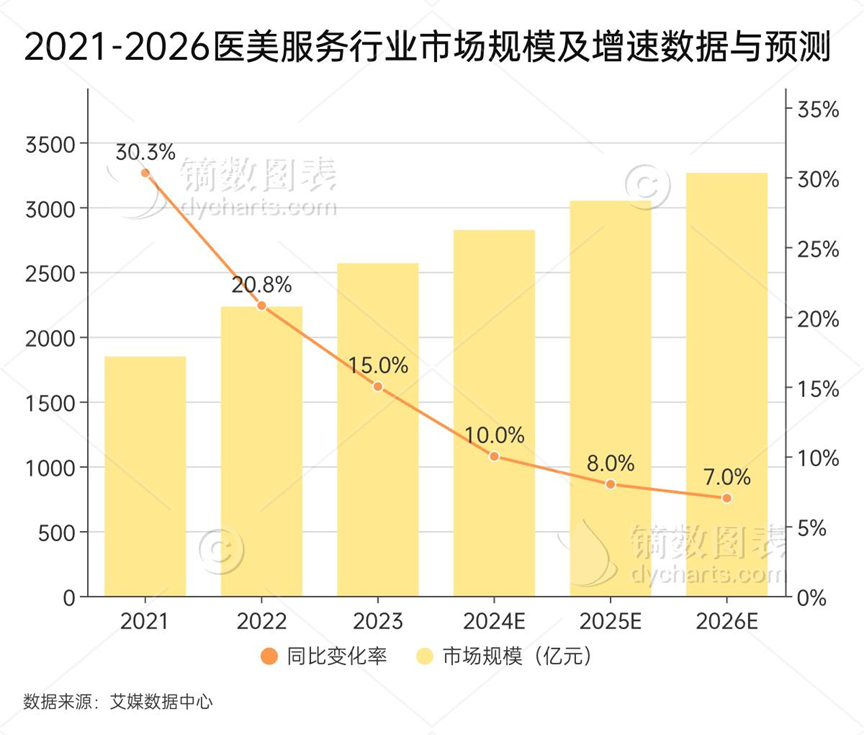
Core Insights - The medical beauty industry in China is experiencing a significant increase in male consumers, with a 27% rise in spending in 2023 compared to the previous year, indicating a growing acceptance of aesthetic procedures among the general public [3] - However, this surge in demand is accompanied by a rise in marketing pitfalls, as many consumers fall into traps set by aggressive sales tactics and misleading information [3][12] Industry Challenges - The medical beauty sector is facing severe challenges, with market growth rates declining from 30% in 2021 to just 15% in 2023 due to increased regulation and scrutiny following past market excesses [4] - The total financing in the medical beauty industry dropped to 10.3 billion yuan in 2023, a 64% decrease from the peak of 28.6 billion yuan in 2021, with the number of financing events falling by 76% [5] - The average price of hyaluronic acid raw materials has decreased by 40.95% from 210 yuan per gram in 2017 to 124 yuan in 2021, while the price of end products has dropped by 28.64% from 1557 yuan per bottle to 1111 yuan during the same period [5] Marketing Trends - The industry is increasingly relying on various marketing strategies, including commission-driven models that incentivize referrals from social influencers and high-pressure sales tactics [13][14] - A notable trend is the emergence of strategic alliances between medical beauty institutions and high-end brands, which allows for resource sharing and targeted marketing to affluent consumers [15] - Online marketing has become a crucial battleground, with 84% of light medical beauty orders being placed online by 2022, up from 62% in 2017 [8][11] Product Shifts - There is a growing preference for composite products containing collagen or regenerative materials over pure hyaluronic acid, as these alternatives are perceived to be more stable and have fewer long-term side effects [6] - The market for regenerative medical beauty injectables is projected to reach 11.52 billion yuan by 2027, with a compound annual growth rate of 54.73% [6] Consumer Concerns - Consumers are increasingly facing privacy risks and lack of transparency regarding the sourcing and quality of self-branded hyaluronic acid products offered by medical beauty institutions [19] - The reliance on aggressive marketing tactics and the potential for misleading information raises concerns about the sustainability of the industry's growth and consumer trust [19][20]
中国科创家联盟今日正式启动
news flash· 2025-07-25 06:33
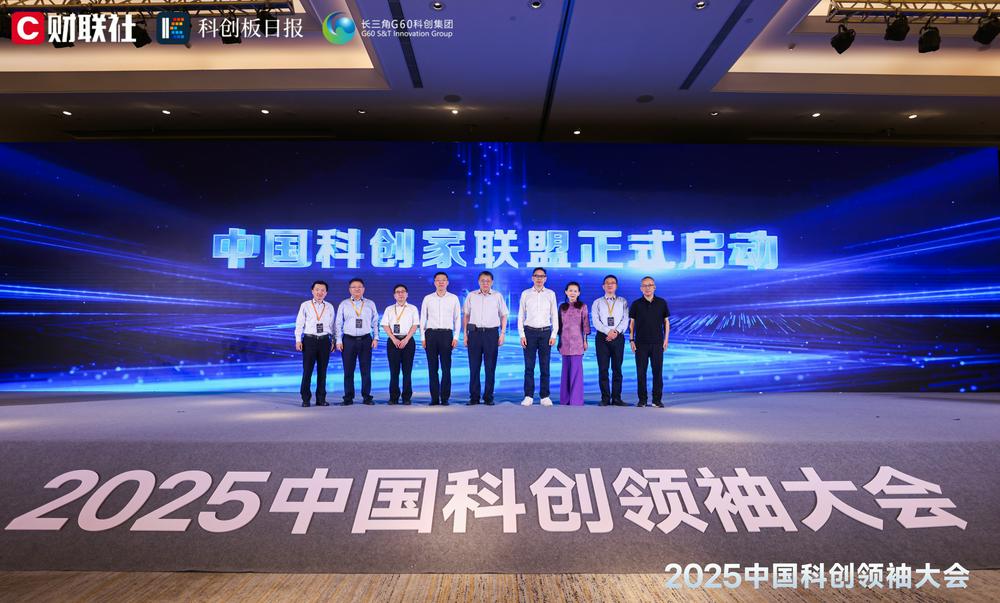
中国科创家联盟致力于汇聚科创板上市公司及细分赛道先锋企业家,以需求为牵引,深度整合产业链核心企业、政府资源与资本平台,旨在解 决各方发展难题,构建一个高效协同、价值共创的科创生态新体系。(记者 郭辉) 中国科创家联盟今日正式启动 《科创板日报》25日讯,"2025中国科创领袖大会暨科创板开市六周年"今日开幕。会上,中国科创家联盟宣布正式启动。G60科创集团党委书 记兼董事长由杨、智通财经总经理胡刚、芯原股份董事长兼总裁戴伟民、华熙生物董事长兼总裁赵燕、华懋科技董事长吴黎明、派能科技董事 兼总裁谈文、埃夫特董事长游玮、安恒信息董事长范渊、卫宁健康总裁王涛等,今日共同参与并见证中国科创家联盟的成立。 ...
1000+人报名!最重磅科创盛会来了
财联社· 2025-07-25 01:22
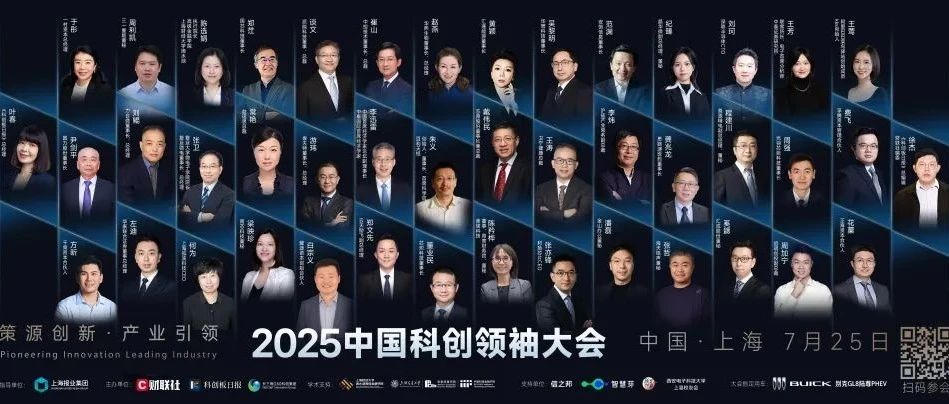
今日(7月25日)上午9点30分,上海松江,备受关注的科创盛会——"2025中国科创领袖大 会暨科创板开市六周年"正式开幕。 在《并购:加快发展新质生产力》圆桌对话环节,嘉宾将围绕行业趋势、技术创新、投资机遇 等热点话题展开深入交流与碰撞,探讨日益加速和深入的产业并购如何为中国科创未来发展注 入新动力;在《出海:新市场的机遇与挑战》圆桌对话环节,嘉宾将聚焦于企业出海过程中的 机遇与挑战,以及如何谋求更为强劲的发展之路。 2大平行分论坛,将分别聚焦集成电路产业与产融对接。 在《2025中国科创领袖大会暨集成电路产业发展闭门会》论坛上,超10位集成电路领域企业 家、高管及科研机构专家汇聚一堂,围绕政策导向、技术创新、市场拓展、产业协同等关键议 题展开深入交流;在《2025中国科创领袖大会暨上市公司产融对接会(闭门)》论坛, 6-8 家科创企业集中亮相,这些企业都来自集成电路、生物医药等硬科技赛道,对接会让创新潜力 与上市公司精准对接。 1场"2025科创家之夜"(闭门),期间将发布1份《科创板ESG榜单》等。 本届大会由上海报业集团指导,财联社、《科创板日报》、上海长三角G60科创集团联合主 办,上海财经大学滴水 ...
医美并购的“朗姿教训”
阿尔法工场研究院· 2025-07-23 13:47
Core Viewpoint - Langzi Co., Ltd. relies on capital-driven growth and rapid mergers and acquisitions to form a chain scale, neglecting the core of the medical beauty industry, which is "doctors and services" [1][30]. Financial Performance - Langzi Co., Ltd. reported a projected net profit of 220 million to 260 million yuan for the first half of 2025, representing a year-on-year growth of 31.74% to 55.69% [3][4]. - However, after excluding a 160 million yuan investment gain from the sale of Ruoyuchen, the actual operating net profit dropped to 90 million to 130 million yuan, a decline of 35.68% to 7.09% year-on-year [6][4]. - The first quarter of 2025 showed a decline in revenue, net profit, and cash flow from operating activities, indicating a downward trend [6][7]. Medical Aesthetics Business Challenges - The medical aesthetics segment, which was expected to be a new growth engine, has underperformed, with revenue and gross profit decreasing by 9.22% and 8.58% respectively in Q1 2025 [11][8]. - The gross profit margin of the medical aesthetics business is 55.05%, significantly lower than the traditional apparel and children's products segments, which have margins of 64.51% and 62.28% respectively [11][8]. - Among the seven medical aesthetics brands under Langzi, only the Jingfu Medical Beauty brand achieved positive growth in Q1 2025, while the other six brands experienced revenue and profit declines [13][11]. Industry Dynamics - The medical aesthetics industry has a complex value structure, with upstream pharmaceutical and equipment manufacturers capturing 50%-70% of the profits, while downstream service providers only retain 10%-25% [16][15]. - Operating a medical aesthetics institution is capital-intensive, requiring significant investment in equipment and facilities, with depreciation periods of 5-10 years [17][16]. - The industry faces increasing competition, with the number of specialized medical aesthetics institutions in China reaching 21,000 in January 2025, an increase of approximately 2,400 from the previous year [21][20]. Strategic Decisions and Market Trends - Despite the challenges, Langzi continues to invest in medical aesthetics, viewing it as a low-resistance entry point into the sector with high valuation potential [23][22]. - The medical aesthetics market in China has seen a compound annual growth rate of over 20% from 2011 to 2019, attracting significant capital investment [24][23]. - Langzi's strategy of rapid acquisitions in the medical aesthetics sector has not translated into sustainable growth, as the industry is moving towards a more decentralized model focused on individual practitioners and boutique institutions [30][29]. Conclusion - The fundamental conflict between capital-driven expansion and the intrinsic nature of the medical aesthetics industry may be the root cause of Langzi's current challenges [31][30].

【全网最全】2025年中国医疗美容行业上市公司全方位对比(附业务布局汇总、业绩对比、业务规划等)
Qian Zhan Wang· 2025-07-23 06:10
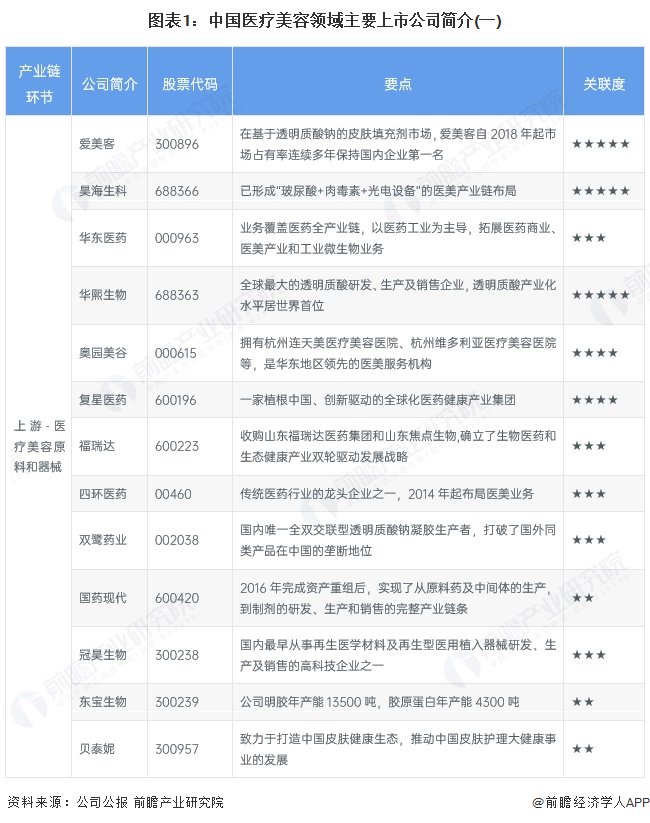
Group 1 - The article provides an overview of the Chinese medical beauty industry, highlighting key listed companies and their performance metrics [1][5][9] - Major players in the industry include Aimeike, Huaxi Biological, and Haohai Biological, with Aimeike maintaining the highest market share in the sodium hyaluronate filler market since 2018 [3][5] - The industry is characterized by a diverse supply chain, with upstream raw material manufacturers, midstream medical institutions, and downstream consumers [1][7] Group 2 - In 2024, Aimeike reported a revenue of 30.26 billion, while Huaxi Biological achieved 53.71 billion, indicating strong performance among leading companies [5][10] - The article notes that Aimeike has a gross profit margin exceeding 90%, outperforming other companies in the sector [9][10] - Companies are focusing on R&D innovation and brand building to enhance market competitiveness and meet evolving consumer demands [11][13] Group 3 - The geographical distribution of companies shows a concentration in coastal regions, particularly in major cities like Beijing, Shanghai, and Guangzhou, which host top research institutions and production companies [7] - Companies like Huadong Pharmaceutical and Huaxi Biological primarily focus on domestic sales, while others like Langzi and Huakan have diversified regional strategies [9][10] - Future plans for companies include enhancing R&D capabilities, expanding production projects, and improving customer service to create a win-win ecosystem [11][13]



美妆高管“大洗牌”,相宜本草CEO入职7个月“闪离”
阿尔法工场研究院· 2025-07-22 11:53
Core Viewpoint - The competition in the cosmetics industry is shifting from "traffic competition" to "technology competition" [3] Group 1: Industry Changes - In the first half of 2025, there will be at least 30 significant personnel changes among leading domestic and international cosmetics companies [4] - International giants are re-employing technical talents and introducing cross-industry talents to strengthen industry barriers, while local companies are restructuring organizational efficiency by leveraging foreign technical experts amidst talent loss [5][6] Group 2: Personnel Restructuring - The phenomenon of management turnover among domestic leading beauty companies is intensifying, with several core positions currently vacant or temporarily filled [8] - Companies like Proya and Shanghai Jahwa have vacant positions for vice presidents [9] Group 3: Talent Acquisition - Proya is actively bringing in foreign technical talents, with its new Chief Scientific Officer having 27 years of experience at Procter & Gamble [13] - Some companies are promoting internal talents to strengthen organizational resilience, such as Huaxi Biological promoting its global supply chain platform executive director and financial director to vice president [15] Group 4: Leadership and Innovation - International beauty giants are promoting technical talents to integrate deeply into brand operations, while also introducing cross-industry talents to stimulate innovation [17] - L'Oréal's recent appointments of executives with R&D backgrounds signify a shift towards "technology defining brands" [18][19] Group 5: Market Dynamics - The demand for cosmetics is shifting from emotional premium to functional essence, compelling companies to build core competitiveness through R&D breakthroughs and technological barriers [22] - The emphasis on technical talents is reshaping the competitive rules of the industry, moving away from reliance on traffic dividends and marketing concepts [22][23] Group 6: Future Outlook - Companies that master core technologies and technical talents will continue to lead, while brands lacking a technical foundation may struggle to survive [23]