
Nestle

Search documents
Nestle recalls infant formula batches on food safety concerns
Reuters· 2026-01-06 07:42
Core Viewpoint - Nestle is recalling specific batches of its SMA infant formula and follow-on formula due to potential toxin contamination that may cause nausea and vomiting [1] Company Summary - The recall involves specific batches of SMA infant formula and follow-on formula [1] - The potential presence of a toxin in these products raises health concerns for consumers [1]



Invest Outside the U.S. With These Top International ETFs
The Motley Fool· 2025-12-31 19:20
Core Insights - The Vanguard FTSE Developed Markets ETF (VEA) and the SPDR Portfolio Developed World ex-US ETF (SPDW) provide low-cost exposure to developed markets outside the U.S., making them suitable for international diversification [2][10] - VEA is significantly larger than SPDW, with $260 billion in assets under management (AUM) compared to SPDW's $33.5 billion, and offers a slightly higher yield [4][11] Cost and Size Comparison - Both ETFs have an identical expense ratio of 0.03% [4] - VEA has a 1-year total return of 35.9%, while SPDW has a return of 35.2% as of December 30, 2025 [4] - VEA's dividend yield is not available, while SPDW offers a yield of 2.3% [4] Performance and Risk Analysis - Over the past five years, VEA has a maximum drawdown of -29.71%, while SPDW's is -30.23% [6] - The growth of $1,000 invested over five years would result in $1,308 for VEA and $1,302 for SPDW [6] - Cumulative growth for VEA is 55.2%, compared to SPDW's 53.4% [12] Portfolio Composition - VEA includes 3,864 stocks, while SPDW has 2,390 holdings, indicating broader diversification in VEA [7][8] - VEA's largest sector weights are in financial services, industrials, and technology, with top holdings including ASML Holding, Samsung Electronics, and AstraZeneca [7] - SPDW also has similar top holdings but is more tilted towards Swiss multinationals like Roche and Novartis [8] Investment Implications - Both ETFs serve as effective tools for portfolio diversification and hedging against U.S. economic downturns [10] - The primary distinction lies in their portfolio sizes and compositions, with VEA focusing more on large-cap stocks [11]

前雀巢CEO兼董事长包必达:董事会一次都没征询过我意见,食品工业世纪范式早已到头
Xin Lang Cai Jing· 2025-12-29 23:15
Group 1 - The former CEO and Chairman of Nestlé, Peter Brabeck-Letmathe, expressed that the traditional paradigm of the food industry has reached its end, emphasizing a shift from merely producing calories to focusing on overall nutrition and well-being [10][31] - Brabeck-Letmathe criticized the "Minder Initiative," which mandates annual re-elections for board members, arguing that it leads to a short-term focus on quarterly performance rather than long-term strategy [3][25] - He highlighted that the excessive regulation in Switzerland has deterred multinational companies from investing, leading to a decline in new investments, particularly in the pharmaceutical sector [7][28] Group 2 - The former CEO noted that the board of directors at Nestlé has not consulted him since he stepped down as Chairman in 2017, indicating a disconnect between the current leadership and his vision for the company [11][32] - Brabeck-Letmathe expressed disappointment over Nestlé's return to a focus on food and beverage, which he believes undermines the progress made towards a more holistic approach to nutrition [10][31] - He mentioned that the financial policies adopted by the current management, including significant debt accumulation for stock buybacks, are detrimental to the company's long-term health [11][32] Group 3 - Brabeck-Letmathe's departure from the World Economic Forum was influenced by a conflict regarding the handling of serious allegations against Klaus Schwab, indicating governance challenges within the organization [14][37] - He believes that the World Economic Forum still has the potential to contribute to a rules-based multilateral world by serving as a platform for consensus-building [39] - The former CEO plans to participate in the Dakar Rally, marking a personal achievement after years of involvement in corporate leadership [18][39]


雀巢新帅谈裁员1.6万:把资源更多投入到销售团队丨消费参考
2 1 Shi Ji Jing Ji Bao Dao· 2025-12-25 08:19
Group 1 - Nestlé plans to cut approximately 16,000 jobs over the next two years, which is about 6% of its total workforce, including 12,000 white-collar positions across all functions and regions [1] - The new CEO, Philipp Navratil, indicated that the layoffs are part of a broader efficiency evaluation, particularly focusing on marketing processes and reallocating resources to sales teams [2][3] - The layoffs are a response to declining growth, with Nestlé's total sales for the first nine months of the year at 65.9 billion Swiss francs, a year-on-year decrease of 1.9% [4] Group 2 - The Greater China region has been a significant drag on Nestlé's performance, with an organic growth rate of -10.4% in Q3, continuing a downward trend from Q2 [5] - The company is working on rebuilding its team in China, emphasizing the need for improved innovation and targeted strategies in the rapidly growing e-commerce channel [5]

雀巢新帅谈裁员1.6万:把资源更多投入到销售团队
2 1 Shi Ji Jing Ji Bao Dao· 2025-12-25 07:42
Group 1 - Nestlé plans to cut approximately 16,000 jobs over the next two years, representing 6% of its total workforce, with around 12,000 white-collar positions affected across all functions and regions [2] - The layoffs are part of a broader strategy to enhance efficiency, particularly in marketing, where resources will be reallocated to sales teams instead of repetitive tasks [2][3] - The company's total sales for the first nine months of the year were 65.9 billion Swiss francs, a year-on-year decline of 1.9%, with an organic growth rate of 3.3% [4] Group 2 - The Greater China region has been a significant drag on Nestlé's performance, with an organic growth rate of -10.4% in Q3, continuing a downward trend from Q2 [5] - For the first nine months, the organic growth rate in Greater China was -6.1%, with a negative internal growth rate of -2.9% and a pricing contribution rate of -3.2% [5] - Excluding Greater China, the organic growth rate for the Asia, Oceania, and Africa region was 5.3%, indicating stronger performance in other markets [5]
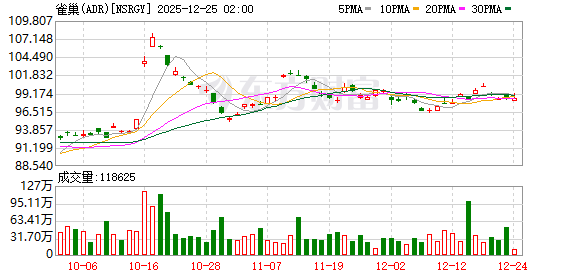
Nestle sells remaining 40% Herta stake to Casa Tarradellas, ending joint venture
Reuters· 2025-12-23 14:57
Core Insights - Nestle has completed the sale of its remaining 40% stake in Herta Foods, a packaged meat business, to Spanish company Casa Tarradellas [1] Company Summary - The divestment marks the end of Nestle's involvement in Herta Foods, indicating a strategic shift in its portfolio [1] - Casa Tarradellas, the acquiring company, is expected to enhance its market position in the packaged meat sector following this acquisition [1]
Nestle's stake in L'Oreal is a financial investment, Nestle CEO says
Reuters· 2025-12-23 06:36
Core Viewpoint - Nestle considers its stake in L'Oreal as a financial investment, with regular reviews but no new developments reported by CEO Philipp Navratil [1] Group 1 - Nestle's investment in L'Oreal is primarily viewed as a financial asset [1] - The company conducts regular assessments of its stake in L'Oreal [1] - No recent updates or changes regarding the investment have been disclosed [1]


5 Global Dividend Stocks to Add Stability to Your Singapore Portfolio
The Smart Investor· 2025-12-22 03:30
Group 1: Johnson & Johnson (J&J) - J&J's revenue for Q3 2025 increased by 6.8% YoY to US$24 billion, with adjusted earnings growing 15.7% to US$6.8 billion due to strong performance across its segments [2][3] - The company has paid US$9.3 billion in dividends and repurchased US$4.0 billion in shares YTD, reflecting its commitment to shareholder returns [3] - J&J plans to spin off its Orthopaedics unit, DePuy Synthes, within the next 18-24 months to focus on higher-margin segments [3][4] Group 2: PepsiCo - PepsiCo's revenue for Q3 2025 rose by 3% YoY to US$23.9 billion, but operating earnings decreased by 8% to US$3.57 billion due to rising costs and M&A charges [5] - The company increased its annual dividend by 5% to US$5.69 per share, maintaining its status as a dividend aristocrat with a payout ratio of 75% [6][7] - PepsiCo plans US$1.0 billion in share repurchases for 2025, with total shareholder returns expected to reach US$8.6 billion for the year [7][8] Group 3: NextEra Energy - NextEra's operating revenue for Q3 2025 grew by 5.3% to US$8.0 billion, with adjusted earnings per share increasing by 9.7% YoY to US$1.13 [9][10] - Dividends for the first nine months of 2025 climbed 10.2% YoY to US$3.5 billion, with a payout ratio of 51.5% [10] - The company has a significant backlog of 29.6 gigawatts in renewables and storage, and is collaborating with Google on a nuclear plant project [11] Group 4: Microsoft - Microsoft's revenue for Q1 FY2026 increased by 18.4% YoY to US$77.7 billion, with net income rising 12% to US$27.7 billion despite increased expenses [13] - The company raised its dividend by 9.6% YoY to US$0.91 per share and has a favorable payout ratio of 24.4% [14] - Microsoft is investing heavily in AI and plans to expand its data center footprint by 80% in FY2026, with significant share repurchases planned [15] Group 5: Nestle - Nestle's sales for the first nine months of 2025 dropped by 1.9% YoY to CHF 65.9 billion, but organic sales growth was 3.3% without currency effects [16][17] - The company has not yet announced its 2025 dividend, but it increased its dividend by 1.7% in 2024 to CHF3.05 per share [17] - Nestle's growth strategy includes focusing on "Cold Coffee" products and "Maggi Air Fryer seasonings" to capitalize on market trends [18][19] Group 6: Global Dividend Stocks - Investing in global dividend stocks can enhance portfolio diversification, providing exposure to sectors like healthcare, consumer staples, and utilities [20] - The combination of local investments in Singapore banks and REITs with global dividend stocks can improve resilience and long-term compounding [21]



Christmas chocolates still costly despite falling cocoa prices – here’s why
The Economic Times· 2025-12-20 20:03
Core Insights - Cocoa prices surged last year but are now declining rapidly, yet chocolate prices in stores are expected to remain high for the foreseeable future due to previous high cocoa purchases and recipe changes by manufacturers [1][3][14] Cocoa Market Dynamics - Cocoa futures reached nearly $13,000 per ton last year due to crop damage from diseases and adverse weather in major producing countries like Ivory Coast and Ghana, which account for over half of global cocoa supply [3][10] - This year, cocoa prices have dropped by approximately 50% to around $6,000 per ton due to improved harvests, reduced demand, and diminished concerns about shortages [3][13] Impact on Chocolate Manufacturers - Many chocolate companies, including Lambertz, have incurred significant costs from purchasing cocoa at elevated prices, with Lambertz reporting an additional €150 million ($176 million) in costs, representing about 20% of its revenue last year [4][16] - Chocolate makers are cautious about adjusting retail prices due to ongoing market instability, with some experts suggesting that relief in pricing may not be seen until 2026 [5][16] Recipe Adjustments - To manage costs, chocolate manufacturers are altering recipes by reducing cocoa content or producing smaller bars, leading to some products no longer being classified as "chocolate" [9][13] - These changes are difficult to reverse, indicating that high retail prices are likely to persist despite falling cocoa prices [9][14] Supply Chain Challenges - Cocoa farming in West Africa faces long-term structural challenges, including a lack of investment, inadequate farming tools, and disease-resistant plants, which continue to threaten supply stability [8][11] - Governments in Ghana and Ivory Coast are now supporting farmers with better pricing and farming practices, which has improved farmer incomes and allowed for better agricultural inputs [12][16]

If You Own GIS Stock, You May Want to Sell and Buy This Instead
Yahoo Finance· 2025-12-18 16:09
Core Viewpoint - General Mills' stock has declined over 26% this year, contrasting with the S&P 500's increase of 15.6%, leading to a historically low valuation and a forward dividend yield of approximately 5.2% [1][2] Valuation and Comparison - General Mills is trading at a forward P/E ratio of just under 13, which is lower than competitors like Nestle and Mondelez International, both trading at around 17 [3] - The current discount in General Mills' valuation is attributed to a growth slump, as customers are shifting towards private label products instead of branded offerings [4] Future Outlook - Management has initiated a cost reduction program and is seeking strategies to revive sales growth, but analyst estimates suggest weak revenue and earnings growth for the next fiscal year [5] - Kraft Heinz is undergoing a split into two entities, which may lead to better performance for its faster-growing brands, potentially making it a more attractive investment compared to General Mills [6][9] - The upcoming corporate divestiture for Kraft Heinz could result in valuation expansion for its faster-growing segment, benefiting investors in both companies [8][9]

