Costco

Search documents
Why Wealthfront Could Be The Costco Of Fintech
Seeking Alpha· 2025-12-24 11:21
Group 1 - The article discusses a cautious approach towards initial public offerings (IPOs), suggesting they may often be overpriced [1] - The focus is on identifying value in small-cap stocks that offer asymmetric upside potential and sustainable high dividend yields [1] - Key investment criteria include insider buying, high insider ownership, a history of free cash flow growth, and significant catalysts for turnaround [1] Group 2 - The investor expresses a preference for long-term holdings and is comfortable with matching market returns during bull markets while aiming for superior returns in downturns [1] - Influences on the investment strategy include notable investors such as Warren Buffett and Peter Lynch [1] - The investor has a background in Economics and Finance, which informs their investment decisions [1]


Costco: The Art Of Execution (NASDAQ:COST)
Seeking Alpha· 2025-12-23 12:19
Core Insights - Costco Wholesale Corporation is recognized as one of the best businesses globally due to its subscription-based demand for essential services like grocery shopping and a strong customer-centric approach [1] Group 1: Business Model - The company operates on a recurring subscription model, which provides a steady demand for its services [1] - Costco's focus on customer satisfaction is a key driver of its success, contributing to its reputation as a quality growth investor [1] Group 2: Investment Perspective - The analysis aims to identify the best businesses worldwide to create a long-term portfolio that can outperform the market [1]
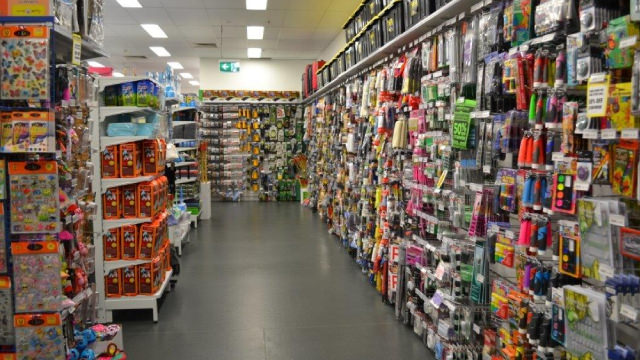
Overlooked Stock: OLLI Upgrade & Comparisons to DG
Youtube· 2025-12-22 21:40
Core Viewpoint - Ali's Bargain Outlet has seen a rise in stock price following an upgrade from Loop Capital, which has increased its price target from $130 to $135 and upgraded the stock rating from hold to buy, anticipating improved comparable sales through 2026 [5][19]. Company Overview - Ali's Bargain Outlet operates as a wholesale membership retailer similar to Costco, focusing on discounted or overstocked general merchandise, including name-brand items [3][4]. - The company has expanded significantly, now operating over 630 stores across 34 states, and is often compared to TJ Maxx in the general merchandise sector [4]. Market Position and Competition - The upgrade from Loop Capital comes at a time when one of Ali's main competitors, Big Lots, is liquidating, which could benefit Ali's by reducing competition in the broadline retail space [5][6]. - Ali's is making strides into consumables, positioning itself alongside companies like Dollar General and Five Below, which could drive more traffic and improve sales [6][10]. Financial Performance - Year-to-date, Ali's stock has been trending down, similar to Costco, despite consistent topline sales growth of approximately 12.5% year-over-year and an EBITDA growth of 11.4% last year, with an estimated growth of 15% next year [11][12]. - The current earnings multiple for Ali's is 28 times for this year and 24 times for next year, trading at a discount to its five-year average, indicating potential for a trend reversal [10][12]. Strategic Outlook - The shift towards consumables may initially impact margins but could lead to increased customer traffic and repeat purchases, enhancing overall sales volume [18]. - Ali's net income margins were around 8.9% of sales last year, indicating a more profitable operation compared to Costco, although it lacks the same scale [15][16].


AFRM vs. AXP: Which Fintech Play is the Better Bet for 2026?
ZACKS· 2025-12-22 17:56
Core Insights - Affirm Holdings, Inc. (AFRM) and American Express Company (AXP) operate in different segments of the payments ecosystem, with both companies positioned at the intersection of consumer spending and credit [1] - The evolving payment preferences and financing models are leading investors to compare traditional card-based companies with newer embedded-finance disruptors [2] Affirm's Position - Affirm is a key player in the buy now, pay later (BNPL) model, integrating into digital checkout experiences, and has reported a 33.6% year-over-year revenue growth in its last quarter [4][10] - The company has 24.1 million active consumers and a 96% repeat transaction rate, indicating strong user engagement [4][10] - Affirm's technology-first underwriting model utilizes real-time data and machine learning for credit risk assessment, which has stabilized credit performance [5] - The company has a growing merchant ecosystem with 420,000 partners, including major brands like Shopify and Amazon, enhancing its market presence [6] - Affirm's long-term debt-to-capital ratio stands at 70.6%, higher than AmEx's 64.1%, reflecting its growth-stage profile [7] - The company is diversifying its funding sources through securitizations and bank partnerships, which is expected to improve profitability over time [8] American Express's Position - American Express is recognized as a leading operator in traditional payments, benefiting from a loyal customer base and strong brand equity, with an 11% revenue growth in its latest quarter [9][10] - The company's revenue mix is heavily reliant on lending and interest income, which may limit its agility in adopting new payment technologies [11] - Growth for AmEx is more incremental due to its deep market penetration, making it challenging to achieve outsized growth without increasing credit risk [12] - Innovation at AmEx is characterized as measured rather than disruptive, which may restrict its competitive edge against faster-moving fintech companies [13] Comparative Analysis - The Zacks Consensus Estimate indicates a projected 560% year-over-year earnings surge for Affirm in fiscal 2026, compared to a 15.4% increase for American Express [14][15] - Affirm trades at a higher price-to-sales multiple of 5.58X, reflecting its growth profile, while AmEx's multiple is 3.33X, indicative of its maturity [16] - Over the past month, Affirm has outperformed American Express, with a 14% increase compared to AmEx's 5.8% rise [18] Conclusion - While American Express provides stability and reliable cash flows, Affirm is positioned as the more attractive growth opportunity for 2026, driven by rapid revenue growth and an expanding merchant ecosystem [21]



Roth Capital's Bill Kirk points out convenience issues behind Costco's disappointing year
Youtube· 2025-12-22 16:14
Core Insights - The focus is on app downloads as a significant indicator of consumer behavior, particularly for last-minute shoppers who prefer in-store pickup options [2][3] - Walmart continues to perform strongly, while Target has seen a recent surge in app downloads, reaching the third position in total downloads, a notable improvement from earlier in the year [3][4] - Target's recent performance may indicate a positive holiday season, but structural issues related to investment spending and pricing strategies could pose risks in the long term [5][6] Target - Target has experienced a rough couple of years but has shown signs of improvement with a 10% increase in toy sales as of Q3, contributing to strong app download numbers [4][5] - Despite a potentially strong holiday season, Target faces increased spending needs in 2026, which could impact earnings [6] Costco - Costco's app download performance has been weak, and the company is facing challenges with declining renewal rates, slower member growth, and reduced traffic [8][10] - While Costco excels in providing value, it struggles with convenience compared to competitors like Walmart, which is becoming increasingly important as consumer preferences shift [9][10] - The rise of Walmart.com and its extensive assortment poses a competitive threat to Costco, as it overlaps with Costco's offerings [12][13]
当亚马逊被“围猎”,谁在瓜分新的万亿蛋糕?
3 6 Ke· 2025-12-22 11:44
Group 1: Core Insights - The disparity in online retail penetration between China (30%) and the U.S. (16%) is significant, indicating different market dynamics and maturity levels [1][2] - U.S. e-commerce is not merely lagging behind but is in a mature market with strong offline competitors like Walmart and Costco, leading to structural differentiation rather than total growth [2][3] - The U.S. retail landscape is characterized by a robust offline infrastructure that complicates the growth of e-commerce, as traditional retailers provide high efficiency and experience [4][5] Group 2: Market Dynamics - The U.S. e-commerce market, valued at over $1.1 trillion, is supported by a $7 trillion retail base, despite a lower penetration rate [4] - The competition in the U.S. e-commerce space is shifting towards specific niches where traditional retailers cannot compete, such as extreme low pricing, traffic stimulation, and fresh food delivery [4][10] - Amazon, while still a leader, faces challenges from low-cost competitors and content-driven e-commerce platforms like TikTok Shop, which leverage social media for sales [5][9] Group 3: Competitive Landscape - Companies like Temu and Shein are disrupting the U.S. market by utilizing Chinese supply chains to offer low prices without the burden of high logistics costs [7][8] - TikTok Shop is transforming its video content into e-commerce opportunities, presenting a new avenue for merchants seeking alternatives to Amazon [9] - Walmart has successfully adapted to the e-commerce landscape by utilizing its extensive store network for efficient fresh food delivery, surpassing Amazon in this segment [12] Group 4: Key Companies - **Amazon (AMZN)**: Despite facing competition, Amazon maintains a strong retail market share of approximately 37% and continues to perform well in core categories like consumer electronics [13][14] - **Walmart (WMT)**: Walmart is evolving into a full-channel giant, with its e-commerce business growing over 20% for seven consecutive quarters, driven by its fresh food offerings [15] - **PDD Holdings (PDD)**: Temu is transitioning to a model that enhances its pricing power and logistics efficiency, targeting Amazon's mid-tier merchant ecosystem [16] - **Shopify (SHOP)**: Shopify is leveraging AI to enhance traffic distribution and improve monetization rates, moving beyond its initial role as a platform provider [17] - **Instacart (CART)**: Instacart dominates the U.S. third-party fresh food delivery market, with a significant portion of its revenue coming from high-margin advertising [18]


当亚马逊被“围猎”,谁在瓜分新的万亿蛋糕?
格隆汇APP· 2025-12-22 11:12
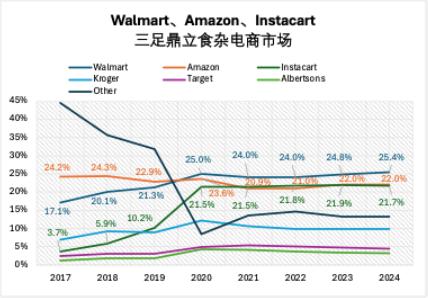
Core Viewpoint - The article discusses the significant disparity in online retail penetration between China and the U.S., with China's online retail sales approaching 30% while the U.S. remains around 16%. This difference is attributed to the maturity of the U.S. retail market, which is dominated by strong offline players like Walmart and Costco, leading to a more complex competitive landscape for e-commerce in the U.S. [4][5][6] Group 1: Market Dynamics - The U.S. e-commerce market is not simply lagging behind China but is characterized by a mature offline retail system that provides high efficiency and experience, making it difficult for e-commerce to replace traditional retail. Instead, e-commerce serves as a supplement to offline shopping [5][6]. - The U.S. retail market, valued at $7 trillion, supports a substantial e-commerce sector worth over $1.1 trillion, despite a lower penetration rate [6]. - The competitive landscape in the U.S. is shifting from total growth to structural differentiation, focusing on specific niches where traditional retailers cannot compete effectively, such as extreme low prices, traffic stimulation, and fresh food delivery [6][13]. Group 2: Competitive Challenges - Amazon, while still a leader in infrastructure, faces significant challenges from low-cost competitors and new traffic sources, particularly from companies like Temu and Shein, which leverage Chinese supply chains to offer lower prices without the need for expensive logistics in the U.S. [8][10][11]. - TikTok Shop is emerging as a powerful player in the e-commerce space, converting its vast short video traffic into purchasing power, contrasting with Amazon's traditional search-based model [12]. - In the fresh grocery segment, Walmart has overtaken Amazon with a 25% market share compared to Amazon's 22%, due to Walmart's effective use of its extensive store network to reduce delivery costs and enhance customer experience [15]. Group 3: Key Companies - **Amazon (AMZN)**: Despite facing competition, Amazon maintains a strong retail market share of around 37% and continues to perform well in core categories, such as consumer electronics [17]. - **Walmart (WMT)**: Walmart is transforming from a traditional supermarket to a full-channel giant, with its e-commerce business growing over 20% for seven consecutive quarters, now accounting for 20% of its total retail sales [20]. - **PDD Holdings (PDD)**: Temu is evolving from a fully managed model to a semi-managed one, enhancing its supply chain capabilities and integrating local inventory to compete with Amazon [21]. - **Shopify (SHOP)**: Shopify is shifting its growth narrative, focusing on AI-driven traffic distribution and financial services to enhance its revenue model [22]. - **Instacart (CART)**: Instacart dominates over 70% of the U.S. third-party grocery delivery market, with a growing high-margin advertising business contributing to its revenue [23].

Before You Buy the Dip on Costco Stock, Here Are 3 Things to Watch in 2026
The Motley Fool· 2025-12-21 23:44
Core Viewpoint - Costco has experienced a disappointing year in 2025, with its stock price down 6% despite strong operational performance [1] Group 1: Same-Store Sales Performance - Costco's same-store sales (SSS) have shown impressive growth, indicating strong productivity at existing locations [4] - In fiscal 2020, during the COVID-19 pandemic, Costco reported positive SSS of 7.7%, followed by 16% in fiscal 2021 and 14.4% in fiscal 2022, with the positive trend continuing [5] - The company is expected to maintain its SSS growth in 2026, driven by increased foot traffic and higher average ticket sizes [6] Group 2: Growth Strategy - Costco currently operates 921 warehouses, with approximately two-thirds located in the U.S., and plans to open 28 net new warehouses in fiscal 2026 [6] - There are significant opportunities for expansion in the U.S. and international markets, particularly in China, which is promising for revenue growth in 2026 and beyond [7] Group 3: Valuation Considerations - Despite a strong operational performance in 2025, with net sales and net income increasing by 8% and 10% year over year, the stock has faced valuation concerns [8] - The current price-to-earnings ratio stands at 46, down from 63 earlier in 2025, indicating a potentially better valuation setup for investors [9]

Here are 5 key events that drove the stock market last week
CNBC· 2025-12-20 16:52
Core Viewpoint - The stock market experienced a positive week, driven by volatility in the artificial intelligence sector, with the S&P 500 gaining 0.1% and the Nasdaq rising 0.5% despite concerns over AI funding and spending levels [1] Group 1: Market Performance - The S&P 500 and Nasdaq recorded modest gains for the week, although they remain lower for the seasonally strong month of December [1] - Micron Technology's shares surged 7% following strong earnings, contributing to the market rebound [1] - Oracle's shares rose over 6.5% after TikTok agreed to sell its U.S. operations to a joint venture involving Oracle and Silver Lake [1] Group 2: Company Highlights - Nvidia's shares increased by 3.4% for the week, with the U.S. government reviewing shipments of its H200 chips to China, leading to a valuation of 23.5 times fiscal 2027 earnings estimates [1] - Nike reported better-than-expected fiscal 2026 Q2 earnings but saw a 10.5% drop in stock price due to disappointing sales in China and a weak fiscal Q3 outlook, resulting in a total weekly loss of 13% [1] - Capital One's stock closed at a record high, with a 20% increase since November 20, prompting the company to raise its price target to $270 while downgrading its rating to hold-equivalent 2 [1] - Texas Roadhouse was added to the portfolio, showing consistent performance in comparable sales despite consumer weakness [1] - Costco's position was trimmed due to mixed quarterly results and declining renewal rates, with concerns about potential impacts on earnings growth [1]
What a 'K-shaped' economy means for America's income divide
NBC News· 2025-12-19 23:48
Economic Trends - The report highlights the emergence of a K-shaped economy, where some Americans are thriving while others struggle to keep up with inflation [1][4][5] - Spending at wholesale retailers like Costco, Amazon, and Walmart has increased by 7% since 2024, even among those earning $100,000 per year [3] - The top 10% of earners account for almost half of all spending, with their spending up by 36% since the early 1990s [5] Consumer Behavior - Consumers are increasingly seeking value and better deals, especially families [1][2] - The bottom 80% of consumers are struggling to keep up with price inflation [5] - The top 10% of earners have increased their spending by almost 45% in the first half of 2025 [5] Economic Sustainability and Risks - A K-shaped economy is considered unsustainable in the medium to long run [6] - The Federal Reserve is observing the K-shaped economy and its potential risks [8] - The economic outlook for 2026 depends on the spending behavior of the top 20% of earners [9] Economic Recovery Shapes - The report contrasts the K-shaped economy with V-shaped, U-shaped, and L-shaped recoveries, referencing historical events like the 2008 recession and the 1973 oil crisis [7]