腾讯控股

Search documents
X光揭秘马踏飞燕为啥能单蹄踏鸟 背后藏着老祖宗对力学的顶级理解
Xin Lang Cai Jing· 2026-02-15 03:16
Core Viewpoint - The article highlights the advanced understanding of mechanics by ancient Chinese craftsmen, exemplified by the "Mata Feiyan" horse sculpture, which showcases a perfect balance and innovative design that impresses modern engineers [1] Group 1 - The "Mata Feiyan" horse, referred to as the "national horse," is housed in the Gansu Provincial Museum and is noted for its unique design and craftsmanship [1] - The horse was created using a ceramic mold method, which involved casting its head, body, and legs separately before assembling them, similar to reinforcing concrete with steel [1] - X-ray analysis reveals that the horse's center of gravity is precisely located on the hoof that is stepping on a bird, demonstrating a remarkable balance in its design [1]
大厂AI竞速,争抢超级入口|TMT年度盘点
经济观察报· 2026-02-15 02:55
Core Viewpoint - By 2025, the paradigm, value, and capabilities of AI will be fully confirmed, leading to significant technological investments, competitive differentiation, and market segmentation in 2026 [1][3]. Group 1: Industry Trends - The technology and internet sectors are experiencing rapid changes, with major companies competing fiercely in computing power and large model applications [2]. - Companies are shifting from a focus on technology arms races to defining scenarios for technology application, emphasizing the need to reconstruct existing business loops or create new interaction entry points [5]. Group 2: Major Company Strategies - Tencent, Alibaba, and ByteDance are heavily investing in AI, with Tencent's annual investment reaching hundreds of billions, Alibaba planning to invest 380 billion over three years, and ByteDance's capital expenditure projected to increase from 150 billion in 2025 to 160 billion in 2026 [3][4]. - Alibaba is developing its own AI chip and deploying large-scale clusters to serve over 400 clients, while Tencent is procuring GPUs and establishing AI research centers [3][4]. Group 3: Market Dynamics - The competition is intensifying, with companies like ByteDance developing their own AI chips and achieving significant daily usage metrics for their models [4]. - The narrative around computing power is shifting, with a focus on achieving greater value from lower energy costs, as exemplified by Alibaba's cloud initiatives [4]. Group 4: Future Outlook - 2026 is anticipated to be a watershed year, with the emergence of multi-modal foundational models leading to a Matthew effect, where only a few general intelligent agents will prevail [5].




红包平时上限为什么是200元,微信回应
Xin Lang Cai Jing· 2026-02-15 02:10
Group 1 - The core idea of the article revolves around the popularity and mechanics of WeChat red envelopes during the Spring Festival, highlighting the balance between fun and user experience [1][6]. - WeChat's product manager, "Feige," explains that the maximum amount for a single red envelope is set at 200 yuan to avoid creating pressure for users while still allowing for meaningful expressions of sentiment [1][3]. - On February 14, WeChat increased the limit for one-on-one red envelopes from 200 yuan to 520 yuan, aligning with the significance of the date and similar festive occasions [3]. Group 2 - The randomness of red envelope amounts is a key feature that enhances the enjoyment of the experience, with faster internet speeds potentially leading to better outcomes in terms of the amounts received [5]. - "Feige" clarified that there are no preset rules or strategies for maximizing red envelope amounts; the most important factor is quick reflexes to claim them [6]. - During the Spring Festival, WeChat reported over 4 billion red envelope transactions, showcasing the platform's extensive usage and engagement over its 12-year history [6].
Better International ETF: Vanguard's VXUS vs. iShares' EEM
The Motley Fool· 2026-02-15 01:53
Core Insights - The Vanguard Total International Stock ETF (VXUS) and iShares MSCI Emerging Markets ETF (EEM) differ significantly in cost, yield, diversification, and risk, with VXUS providing broader international exposure and EEM focusing on emerging markets [1][2] Cost & Size Comparison - VXUS has an expense ratio of 0.05%, significantly lower than EEM's 0.72% - The one-year return for VXUS is 31.4%, while EEM's is higher at 36.2% - VXUS offers a dividend yield of 3.0%, compared to EEM's 2.1% - VXUS has assets under management (AUM) of $606.2 billion, whereas EEM has $26.95 billion [3][4] Performance & Risk Analysis - Over five years, VXUS experienced a maximum drawdown of 29.43%, while EEM had a higher drawdown of 39.82% - An investment of $1,000 in VXUS would grow to $1,277 over five years, compared to $1,046 for EEM [5] Sector Composition - EEM's portfolio is concentrated in emerging markets, with technology (28%), financial services (22%), and consumer cyclical (12%) as leading sectors, holding 1,214 stocks [6] - VXUS covers a wider range of international markets, with financial services (23%), industrials (16%), and technology (15%) as its top sectors, and it holds 8,602 stocks [7] Investor Suitability - EEM is suited for aggressive investors seeking high growth potential from emerging markets, despite its higher expense ratio and risk profile [8] - VXUS is recommended for long-term investors looking for stability and lower costs, with a more attractive dividend yield [10]

杜绝内卷式竞争,市场监管总局约谈7家平台
Xin Lang Cai Jing· 2026-02-15 01:08
Core Viewpoint - The State Administration for Market Regulation (SAMR) has summoned major platform companies including Alibaba, Douyin, Baidu, Tencent, JD.com, Meituan, and Taobao Shanguo to ensure compliance with various laws and regulations, emphasizing the need for fair competition and innovation in the platform economy [1] Group 1: Regulatory Compliance - The platform companies are required to strictly adhere to the Anti-Unfair Competition Law, Price Law, Consumer Rights Protection Law, and E-commerce Law of the People's Republic of China [1] - Companies are urged to take proactive responsibility in implementing these regulations to enhance their promotional practices [1] Group 2: Market Environment - The SAMR has highlighted the importance of eliminating "involution" competition among platforms to maintain a fair competitive market environment [1] - The initiative aims to promote innovation and healthy development within the platform economy [1]


新华财经早报:2月15日
Xin Hua Cai Jing· 2026-02-15 00:46
Financial Support Mechanisms - The People's Bank of China, along with other regulatory bodies, has issued opinions to establish a regular financial support mechanism aimed at preventing poverty and promoting rural revitalization, focusing on developing long-term financial assistance for key populations [1][1][1] - The opinions include optimizing microcredit for impoverished populations and enhancing small credit loan policies for farmers to support those at risk of falling back into poverty [1][1][1] Market Regulation - The State Administration for Market Regulation has interviewed seven platform companies, including Alibaba and Tencent, to ensure compliance with various laws and to eliminate "involution" competition, promoting a fair market environment [1][1][1] - Companies are reminded to adhere to laws such as the Anti-Unfair Competition Law and the Consumer Rights Protection Law [1][1][1] Industry Upgrades - The Ministry of Industry and Information Technology has released guidelines for the liquor industry, aiming for the establishment of over three trillion-yuan traditional liquor production areas and more than ten hundred-billion-yuan specialty liquor parks by 2028 [1][1][1] - Similar guidelines for the tea industry target the cultivation of over five tea industry clusters with annual revenues exceeding 10 billion yuan by 2028, with the entire industry chain expected to reach a scale of 1.5 trillion yuan by 2030 [1][1][1] Tax Policies - A joint notice from the Ministry of Finance and other departments has introduced tax exemptions for seed imports and military working dogs from January 1, 2026, to December 31, 2030, to enhance agricultural quality and competitiveness [1][1][1] IPO Developments - Manycore Tech Inc. has received approval for its overseas IPO, marking a significant step for the company and positioning it to potentially become the first listed company among the "Hangzhou Six Dragons" [1][1][1] Urban Development - Beijing's housing authority has announced the first batch of urban renewal projects for 2026, totaling 1,321 projects with planned investments of 1,049.5 billion yuan [1][1][1]
发春节红包的大厂都被约谈了
Jing Ji Guan Cha Wang· 2026-02-15 00:12
Core Viewpoint - The Chinese market regulator has conducted a centralized interview with major platform companies, including Alibaba, Douyin, Baidu, Tencent, JD.com, Meituan, and Taobao Shanguo, to regulate promotional activities and eliminate "involution" competition. This coincides with the release of the "Internet Platform Antitrust Compliance Guidelines," which outlines four categories of antitrust risks [2][3]. Group 1: Regulatory Actions - The market regulator's interview with the seven platform companies is seen as a follow-up action to the implementation of the new guidelines [3]. - The guidelines specifically address monopolistic agreements, abuse of market dominance, operator concentration, and the misuse of administrative power to restrict competition [2]. Group 2: Promotional Activities - All seven platform companies have recently announced significant cash red envelope campaigns for the Spring Festival, with Tencent and Baidu leading the charge by offering 10 billion yuan and 5 billion yuan, respectively [4]. - Alibaba has committed 30 billion yuan to its "Spring Festival Treat Plan," while JD.com plans to distribute 30 billion yuan in red envelopes on New Year's Eve [4]. - The total planned red envelope distribution from Tencent, Baidu, Alibaba, and JD.com for the 2026 Spring Festival exceeds 7.5 billion yuan [4]. Group 3: Antitrust Risks - The guidelines identify eight new types of monopolistic risks specific to the platform economy, including algorithm collusion, unfair pricing, and discriminatory treatment [5]. - The guidelines emphasize the need for platform operators to ensure fair rules, ethical algorithms, and compliant competition [5]. Group 4: Industry Insights - Industry insiders suggest that while issuing red envelopes is not inherently problematic, it could lead to harmful subsidies or discriminatory practices if not managed properly [6]. - The competition for traffic has expanded from e-commerce to AI platforms, presenting new regulatory challenges that require monitoring for algorithmic collusion and exclusionary practices [6].
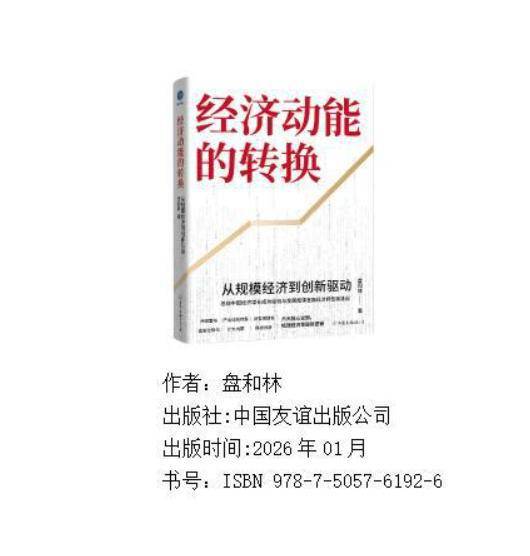
从7家平台被约谈看反内卷式竞争,知名经济学家盘和林新作谈反内卷的路径、措施与方向
Sou Hu Cai Jing· 2026-02-15 00:10
Core Viewpoint - The recent regulatory discussions with major platform companies like Alibaba, Douyin, Baidu, and Tencent aim to eliminate "involutionary" competition and establish clear guidelines for promotional activities, promoting healthy development in the platform economy [1] Group 1: Nature of Involution in Platform Economy - The essence of platform economy involution is the distortion of scale economy logic, where irrational competition arises when scale expansion exceeds reasonable boundaries, leading to unsustainable practices [2] - Current competition often involves a cycle of "burning money for subsidies" to capture market share, which deviates from economic principles and results in significant losses for platforms [2] Group 2: Regulatory Significance - The core significance of the regulatory discussions is to delineate legal and commercial boundaries for platform competition, aligning with the idea of shifting from low-quality price wars to high-quality innovation competition [3] - The discussions aim to enforce compliance with laws like the Anti-Unfair Competition Law and the Price Law, effectively curbing irrational pricing strategies and encouraging platforms to transition from scale-driven models to innovation-driven approaches [3] Group 3: Measures for Transition - Platforms need to establish self-regulatory price mechanisms to avoid false subsidies and low-price dumping, ensuring transparency in pricing and subsidy rules [5] - There should be a mandatory investment in technological innovation, with platforms allocating a certain percentage of revenue (e.g., over 10%) to core technology research and development [5] - A comprehensive service system should be developed to support small and medium-sized businesses, providing free digital tools and low-interest financing to reduce operational costs [6] Group 4: Shift in Competitive Dynamics - The competitive model should transition from price wars to innovation battles, focusing on technological advancements and service upgrades rather than merely competing on subsidy amounts [7] - The profitability logic must evolve from relying on traffic monetization to creating shared value across the supply chain, enhancing long-term collaboration with businesses [7] - Development orientation should shift from chaotic expansion to compliant sustainability, establishing long-term mechanisms for data security and consumer rights protection [8] Group 5: Broader Economic Implications - The process of addressing platform economy involution reflects China's broader economic transition from scale-driven growth to innovation-driven growth, which is crucial for overcoming growth bottlenecks [9] - To support this transition, measures such as improving intellectual property protection, establishing innovation evaluation systems, and optimizing regulatory approaches are essential [10]
短剧平台逐鹿春节档,春运“陪伴剧”《北往》成爆款
Xin Lang Cai Jing· 2026-02-15 00:01
Core Insights - The short drama market is experiencing significant growth during the Spring Festival, with platforms actively positioning themselves to capture traffic and enhance brand presence [1][3] - The success of the short drama "Northward" highlights the potential of this genre, achieving a heat value of 66.25 million within two days of release [3][12] - The competition among platforms has shifted from quantity to refined operations and strategic planning, indicating a maturation of the short drama sector [1][8] Industry Trends - The short drama sector has evolved over the years, with 2024 marking a pivotal year as several titles gained massive popularity, such as "I Am a Stepmother in the 80s," which saw daily recharge surpassing 20 million and views exceeding 1 billion [3][12] - By 2026, platforms have refined their strategies for the Spring Festival, with Red Fruit Short Dramas launching pre-heating campaigns and collaborating with top actors to drive engagement [3][8] - The market is witnessing a shift towards quality content, with productions like "Northward" and "New Heroes" breaking the stereotype of short dramas being formulaic [8][12] Audience Engagement - The short dramas cater to a wide audience during the Spring Festival, providing content that resonates with various demographics, from family-friendly comedies to romantic and suspenseful narratives [12] - The industry's evolution from 2024's breakout hits to 2025's operational strategies and 2026's focus on quality and diversity illustrates a clear developmental trajectory [12] - The success of short dramas during the festival period underscores the importance of authenticity and emotional connection in content creation, reflecting broader trends towards professionalism and diversity in the industry [12]

Better International ETF: iShares' IEFA vs. Schwab's SCHE
The Motley Fool· 2026-02-14 23:49
Core Insights - The Schwab Emerging Markets Equity ETF (SCHE) and iShares Core MSCI EAFE ETF (IEFA) provide low-cost international diversification but differ significantly in regional focus, sector weights, and recent performance [1][2] Cost & Size - Both SCHE and IEFA have an expense ratio of 0.07% - As of February 4, 2026, SCHE has a one-year return of 26.1% while IEFA has a return of 29.0% - SCHE offers a dividend yield of 2.8%, whereas IEFA provides a higher yield of 3.4% - SCHE has a beta of 0.87, indicating lower volatility compared to the S&P 500, while IEFA has a beta of 1.01 - Assets under management (AUM) for SCHE stand at $12.2 billion, significantly lower than IEFA's $173.4 billion [3][4] Performance & Risk Comparison - Over the past five years, SCHE experienced a maximum drawdown of -35.70%, compared to IEFA's -30.41% - An investment of $1,000 in SCHE would have grown to $1,027 over five years, while the same investment in IEFA would have grown to $1,338 [5] Portfolio Composition - IEFA includes over 2,500 developed-market stocks, with significant sector allocations in financial services (22%), industrials (20%), and healthcare (11%) - Major holdings in IEFA include ASML Holding, Roche Holding, and HSBC Holdings - SCHE focuses on emerging markets, with a notable emphasis on technology (23%) and financial services (23%), featuring top positions in Taiwan Semiconductor Manufacturing, Tencent Holdings Ltd., and Alibaba Group [6][7] Investor Implications - IEFA is suitable for investors seeking lower risk and volatility, given its focus on developed markets and larger number of holdings, which contributes to its lower five-year drawdown and higher dividend yield - SCHE appeals to aggressive investors looking for growth, particularly in technology stocks, but comes with higher volatility and political risks associated with emerging markets [9][10]