网易

Search documents
网易有道股价单日涨超10%,AI开源产品与财报支撑市场信心
Xin Lang Cai Jing· 2026-02-20 22:46
Core Viewpoint - NetEase Youdao (DAO.N) stock experienced a significant increase on February 20, 2026, primarily due to the launch of its desktop-level Agent "LobsterAI," which is seen as a key move in deepening the company's "AI-native" strategy and expanding its technological applications [1] Group 1: Stock Price Movement Reasons - On February 19, NetEase Youdao officially open-sourced its desktop-level Agent "LobsterAI," positioning it as a "24/7 all-scenario personal assistant Agent," which resonated with the recent global AI trends and boosted investor confidence in AI applications [1] Group 2: Sector Performance - On February 20, the Hong Kong AI sector saw a significant surge, with companies like Zhiyuan AI and MiniMax experiencing stock price increases of over 14%, and some individual stocks rising by as much as 37%. Although NetEase Youdao trades on the US stock market, its business is closely related to AI applications, benefiting from the positive sentiment in the sector [2] Group 3: Performance and Operating Conditions - The company released its 2025 financial report on February 11, 2026, showing its first annual operating cash net inflow of 55.2 million yuan. The fourth quarter net revenue grew by 16.8% year-on-year, marking six consecutive quarters of profitability. Online marketing service revenue increased by 28.5%, and AI subscription service annual sales approached 400 million yuan, providing fundamental support for the stock price [3] Group 4: Financial and Technical Aspects - On February 20, NetEase Youdao's stock trading volume reached 239,254 shares, significantly higher than previous periods. The closing price was $10.18, with a single-day increase of 10.17% and a volatility of 12.55%. The active trading volume indicates concentrated market attention in the short term, potentially accelerating price fluctuations [4]
中概股龙头指数收涨0.94% 网易有道涨近10%




Mei Ri Jing Ji Xin Wen· 2026-02-20 22:10
Group 1 - The leading index of Chinese concept stocks rose by 0.94% on February 21 [1] - Among the constituent stocks, NetEase Youdao increased by nearly 10%, Hilltop Metal Mining rose over 5%, and Tuya Smart gained more than 4% [1] - Other notable gainers included Daylight Technology and Zhiyun Group, both rising over 3% [1] Group 2 - Century Internet and Lufax both fell by over 4%, while AHG and NEGG dropped more than 3% [1] - Other decliners included Wenyan Zhixing and Bilibili, which both decreased by over 2% [1]
中国十大最具发展潜力城市
泽平宏观· 2026-02-20 16:05
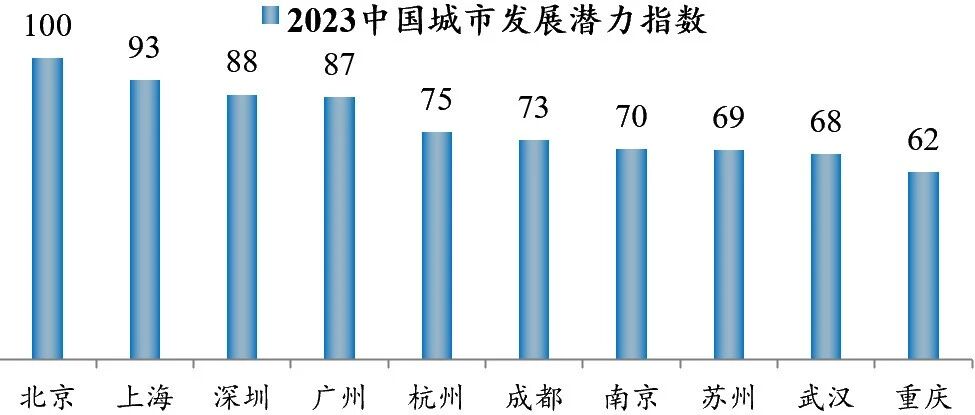
Core Viewpoint - The article discusses the competitive landscape of Chinese cities, highlighting the rapid urbanization and the emergence of new economic centers, while ranking the development potential of 337 cities in China, with Beijing, Shanghai, Shenzhen, and others leading the list [2]. Group 1: Beijing - Beijing is positioned as the political, cultural, international exchange, and technological innovation center of China, with a GDP exceeding 4.1 trillion yuan in 2022, making it the second-largest city after Shanghai [9][10]. - The service sector accounts for 84% of Beijing's economy, with finance, headquarters economy, and technological innovation as key pillars [10]. - Future plans include transforming Beijing into a world-class harmonious city while optimizing population distribution to enhance urban vitality [11][13]. Group 2: Shanghai - Shanghai has established itself as an international economic center, with a GDP of approximately 4.5 trillion yuan in 2022, and aims to rival New York in global economic influence [16][24]. - The city’s industrial structure is supported by the automotive, electronics, and financial sectors, with finance contributing 19.3% to the GDP [17][19]. - Shanghai plans to continue its open policies and develop into a globally competitive city, enhancing the Yangtze River Delta region [24]. Group 3: Shenzhen - Shenzhen's GDP surpassed 3.2 trillion yuan in 2022, marking it as the third-largest city in China, with a significant annual population increase of around 600,000 [25][26]. - The city is recognized as a leading innovation hub, with strategic emerging industries accounting for over 41% of its GDP [26]. - Future initiatives focus on enhancing collaboration within the Guangdong-Hong Kong-Macau Greater Bay Area to solidify its status as a global innovation city [29]. Group 4: Guangzhou - Guangzhou's GDP reached approximately 2.9 trillion yuan in 2022, ranking fifth nationally, with a strong manufacturing base in automotive and electronics [30][31]. - The city faces challenges in innovation capacity and financial sector development, with financial services contributing only 9.2% to the GDP [33]. - Future goals include enhancing its role as a national center city and participating in global economic cooperation [34]. Group 5: Hangzhou - Hangzhou's economy has shown robust growth, with a GDP of around 1.9 trillion yuan in 2022, driven by a vibrant private and digital economy [36][37]. - The city is recognized for its strong digital economy, with core digital industries contributing 27.1% to the GDP [37]. - Plans for the future include improving transportation infrastructure and fostering a more open and innovative business environment [41][42]. Group 6: Chengdu - Chengdu's GDP exceeded 2 trillion yuan in 2022, accounting for 36.7% of Sichuan province's economy, and it is recognized as a key economic hub in Western China [43][44]. - The electronics sector is a major contributor, with a significant portion of the industrial output [44]. - Future strategies involve enhancing its role as a national center city and collaborating with Chongqing to develop the Western economic highland [49]. Group 7: Nanjing - Nanjing's GDP approached 1.7 trillion yuan in 2022, with a per capita GDP of 179,000 yuan, ranking fifth among major cities [50][51]. - The city is focusing on developing its automotive, steel, electronics, and petrochemical industries while nurturing emerging sectors [51]. - Future aspirations include becoming an "innovation city" and enhancing its influence in the Yangtze River Delta region [54]. Group 8: Suzhou - Suzhou's GDP reached nearly 2.4 trillion yuan in 2022, making it the top city among prefecture-level cities in China [56]. - The city is recognized as a global industrial powerhouse, with significant contributions from electronics and manufacturing sectors [56]. - Future plans emphasize its role in the Yangtze River Delta urban cluster and advancing towards a high-tech manufacturing base [59].

港股马年开市:AI、机器人概念股,集体大涨
Sou Hu Cai Jing· 2026-02-20 13:36
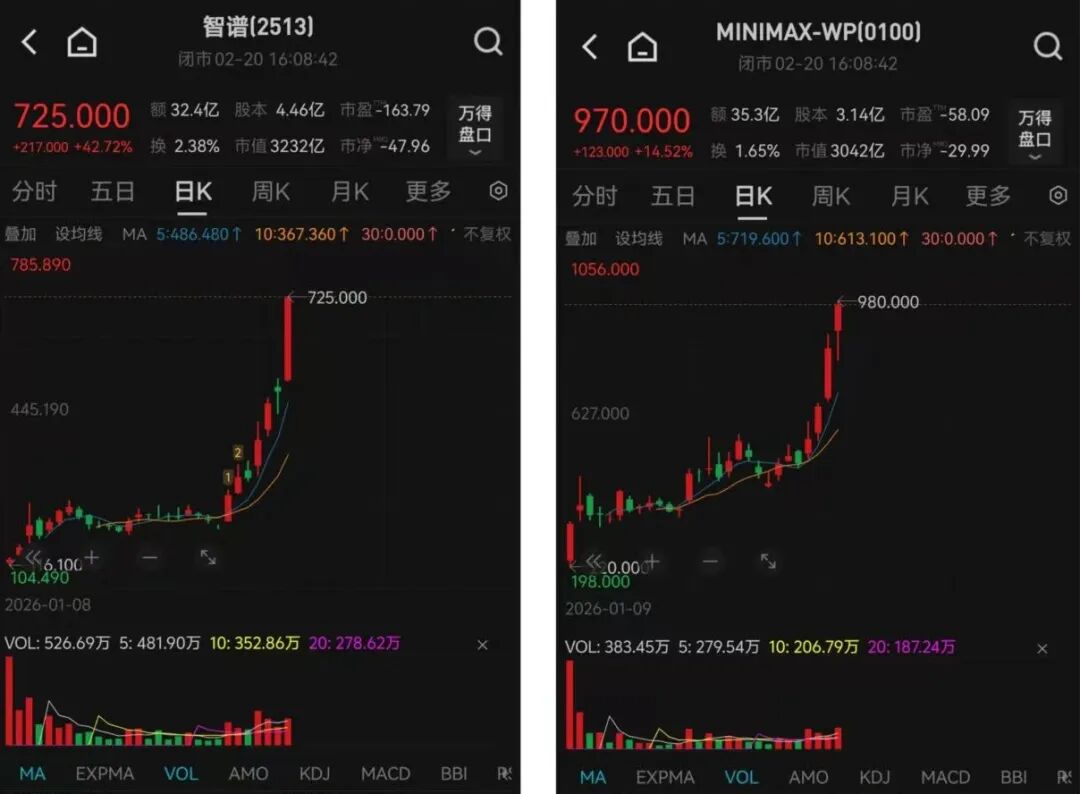
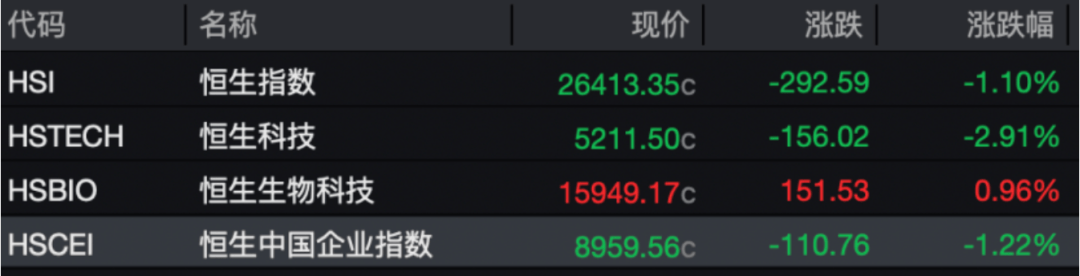
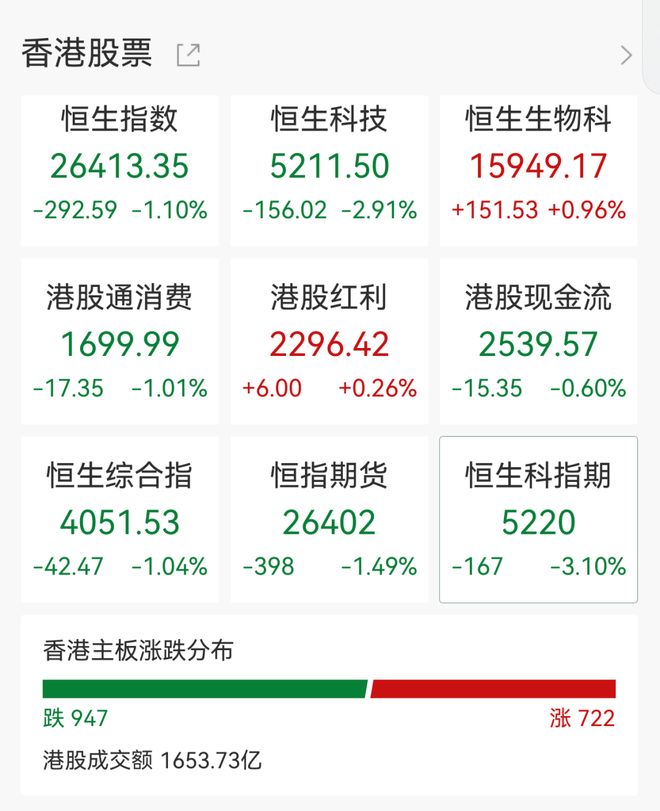
Core Viewpoint - The Hong Kong stock market experienced a decline on the first trading day of the Year of the Horse, with major indices falling, while domestic AI models and robotics stocks surged significantly [1][2]. Market Performance - As of February 20, the Hang Seng Index closed at 26,413.35 points, down 1.1%; the Hang Seng Tech Index closed at 5,211.5 points, down 2.91%; and the Hang Seng China Enterprises Index closed at 8,959.56 points, down 1.22% [2][3]. - The AI model sector saw strong performance, with Zhizhu and MiniMax both surpassing a market capitalization of 300 billion HKD. Zhizhu surged by 42.72% to 725 HKD per share, marking a cumulative increase of 206% in February [3][5]. Robotics Sector - The robotics sector also experienced a collective rise, with companies like Yujian up 21.4% to 48.44 HKD per share, and Suton Ju Chuang rising 9.24% to 37.58 HKD per share [5]. Oil Sector - Oil-related stocks also saw gains, with Yanchang Petroleum International up 3.75%, China Petroleum International up 3.70%, and CNOOC Services up 3.20% [6]. Sector Outlook - Huatai Securities suggests focusing on three key areas in the Hong Kong market: semiconductor hardware represented by storage, improving specialty consumption, and electrical equipment [6]. - Galaxy Securities recommends attention to precious metals and energy sectors due to geopolitical uncertainties, as well as the technology sector as a long-term investment focus, particularly in the context of accelerating AI applications [6].

冰火两重天!恒生科技指数大跌近3%,为何国产AI与机器人却逆势狂飙?
Sou Hu Cai Jing· 2026-02-20 13:14
Market Overview - The Hong Kong stock market experienced a significant divergence on the first trading day of the Lunar New Year, with the Hang Seng Index declining by 1.1% and the Hang Seng Tech Index dropping by 2.91%, reaching a new low of nearly 5200 points [1][3] - Internet technology stocks, once highly sought after, became the main contributors to the market decline, with notable drops including Baidu down over 6%, Bilibili down over 5%, Alibaba down nearly 5%, and Tencent down over 2% [3] AI and Robotics Sector - In stark contrast to the decline in internet giants, the domestic AI model sector saw a significant surge, particularly with the "domestic AI dual champions" Zhiyuan and MiniMax, with Zhiyuan's stock price soaring by 42.72% to 725 HKD per share, marking a cumulative increase of over 220% since February [3][5] - The recent launch of Zhiyuan's flagship model GLM-5, which boasts over a 20% performance improvement in programming development scenarios, has garnered strong market interest [5] - The robotics sector also experienced a notable rise, with leading collaborative robot company Yujian increasing by 21.40% and other companies like Sutonju and Ubtech showing impressive gains [7] Market Trends and Insights - The market is witnessing a shift in investment focus from internet platforms, which primarily relied on model innovation, to hard technology sectors driven by technological innovation [7][9] - Analysts from Dongwu Securities highlighted that advancements in core robotic capabilities have been crucial for the sector's recent popularity, with expectations for significant growth as major companies like Tesla and domestic leaders begin large-scale production [7] - According to招商证券, the AI application field is experiencing simultaneous deepening of technological breakthroughs and commercialization competition, supported by the national strategy for artificial intelligence, indicating promising upward potential despite slightly high valuations [9]
港股迎马年首个交易日,机器人板块逆势大涨
凤凰网财经· 2026-02-20 13:07
Core Viewpoint - The Hong Kong stock market experienced a collective decline on the first trading day of the Year of the Horse, with significant interest in robotics stocks following their appearance at the Spring Festival Gala, which led to a strong performance in this sector [1][5]. Market Performance - The Hang Seng Index fell by 0.6%, the Hang Seng Tech Index dropped by 2.28%, and the Hang Seng China Enterprises Index decreased by 0.59% [1]. - Major tech stocks faced pressure, with Baidu Group-SW down 5.67%, Kingdee International down 5.47%, Bilibili-W down 5.12%, and JD Health down 5.03%. Alibaba-W also saw a decline of 3.75% [3][1]. Sector Highlights - Robotics stocks surged, with notable gains including Yujian up over 19%, Suten up over 9%, and UBTECH and Sanhua Intelligent Control both up over 6% [5]. - The electric equipment sector also performed well, with China High-Speed Transmission up over 17%, Shanghai Electric up over 6%, and Harbin Electric up over 4% [7][9]. - The semiconductor sector saw fluctuations, with Lanke Technology rising nearly 2% before retreating, while Tensu Zhixin fell over 6% after reaching a historical high [9]. Investment Recommendations - Haitong Securities suggests focusing on three key areas for future investments: 1. Semiconductor hardware, particularly storage, which is expected to benefit from ongoing global demand [10]. 2. Specialty consumption sectors, such as dining and innovative pharmaceuticals, which are anticipated to see improved market conditions [10]. 3. The electric equipment sector, driven by the need for upgrades in power systems and the influx of passive funds following the inclusion of CATL in the Hang Seng Index [10].

两大交易所集中释放利好
2 1 Shi Ji Jing Ji Bao Dao· 2026-02-20 13:07
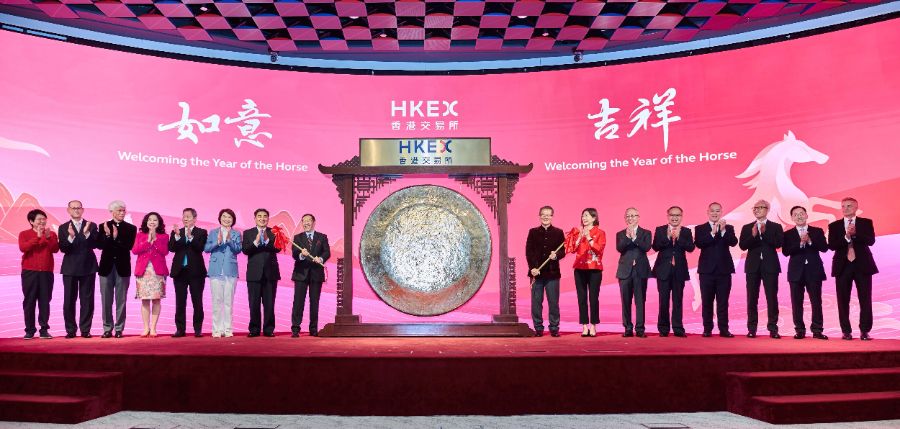
Market Overview - The Hong Kong stock market opened on February 20, 2023, with the Hang Seng Index closing down by 1.10% and the Hang Seng Tech Index down by 2.91% [1][8] - Despite the overall market decline, several robotics concept stocks rose significantly, indicating a "Spring Festival effect" [3][11] IPO and Market Activity - As of the new year, 24 new stocks have been listed on the Hong Kong Stock Exchange, raising over 87 billion HKD, with 488 companies currently waiting to go public [4][15] - The average daily trading volume in January exceeded 278 billion HKD, reflecting the effectiveness of liquidity enhancement measures [15] Sector Performance - The technology sector faced pressure, with major internet stocks like JD Health, Baidu, Alibaba, and Tencent experiencing declines ranging from 2.06% to 6.27% [9][10] - In contrast, the robotics sector saw notable gains, with stocks such as Yujian up by 21.4%, Sutech up by 9.24%, and Ubtech up by 4.71% [11][12] Gold Market - The Hong Kong gold market also performed well, with gold prices rising to 46,685 HKD per tael, an increase of over 200 HKD from the previous trading day [17][18] - The Hong Kong government aims to establish the city as an international gold trading center, targeting over 2,000 tons in gold storage within three years [16][17] Index Adjustments - The Hang Seng Index will increase its constituent stocks from 88 to 90, adding companies like CATL and Luoyang Molybdenum, effective March 9, 2023 [18][19] - The adjustments in the Hong Kong Stock Connect are expected to lead to significant trading activity, particularly for newly included stocks in the healthcare and technology sectors [19]



马年首个交易日,机器人概念股爆发,智谱暴涨43%,科网股大跌
Mei Ri Jing Ji Xin Wen· 2026-02-20 13:05
Market Overview - The Hong Kong stock market experienced a collective decline on the first trading day of the Lunar New Year, with the Hang Seng Index falling by 1.1% to close at 26,413.35 points, the Hang Seng Tech Index dropping by 2.91%, and the National Enterprises Index decreasing by 1.22% [1] Technology Sector - Most tech stocks saw declines, with Baidu Group down over 6%, Kingdee International and Bilibili down over 5%, Alibaba down 4.91%, NetEase down 4.27%, Xiaomi and SMIC down over 3%, Meituan down 1.58%, and Tencent Holdings down 2.06% [1] Robotics Sector - The robotics sector experienced a surge, driven by the Lunar New Year Spring Festival, with companies like Yujian rising over 21%, Shoucheng Holdings increasing nearly 12%, and Sutech Juchuang up over 9% [1] Oil Sector - Oil-related stocks saw gains, with China Merchants Energy rising by 6.34%, China Petroleum up by 3.7%, and CNOOC increasing by 2.23%. This uptick is attributed to rising international oil prices and concerns over escalating tensions between the U.S. and Iran, particularly in the Middle East oil-producing regions [1] Notable Stock Performance - Zhipu's stock price surged, closing with a gain of 42.72% at 725 HKD, bringing its total market capitalization to 323.2 billion HKD. The stock has seen a cumulative increase of 220.51% since February [1]
港股马年开市现结构性行情,两大交易所集中释放利好
2 1 Shi Ji Jing Ji Bao Dao· 2026-02-20 10:53
Market Overview - The Hong Kong stock market opened for trading on February 20, 2023, with the Hang Seng Index closing down 1.10% and the Hang Seng Tech Index down 2.91% [1][5] - Despite the overall market decline, several robotics concept stocks rose significantly, driven by the "Spring Festival Gala effect" [1][5] IPO Activity - As of the beginning of the year, 24 new stocks have been listed on the Hong Kong Stock Exchange, raising over 87 billion HKD, with 488 companies currently waiting to go public [1][12] - The average daily trading volume in January exceeded 278 billion HKD, indicating effective liquidity enhancement measures [12] Sector Performance - The technology sector faced pressure, with major internet stocks like Baidu, Alibaba, and Tencent experiencing declines of 6.25%, 4.91%, and 2.06% respectively [5] - In contrast, the robotics sector saw notable gains, with stocks such as Yujian rising by 21.4%, SUTENG by 9.24%, and UBTECH by 4.71% [6][8] Gold Market - The Hong Kong gold market also performed well, with gold prices opening at 46,518 HKD per two taels and closing at 46,685 HKD, marking an increase of over 200 HKD [13] - The Hong Kong government aims to establish the city as an international gold trading center, targeting over 2,000 tons in gold storage within three years [12][13] Index Adjustments - The Hang Seng Index will increase its constituent stocks from 88 to 90, adding companies like CATL and Luoyang Molybdenum, effective March 9, 2023 [16] - The adjustments are expected to influence trading strategies, particularly for stocks that will be included in the Stock Connect program [17]
涨超40%!AI“新秀”爆发
Zhong Guo Zheng Quan Bao· 2026-02-20 09:57
2月20日,港股在马年首个交易日走弱,三大指数集体收跌。 Wind数据显示,截至收盘,恒生指数跌1.1%,恒生科技指数跌2.91%,恒生中国企业指数跌1.22%。AI"新秀"表现亮眼,智谱大涨42.72%,MiniMax-WP 涨14.52%,资金从大型互联网科技权重股,流向AI"新秀"企业。 AI"新秀"获市场青睐 Wind数据显示,截至收盘,智谱大涨42.72%,MiniMax-WP涨14.52%,市值均突破3000亿港元。 1月8日和9日,智谱与MiniMax相继登陆港交所。Wind数据显示,上市以来,智谱股价累计涨超504%,MiniMax股价累计涨超312%。 机器人概念股活跃 从恒生综合行业指数来看,能源板块领涨,收涨1.62%;医疗保健、工业、电讯、金融及地产建筑板块涨幅居前。非必需性消费板块领跌,收跌3%;信息 科技、必需性消费及原材料等板块跌幅靠前。 恒生科技指数权重股普遍下跌。截至收盘,京东健康、百度集团-SW跌超6%,华虹半导体、金蝶国际、腾讯音乐-SW、哔哩哔哩-W等跌幅均超5%,阿里 巴巴-W跌近5%。 | < w | 恒生科技(HSTECH) 5211.50 -156.02 -2. ...