
赛诺菲

Search documents
Press Release: Sanofi’s venglustat met all primary endpoints in a phase 3 study of type 3 Gaucher disease
Globenewswire· 2026-02-02 06:00
Core Insights - Sanofi's investigational drug venglustat has shown positive results in a phase 3 study for type 3 Gaucher disease, meeting all primary endpoints and three out of four key secondary endpoints [1][4][8] Group 1: Study Results - The LEAP2MONO phase 3 study demonstrated that patients receiving venglustat had statistically significant improvements in neurological symptoms compared to those receiving enzyme replacement therapy (ERT), with a p-value of 0.007 [4][8] - Venglustat showed comparable efficacy to ERT in non-neurological outcomes, including changes in spleen volume, liver volume, and hemoglobin levels [4][8] - The study involved 43 patients aged 12 and older, randomized to receive either venglustat or ERT, with a focus on neurological assessments over 52 weeks [13] Group 2: Drug Mechanism and Background - Venglustat is a glucosylceramide synthase inhibitor designed to reduce the accumulation of harmful sugar-and-fat molecules in cells, specifically targeting neurological aspects of Gaucher disease that lack approved therapies [2][12] - Gaucher disease is a rare lysosomal storage disorder characterized by the accumulation of glycosphingolipids, leading to various systemic and neurological symptoms [10] Group 3: Future Plans and Regulatory Path - Sanofi plans to pursue global regulatory filings for venglustat in treating type 3 Gaucher disease [7][8] - The company has a long-standing commitment to rare disease research and has supported the Gaucher disease community for over 40 years [2][4] Group 4: Safety and Tolerability - Venglustat was well tolerated in the study, with no new safety signals reported compared to previous studies; common adverse events included headache, nausea, spleen enlargement, and diarrhea [6][8]


赛默飞世尔科技:4Q25 results: Capitalizing on the growing pharmaceutical demand-20260202
Zhao Yin Guo Ji· 2026-02-02 05:24
Investment Rating - The report maintains a BUY rating for Thermo Fisher with a new target price of US$670, up from the previous target price of US$654, indicating a potential upside of 15.8% from the current price of US$578.61 [2][8]. Core Insights - Thermo Fisher reported a strong performance in 4Q25, with revenue increasing by 7.2% year-over-year, marking the fastest quarterly growth in 2025. Adjusted EPS rose by 7.7%, surpassing Bloomberg consensus estimates by 2.2% and 1.9%, respectively [1][8]. - The company expects revenue growth of 3.9% to 5.9% and adjusted EPS growth of 5.9% to 8.4% for the full year 2026, reaffirming a long-term organic revenue growth target of 3%-6% [1][8]. Summary by Sections Financial Performance - For FY25, Thermo Fisher's revenue was US$44,556 million, with a year-over-year growth of 3.9%. The adjusted net profit was US$8,643 million, reflecting a growth of 3.1% [9][14]. - The company forecasts revenue of US$46,849 million for FY26, representing a growth of 5.1%, and adjusted net profit of US$9,130 million, which is a 5.6% increase [9][14]. Market Dynamics - The pharmaceutical and biotech sectors were the strongest client segments for Thermo Fisher in 2025, achieving mid-single-digit revenue growth for the year and high-single-digit growth in 4Q25. Management noted increased confidence among pharma companies in their relationships with governments [8]. - Biotech financing showed recovery in the second half of 2025, which is expected to drive revenue growth despite a typical lag of approximately six months between funding and R&D expenditure [8]. Strategic Acquisitions - In 2025, Thermo Fisher completed significant acquisitions, including Solventum's filtration and separation business for US$4.0 billion and Sanofi's sterile fill-finish facility for US$8.9 billion. These acquisitions are anticipated to enhance the company's global leadership in bioproduction and expand its capacity in the U.S. [8][9]. - Management expects adjusted EPS to grow by 7-9% in 2026 as a result of these strategic acquisitions [8]. Service Capabilities - Thermo Fisher's CDMO segment experienced strong growth in 2025, benefiting from limited sterile fill-finish capacity globally. The acquisition of Sanofi's facility is expected to secure growing orders for production in the U.S. [8]. - The integrated Accelerator business aims to improve project execution and reduce time-to-market for innovative drugs, thereby generating significant orders through differentiated service offerings [8].

英矽智能(03696):点评报告:与齐鲁制药达成合作,持续验证AI制药能力
Guohai Securities· 2026-02-02 02:42
2026 年 02 月 02 日 公司研究 评级:买入(首次覆盖) 研究所: 证券分析师: 曹泽运 S0350525110001 证券分析师: 万鹏辉 S0350524050003 caozy@ghzq.com.cn wanph@ghzq.com.cn [Table_Title] 与齐鲁制药达成合作,持续验证 AI 制药能力 ——英矽智能(03696)点评报告 最近一年走势 事件: 2026 年 1 月 27 日,英矽智能发布公告:公司与齐鲁制药签署战略合作 协议,双方将围绕心血管与代谢类疾病领域,利用英矽智能的 Pharma.AI 平台进行小分子抑制剂的研发。协议总金额超过 9.31 亿港元,包含开发 和销售里程碑付款,以及单位数的后续净销售额分成。 投资要点: | 相对恒生指数表现 | | 2026/01/30 | | | --- | --- | --- | --- | | 表现 | 1M | 3M 12M | | | 英矽智能 | 109.8% | - | - | | 恒生指数 | 5.9% | - | - | | 市场数据 | | 2026/01/30 | | | 当前价格(元) | | 62.90 ...
AI医疗:暴力破解创新药,人类突破长寿极限
泽平宏观· 2026-02-01 16:05
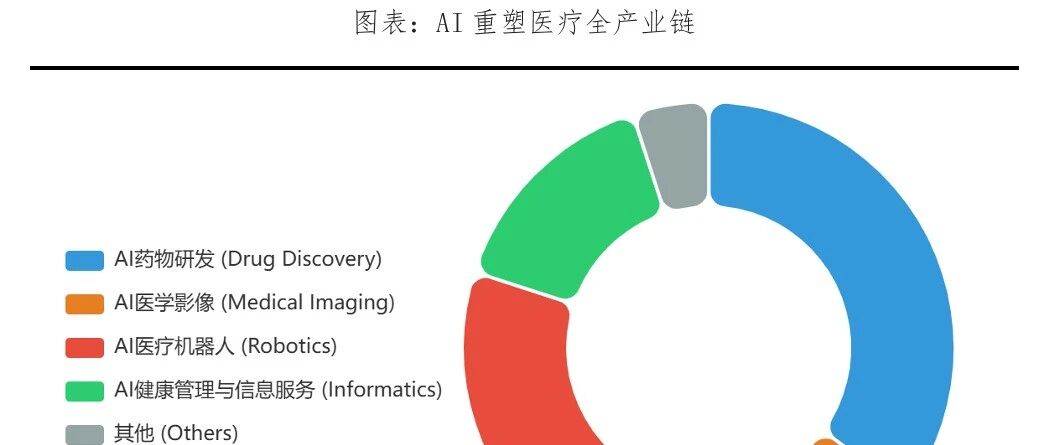
Core Viewpoint - AI is revolutionizing the life sciences and pharmaceutical research, significantly improving efficiency and reducing costs associated with drug development [3][4][7]. Group 1: Global AI Medical Market Expansion - The global AI medical market is rapidly expanding, characterized by the entry of major tech companies like NVIDIA, Google, and Microsoft, which are restructuring medical infrastructure [3][4]. - AI technology is deeply integrating with biotechnology, leading to unprecedented levels of financing and mergers in the AI medical sector, with projections indicating a record high in 2025 [4][5]. - Major pharmaceutical companies are investing billions in partnerships with AI startups, exemplified by Sanofi's $2.5 billion collaboration with Earendil and other significant deals with Atomwise and Dren Bio [5][6]. Group 2: AI Drug Development and Applications - AI is transforming drug development by addressing various diseases, including cancer, neurodegenerative diseases, metabolic disorders, autoimmune diseases, infectious diseases, and rare diseases, significantly lowering trial costs and improving success rates [7][8][9]. - The efficiency of AI in drug development is highlighted by its ability to reduce the traditional 10-year, $1 billion timeline with only a 10% success rate, enhancing the overall drug discovery process [8][9]. - AI's role in drug discovery is expanding from initial target identification to clinical trial design and patient recruitment, covering the entire industry spectrum [8][9]. Group 3: Policy Support for AI in Healthcare - National strategies are being implemented to support AI applications in healthcare, including the 2025 guidelines promoting AI in drug development to reduce costs and time [9][10]. - Local governments are providing financial incentives for AI drug development, with subsidies for computational costs and support for companies achieving regulatory approvals [11][12]. - Policies are encouraging the internationalization of innovative drugs, with significant support for local companies conducting global clinical trials [11][12]. Group 4: Future Opportunities in AI Healthcare - The first major opportunity lies in AI-assisted drug discovery, which is expected to have a trillion-dollar market potential, particularly in treating diseases like cancer and Alzheimer's [25][26]. - AI is set to enhance diagnostic accuracy in medical imaging, addressing resource distribution issues and integrating diagnostic capabilities into imaging devices [28][29]. - AI will drive advancements in clinical decision support and healthcare information systems, improving data utilization and patient care efficiency [30][31]. - AI-powered surgical robots are expected to redefine surgical precision and enable remote medical procedures, breaking geographical barriers in healthcare delivery [32][33].

REGN Q4 Earnings Beat Estimates, Sales Rise on Eylea HD Growth
ZACKS· 2026-01-30 16:25
Core Insights - Regeneron Pharmaceuticals reported Q4 2025 adjusted EPS of $11.44, exceeding the Zacks Consensus Estimate of $10.56, but down 5% from $12.07 in the previous year due to higher expenses [1][8] - Total revenues increased by 3% year over year to $3.9 billion, driven by higher sales of Eylea HD and increased profits from Dupixent, surpassing the Zacks Consensus Estimate of $3.8 billion [1][9] Financial Performance - Eylea sales in the U.S. fell 52% year over year to $577 million, primarily due to increased competition and market share loss, missing the Zacks Consensus Estimate of $592 million [5] - Eylea HD generated $506 million in the U.S., up 66% year over year, exceeding the Zacks Consensus Estimate of $477 million [9] - Total collaboration revenues reached $2 billion, a 22.6% increase from the previous year, beating the Zacks Consensus Estimate of $1.9 billion [9] - Sanofi's collaboration revenues rose 35% to $1.64 billion, driven by higher Dupixent sales, surpassing the Zacks Consensus Estimate of $1.6 billion [10] - Adjusted R&D expenses increased by 9% year over year to $1.3 billion, while adjusted SG&A expenses rose by 1% to $691 million [13] Product Developments - Eylea HD received FDA approval for additional indications, enhancing its market potential [7][17] - Dupixent was approved by the European Commission for chronic spontaneous urticaria, expanding its therapeutic applications [16] - Libtayo gained approval as an adjuvant treatment for cutaneous squamous cell carcinoma, broadening its market reach [19] Strategic Initiatives - Regeneron announced a new share repurchase program of up to $3 billion, with $1.5 billion remaining available as of December 31, 2025 [14] - The company is focusing on strengthening its oncology portfolio to diversify revenue streams, particularly following the label expansion of Libtayo [23] Market Position - Regeneron's shares have increased by 9.7% over the past year, compared to the industry's growth of 15.6% [2] - The company maintains a Zacks Rank 1 (Strong Buy), indicating strong market confidence [24]

Press Release: Sanofi’s Rezurock recommended for EU approval by the CHMP to treat chronic graft-vs-host disease
Globenewswire· 2026-01-30 12:00
Sanofi’s Rezurock recommended for EU approval by the CHMP to treat chronic graft-vs-host disease Recommendation supported by safety and efficacy results from several clinical studies and real-world evidenceIf approved, Rezurock would offer a new treatment option in the EU for adult patients and in children aged 12 years and older in late line chronic GVHD Paris, January 30, 2026. The European Medicines Agency’s Committee for Medicinal Products for Human Use (CHMP) has adopted a positive opinion recommending ...
从巨头布局到全场景渗透,AI+医药迈入竞争新阶段
2 1 Shi Ji Jing Ji Bao Dao· 2026-01-30 11:34
Group 1 - The global pharmaceutical industry is experiencing a surge in AI initiatives, with major companies like Eli Lilly and NVIDIA collaborating to establish an AI innovation lab, and AstraZeneca acquiring Modella AI to enhance its capabilities in biomedical AI [1][4] - AI's role in drug development is evolving from a supportive tool to a core innovation engine, as evidenced by its prominence at the 2026 JPM Healthcare Conference [1][4] - The AI wave is impacting not only drug development but also permeating various sectors within the healthcare industry, with hospitals and tech giants entering the AI healthcare space [1][2] Group 2 - Deloitte's report indicates that the innovation return on investment (IRR) for the top 20 global pharmaceutical companies is only 5.9%, with the average cost of drug development rising from $2.12 billion in 2023 to $2.229 billion in 2024 [4] - AstraZeneca's AI initiatives include the AIDA system aimed at reducing development time by 50%, while Eli Lilly and NVIDIA plan to invest $1 billion over five years in their AI lab [4][5] - Domestic AI pharmaceutical companies are also making strides, with companies like InSilico Medicine and CrystalClear Technology forming significant partnerships to enhance drug development using AI [5] Group 3 - The global AI healthcare market is projected to grow at a compound annual growth rate (CAGR) of 43% from 2024 to 2032, with generative AI in healthcare expected to grow at an even higher CAGR of 85% [6][7] - AI is anticipated to save the U.S. healthcare system approximately $150 billion annually by 2026, with long-term investment returns in AI healthcare reaching 10%-15% [7] - Companies are increasingly integrating AI across the entire pharmaceutical value chain, from drug discovery to marketing and patient services, enhancing operational efficiency [7][8] Group 4 - Innovative companies are focusing on specific scenarios to launch AI products, gaining attention from the capital market, with examples including Hangzhou Quanzhen Medical Technology and its AI application "Quanzhen Tong" [8][9] - Many domestic AI healthcare products are still in the data accumulation phase, with those that can effectively integrate into real medical processes and address industry pain points emerging as the future mainstream [9]

2026跨国药企大湾区行座谈会在广州举行
Nan Fang Ri Bao Wang Luo Ban· 2026-01-30 08:42
辉瑞制药高级副总裁钱云建议,广东可借助先发优势,率先建设"省级商保创新药结算平台",彻底告 别"先垫付、后理赔",同时统一标准以降低保险公司运营成本,形成"目录—支付—使用"的良性循环。 强生创新制药中国区总裁黄琛则建议出台具体激励措施,鼓励医疗机构加快落地商保,并加强国谈药落 地政策的培训宣传,让好政策真正穿透至医生层面。 1月28日,2026跨国药企大湾区行座谈会在广州举行。来自强生、辉瑞、阿斯利康、拜耳等15家跨国药 企的40余位中国区总裁及部门负责人,广东省有关单位和珠三角九市政府相关负责人和专家齐聚一堂, 一场汇聚全球医药产业顶尖智慧的对话在此展开。 各方围绕"国家医保谈判药物在大湾区落地""创新药商业健康保险进展""'港澳药械通'实施与优化"等话 题进行深入交流,展现大湾区吸引全球医药创新资源的决心,勾勒出构建开放共赢产业生态的路径。 政企共探医药高质量发展"湾区方案" 座谈会上,广东省相关部门负责人介绍,近两年来,广东密集出台了近20份相关政策文件,形成覆盖全 产业链的发展规划、针对优势领域的专项政策及布局未来产业的行动方案"组合拳",旨在为企业打造全 方位、可持续的优良发展环境。 与会跨国药企 ...
TEVA's Q4 Earnings Beat, Branded Drugs Drive Revenue Growth
ZACKS· 2026-01-29 17:26
Core Insights - Teva Pharmaceutical Industries (TEVA) reported fourth-quarter 2025 adjusted earnings of 96 cents per share, significantly surpassing the Zacks Consensus Estimate of 65 cents, with a year-over-year increase of 35.2% driven by higher gross profit and tax benefits [1][6] - Revenues for the fourth quarter reached $4.71 billion, exceeding the Zacks Consensus Estimate of $4.34 billion, marking an 11% increase from the previous year on a reported basis and a 9% increase on a constant currency basis [1][6] Revenue Drivers - The fourth-quarter top line was primarily boosted by a $500 million milestone payment from Sanofi related to the development of duvakitug, alongside strong sales from branded drugs such as Austedo, Ajovy, and Uzedy [2][6] - U.S. segment sales were $2.64 billion, up 34% year over year, driven by higher revenues from Austedo and the milestone payment from Sanofi, surpassing the Zacks Consensus Estimate of $2.14 billion [7] Product Performance - Austedo recorded U.S. sales of $725 million, a 40% year-over-year increase, driven by volume growth and the launch of Austedo XR, exceeding the Zacks Consensus Estimate of $585 million [8] - Ajovy sales reached $105 million, up 68% year over year, also surpassing the Zacks Consensus Estimate of $71 million [9] - Uzedy generated sales of $55 million in the fourth quarter, up 28% year over year, primarily due to volume growth [9] International Market Performance - The Europe segment reported revenues of $1.31 billion, down 3% year over year, with a 10% decline on a constant currency basis, slightly missing the Zacks Consensus Estimate of $1.32 billion [11] - The International Markets segment recorded revenues of $528 million, down 20% year over year, missing the Zacks Consensus Estimate of $625 million, primarily due to the divestment of Teva's business venture in Japan [12] Margin and Operating Income - Adjusted gross margin was 60.3%, up 550 basis points year over year, driven by the milestone from Sanofi and higher Austedo revenues [14] - Adjusted operating income rose 31% year over year to $1.53 billion, with an adjusted operating margin of 32.5%, an increase of 490 basis points [15] Full Year Results and Guidance - For the full year 2025, revenues were $17.3 billion, a 4% year-over-year increase, exceeding the guided range of $16.8-$17.0 billion [17] - Teva expects total revenues for 2026 to be in the range of $16.4-$16.8 billion, reflecting continued strong momentum in its innovative portfolio [18] - Projected sales for Austedo in 2026 are estimated to be between $2.40-$2.55 billion, with Ajovy sales expected at approximately $750-$790 million [19]

Sanofi Edges Higher As Immunology Powerhouse, Dupixent, Wallops Forecasts
Investors· 2026-01-29 17:08
Group 1 - Sanofi reported adjusted earnings of 91 cents per share on $13.5 billion in fourth-quarter sales, exceeding analysts' expectations of 84 cents per share and $13.57 billion in sales [1][1][1] - The company's earnings per share increased from 68 cents in the same period last year, while sales rose from $11.89 billion [1][1][1] Group 2 - Sanofi's stock experienced a slight increase following the earnings report, indicating a positive market reaction to the results [1][1][1]