AI+医药

Search documents
维亚生物20260317
2026-03-18 02:31
Summary of the Conference Call for VyaBio Company Overview - VyaBio has become the exclusive CRO partner of NVIDIA in the AI + pharmaceutical sector, leveraging the Complexa model to complete the design of minibinders and validate the effectiveness of its "Lab in the Loop" integrated system [2][3][4]. Core Insights and Arguments - **AIDD Platform Maturity**: The AIDD (AI-Driven Drug Discovery) platform has reached a mature commercialization stage, featuring an in-house algorithm team and a leading position in SBDD (Structure-Based Drug Design), with delivery speed significantly surpassing other partners. Results will be showcased at the 2026 GTC conference [2][3]. - **Positive Business Trends**: The company expects its 2025 performance to meet guidance, with strong growth in China and a recent uptick in overseas inquiries. CDMO (Contract Development and Manufacturing Organization) capacity is nearly saturated, prompting the construction and renovation of three facilities to meet unexpected new orders [2][13][14]. - **Business Model Upgrade**: AI empowerment is driving growth in wet lab services, with exploration into transitioning from traditional CRO service fees to higher-level models like Research Collaboration, utilizing returned funds for AI-driven investment incubation [2][11][15]. - **Cost Advantages**: The existing mature wet lab platform allows AI research without incurring high experimental costs, maintaining industry leadership while planning to increase AI investments [2][16]. Additional Important Content - **Collaboration Background with NVIDIA**: The partnership was disclosed during a presentation at NVIDIA's GTC conference, focusing on using molecular generation models within a "Lab in the Loop" framework to design minibinders. This collaboration has validated both NVIDIA's Complexa model and VyaBio's AIDD capabilities [3][4]. - **Strategic Positioning**: VyaBio is uniquely positioned as the only CRO among NVIDIA's AI + pharmaceutical partners, with a strong internal algorithm team and a systematic approach to integrating AI with wet lab processes, enhancing efficiency and success rates in drug design [6][11]. - **Future Plans and Developments**: The collaboration with NVIDIA is expected to yield more projects, including support for VyaBio's proprietary models in computational acceleration. The "Lab in the Loop" system is crucial for rapid prototyping and validation of drug candidates [4][7][11]. - **Investment Incubation**: The company is actively integrating AI with investment incubation, selectively pursuing projects that leverage AI to enhance efficiency and operational cycles, while maintaining a conservative investment strategy [15][16]. Industry Trends - **CRO and CDMO Business Outlook**: The overall industry trend indicates a strong growth trajectory, particularly in the Chinese market, with a recent increase in overseas inquiries. The company is optimistic about its 2026 business development [12][13]. This summary encapsulates the key points from the conference call, highlighting VyaBio's strategic initiatives, collaborations, and industry positioning.

华兰股份狂奔“AI+医药”赛道
Bei Jing Shang Bao· 2026-02-10 16:54
Core Viewpoint - Hualan Co., Ltd. is expanding its presence in the "AI + Medicine" sector through the establishment of a joint venture focused on drug repurposing and pharmacovigilance services, leveraging knowledge graphs and advanced technology partnerships [1][3][4] Group 1: Company Developments - Hualan Co., Ltd. has established a subsidiary, Hainan Lingqing Intelligent Pharmaceutical Technology Co., Ltd. (Lingqing Intelligent), to explore AI applications in the pharmaceutical industry [1][6] - The company plans to collaborate with a technical team led by former CTO of Insilico LLC, Yu Kaixian, and Academician Liu Jun to set up a joint venture that will focus on intelligent solutions for drug development and safety management [3][4] - The joint venture will be controlled by Lingqing Intelligent and aims to integrate heterogeneous data sources to enhance drug research and safety management [3][5] Group 2: Investment Strategy - Hualan Co., Ltd. has made significant investments in AI pharmaceutical companies, including a recent capital increase of 450 million yuan to Lingqing Intelligent, raising its registered capital to 500 million yuan [6][7] - The company is also establishing an AI Pharmaceutical Expert Committee to provide strategic planning and technical guidance for its AI-related business [7] Group 3: Market Context and Challenges - The AI pharmaceutical sector is characterized by high technical barriers and requires substantial investment in computing power, funding, and talent, which may pose operational pressures for companies with insufficient technical accumulation [5][9] - Despite the potential for efficiency gains in drug repurposing and pharmacovigilance, the competitive landscape is challenging, with established players having a head start [5][10] Group 4: Board Concerns - Two board members, Cui Ke and Yao Mingfang, opposed the establishment of the joint venture, citing the need for thorough feasibility assessments and governance structures to ensure efficient use of funds and sustainable development [9][10] - Their concerns reflect a cautious approach to the company's foray into the AI pharmaceutical field, emphasizing the importance of evaluating key factors such as data sources and commercialization pathways [10]

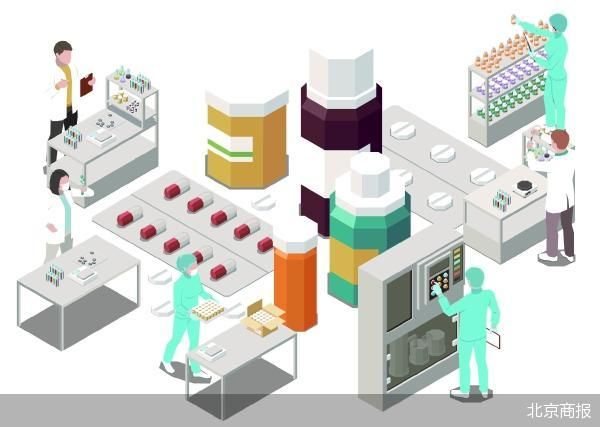
在“AI+医药”赛道狂奔的华兰股份
Bei Jing Shang Bao· 2026-02-10 12:31
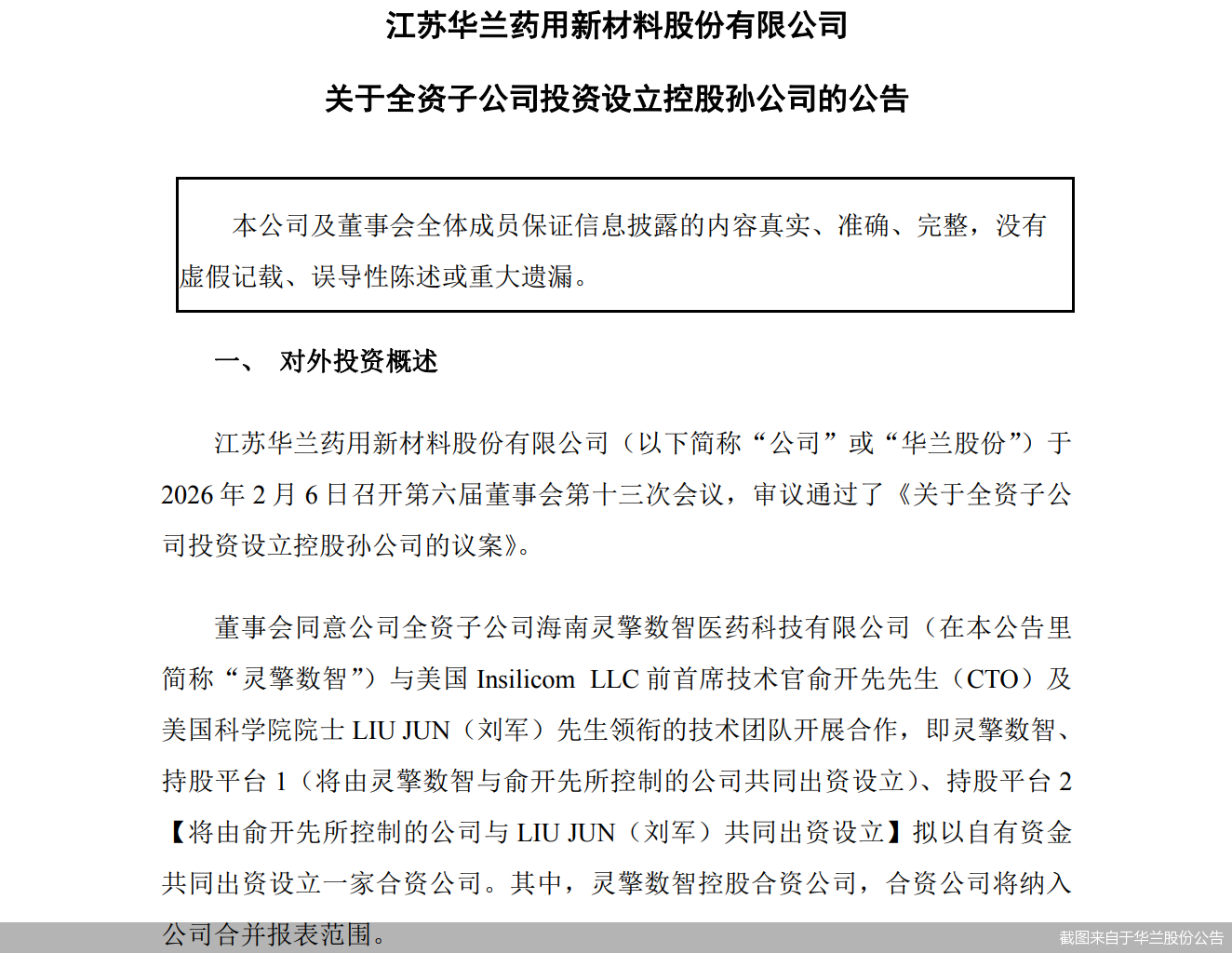
Core Viewpoint - Hualan Co., Ltd. is expanding its presence in the "AI + Medicine" sector through the establishment of a joint venture focused on drug repurposing and pharmacovigilance services, despite facing internal dissent from two board members regarding the feasibility of this strategic move [1][4][11]. Group 1: Company Initiatives - Hualan Co., Ltd. has established a subsidiary, Hainan Lingqing Smart Pharmaceutical Technology Co., Ltd., to explore AI applications in the pharmaceutical industry [1][5]. - The company plans to collaborate with a technical team led by former CTO of Insilico LLC, Yu Kaixian, and Academician Liu Jun to set up a joint venture that will leverage knowledge graphs for drug-related services [1][4]. - The joint venture aims to provide intelligent solutions for drug development and safety management by integrating heterogeneous data sources [4][6]. Group 2: Investment and Financial Moves - Hualan Co., Ltd. has made significant investments in AI pharmaceutical companies, including a recent capital increase of 45 million yuan to Hainan Lingqing Smart, raising its registered capital to 500 million yuan [8][9]. - The company has also invested 20 million yuan in Kema Biotechnology to acquire a 9.53% stake, which includes a board seat and priority acquisition rights [7]. Group 3: Board Concerns - Two board members, Cui Ke and Yao Mingfang, have expressed concerns about the feasibility of the AI pharmaceutical initiatives, suggesting that the company should conduct thorough evaluations before proceeding [11][12]. - The board members have highlighted the high technical barriers and the need for stable resources and talent in AI pharmaceutical research, indicating potential operational pressures [6][12]. Group 4: Market Performance - Hualan Co., Ltd. has seen a significant increase in its stock price, with a cumulative rise of 68.9% from January 5 to February 10, outperforming the broader market [13]. - The company’s stock reached a historical high on February 9, signaling strong market expectations for its future performance [13][14].
从巨头布局到全场景渗透,AI+医药迈入竞争新阶段
2 1 Shi Ji Jing Ji Bao Dao· 2026-01-30 11:34
Group 1 - The global pharmaceutical industry is experiencing a surge in AI initiatives, with major companies like Eli Lilly and NVIDIA collaborating to establish an AI innovation lab, and AstraZeneca acquiring Modella AI to enhance its capabilities in biomedical AI [1][4] - AI's role in drug development is evolving from a supportive tool to a core innovation engine, as evidenced by its prominence at the 2026 JPM Healthcare Conference [1][4] - The AI wave is impacting not only drug development but also permeating various sectors within the healthcare industry, with hospitals and tech giants entering the AI healthcare space [1][2] Group 2 - Deloitte's report indicates that the innovation return on investment (IRR) for the top 20 global pharmaceutical companies is only 5.9%, with the average cost of drug development rising from $2.12 billion in 2023 to $2.229 billion in 2024 [4] - AstraZeneca's AI initiatives include the AIDA system aimed at reducing development time by 50%, while Eli Lilly and NVIDIA plan to invest $1 billion over five years in their AI lab [4][5] - Domestic AI pharmaceutical companies are also making strides, with companies like InSilico Medicine and CrystalClear Technology forming significant partnerships to enhance drug development using AI [5] Group 3 - The global AI healthcare market is projected to grow at a compound annual growth rate (CAGR) of 43% from 2024 to 2032, with generative AI in healthcare expected to grow at an even higher CAGR of 85% [6][7] - AI is anticipated to save the U.S. healthcare system approximately $150 billion annually by 2026, with long-term investment returns in AI healthcare reaching 10%-15% [7] - Companies are increasingly integrating AI across the entire pharmaceutical value chain, from drug discovery to marketing and patient services, enhancing operational efficiency [7][8] Group 4 - Innovative companies are focusing on specific scenarios to launch AI products, gaining attention from the capital market, with examples including Hangzhou Quanzhen Medical Technology and its AI application "Quanzhen Tong" [8][9] - Many domestic AI healthcare products are still in the data accumulation phase, with those that can effectively integrate into real medical processes and address industry pain points emerging as the future mainstream [9]

20cm速递|科创创新药ETF国泰(589720)连续5日资金净流入超1.3亿元,医药行业迎来多项利好
Mei Ri Jing Ji Xin Wen· 2026-01-20 06:51
Group 1 - The core viewpoint of the article highlights the positive developments in the pharmaceutical industry, particularly in the innovative drug sector, driven by multiple favorable factors such as increased funding, industry conferences, and performance forecasts [1] - The Cathay Innovation Drug ETF (589720) has seen a net inflow of over 130 million yuan for five consecutive days, indicating strong investor interest in the sector [1] - The industry is benefiting from positive clinical data for small nucleic acid drugs and increased collaborations, which are expected to enhance the outlook for innovative drugs [1] Group 2 - Neuralink plans to start mass production in 2026, aiming for safer surgical operations in the brain-computer interface technology sector [1] - The AI and pharmaceutical fields are evolving, with OpenAI launching ChatGPTHealth and several domestic AI drug companies exploring new business models [1] - The domestic CRO (Contract Research Organization) sector is experiencing a significant increase in demand, with new orders accelerating on a month-over-month basis [1] Group 3 - The Cathay Innovation Drug ETF focuses on innovative drug companies listed on the Sci-Tech Innovation Board, tracking a representative index of 30 high-quality companies [1] - During the market rebound period from September 24, 2024, to October 31, 2025, the Sci-Tech Innovation Drug Index and the Hang Seng Hong Kong Stock Connect Innovation Drug Index are expected to rise by 143.70% and 135.34%, respectively [1] - The Sci-Tech Innovation Drug Index may provide better exposure to the resilience of the Sci-Tech Innovation Board when market risk appetite increases [1]
JPM亮点归纳,年报预告陆续披露,积极把握超预期机会
ZHONGTAI SECURITIES· 2026-01-19 04:40
Investment Rating - The report maintains an "Overweight" rating for the pharmaceutical and biotechnology industry [2]. Core Insights - The report highlights the ongoing performance of the pharmaceutical sector, with a focus on the upcoming annual earnings forecasts and the potential for exceeding expectations. The sector has shown a return of 7.08% since the beginning of 2026, outperforming the CSI 300 index by 4.88% [8][12]. - Key catalysts in the industry include significant partnerships and acquisitions, such as AbbVie’s $6.5 billion upfront payment for RC148 and a $1 billion collaboration between Eli Lilly and NVIDIA to accelerate AI drug development [4][10]. - The report emphasizes the importance of innovative drug chains and the AI+ theme, suggesting that these areas will continue to attract investment and yield positive results [4][5]. Summary by Sections Industry Overview - The pharmaceutical sector's total market capitalization is approximately 74,744.70 billion yuan, with a circulating market value of 68,522.64 billion yuan [2]. - The report notes that the pharmaceutical sector is currently valued at 23.4 times PE based on 2026 earnings forecasts, which is a premium of 13.7% compared to the overall A-share market [15]. Market Dynamics - The report indicates that the pharmaceutical sector has experienced a mixed performance, with medical services up by 3.29% while other segments like medical devices and traditional Chinese medicine have seen declines [8][12]. - The report also mentions that the market is transitioning to a more rational and steady growth phase, moving away from the initial volatility seen at the start of the year [4]. Key Company Performances - Notable companies such as WuXi Biologics, Sangamo Therapeutics, and Tigermed have been highlighted for their strong performance, with WuXi Biologics showing a significant increase of 26.53% in January [24]. - The report suggests continued monitoring of companies involved in AI and small nucleic acid technologies, as they are expected to lead future growth in the sector [5][9]. Investment Recommendations - The report recommends focusing on companies that are well-positioned within the innovative drug chain and AI+ sectors, as these are anticipated to provide substantial returns [4][5]. - Specific stocks recommended include WuXi Biologics, Sangamo Therapeutics, and Tigermed, which have shown promising growth trajectories [24].



疫苗ETF(159643)盘中涨超2%,医药科技属性强化或成行业新动能
Mei Ri Jing Ji Xin Wen· 2026-01-14 06:35
Group 1 - The pharmaceutical and biotechnology industry is experiencing a sustained improvement in prosperity, with innovative drugs entering the 3.0 era, showcasing a leading trend in new targets, technologies, and disease areas in China [1] - Recent positive clinical data for small nucleic acid drugs and the emergence of targeted delivery technologies indicate significant potential in chronic disease areas such as cardiovascular and metabolic diseases [1] - The domestic CRO (Contract Research Organization) orders are showing a trend of increasing volume and price, benefiting from the overseas business development of innovative drugs and a stabilization in financing, with performance expected to improve by 2026 [1] Group 2 - The medical device industry continues to have demand-side potential, with supply-side structural upgrades and accelerated innovation and internationalization, expected to maintain steady growth through 2026 [1] - The exploration of AI in medicine is ongoing, with potential effective business models emerging in areas such as assisted diagnosis and health management [1] - Brain-computer interface technology is undergoing rapid iteration and upgrades, with significant clinical and commercialization advancements anticipated by 2026, marking a new development phase for the industry [1] Group 3 - The vaccine ETF (159643) tracks the vaccine biotechnology index (980015), which selects listed companies involved in vaccine research, production, and related biotechnology businesses to reflect the overall performance of the biopharmaceutical and research service sectors [1] - This index is characterized by high growth and innovation, focusing on the bioproducts and research service fields [1]
生物医药ETF(512290)涨超1%,结构性机会与估值修复受关注
Mei Ri Jing Ji Xin Wen· 2026-01-14 03:54
Group 1 - The pharmaceutical and biotechnology industry is entering an Innovation 3.0 era, with China leading in innovative drug development across new targets, technologies, and diseases, particularly in ADC, bispecific antibodies, and small nucleic acids [1] - Recent positive clinical data for small nucleic acid drugs, including Arrowhead's ARO-INHBE and ARO-ALK7 early PoC data, has boosted market confidence in their use for weight maintenance, while Reborna's core pipeline FXI siRNA shows promising prospects for thrombotic diseases [1] - The domestic CRO sector is experiencing a clear turning point in demand, with orders increasing in both volume and price since 2025, benefiting from the overseas expansion of innovative drugs and a stabilization in financing, leading to accelerated new orders for multiple CROs [1] Group 2 - The AI+pharmaceutical sector is exploring new business models, with OpenAI launching the ChatGPT Health module, and domestic AI drug companies forming strategic partnerships with global pharmaceutical firms [1] - Significant advancements in brain-computer interface technology have been announced, with Neuralink set to begin mass production in 2026, supported by domestic policies that promote brain-computer interfaces as a new economic growth point [1] - The innovative drug industry chain continues to show upward momentum, with a focus on high-growth CDMO and recovering domestic CROs within the CXO sector [1] Group 3 - The medical device industry still holds potential on the demand side, with supply-side upgrades occurring, and under normalized centralized procurement, domestic manufacturers have room to exchange price for volume [1]
对话基金经理毛丁丁:A股创新药的投资逻辑是什么?今年医药板块还会继续涨吗?
Sou Hu Cai Jing· 2026-01-08 12:45
Core Viewpoint - The A-share market is expected to continue its recovery in 2026, particularly in the pharmaceutical sector, driven by three main factors: the ongoing trend of international expansion, stabilization of domestic demand alongside macroeconomic recovery, and overall valuations remaining below historical averages [2][3]. Group 1: Pharmaceutical Sector Performance - In 2025, the pharmaceutical sector showed a structural recovery, with the innovation drug segment being the standout performer, while other areas like medical devices and services lagged [1][3]. - The innovation drug sector experienced significant growth primarily from March to July 2025, followed by a correction starting in September due to rapid price increases and overvaluation [1][3]. - The overall performance of the pharmaceutical sector in 2025 was characterized by a 10% increase in the Shenwan Biopharmaceutical Index, which underperformed compared to the CSI 300 [1]. Group 2: Investment Logic and Trends - The investment logic for innovative drugs in A-shares, H-shares, and U.S. stocks is fundamentally similar, focusing on drug technology characteristics, global competition, and valuation factors influenced by policies and interest rates [2][8]. - The Chinese innovative drug industry is still in its early stages, with significant growth potential, and the investment focus in A-shares and H-shares is more on policy, capital market cycles, and industry mapping [2][8]. - The trend of "going global" for innovative drugs and medical devices is accelerating, which is expected to enhance the competitive edge of Chinese companies in various disease areas, especially oncology [3][4]. Group 3: Future Outlook and Risks - The pharmaceutical sector is anticipated to maintain its upward trend in 2026, supported by the deepening internationalization of the industry and improved domestic demand due to economic recovery [2][3]. - Key risks to monitor include potential unexpected tightening of medical insurance cost controls, U.S. healthcare reforms, and the pace of interest rate changes by the Federal Reserve [3][9]. - The valuation of the pharmaceutical sector remains below the historical average of the past 15 years, indicating a relative advantage for investors [3].
对话基金经理毛丁丁:A股创新药的投资逻辑是什么?今年医药板块还会继续涨吗?|基遇2026
Sou Hu Cai Jing· 2026-01-08 09:43
Core Viewpoint - The A-share market is expected to continue its recovery in 2026, particularly in the pharmaceutical sector, driven by three main factors: the ongoing trend of international expansion, stabilization of domestic demand alongside macroeconomic recovery, and the overall valuation of the sector remaining below historical averages [5][6]. Group 1: Pharmaceutical Sector Performance - In 2025, the pharmaceutical sector showed an overall recovery, but with significant structural differences, as the Shenwan Biopharmaceutical Index rose by approximately 10%, underperforming the CSI 300 [4]. - The innovative drug sector was the standout performer, although its strong performance was not consistent throughout the year, experiencing a notable correction from September onwards due to rapid price increases earlier in the year [4][7]. - The valuation of representative indices like the Hang Seng Healthcare and Shenwan Chemical Pharmaceutical exceeded historical averages, necessitating a period of adjustment [4][7]. Group 2: Investment Logic and Trends - The investment logic for innovative drugs in A-shares and Hong Kong shares focuses on policy, capital market cycles, and industry and technology mapping, reflecting the relatively early stage of China's innovative drug industry [5][11]. - The global trend of Chinese innovative drugs is just beginning, with significant competitive advantages in areas like molecular screening and clinical trials, particularly in oncology [8][11]. - The normalization of medical insurance negotiations and the trend of "going global" are identified as two key pricing logic factors for new drugs [9]. Group 3: Future Outlook and Considerations - The pharmaceutical sector is expected to maintain its upward trend in 2026, supported by the deepening trend of internationalization, improved domestic demand, and favorable valuations [6][8]. - Key considerations for evaluating new drugs include their efficacy compared to existing therapies and the competitive landscape, which significantly impacts their commercial viability [9]. - AI's potential impact on the pharmaceutical industry is recognized, particularly in drug discovery and clinical trials, with a focus on tangible outcomes rather than speculative hype [10].