BioNTech SE

Search documents
Moderna Vs BioNTech: Who's Winning The Post-COVID Race
Seeking Alpha· 2025-10-18 13:30
Core Insights - Allka Research has over two decades of experience in investment, focusing on uncovering undervalued assets in ETFs, commodities, technology, and pharmaceutical sectors [1] - The company adopts a conservative investment approach, aiming to deliver substantial returns and strategic insights to clients [1] - Allka Research is committed to simplifying investment strategies, making them accessible to both seasoned and novice investors [1] Company Mission - The mission of Allka Research is to empower individuals financially by sharing knowledge and insights through the Seeking Alpha platform [1] - The company aims to provide thought-provoking analyses and informed perspectives to foster a community of informed investors [1] - Allka Research seeks to demystify investing, inspiring confidence in readers to navigate the financial markets intelligently [1]



“我们需要欧洲证交所,这样公司就不必赴美上市了”
Guan Cha Zhe Wang· 2025-10-17 08:03
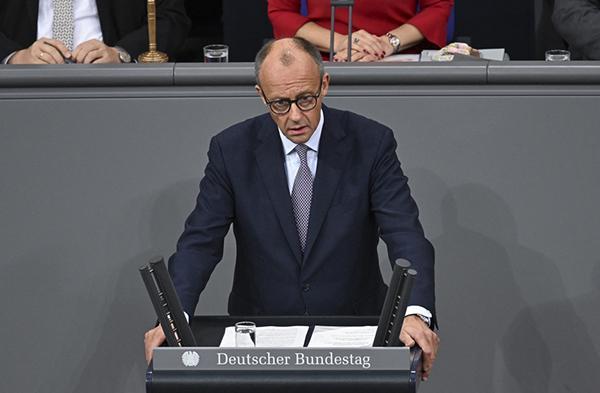
Core Viewpoint - German Chancellor Merz calls for the establishment of a unified European stock exchange to help European companies secure financing locally and avoid being forced to list in New York, thereby preventing Europe from becoming a subordinate to the major economic centers of the US and Asia [1][3]. Group 1: European Capital Market Integration - Merz's statement is seen as a signal of Germany's support for the integration of EU capital markets, which has been hindered by Germany's previous opposition [1][3]. - Germany and France have reached a consensus to accelerate the EU Capital Markets Union (CMU), including transferring some regulatory powers to a unified European regulatory body [3]. - The EU's capital market integration plan has faced delays due to opposition from Germany, Luxembourg, and Cyprus regarding the concentration of regulatory power in the European Securities and Markets Authority (ESMA) [3]. Group 2: Market Response - Major European exchange operators have responded positively to Merz's call, with Euronext's CEO emphasizing the need for unified regulation to address discrepancies in regulatory and supervisory standards [4]. - Deutsche Börse supports Merz's proposal, highlighting that the EU has over 500 trading platforms, resulting in a fragmented and opaque market, with only about 30% of stock trading occurring in transparent public markets [4]. Group 3: Broader European Reforms - Ahead of the upcoming EU summit, Merz proposed a broader reform agenda aimed at deeper integration, reducing excessive regulation, and implementing recommendations from Draghi and former Italian Prime Minister Letta to eliminate barriers to the flow of goods, capital, labor, and services within the EU [5]. - Merz pointed out that the growth gap between the EU and the US is largely due to weak productivity growth in Europe, emphasizing that profound changes are necessary for Europe to regain growth momentum [5].
US banks slump on fears of hidden credit crisis
Yahoo Finance· 2025-10-16 18:36
Group 1: Private Credit Market Concerns - The head of the IMF, Kristalina Georgieva, expressed concern over the growth of private credit lenders, which now account for more than half of financing [1][48] - Recent collapses of heavily indebted firms, such as subprime auto lender Tricolor and auto parts maker First Brands, have raised alarms about lending standards in the $3 trillion private credit sector [2][3] - Jamie Dimon, CEO of JP Morgan, highlighted the presence of "cockroaches" in the debt markets, indicating underlying issues within the private credit industry [5][49] Group 2: Economic Indicators and Banking Sector Performance - Zions Bancorporation announced a write-off of $50 million on two loans, while Western Alliance is pursuing legal action over a $100 million bad loan, contributing to fears of hidden credit stress [4] - US banking stocks have seen significant declines, with Zions shares falling over 10% and Western Alliance dropping more than 9% [3] - The SPDR S&P Regional Banking ETF, which tracks regional banking shares, decreased by more than 4% amid these concerns [3] Group 3: Broader Economic Context - The UK's GDP grew by only 0.1% in August, indicating a mild recovery from a previous contraction, but overall growth remains sluggish [7][18] - The US budget deficit narrowed slightly to $1.8 trillion, despite increased spending on health and public debt interest [8][9] - Wall Street's main indexes experienced declines, particularly in financial stocks, as concerns over the banking sector weighed on investor sentiment [10][11]
BMY Slips Below 50-Day SMA: Buy, Sell or Hold the Stock?
ZACKS· 2025-10-14 15:06
Core Insights - Bristol Myers (BMY) shares have been losing momentum in 2025, with a 4.7% decline in a month compared to a 4.8% gain in the industry, closing at $45.11 on October 2, 2025, below the 50-day simple moving average (SMA) of $45.84 [1][2][7] Stock Performance - The stock reached a 52-week high of $63.33 on March 11 but has since been on a downward trend, hitting a 52-week low of $42.96 on July 31, 2025 [2] - Over the past six months, BMY shares have decreased by 10.5%, while the industry has gained 17% [3] Financial Outlook - The outlook for 2025 has disappointed investors, with a cut in EPS guidance to $6.35-$6.65 from a previous $6.70-$7 due to unfavorable impacts from the BNTX deal [4][16] - Revenues from BMY's legacy portfolio fell by 17% in the first half of 2025, with expectations of a decline of approximately 15% to 17% for the full year [8][9] Drug Portfolio Performance - BMY's growth portfolio includes drugs like Opdivo and Reblozyl, which have shown strong performance, with Opdivo sales expected to grow in the mid to high-single-digit range [10][11] - Reblozyl has generated over $1 billion in global sales year-to-date, while Breyanzi sales increased by 134% to $607 million in the first half [12] Debt and Valuation - As of June 30, 2025, BMY had cash and equivalents of $12.6 billion and long-term debt of $44.5 billion, raising concerns about its high debt ratio [14] - BMY is trading at a price/earnings ratio of 7.12X forward earnings, lower than its historical mean of 8.45X and the large-cap pharma industry's 15.70X [17] Market Sentiment - The recent slip below the 50-day SMA indicates bearish sentiment, although BMY is considered a safe haven for long-term investors in the biotech sector [21] - The company's attractive dividend yield of 5.64% is a reason for existing investors to remain invested [21]


云顶新耀(01952)mRNA肿瘤疫苗EVM14接连突破:中国获批临床后,美国一期首患成功入组
智通财经网· 2025-10-14 05:19
Core Insights - CloudTop New Horizon's EVM14 injection, a universal therapeutic vaccine for cancer, has successfully enrolled its first patient in a global multi-center Phase I clinical trial in the U.S. [1] - The vaccine received approval for its Investigational New Drug (IND) application from China's National Medical Products Administration, marking a significant milestone in synchronized clinical development between China and the U.S. [1] - EVM14 targets five tumor-associated antigens (TAA) and aims to treat various squamous cell carcinomas, addressing unmet medical needs in the current treatment landscape [1][2] Company Developments - EVM14 is based on CloudTop's self-developed mRNA technology platform and is designed to be a readily available treatment option without HLA screening, with lower production costs and applicability across multiple tumor types [1] - The vaccine has shown promising preclinical results, inducing dose-dependent antigen-specific immune responses and significantly inhibiting tumor growth in mouse models [2] - EVM14's ability to induce immune memory and reduce tumor recurrence positions it as a potential long-term solution for cancer patients [2] Industry Context - The mRNA sector is experiencing rapid growth, with significant investments and acquisitions by major pharmaceutical companies, indicating a competitive landscape [3] - The global mRNA tumor vaccine market is projected to reach $40.651 billion, with universal vaccines expected to have a higher penetration rate due to cost advantages [3] - CloudTop's EVM14 is leading in clinical development amidst fierce competition, with participation from top institutions in both China and the U.S. for the ongoing Phase I trial [3] Technological Advancements - CloudTop has established an integrated AI+mRNA platform that enhances mRNA expression levels and supports the entire vaccine development process from antigen design to large-scale production [4] - EVM14 is one of several promising projects in CloudTop's pipeline, which includes EVM18, a CAR-T project expected to start clinical trials by the end of the year, and EVM16, a personalized cancer vaccine that has already begun human trials in China [4]
云顶新耀mRNA肿瘤疫苗EVM14接连突破:中国获批临床后,美国一期首患成功入组
Zhi Tong Cai Jing· 2025-10-14 05:18
Core Insights - CloudTop New Horizon (01952) announced the successful enrollment of the first patient in the global multi-center Phase I clinical trial of its universal on-demand tumor therapeutic vaccine EVM14 at NEXT Oncology Virginia in the U.S. This milestone follows the approval of the Investigational New Drug (IND) application by the National Medical Products Administration (NMPA) in China, marking a significant step in synchronized clinical development in both countries [1][2] Company Summary - EVM14 is based on CloudTop's self-developed mRNA technology platform and targets five tumor-associated antigens (TAA), intended for treating various squamous cell carcinomas, including non-small cell lung squamous carcinoma and head and neck squamous cell carcinoma [1] - The vaccine addresses significant unmet medical needs in the treatment of squamous cell carcinoma, which has a large patient population but currently lacks satisfactory treatment options [1] - EVM14 offers advantages such as no HLA screening requirement, on-demand supply, lower production costs, and applicability to multiple tumor types, showcasing broad application prospects in cancer treatment [1] Clinical and Preclinical Insights - Preclinical results demonstrated EVM14's potential by inducing dose-dependent antigen-specific immune responses and significantly inhibiting tumor growth in multiple mouse models. It also showed the ability to induce immune memory, effectively reducing tumor recurrence [2] - The combination of EVM14 with immune checkpoint inhibitors has been shown to significantly enhance anti-tumor activity, supporting further exploration of combination therapies in clinical settings [2] - The lead researcher, Professor Lu Shun, emphasized the importance of tumor-associated antigen vaccines as a powerful complement to existing therapies, potentially reducing recurrence and aligning with global trends in cancer drug development [2] Industry Context - The mRNA field is experiencing a surge, with frequent strategic moves by global pharmaceutical companies. For instance, recent acquisitions include Bristol-Myers Squibb's $15 billion purchase of Orbital for its CAR-T therapy and RNA technology platform, and BioNTech's $1.25 billion acquisition of CureVac to integrate mRNA technology advantages [3] - The mRNA tumor vaccine market is projected to reach $40.651 billion under neutral scenarios, with universal vaccines expected to have a higher penetration rate than personalized products due to cost advantages [3] - EVM14 is positioned to lead in clinical development amidst intense industry competition, with a multi-center Phase I trial involving top institutions in both the U.S. and China focusing on the vaccine's safety and efficacy [3] Pipeline Highlights - EVM14 is just one highlight in CloudTop's mRNA pipeline, which also includes the autologous CAR-T project EVM18 expected to start clinical trials by the end of the year, the personalized tumor therapeutic vaccine EVM16 that has initiated its first human clinical trial in China, and the on-demand immune modulation vaccine EVM15 that has completed preclinical concept validation [4]
映恩生物-亚洲医疗行业考察要点
2025-10-13 01:00
Summary of Duality Bio Conference Call Company Overview - **Company**: Duality Biotherapeutics Inc - **Industry**: Biotechnology - **Focus**: Development of antibody-drug conjugates (ADCs) for cancer and autoimmune diseases Key Takeaways Strategic Partnerships - Duality Bio has formed a strategic partnership with BioNTech (BNT) to enhance global development capabilities. Duality retains rights for ADC programs in China while granting ex-China rights to BNT, which covers development costs outside China. This structure allows Duality to co-fund 50% of U.S. development for the B7-H3 ADC, providing significant upside potential [2][6][11]. Product Pipeline and Development - The B7-H3 ADC is positioned as a cornerstone asset, demonstrating strong safety at 6mg and efficacy across various tumor types, including non-small cell lung cancer (NSCLC), small cell lung cancer (SCLC), and hormone-sensitive prostate cancer (HSPC). The program is exploring both monotherapy and combination therapy opportunities with immuno-oncology (IO) agents [3][21][22]. - Duality is also advancing Trop-2 ADC for first-line combination settings, focusing on indications with unmet needs and sufficient safety margins [3][4]. Innovative Technologies - The company is pioneering bispecific ADCs (BsADCs) that integrate tumor-targeting and immune activation. Early clinical data indicate strong biomarker-driven activity at higher doses compared to competitors, suggesting potential for best-in-class differentiation [4][24]. - Additional innovations include the BDCA2 ADC for autoimmune indications and next-generation steroid payloads, with multiple data disclosures expected by year-end [4][30]. Clinical Trials and Execution - Duality is actively running multiple global pivotal trials, including HER2 ADC programs in breast and endometrial cancers. China-only studies have shown positive results, with global Phase 3 readouts pending [5][29]. - The company aims to close the gap with front-runners in ADC therapeutics by leveraging strategic alliances and focusing on execution [5][28]. Financial Projections - For FY 2024A, Duality projects revenues of approximately $1.94 billion, with net losses expected to reach $1.05 billion. EPS is projected at -11.90 [6]. - The price target for Duality is set at HK$500, representing a 46% upside from the current price of HK$343.40 [7][14]. Risks and Considerations - Key risks include the development of drug candidates, dependence on third parties, manufacturing and commercialization challenges, and regulatory hurdles [34]. - The company is also focused on integrating environmental, social, and governance (ESG) considerations into its strategic planning [18][19]. Future Directions - Duality is exploring the integration of cancer vaccines into its pivotal designs and is open to triplet combinations involving IO, ADC, and vaccines [27]. - The company is prioritizing indication differentiation and advancing novel targets and payload technologies beyond traditional therapies [11][34]. Conclusion Duality Bio is well-positioned in the biotechnology sector with a robust pipeline of ADCs and strategic partnerships that enhance its development capabilities. The focus on innovative technologies and combination therapies, along with a clear financial outlook, presents a compelling investment opportunity despite inherent risks in drug development and market competition.
中国医药与生物技术-中国向跨国公司的高价值对外授权持续推进;个股精选-China Pharma & Biotech-High-value Out-licensing Continues from China to MNCs; Stock Picks
2025-10-09 02:00
Summary of Key Points from the Conference Call Industry Overview - **Industry**: China Pharma & Biotech - **Trend**: High-value out-licensing from China to multinational corporations (MNCs) is on the rise, with significant growth in transaction values and deal numbers from 2020 to August 2025 [2][6][8]. Core Insights - **Out-licensing Growth**: - The share of out-licensed molecules from China increased from 4% to 19% of global deals, while total transaction consideration rose from 1% to 52% [2][6]. - Over 40% of deals with total transaction consideration exceeding $1 billion originated from China, and more than 20% of MNC collaborations are now from China [2][8]. - **Investment Trends**: - MNCs are increasingly investing in China's biotech assets due to their innovative potential, cost-effectiveness, and strong clinical data [1][23]. - The trend of fund inflow and increased ownership by larger institutions in China Healthcare is becoming prominent [1]. - **Key Companies**: - Top picks in the Pharma/Biotech sector include Hengrui, Hansoh, Ascletis, Abbisko, Fosun Pharm, Sino Biopharm, and Luye [1]. Potential Business Development (BD) Opportunities - **Areas of Interest**: - High interest in next-generation immuno-oncology (IO), oral GLP-1, antibody-drug conjugates (ADC), bispecific antibodies for autoimmune diseases, and siRNA platforms [3][34]. - Candidates with higher safety and efficacy potential in obesity treatments are being prioritized, particularly oral GLP-1 candidates [3][39]. - **Valuation and Differentiation**: - Valuation is crucial for next-generation IO candidates, while differentiation is key for obesity candidates due to market competition [3][39]. Geopolitical Considerations - **Geopolitical Risks**: - Although there are concerns regarding potential restrictions on partnerships with China-developed assets, the likelihood of such restrictions being implemented is considered low [4][21][22]. - The urgency for global drugmakers to replenish their pipelines amid patent cliffs and pricing pressures makes China-originating assets increasingly important [4][22]. Market Dynamics - **US In-licensing**: - China-originated assets accounted for approximately 24% of total US in-licensing deals in 2025, a significant increase from 5% in 2021 [24]. - **Pipeline Replenishment**: - A substantial number of best-selling drugs are set to lose market exclusivity between 2025 and 2030, creating a strong need for global drugmakers to enrich their pipelines [26]. Key Candidates and Products - **Innovative Pipeline**: - Companies like MSD, BMS, and Pfizer are actively seeking next-generation IO candidates and other innovative assets to strengthen their portfolios [29][38]. - **Obesity Treatments**: - Candidates such as oral GLP-1s and muscle-preserving drugs are highlighted for their potential in the obesity market, which is projected to be worth around $30 billion [39][40]. Conclusion - The China Pharma & Biotech sector is experiencing a transformative phase with increasing out-licensing activities and MNC investments. The focus on innovative assets, particularly in oncology and metabolic diseases, presents significant opportunities for growth and collaboration in the coming years.

Healthcare Stocks Are Rising: Here Are 2 With Even More Upside Ahead
Yahoo Finance· 2025-10-08 14:15
Group 1: Pfizer and the Healthcare Sector - Pfizer announced a deal with the U.S. government to avoid tariffs for three years by reducing drug prices and investing in local manufacturing [1] - This deal positively impacted Pfizer and the broader healthcare sector, with expectations of similar agreements in the future [1] Group 2: CRISPR Therapeutics - CRISPR Therapeutics is a gene-editing company with one approved drug, Casgevy, which targets two rare blood diseases and is priced at $2.2 million in the U.S. [4][5] - The company estimates around 60,000 potential patients for Casgevy in the launched countries, indicating future sales potential [5] - Significant clinical progress is anticipated with leading candidates CTX310 and CTX320, which target cardiovascular risk factors and could address up to 40 million patients in the U.S. [6][7] Group 3: BioNTech - BioNTech, alongside CRISPR Therapeutics, has seen stock price increases and possesses significant upside potential due to innovative developments [2][8] - Both companies are positioned well within the biotech sector, with catalysts that could drive stock prices higher in the coming years [8]

【锋行链盟】纳斯达克并购重组交易结构设计要点
Sou Hu Cai Jing· 2025-10-07 13:10
Core Viewpoint - The design of M&A structures in the Nasdaq market must balance U.S. capital market rules, tax efficiency, shareholder protection, regulatory requirements, and strategic goals while addressing the unique challenges of cross-border transactions [2]. Group 1: Strategic Alignment - The design of the transaction structure should start from the acquirer's strategic intent, such as industry consolidation, financial investment, or technology/IP acquisition [2]. - For industry consolidation, horizontal or vertical mergers should be chosen to quickly integrate businesses and retain the target company's core assets [2]. - Financial investments may involve minority equity acquisitions or convertible bonds for short-term gains [2]. - When acquiring technology or IP, stock or asset acquisitions are preferred to avoid assuming the target company's hidden liabilities [2][3]. Group 2: Legal Structure - The core legal structures for Nasdaq M&A are stock acquisition and asset acquisition, each with significant differences in liability, tax treatment, and processes [4]. - Stock acquisition involves purchasing a majority of the target company's shares, directly obtaining its assets and liabilities [5]. - Advantages of stock acquisition include simpler processes and the ability to inherit contracts and licenses, with potential tax deferral benefits [5]. - Asset acquisition allows for liability isolation, enabling the acquirer to select quality assets while avoiding historical debts [7][8]. Group 3: Payment Methods - Payment methods in Nasdaq M&A include cash, stock, or a combination, balancing cash flow pressures, shareholder valuation preferences, and stock price volatility risks [11]. - Cash payments provide immediate liquidity to target shareholders but require significant financing, increasing financial leverage [12][13]. - Stock payments reduce cash pressure but expose target shareholders to stock price fluctuations and dilute the acquirer's equity [14][15]. - Mixed payments balance risks for both parties, allowing for a predetermined ratio of cash and stock [16][17]. Group 4: Tax Optimization - U.S. tax law significantly impacts M&A tax treatment, aiming to minimize tax burdens for both parties [20]. - Stock acquisitions can qualify for tax-deferred treatment under IRC §368, allowing shareholders to defer capital gains taxes [20]. - Asset acquisitions can utilize §338(h)(10) elections to treat the transaction as a "deemed stock acquisition," providing tax benefits [22][23]. - Cross-border transactions require consideration of withholding taxes and compliance with transfer pricing rules [24][25]. Group 5: Information Disclosure and Shareholder Protection - Nasdaq imposes strict information disclosure and shareholder rights requirements in M&A transactions [26]. - Key documents include letters of intent, stock purchase agreements, and proxy statements, which must disclose critical terms and fairness analyses [26]. - Shareholder protection mechanisms include appraisal rights, golden parachutes, and poison pill strategies to prevent hostile takeovers [27]. Group 6: Regulatory Approval - Nasdaq M&A transactions require approval from federal and state regulatory agencies, focusing on antitrust and industry-specific regulations [28]. - Antitrust reviews by the FTC and DOJ assess whether mergers reduce market competition, with specific thresholds triggering detailed scrutiny [28]. - Industry-specific approvals are necessary for sectors like finance, healthcare, and technology, ensuring compliance with relevant regulations [29][30]. Group 7: Integration Support - The transaction structure should facilitate post-merger integration to ensure the realization of synergies [31]. - Retaining operational entities and designing debt structures are crucial for maintaining cash flow and avoiding defaults [31]. - Clear delineation of IP ownership is essential for technology acquisitions to support global strategies [31].