
晶澳科技

Search documents
光伏产业链价格上调,光伏ETF基金(516180)涨超2.9%!
Xin Lang Cai Jing· 2025-07-10 03:13
Group 1 - Multiple silicon wafer companies have raised their prices, with increases ranging from 8% to 11.7% for different sizes of wafers [1] - The average transaction price of silicon materials has increased by over 6% week-on-week [1] - As of July 10, 2025, the Zhongzheng Photovoltaic Industry Index (931151) has risen by 2.91%, with significant gains in constituent stocks such as Hongyuan Green Energy (603185) up 10.03% and Xiexin Integrated (002506) up 10.00% [1] Group 2 - The Photovoltaic ETF Fund (516180) has increased by 2.88%, with a recent price of 0.61 yuan [1] - Over the past week, the Photovoltaic ETF Fund has accumulated a rise of 3.87% [1] - The fund's net value has increased by 10.26% over the past year [1] Group 3 - The Photovoltaic ETF Fund has achieved a maximum monthly return of 24.05% since its inception, with the longest consecutive monthly gain being 5 months and a maximum cumulative increase of 81.96% [1] - The fund has outperformed its benchmark with an annualized excess return of 1.79% over the past three months [1] Group 4 - The management fee for the Photovoltaic ETF Fund is 0.50%, and the custody fee is 0.10% [3] - The fund's tracking error over the past month is 0.060% [4] - The Zhongzheng Photovoltaic Industry Index is currently at a historical low valuation, with a price-to-book ratio (PB) of 1.87, lower than 86.16% of the time over the past five years [4] Group 5 - The top ten weighted stocks in the Zhongzheng Photovoltaic Industry Index account for 55.39% of the index, including major companies like Sunshine Power (300274) and Longi Green Energy (601012) [4]
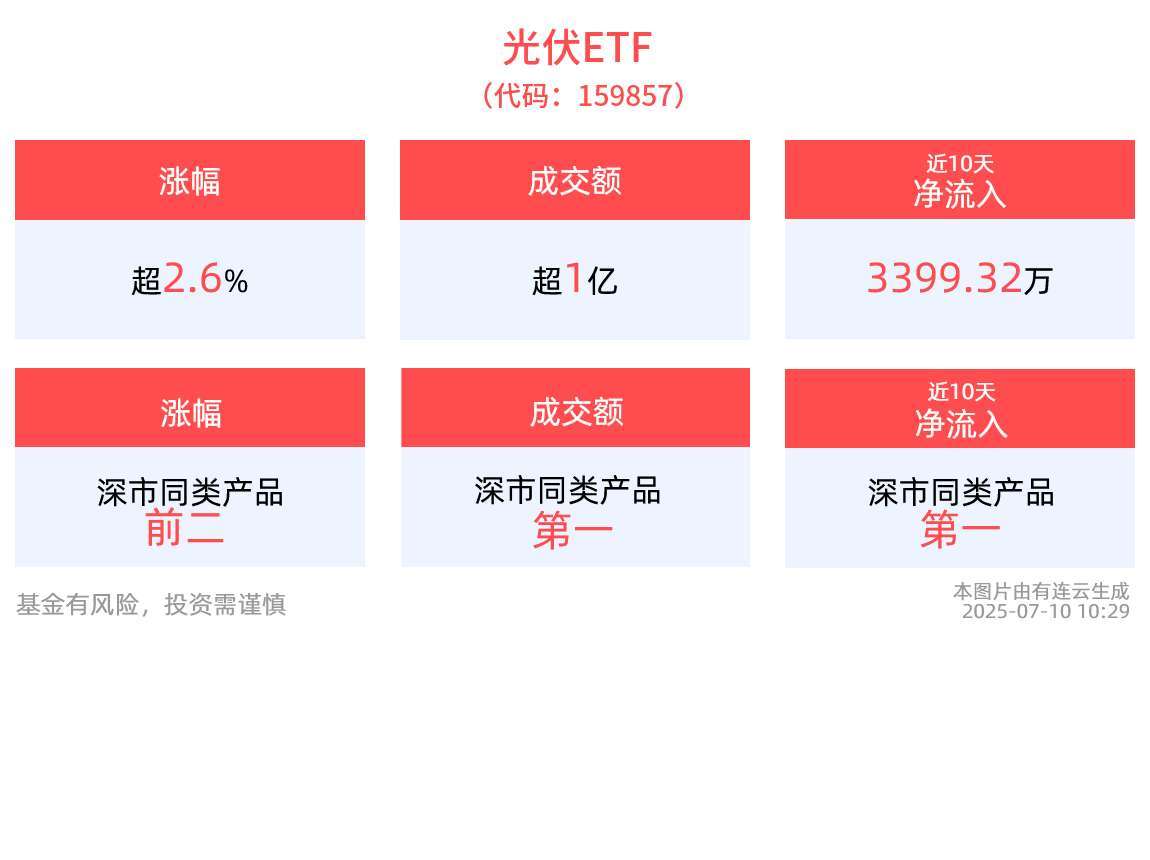
深市最大的光伏ETF(159857)冲高涨近3%,近10日“吸金”近3400万元,光伏领域“反内卷”进行时,龙头企业引领待破局
Sou Hu Cai Jing· 2025-07-10 02:56
Group 1 - The core viewpoint of the articles highlights the significant growth and positive momentum in the photovoltaic (PV) sector, particularly reflected in the performance of the photovoltaic ETF (159857) and its underlying index [3][4] - As of July 10, 2025, the photovoltaic ETF (159857) has increased by 2.64%, with a trading volume of 113 million yuan, indicating strong investor interest [3] - The photovoltaic ETF has seen a substantial increase in scale, with a growth of 248 million yuan over the past two weeks and an increase of 81.5 million shares over the past six months [3] Group 2 - The "anti-involution" trend in various industries, including photovoltaics, is gaining traction, with expectations that this will lead to improved profitability and market conditions for the sector [3] - The urgency for addressing low-price and disorderly competition in the photovoltaic glass industry has been emphasized, with many companies planning to reduce production by 30% in July 2025 [4] - The current price of 2.0mm coated glass is at 11 yuan per square meter, with inventory days reaching 32, indicating potential challenges for profitability in the industry [4] Group 3 - The valuation of the index tracked by the photovoltaic ETF is at a historical low, with a price-to-book ratio (PB) of 1.87, suggesting attractive valuation opportunities [4] - The index reflects the overall performance of listed companies involved in the photovoltaic industry chain, selecting up to 50 representative companies [4]


“反内卷”见效!多家硅片厂商上调报价,光伏ETF基金(159863)上涨超1%
Xin Lang Cai Jing· 2025-07-10 02:49
Group 1 - The core viewpoint is that the photovoltaic industry is experiencing a significant price increase in silicon wafers, with various sizes seeing price hikes between 8% and 11.7% [1] - The photovoltaic industry index (931151) has shown strong performance, with component stocks such as Hongyuan Green Energy (603185) and Xiexin Integration (002506) rising by 6.84% and 6.15% respectively [1] - The photovoltaic ETF fund (159863) has also increased by 1.26%, reflecting the overall positive trend in the industry [1] Group 2 - The current focus for the photovoltaic industry is to break away from "involutionary" competition, which is crucial for policy and corporate self-rescue [2] - This transformation is expected to shift the industry from "price wars" to "quality for price," allowing for the orderly exit of backward production capacity [2] - The top ten weighted stocks in the photovoltaic industry index account for 55.39% of the index, indicating a concentration of market influence among leading companies [3]


硅片价格大涨超10%,反内卷背景下行业信心望进一步提振
Xuan Gu Bao· 2025-07-09 14:48
Industry Overview - Multiple silicon wafer companies have raised their prices, with increases ranging from 8% to 11.7% for different sizes of wafers [1] - The price hike is primarily attributed to the rising costs of upstream silicon materials, although the downstream battery segment's ability to absorb these price increases remains uncertain due to slowing terminal demand in the domestic photovoltaic market [1] - The average transaction price of silicon materials has increased by over 6% week-on-week [1] - In June, the monthly output of silicon wafers was approximately 58.2 GW, but due to limited terminal demand, production is expected to decline to around 51.8 GW in July [1] - The photovoltaic industry is expected to respond to the price adjustments, with polysilicon prices being raised to avoid price competition, and photovoltaic glass manufacturers actively reducing production to enhance prices [1] Company Insights - Shuangliang Energy has achieved superior performance in single crystal silicon growth speed, shoulder counts, oxygen content, and minority carrier lifetime compared to industry averages, gaining recognition from many high-quality downstream customers [2] - The majority of Shuangliang Energy's silicon wafers sold are N-type, with a steadily increasing market share in the domestic market [2] - JA Solar Technology operates as an integrated enterprise in the photovoltaic industry, focusing on the research, development, production, and sales of photovoltaic silicon wafers, cells, and modules, as well as the development, construction, and operation of solar power plants [2]
电力设备行业资金流出榜:融发核电等11股净流出资金超亿元
Zheng Quan Shi Bao Wang· 2025-07-09 09:26
Market Overview - The Shanghai Composite Index fell by 0.13% on July 9, with 17 out of the 28 sectors rising, led by Media and Agriculture sectors, which increased by 1.35% and 0.65% respectively [1] - The Electric Equipment sector saw a slight increase of 0.17% [1] - The sectors with the largest declines were Non-ferrous Metals and Basic Chemicals, which dropped by 2.26% and 0.85% respectively [1] Capital Flow Analysis - The main capital outflow from the two markets totaled 38.536 billion yuan, with only three sectors experiencing net inflows: Media (1.055 billion yuan), Retail (864 million yuan), and Construction Decoration (40.34 million yuan) [1] - The Electronic sector had the largest net outflow, totaling 7.789 billion yuan, followed by Non-ferrous Metals with 5.412 billion yuan [1] Electric Equipment Sector Performance - In the Electric Equipment sector, 358 stocks were tracked, with 99 stocks rising and 252 stocks declining; 5 stocks hit the daily limit up [2] - The top net inflow stock was Ningde Times, with a net inflow of 378 million yuan, followed by Tongguan Copper Foil and Kelu Electronics with inflows of 219 million yuan and 178 million yuan respectively [2] - The sector experienced a total net outflow of 4.576 billion yuan, with 11 stocks seeing outflows exceeding 100 million yuan; the largest outflows were from Rongfa Nuclear Power, Sunshine Power, and Nord Shares, with outflows of 327 million yuan, 250 million yuan, and 226 million yuan respectively [2][3] Top Gainers in Electric Equipment Sector - The top gainers in the Electric Equipment sector included: - Ningde Times: +2.84%, turnover rate 0.75%, main capital flow 377.94 million yuan - Tongguan Copper Foil: +20.02%, turnover rate 48.19%, main capital flow 218.52 million yuan - Kelu Electronics: +10.06%, turnover rate 7.49%, main capital flow 178.39 million yuan [2] Top Losers in Electric Equipment Sector - The top losers in the Electric Equipment sector included: - Rongfa Nuclear Power: +0.42%, turnover rate 33.08%, main capital flow -327.43 million yuan - Sunshine Power: -0.57%, turnover rate 3.01%, main capital flow -249.65 million yuan - Nord Shares: -4.98%, turnover rate 14.04%, main capital flow -226.20 million yuan [3]




基民亏掉半套房,高管狂赚千万分红:广发基金的利益天平歪向何方?
Sou Hu Cai Jing· 2025-07-09 07:32
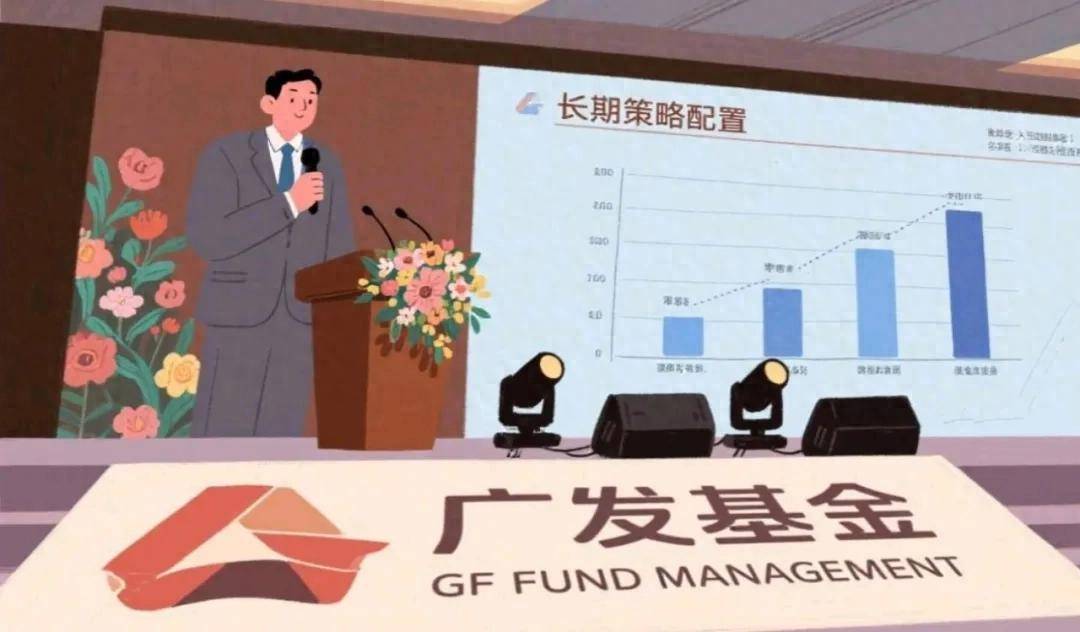
Core Viewpoint - The article highlights the significant challenges faced by GF Fund, which was once a leading player in the public fund industry, due to poor performance and substantial losses for investors, while management continues to benefit from generous compensation packages [2][3][8]. Group 1: Management Compensation and Incentives - GF Fund implemented an employee stock ownership plan in December 2020, allowing management to hold 10% of the company, which was seen as a way to align interests but has led to significant disparities between management rewards and fund performance [2][6]. - From 2020 to 2024, the employee stock ownership platform received a total of 647 million yuan in dividends, with 2021 seeing a peak of 224 million yuan, while the funds underperformed significantly, leading to investor losses of 56.9 billion yuan during the same period [2][3][6]. Group 2: Fund Performance and Investor Losses - Between 2022 and 2024, GF Fund's public products caused investors to incur losses totaling 56.9 billion yuan, with 90 funds underperforming their benchmarks by over 10% [3][4]. - Notably, funds managed by prominent managers like Zheng Qianran and Liu Gesong experienced severe underperformance, with some funds losing over 50% of their value [3][4][5]. Group 3: Investment Strategy and Market Vulnerability - GF Fund's reliance on star fund managers and popular sectors, particularly in the renewable energy space, has made it vulnerable to market changes, leading to significant losses as the industry faced challenges post-2023 [4][5]. - The fund's heavy investment in solar energy stocks resulted in substantial declines, with major holdings suffering from a collective drop in value, exacerbating the losses for investors [4][5]. Group 4: Organizational Challenges and Reforms - The departure of over ten fund managers in recent years has highlighted weaknesses in GF Fund's research and talent development systems, leading to increased volatility in fund performance [5][8]. - The company is urged to reform its incentive mechanisms to better align management compensation with long-term performance and to develop a more robust research framework that reduces reliance on individual star managers [8][9]. Group 5: Industry Context and Future Outlook - The issues faced by GF Fund reflect broader challenges within the public fund industry, characterized by a focus on scale over returns, necessitating systemic reforms to protect investor interests [9]. - The ability of GF Fund to navigate its current challenges and shift from a scale-driven to a performance-driven model will be crucial not only for its survival but also for setting a precedent for the industry [9].
光伏行业“内卷”严重,国家层面政策信号密集释放 光伏产业大省如何“反内卷”
Si Chuan Ri Bao· 2025-07-09 00:24
Core Viewpoint - The recent surge in the photovoltaic (PV) equipment sector in the A-share market is driven by a series of favorable policies aimed at combating "involution" and promoting high-quality development within the industry [1][2]. Policy Background - The central government has intensified signals against "involution," with the Ministry of Industry and Information Technology (MIIT) mandating PV companies to report their cost prices, threatening penalties for those selling below cost [2][4]. - High-level meetings involving major PV companies indicate a strong governmental commitment to addressing disordered competition and enhancing product quality [2][4]. - The "anti-involution" measures have been a recurring theme in government discussions since last year, with multiple policy documents emphasizing the need for comprehensive regulation [2][4]. Industry Background - The PV industry is experiencing severe overcapacity, with significant price declines across the supply chain. In 2024, prices for polysilicon, silicon wafers, batteries, and modules are expected to drop by 39%, 50%, 40%, and 29% respectively [6][7]. - The industry's rapid expansion has led to a situation where many companies are selling products below cost, resulting in substantial losses. In 2024, major PV companies reported losses exceeding 600 billion yuan [6][7]. - The growth of the PV sector is notable, with projected installation capacity growth rates of 13.9%, 59.3%, 148.1%, and 28.3% from 2021 to 2024 [6]. Sichuan Countermeasures - Sichuan, a major player in the PV industry, is implementing strategies to address overcapacity while promoting technological upgrades and competitive advantages [9][10]. - The province is witnessing short-term challenges, including production cuts and layoffs, but long-term benefits are anticipated as companies stabilize and innovate [10][11]. - A combination of self-initiated production cuts and government policies aims to reduce capacity and enhance competitiveness [12][14]. Future Outlook - Despite current challenges, the PV industry is expected to rebound as the market corrects itself. The International Renewable Energy Agency projects that global PV installations will need to reach 18,200 GW by 2050 to meet carbon neutrality goals [14].


“ISSB 可持续披露准则先学伙伴”成都研讨会——暨第三届零碳协同创新大会成功举办
Jing Ji Guan Cha Bao· 2025-07-08 09:42
Core Insights - The conference focused on "Zero Carbon Collaborative Innovation Empowering Global Sustainability," highlighting the importance of sustainable practices and the role of ISSB standards in integrating sustainability into financial reporting [1][2]. Group 1: ISSB Standards and Sustainable Development - Zhang Zhengwei, a senior advisor to ISSB, emphasized the shift from non-financial to integrated financial reporting, which will embed sustainability into core business value creation [2]. - Ndidi Nnoli-Edozien discussed the significance of multi-stakeholder collaboration in advancing global sustainability, with China's involvement being crucial for developing impactful global standards [5]. Group 2: Industry Contributions to Sustainability - Tinci Lithium's Vice President Zou Jun outlined the lithium industry's role in achieving net-zero goals through technological innovation and sustainable financial tools, aiming for a 2030 emission reduction target [3]. - Zhang Guohao from China Southwest Construction shared a new model for integrated low-carbon building renovation services, addressing the disconnect in financing, design, construction, and operation phases [4]. Group 3: Collaborative Initiatives and Agreements - The "Xinglong Lake Sustainable Consensus" was signed by multiple organizations, promoting zero-carbon technology innovation and ecological construction in the Xinglong Lake area [8]. - The "Supply Chain ESG Management Initiative" expanded to include four new companies, enhancing its influence and supporting the establishment of ESG assessment standards in supply chains [9]. Group 4: Discussions on ESG and Climate Action - A roundtable discussion highlighted the importance of standardization in ESG disclosures and the integration of carbon management across enterprises and cities, which is vital for global zero-carbon transitions [10][11]. - The role of ISSB standards in reshaping global value chains was discussed, emphasizing their function in enhancing corporate governance and competitive advantage through sustainable practices [12].
光伏ETF基金(159863)大涨5.08%,政策上再度重申“供给侧预期再起”
Sou Hu Cai Jing· 2025-07-08 06:05
Group 1 - The photovoltaic ETF fund (159863.SZ) has increased by 5.08%, with major components such as Sungrow Power (up 8.98%), Longi Green Energy (up 6.08%), Tongwei Co. (up 10.00%), Daqo New Energy (up 14.84%), and TBEA Co. (up 3.02%) [1] - There are rumors that silicon material does not have a guiding price and cannot be sold below their full cost, with policies reiterating "supply-side expectations rising" [1] - The photovoltaic industry is currently undergoing a clearing process that can be categorized into financial, policy, and technical clearings, with expectations of challenges in domestic demand in Q3 and an anticipated increase in polysilicon production in July [1] Group 2 - Zhongyi Securities' strategy team notes that the current market environment is similar to the end of 2014, with investors having accumulated profit effects in the industry, and policy expectations stabilizing [1] - China Post Securities highlights that the photovoltaic industry has been officially named for "involution-style" competition, with leading photovoltaic glass companies planning to collectively reduce production by 30% starting in July [2] - The Ministry of Industry and Information Technology has signaled stronger regulatory measures, requiring companies to report cost prices and planning to impose heavy penalties on low-price sales, indicating an escalation in industry governance [2]



光伏ETF基金(159863)暴涨超5%,光伏概念股持续走高!
Xin Lang Cai Jing· 2025-07-08 05:48
Group 1 - The core viewpoint of the articles highlights a strong performance in the photovoltaic sector, with the China Securities Photovoltaic Industry Index rising by 5.02% and several key stocks, such as Daqo New Energy and Tongwei Co., experiencing significant gains [1] - The photovoltaic industry is currently facing challenges including supply-demand balance, price declines, and profit pressures, with supply-side reforms and anti-involution policies being key factors influencing supply and demand [1] - Policy support is expected to alleviate pressures in the industry chain, with potential measures including raising industry standards and supporting the development of new battery technologies like perovskite [1] Group 2 - As of June 30, 2025, the top ten weighted stocks in the China Securities Photovoltaic Industry Index account for 55.39% of the index, with notable companies including Sungrow Power Supply, LONGi Green Energy, and TCL Technology [2] - The photovoltaic ETF fund closely tracks the China Securities Photovoltaic Industry Index, which selects up to 50 representative listed companies involved in the photovoltaic industry chain [1]