
中国南方电网有限责任公司

Search documents
国家电网新任总经理,定了
中国基金报· 2025-11-14 10:48
张文峰在国家电网的前任为庞骁刚。庞骁刚此前曾长期在南方电网工作,从 2020 年 7 月 起,先后任国家电网副总经理、总经理; 2025 年 10 月调任国务院国资委副主任。 公开资料显示,张文峰也曾长期在南方电网工作,曾任中国南方电网有限责任公司党组成 员、副总经理; 2023 年 6 月,任中国华能集团有限公司董事、党组副书记; 2024 年 8 月,任中国华能集团有限公司董事、总经理、党组副书记。 国家电网有限公司成立于 2002 年 12 月 29 日,是根据《公司法》设立的中央直接管理的 国有独资公司,注册资本为 8295 亿元,以投资建设运营电网为核心业务,是关系国家能源 安全和国民经济命脉的特大型国有重点骨干企业。 20 多年来,国家电网持续保持全球特大型电网最长安全纪录,建成 42 项特高压输电工程, 成为世界上输电能力最强、新能源并网规模最大的电网,公司专利拥有量持续排名央企第 【导读】张文峰任国家电网总经理 中国基金报记者 卢鸰 国家电网官方网站 11 月 14 日发文称, 2025 年 11 月 14 日,国家电网有限公司召开领导 班子(扩大)会议。受中央组织部领导委托,中央组织部有关干 ...

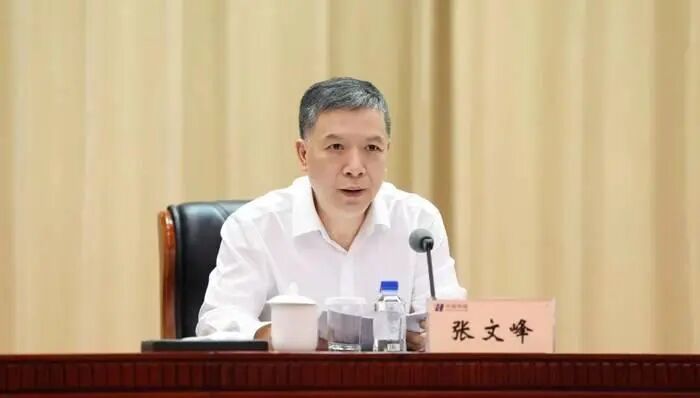
张文峰,任国家电网总经理!此前任中国华能集团总经理
Mei Ri Jing Ji Xin Wen· 2025-11-14 10:15
张文峰在中国南方电网有限责任公司系统深耕多年,历任南方电网电力调度通信中心副主任(公司系统运行部副主任)、党委委员,广东电网公司董事、副 总经理、党委委员,广东电网公司董事、总经理、党委副书记,南方电网计划发展部主任、计划与财务部(运营监控中心)总经理等职务。 每经编辑|段炼 2025年11月14日,国家电网有限公司召开领导班子(扩大)会议。受中央组织部领导委托,中央组织部有关干部局负责同志宣布了党中央关于国家电网有 限公司总经理任职的决定:张文峰同志任国家电网有限公司董事、总经理、党组副书记,免去其中国华能集团有限公司董事、总经理、党组副书记职务。 相关职务任免,按有关法律和章程的规定办理。 图片来源:中国华能官微 张文峰出生于1967年9月,大学本科学历,硕士学位,高级工程师,自1989年7月参加工作。 每日经济新闻综合自国家电网官网、大河财立方、公开资料等 2024年8月19日,华能集团召开领导班子(扩大)会议,会上,中央组织部有关干部局负责人宣布,张文峰任华能集团董事、总经理、党组副书记。 编辑|段炼 易启江 校对|何小桃 ...


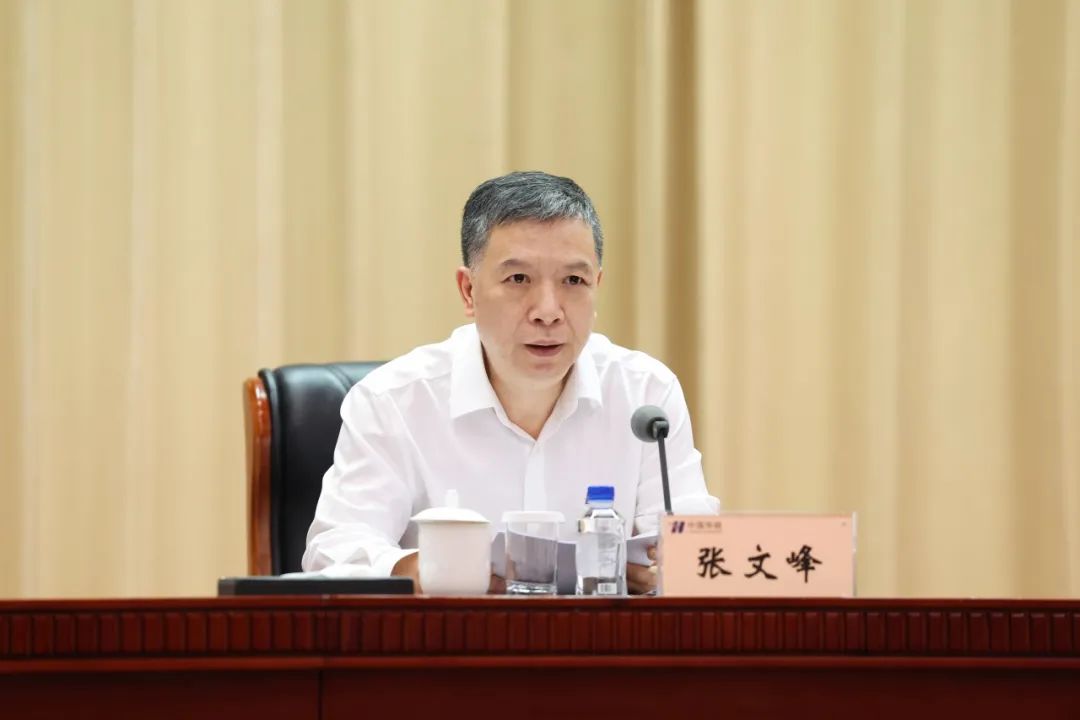
中国华能总经理张文峰,调任国家电网总经理
Guan Cha Zhe Wang· 2025-11-14 10:01
据国家电网有限公司官网消息,2025年11月14日,国家电网有限公司召开领导班子(扩大)会议。受中央组织部领导委托,中央组织部有关干部局负责同 志宣布了党中央关于国家电网有限公司总经理任职的决定:张文峰同志任国家电网有限公司董事、总经理、党组副书记,免去其中国华能集团有限公司董 事、总经理、党组副书记职务。相关职务任免,按有关法律和章程的规定办理。 张文峰(资料图) 中国电力网 公开资料显示,张文峰生于1967年9月,先后历任中国南方电网电力调度通信中心副主任(公司系统运行部副主任)、党委委员,广东电网公司董事、副 总经理、党委委员,广东电网公司董事、总经理、党委副书记,中国南方电网有限责任公司计划发展部主任、计划与财务部(运营监控中心)总经理。 2020年8月,任南方电网公司副总经理。 2023年6月,张文峰出任中国华能集团有限公司董事、党组副书记,2024年8月,任中国华能集团有限公司董事、总经理、党组副书记,至此番履新。 ...
国家能源局关于印发2024年度全国可再生能源电力发展监测评价结果的通知
国家能源局· 2025-11-14 09:26
Core Viewpoint - The article emphasizes the importance of promoting high-quality development of renewable energy in China, as guided by national policies and targets for carbon neutrality and peak carbon emissions [2]. Summary by Sections Renewable Energy Power Consumption Responsibility Completion - In 2024, the national renewable energy power consumption responsibility weight was completed at 35.2%, an increase of 3.2 percentage points year-on-year [5]. - 26 provinces completed the national total consumption responsibility weight, with Sichuan, Yunnan, and Qinghai exceeding 70% [5]. - Only Shanxi, Hubei, and Chongqing did not meet their renewable energy power consumption responsibility weights, with deficits of 0.3, 3.0, and 1.9 percentage points respectively [5][9]. Non-Hydropower Renewable Energy Power Consumption - The actual completion of non-hydropower renewable energy power consumption responsibility weight was 20.8%, up by 2.7 percentage points year-on-year [10]. - 28 provinces met the national non-hydropower consumption responsibility weight, with six provinces exceeding 30% [10]. - Shanxi was the only province that did not meet the non-hydropower renewable energy power consumption responsibility weight, with a shortfall of 0.6 percentage points [10][12]. Utilization Rates of Renewable Energy - In 2024, the average wind power utilization rate was 95.9%, a decrease of 1.4 percentage points year-on-year [13]. - The average photovoltaic power utilization rate was 96.8%, down by 1.1 percentage points year-on-year [13]. - The effective hydropower utilization rate was approximately 99.0%, a decline of 0.4 percentage points year-on-year [13]. High Voltage Direct Current (HVDC) Transmission of Renewable Energy - In 2024, 20 HVDC lines transmitted a total of 705.3 billion kWh, with renewable energy accounting for 400.8 billion kWh, an increase of 22.2% year-on-year [22]. - Renewable energy accounted for 56.8% of the total transmission volume of HVDC lines, an increase of 4.3 percentage points year-on-year [22]. Clean Energy Demonstration Provinces - In Zhejiang, the total renewable energy power consumption was 170.9 billion kWh, accounting for 25.2% of the province's total electricity consumption, an increase of 3.1 percentage points year-on-year [24]. - In Sichuan, the total renewable energy power consumption was 298 billion kWh, representing 74.5% of the province's total electricity consumption, a decrease of 1.5 percentage points year-on-year [24]. - In Gansu, the total renewable energy power consumption was 93.1 billion kWh, accounting for 53.3% of the province's total electricity consumption, an increase of 1.7 percentage points year-on-year [25].
国家能源局:公布2024年消纳责任完成情况,山西等被点名!
Zhong Guo Neng Yuan Wang· 2025-11-13 08:12
Core Viewpoint - The National Energy Administration has released the "2024 National Renewable Energy Power Development Monitoring and Evaluation Results," which serves as foundational data for renewable energy development and grid operation across various regions in 2024 [3][5]. Summary by Sections Overall Situation of Renewable Energy Power Development - By the end of 2024, the cumulative installed capacity of renewable energy power in China is expected to reach 1,889 million kilowatts, representing a year-on-year growth of approximately 24.4%, accounting for 56.4% of total installed power capacity [5]. - The breakdown of installed capacity includes: hydropower at 436 million kilowatts (including 59 million kilowatts of pumped storage), wind power at 521 million kilowatts, solar power at 887 million kilowatts, and biomass power at 46 million kilowatts [5]. - In 2024, the newly added installed capacity of renewable energy is projected to be 375 million kilowatts, with hydropower contributing 13.79 million kilowatts, wind power 81.37 million kilowatts, solar power 278 million kilowatts, and biomass power 2.31 million kilowatts [5]. - The total renewable energy generation in 2024 is estimated at 3.47 trillion kilowatt-hours, accounting for 35% of total power generation [5]. Completion of Renewable Energy Power Consumption Responsibility Weight - The actual completion rate of the national renewable energy power consumption responsibility weight in 2024 is 35.2%, an increase of 3.2 percentage points year-on-year [7]. - 26 provinces (autonomous regions and municipalities) have met the national total consumption responsibility weight, with Sichuan, Yunnan, and Qinghai exceeding 70% [7]. - Among the 31 provinces, one has a renewable energy power consumption ratio exceeding 80%, eight are between 40%-80%, and 22 are between 20%-40% [7]. Non-Hydropower Renewable Energy Power Consumption Responsibility Weight - The actual completion rate for non-hydropower renewable energy power consumption responsibility weight is 20.8%, up by 2.7 percentage points year-on-year [12]. - 28 provinces have met the national non-hydropower consumption responsibility weight, with six provinces exceeding 30% [12]. Utilization Rates of Renewable Energy - The average utilization rate of wind power in 2024 is projected to be 95.9%, a decrease of 1.4 percentage points year-on-year [13]. - The average utilization rate of photovoltaic power is expected to be 96.8%, down by 1.1 percentage points year-on-year [14]. - The effective utilization rate of hydropower in major river basins is approximately 99.0%, a decrease of 0.4 percentage points year-on-year [14]. High Voltage Direct Current (HVDC) Transmission of Renewable Energy - In 2024, 20 HVDC lines are expected to transmit a total of 705.3 billion kilowatt-hours, with renewable energy accounting for 400.8 billion kilowatt-hours, a year-on-year increase of 22.2% [23]. - Renewable energy accounts for 56.8% of the total transmission volume of HVDC lines, an increase of 4.3 percentage points year-on-year [23].
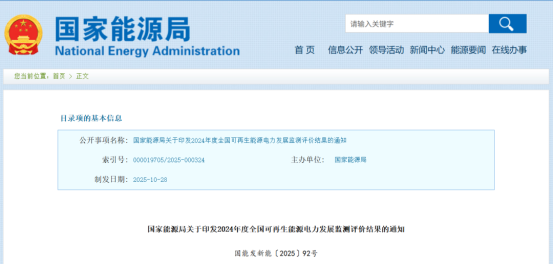
国家能源局发布重要结果!
中国能源报· 2025-11-13 06:09
Core Viewpoint - The National Energy Administration has released the monitoring and evaluation results for the development of renewable energy power in 2024, highlighting significant growth in installed capacity and power generation from renewable sources, which is crucial for achieving carbon peak and carbon neutrality goals [4][6][26]. Summary by Sections 1. Overall Development of Renewable Energy Power - By the end of 2024, the cumulative installed capacity of renewable energy in China reached 1,889 million kilowatts, a year-on-year increase of approximately 24.4%, accounting for 56.4% of total installed power capacity [6]. - The breakdown of installed capacity includes: hydropower at 436 million kilowatts, wind power at 521 million kilowatts, solar power at 887 million kilowatts, and biomass power at 46 million kilowatts [6]. - In 2024, the total power generation from renewable energy was 3.47 trillion kilowatt-hours, representing about 35% of total power generation [6]. 2. Renewable Energy Consumption Responsibility Completion - The actual completion rate for renewable energy power consumption responsibility in 2024 was 35.2%, an increase of 3.2 percentage points year-on-year [7]. - 26 provinces met the national consumption responsibility targets, with Sichuan, Yunnan, and Qinghai exceeding 70% [7][10]. - The report indicates that 1 province had over 80% of renewable energy consumption, 8 provinces were between 40%-80%, and 22 provinces were between 20%-40% [7]. 3. Non-Hydropower Renewable Energy Consumption - The actual completion rate for non-hydropower renewable energy consumption responsibility was 20.8%, with a year-on-year increase of 2.7 percentage points [12]. - 28 provinces met the national targets for non-hydropower consumption, with 6 provinces exceeding 30% [13][15]. 4. Utilization Rates of Renewable Energy - The average utilization rate for wind power in 2024 was 95.9%, a decrease of 1.4 percentage points from the previous year [16]. - The average utilization rate for solar power was 96.8%, down by 1.1 percentage points [16]. - The effective utilization rate for hydropower was approximately 99.0%, a decrease of 0.4 percentage points [16]. 5. High Voltage Direct Current (HVDC) Transmission of Renewable Energy - In 2024, 20 HVDC lines transmitted a total of 705.3 billion kilowatt-hours, with renewable energy accounting for 400.8 billion kilowatt-hours, a year-on-year increase of 22.2% [22][24]. - Renewable energy constituted 56.8% of the total transmission volume through HVDC lines, an increase of 4.3 percentage points [22]. 6. Implementation of Clean Energy Demonstration Provinces - In Zhejiang, the total renewable energy consumption was 170.9 billion kilowatt-hours, accounting for 25.2% of the province's total electricity consumption, an increase of 3.1 percentage points [26]. - In Sichuan, renewable energy consumption was 298 billion kilowatt-hours, representing 74.5% of total consumption, a decrease of 1.5 percentage points [27].

驻南方电网纪检监察组惩治防协同发力 护航新能源高质量发展
Zhong Yang Ji Wei Guo Jia Jian Wei Wang Zhan· 2025-11-10 23:59
Core Viewpoint - The rapid development of distributed photovoltaic projects in southern China is driven by the "dual carbon" goals, leading to significant increases in renewable energy capacity and associated challenges in grid management and integrity risks [1][2][3]. Group 1: Project Overview - A 6.5-kilometer distributed photovoltaic project in Hainan has achieved full capacity grid connection, expected to generate 20.58 million kWh annually, equivalent to the annual electricity consumption of approximately 5,700 households, while saving 6,278 tons of standard coal and reducing emissions by about 22,602 tons [1]. - As of September 2023, the total installed capacity of renewable energy in Guangdong, Guangxi, Hainan, Yunnan, and Guizhou has reached 257 million kW, accounting for 40% of the southern grid's power sources, with photovoltaic capacity exceeding 180 million kW [1]. Group 2: Management Challenges - The rapid integration of distributed photovoltaic projects poses new challenges for grid management, particularly in the areas of project acceptance, approval, equipment access, and grid debugging, leading to potential integrity risks due to concentrated discretionary power at local power supply offices [2][3]. - The approval process for photovoltaic projects relies heavily on local grid capacity and available connection points, which can lead to corruption issues such as "queue jumping" for capacity allocation and "personal connections" influencing project approvals [2]. Group 3: Regulatory Measures - The Southern Power Grid's disciplinary inspection team has initiated a series of targeted measures to address integrity risks in the renewable energy grid integration sector, including the establishment of new management protocols and enhanced internal controls [3][4]. - A comprehensive review of the renewable energy grid integration management system has been conducted, resulting in the issuance of new guidelines and the optimization of key processes to improve transparency and reduce discretionary power in project approvals [4][5]. Group 4: Case Studies and Implementation - The Guangxi Power Grid Company has reported the resolution of multiple integrity violations related to expedited project approvals, highlighting the need for ongoing supervision and the identification of high-risk positions within the organization [5][6]. - The implementation of a digital platform, "Sunshine Southern Network," allows for real-time monitoring of 1,026 photovoltaic projects, enhancing transparency and accountability in the approval process [6][7].
南方电网与中国能建高层会谈
Zhong Guo Dian Li Bao· 2025-11-10 22:11
Industry News - The State Council issued measures to promote private investment, proposing 13 targeted policy measures, including feasibility studies for private capital participation in certain sectors like railways and nuclear power, with a minimum private capital share of 10% for eligible projects [4][6] - The National Development and Reform Commission and the National Energy Administration aim to establish a new power system adaptable to high proportions of renewable energy by 2035, with a multi-level renewable energy consumption and regulation system in place by 2030 [4][6] Company News - China Energy Construction held high-level talks with China Southern Power Grid to discuss cooperation in energy transition, enhancing energy infrastructure intelligence, and promoting green low-carbon development [6] - The Daan Wind-Solar Green Hydrogen Integrated Demonstration Project, the world's largest single green ammonia facility, has successfully connected its 700 MW wind power project to the grid, producing 32,000 tons of green hydrogen annually and 180,000 tons of green ammonia [6] - Huadian Energy announced an investment of 12.043 billion yuan in a project to build a combined heat and power generation unit and integrate it with renewable energy in Heilongjiang, enhancing the company's competitiveness and profitability [8] Local News - Inner Mongolia's renewable energy installed capacity reached 150 million kW by the end of October, a 35% year-on-year increase, with wind power at 97.41 million kW (23% increase) and solar power at 52.12 million kW (66% increase) [9] - The Nanning Pumped Storage Power Station, a major project under the 14th Five-Year Plan, has begun filling its reservoir, expected to take 32 days, with a total capacity of 1.2 million kW and the ability to consume up to 2.5 billion kWh of clean energy annually [9] International News - Reports of unidentified drones were observed over the Doel nuclear power station in Belgium, although the operator stated that these sightings would not affect the station's operations [11]


促进新能源消纳和调控 增强新型电力系统适配能力成关键
Shang Hai Zheng Quan Bao· 2025-11-10 17:59
11月10日,国家发展改革委、国家能源局联合发布《关于促进新能源消纳和调控的指导意见》(下称 《意见》),聚焦新能源大规模开发与高质量消纳的核心命题,提出分阶段目标及七大重点任务,旨在 构建适配高比例新能源的新型电力系统,支撑碳达峰及国家自主贡献目标。 能源领域专家和企业负责人在接受上海证券报记者采访时表示,分类引导各类新能源有序发展、增强新 型电力系统适配能力将成为关键。发电、电网、输配电设备制造等领域的大型央企已推进相应布局。 开发规模持续扩大 新能源需分类有序发展 当前,我国新能源发展正处于由规模化扩张向高质量转型的关键阶段:尽管开发规模持续扩大,但消纳 机制不完善、系统适配能力不足、市场化程度不高等问题仍较突出,部分地区新能源弃电现象时有发 生,跨区域资源配置效率有待提升,成为制约新能源产业持续健康发展的瓶颈。 新能源装机规模还将成倍增长。9月24日,我国在联合国气候变化峰会上宣布新一轮自主贡献目标,明 确2035年全国风电、太阳能发电总装机容量要达到2020年的6倍以上,力争达到36亿千瓦以上。截至今 年9月底,我国风电、太阳能发电总装机已突破17亿千瓦;要实现2035年自主贡献目标,未来10年每年 ...
5年30倍!从中国 向世界 新型储能撬动万亿市场
Zhong Guo Dian Li Bao· 2025-11-10 01:56
Core Insights - China's new energy storage capacity reached 103 million kilowatts by the end of September 2023, marking a more than 30-fold increase since the end of the 13th Five-Year Plan, accounting for over 40% of the global total and positioning China as the world leader in this sector [1][2][5] Industry Development - New energy storage is a key technology for establishing a new energy system and supporting global energy transition, with significant investments expected to exceed 1 trillion yuan [2][5] - By September 2023, the installed capacity of new energy storage in Inner Mongolia and Xinjiang exceeded 10 million kilowatts, with North China operating 31.18 million kilowatts, representing 30.4% of the national total [2] - The average bidding price for EPC projects has decreased by approximately 40%, and battery cell prices have dropped by about 60% compared to 2022, indicating a trend towards cost reduction [4] Market Dynamics - The utilization hours of new energy storage systems increased by about 120 hours year-on-year to approximately 770 hours in the first three quarters of 2023, demonstrating enhanced operational efficiency [2] - As of June 2023, there were 194 new energy storage stations participating in market transactions within the State Grid's operating area, with a total installed capacity of 20.59 million kilowatts, accounting for 27% of the total new energy storage capacity [7] Technological Innovation - Various new energy storage technologies are being developed, including compressed air storage, liquid flow batteries, and solid-state batteries, with liquid flow battery capacity increasing to 1.15 million kilowatts, a 30-fold increase since the end of the 13th Five-Year Plan [6] - The "136 Document" issued in January 2023 aims to clarify the market value of energy storage, promoting its integration into market trading systems [6] Future Outlook - The new energy storage market in China is expected to accelerate further, with projections indicating that by 2030, the installed capacity could reach between 236.1 GW and 291.2 GW, with a compound annual growth rate of 20.2% to 24.5% from 2025 to 2030 [10] - The shift from price competition to value competition in the energy storage market is anticipated to drive high-quality development and innovation in business models [11]
