小红书

Search documents
财经深一度丨“先买后付”,安全谁来保障?
Ren Min Ri Bao· 2026-01-19 03:34
Core Insights - The "Buy Now, Pay Later" (BNPL) model has rapidly gained popularity in China, initially emerging in e-commerce and now extending to hundreds of everyday scenarios, with projections estimating the market size to approach 1 trillion yuan by 2025 [1][2] Group 1: Consumer Behavior and Market Impact - The BNPL model enhances consumer willingness to purchase, allowing users to buy multiple items without immediate payment, thus addressing the inability to try products before buying [2][3] - Merchants have reported a significant increase in sales, with some noting over a 30% rise in product sales after integrating BNPL services, despite a slight increase in return rates [2][3] - Major e-commerce platforms such as Pinduoduo, Taobao, Xiaohongshu, Douyin, and Dewu have adopted BNPL features, indicating its integration into consumer lifestyles [2] Group 2: Operational Mechanisms and User Requirements - The BNPL service operates under two primary models: sales credit and consumer credit, with the former focusing on enhancing consumer willingness rather than providing financial loans [6] - Users must meet specific criteria, such as a minimum credit score and stable payment behavior, to access BNPL services, while merchants undergo evaluations to ensure quality service [4][6] Group 3: Risks and Regulatory Considerations - The "invisible" nature of BNPL can lead to unintentional overspending, with some users unaware of accumulating debt until it becomes significant [5][7] - Regulatory frameworks are evolving, with new consumer protection laws and guidelines aimed at ensuring transparency and consumer rights in BNPL services [8][10] - Experts emphasize the need for a comprehensive governance system involving regulatory bodies, e-commerce platforms, and industry associations to mitigate risks associated with BNPL [8][10]
“先买后付”,安全谁来保障?
Xin Hua Wang· 2026-01-18 23:41
Core Insights - The "Buy Now, Pay Later" (BNPL) model has rapidly gained popularity in China, initially emerging in e-commerce and now extending to hundreds of everyday scenarios, with projections estimating the market size to approach 1 trillion yuan by 2025 [1][2] Group 1: Impact on Consumer Behavior - The BNPL model enhances consumer willingness to purchase, allowing users to try multiple items without upfront payment, thus addressing the limitations of online shopping compared to physical stores [2][3] - Merchants have reported a significant increase in sales, with some businesses experiencing over a 30% rise in product sales after integrating BNPL services [2] - Major e-commerce platforms such as Pinduoduo, Taobao, Xiaohongshu, Douyin, and Dewu have adopted BNPL features, indicating its deep integration into consumer lifestyles [2] Group 2: Operational Mechanisms - The BNPL services in China primarily focus on enhancing consumer willingness rather than solely improving purchasing power, evolving from initial challenges to become a tool for reducing decision-making barriers [3][6] - Two main operational models exist: one is a sales service based on credit scores that does not involve loans, while the other is a consumer loan model that can impact personal credit if payments are not made [6][7] Group 3: Risks and Consumer Awareness - Users may unknowingly accumulate debt due to the "invisible" nature of BNPL transactions, leading to concerns about potential financial strain and credit impacts if payments are missed [5][6] - Some platforms have been criticized for defaulting users into BNPL services without clear consent, raising issues of consumer awareness and understanding of the associated risks [7][9] Group 4: Regulatory and Industry Responses - New regulations, such as the Consumer Rights Protection Law and guidelines for online transaction platforms, aim to clarify the obligations of platforms in providing BNPL services [8][10] - Industry associations are advocating for self-regulation, emphasizing the need for clear communication of rights and obligations to consumers regarding BNPL services [8][9] - Experts suggest a comprehensive governance system involving regulatory bodies, e-commerce platforms, and industry organizations to mitigate risks associated with BNPL [8][10]
西贝确认将关店102家 千问App打通阿里“全家桶” 小红书与美团达成“红美计划”|一周未来商业
Mei Ri Jing Ji Xin Wen· 2026-01-18 23:02
E-commerce Retail - Qianwen App has launched AI shopping features for food delivery, purchasing, and flight booking, integrating with Alibaba's ecosystem, and offering over 400 AI functionalities for user testing [1] Logistics Supply Chain - Prologis has appointed Zhao Mingqi as the new CEO for Prologis China, a newly created position aimed at managing logistics and infrastructure in the Chinese market, reporting to the global CEO [2] - Deppon Logistics has announced its delisting from the Shanghai Stock Exchange, with JD Logistics offering a cash option to Deppon shareholders at a 35% premium to the last closing price [3] - SF Express and Jitu Express have entered a strategic cross-shareholding agreement, with a total investment of HKD 8.3 billion, marking a significant milestone in their collaboration [4] Lifestyle Services - Xiaohongshu and Meituan have launched the "Red-Mei Plan," allowing Meituan merchants to advertise on Xiaohongshu, enhancing user shopping experiences and expanding market reach [5] - Xibei Restaurant has confirmed the closure of 102 stores, representing 30% of its total, in response to market pressures and competition [6] - JD has established a cultural tourism company to diversify its business and enhance its presence in the tourism market [7] Innovation and Investment - Variable Robotics has completed a C++ round financing of 1 billion yuan, backed by top investment firms, positioning itself as a leading player in the embodied intelligence sector [8] - Keling AI has reported a monthly revenue of 140 million yuan, with an annual recurring revenue rate of 1.68 billion yuan, indicating rapid growth in the AI sector [9]


消费观察| 种草到造货,沃尔玛小红书“玩出”新花样
Sou Hu Cai Jing· 2026-01-17 07:45
Core Viewpoint - The collaboration between Walmart and Xiaohongshu marks a new phase in retail and content integration, moving beyond traditional advertising and live-streaming to product development and scene design [1][3][4] Group 1: Collaboration Details - The first co-branded store between Walmart and Xiaohongshu opened in Shenzhen, showcasing a deep partnership that connects online insights with offline product offerings [1][4] - The collaboration utilizes Walmart's private label "Wojixian" to transform community insights from Xiaohongshu into product development guidelines, with initial products including baked goods and dairy [4][6] Group 2: Consumer Insights and Market Trends - The partnership aims to cater to the Z generation, whose emotional value and interest recognition are increasingly surpassing functional needs, with the emotional economy in China expected to exceed 4.5 trillion yuan by 2029 [6] - Walmart leverages Xiaohongshu's content ecosystem to capture shifts in consumer behavior, while Xiaohongshu benefits from Walmart's supply chain and offline channels, creating a tangible outlet for community traffic [6] Group 3: Industry Implications - The collaboration represents a potential new approach for the retail industry to break through competitive saturation by focusing on user needs and integrating the entire supply chain [6]


沃尔玛与小红书达成深度合作 首推联名商品及创新体验空间
Huan Qiu Wang Zi Xun· 2026-01-17 06:38
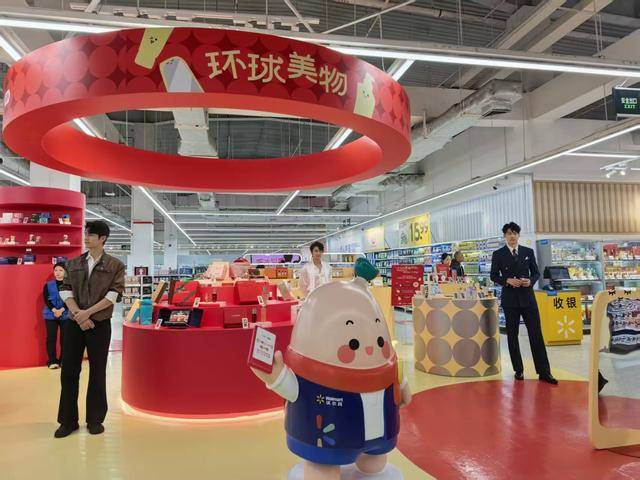
Core Insights - Walmart and Xiaohongshu have announced a deep collaboration to integrate products and shopping experiences, launching nearly 20 co-branded products and the first "Mashi Store" innovative retail space in China [1][3] - The partnership aims to respond to the shift in consumer shopping decisions towards "high value, interest exploration, and emotional resonance" [1] Group 1: Collaboration Details - The initial product line, "Wojixian × Xiaohongshu | Treasure New Products," includes categories such as baking, dairy, health drinks, and snacks, emphasizing simple ingredients and globally sourced materials [3] - Notable ingredients include New Zealand imported butter, Belgian cocoa butter chocolate, and award-winning coffee beans, along with creative items like cilantro-flavored yogurt and Mahjong-shaped cookies [3] Group 2: Retail Experience Innovation - The "Mashi Store" in Shenzhen breaks traditional shelf display models by creating eight "interest islands" focused on customer interests, such as "Aesthetic Justice Island" and "Ingredient Assurance Island" [3] - This store design aims to extend online "grass planting" content into offline spaces, providing an integrated shopping cycle of "discovering inspiration - immersive experience - convenient purchase" [3] Group 3: Strategic Goals and Market Position - Walmart's senior vice president and chief purchasing officer stated that this collaboration helps the company align more closely with customer lifestyles and continuously create value [3] - Xiaohongshu's CMO noted significant growth in search volume and interest in Walmart within the Xiaohongshu community over the past year, highlighting the success of the partnership [3] - Walmart becomes the first full-channel retail supermarket brand to enter the Xiaohongshu e-commerce platform, with hundreds of stores across over 100 cities in China, while Xiaohongshu's monthly active users are projected to exceed 350 million by the end of 2024 [3]
沃尔玛宣布与小红书达成深度合作,“玛薯店”在深圳蛇口沃尔玛新装开业
Cai Jing Wang· 2026-01-16 15:07
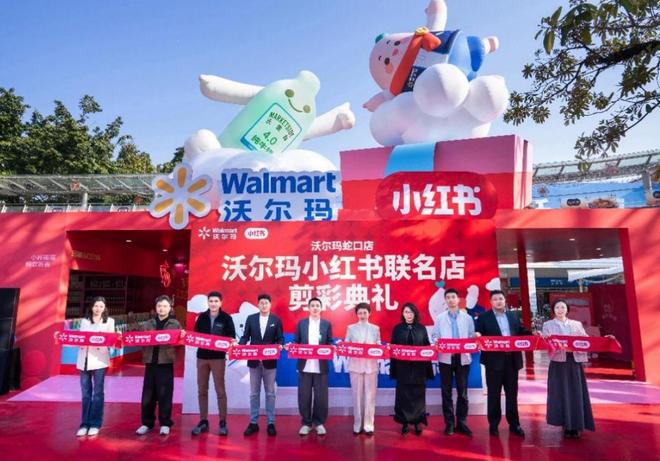
Core Insights - Walmart has entered into a deep collaboration with Xiaohongshu to explore a customer-centric business model through the integration of products and shopping scenarios [1] - The first co-branded products, "Wojixian × Xiaohongshu | Treasure New Products," have recently been launched [1] - An innovative retail experience space named "Mashu Store" has opened in Shenzhen's Shekou Walmart, marking a significant step in their partnership [1] - Walmart is the first omni-channel retail supermarket brand to enter Xiaohongshu's e-commerce platform [1]
沃尔玛与小红书达成合作
Xin Lang Cai Jing· 2026-01-16 13:55
Core Insights - Walmart and Xiaohongshu have announced a deep strategic partnership to co-create around products and shopping scenarios, exploring a consumer-centric retail model [1] - The first innovative retail experience space, "Mashi Store," was launched in Shenzhen, marking a significant step in their collaboration [1] - Walmart becomes the first omni-channel supermarket brand to enter Xiaohongshu's e-commerce platform, indicating its accelerated integration of social e-commerce and offline experiences [1]
沃尔玛与小红书达成深度合作 近20款联名品及“玛薯店”首发亮相
Bei Jing Shang Bao· 2026-01-16 13:28
Group 1 - Walmart and Xiaohongshu have announced a deep collaboration focusing on product and shopping scene integration [1] - The first co-branded product line "沃集鲜×小红书|宝藏新品" has recently been launched [1] - An innovative retail experience space named "玛薯店" has opened in Shenzhen's Shekou Walmart [1]
小红书联手沃尔玛开出首家“玛薯店”
Bei Jing Shang Bao· 2026-01-16 13:28
Core Insights - Xiaohongshu and Walmart have upgraded their collaboration, launching the first "Mashi Store" in Shenzhen from January 17 to February 1 [1] Group 1 - The "Mashi Store" will feature interactive elements such as stamp collection, red envelopes, and interest islands within the supermarket setting [1]
A股收评:成交额再超3万亿!三大指数齐跌,沪指险守4100点,半导体逆市走高
Ge Long Hui· 2026-01-16 07:10
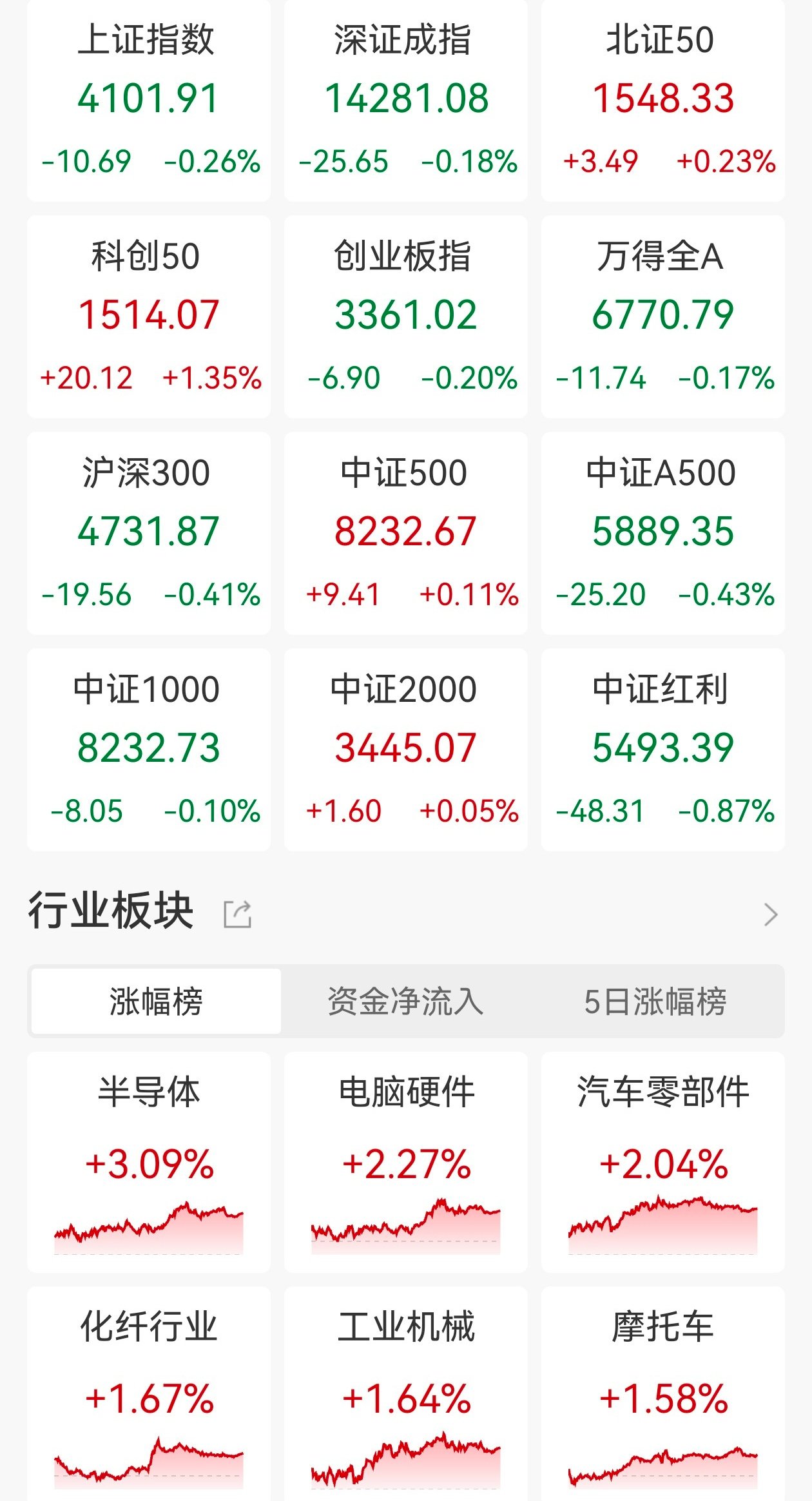
Market Overview - The three major A-share indices experienced a downward trend today, with the Shanghai Composite Index falling by 0.26% to 4101 points, the Shenzhen Component Index down by 0.18%, and the ChiNext Index decreasing by 0.2% [1] - The total market turnover reached 3.06 trillion yuan, an increase of 118 billion yuan compared to the previous trading day, with nearly 3000 stocks declining [1] Sector Performance - The AI application sector saw a significant decline for the second consecutive day, with Sora concept, Kimi concept, Zhipu AI, and AI corpus leading the losses, resulting in multiple stocks such as Jieshun Technology and Vision China hitting the daily limit down [1] - The online education sector also faced a downturn, with Dongfang Mingzhu hitting the daily limit down [1] - Concepts related to Kuaishou, Douyin, and Xiaohongshu experienced declines, with stocks like Sanwei Communication and Tianxiao hitting the daily limit down [1] - The gaming, broadcasting, film, and internet service sectors had notable declines [1] Positive Sector Movements - TSMC reported earnings that exceeded expectations, leading to a surge in the semiconductor sector, with storage chips, silicon carbide, and automotive chips among the top gainers, resulting in stocks like Yongxi Electronics, Tianyue Advanced, and Tongfu Microelectronics hitting the daily limit up [1] - The CPO concept was active, with Changdian Technology hitting the daily limit up [1] - The humanoid robot sector saw a rise, with stocks like Wuzhou Xinchun hitting the daily limit up [1] - Sectors such as industrial gases, ultra-high voltage, and industrial mother machines showed significant gains [1] Top Gainers - The top gainers included sectors such as computer hardware, automotive components, and chemical fiber, with respective increases of 3.09%, 2.27%, and 2.04% [2] - Other sectors like industrial machinery and motorcycles also showed positive performance, with increases of 1.67% and 1.64% respectively [2]