
Neuralink

Search documents
腾讯研究院AI速递 20260119
腾讯研究院· 2026-01-18 16:01
Group 1 - xAI's Colossus 2 is the world's first supercomputer cluster to reach 1GW power, with plans to upgrade to 1.5GW in April and a final capacity of 2GW [1] - The cluster will house 555,000 GPUs, surpassing Meta and Microsoft, dedicated to training Grok 5 with 60 trillion parameters [1] - The surge in power demand from data centers may lead to rolling blackouts for 67 million residents in the US PJM grid area, prompting xAI to deploy 168 Tesla Megapack energy storage systems [1] Group 2 - OpenAI has launched an $8/month ChatGPT Go subscription service, offering the GPT-5.2 Instant version with message and image creation limits ten times that of the free version [2] - The company plans to test advertisements in the US on both free and Go versions, with ads clearly marked and not affecting response content [2] - OpenAI assures that user data will not be sold to advertisers, and users can opt out of personalized ads and delete related data [2] Group 3 - OpenAI has quietly launched the ChatGPT Translate tool, supporting over 50 languages and allowing users to adjust the tone of translations [3] - Google has responded with the open-source TranslateGemma model, supporting 55 languages and featuring 12 billion parameters, surpassing the previous 27 billion baseline [3] - TranslateGemma retains multimodal capabilities to translate text in images, with a 4 billion version that can run on mobile devices [3] Group 4 - Black Forest Labs has open-sourced the FLUX.2 Klein model, achieving end-to-end inference in under 0.5 seconds on modern hardware, unifying text-to-image generation and editing [4] - The 4 billion parameter model requires only 13GB of VRAM to run on consumer-grade GPUs, while the 9 billion version matches the performance of models with five times the parameters [4] - The model offers FP8 and NVFP4 quantized versions, achieving inference speedups of up to 1.6x and 2.7x on RTX GPUs, with VRAM usage reduced by 40% to 55% [4] Group 5 - Meituan has released the LongCat-Flash-Thinking-2601 model with 560 billion parameters, introducing a rethinking mode that allows for simultaneous parallel thinking [7] - The model shows significant improvements in tool usage and search benchmarks, with a new evaluation method for generalization capabilities in automated environment scaling [7] - The model employs environment scaling and multi-environment reinforcement learning, enhancing adaptability in out-of-distribution scenarios [7] Group 6 - The court has unsealed over 100 documents in the lawsuit between Musk and OpenAI, revealing that Altman indirectly holds shares in OpenAI through the YC fund [8] - A diary entry from Brockman in 2017 admits to wanting to turn OpenAI into a for-profit company and remove Musk, stating it was the only chance to get rid of him [8] - OpenAI refutes claims that Musk sought a 50%-60% equity stake and CEO position, with the judge deeming the evidence too contentious for a jury trial set for April 27 [8] Group 7 - Neuralink's first subject revealed that brain chips can be upgraded without surgery through three methods: Telepathy app updates, OTA firmware updates, and hardware iterations [9] - After 85% of electrodes detached, the team used software algorithms to enhance the performance of the remaining 15%, achieving better results than intact electrodes [9] - Future plans include a "dual-chip configuration" to create a "digital bridge" between the brain and spinal cord, potentially allowing paralyzed individuals to walk again [9] Group 8 - Sequoia Capital partners have published a blog asserting that AGI has arrived, defining it as the ability to clarify tasks [10] - The article cites an example of an intelligent agent completing a recruitment task autonomously in 31 minutes, demonstrating its capability to form hypotheses and validate them [10] - The capabilities of long-cycle intelligent agents are expected to double every seven months, with predictions that by 2028 they could complete a human expert's daily work [10] Group 9 - OpenAI's post-training lead stated that the intelligence of a model is determined by how well it understands user queries [11] - GPT-5.1 has transformed all chat models into reasoning models, allowing them to autonomously decide on thinking duration based on question difficulty [11] - Improvements have been made in context memory, automatic model switching, and user-defined expression styles, with future models expected to be more customizable [11] Group 10 - Anthropic's new Economic Index report indicates that AI accelerates significantly with task complexity, achieving speedups of 9 times for high school tasks and 12 times for college tasks [12] - Human-AI collaboration has extended the time limit for AI tasks from 2 hours to 19 hours, nearly a tenfold increase, emphasizing the importance of human feedback [12] - The report warns of the "de-skilling" risk, as AI systematically removes high-intelligence components from work, with tasks now requiring an average of 14.4 years of education [12]


How Neuralink works 🧠
Neura Pod – Neuralink· 2026-01-18 16:01
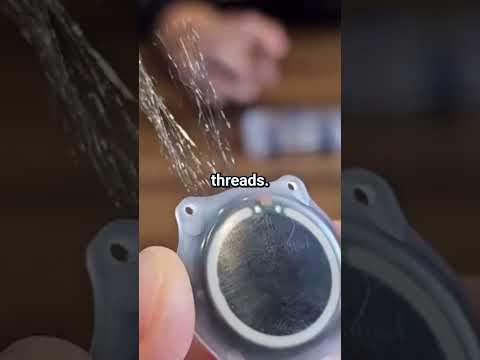
Elon Musk and his team are building this device to help solve many brain problems like strokes, ringing in the ears, or even depression. And what's even crazier is he expects these chips to one day help blind people see and paralyze people walk again. These devices have already been surgically implanted with permission from the FDA to do human trials.This small package has tiny chips and electronics inside. And you can see at the end it's connected to these very thin, shiny threads. Since our brains are lik ...
意念控物成真!脑机接口产业化爆发,这波机会别错过!
格隆汇APP· 2026-01-18 08:23
Core Viewpoint - The brain-computer interface (BCI) industry is entering a critical phase of industrialization, driven by strong policy support, clinical advancements, financing growth, and the formation of a complete industrial chain [6][9]. Policy Support - The Chinese government has consistently prioritized BCI in its development plans, with significant policy support expected in 2025, including the establishment of special funds by local governments [9]. - The "China Brain Project" and the "14th Five-Year Plan" highlight the importance of BCI, indicating a robust commitment to its development [9]. Clinical Advancements - The number of clinical trials in China is projected to increase significantly by 2025, with breakthroughs in invasive, semi-invasive, and interventional technologies [9]. - Notable achievements include the completion of the world's first interventional BCI human trial and the development of advanced devices that are fully implanted and wireless [9]. Financing Growth - In the first 11 months of 2025, there were 24 financing events in the BCI sector, marking a 30% year-on-year increase, supported by government funds and market capital [9]. - Various companies have secured significant funding, indicating strong investor interest in the sector [11]. Industrial Development - The BCI industry is evolving into a trillion-yuan market, with over 40 clinical research wards established nationwide, enhancing the ecosystem from core components to complete systems [7][9]. - The industry is witnessing a shift from experimental concepts to practical applications across medical, industrial, and transportation sectors [7]. Technological Breakthroughs - BCI technology is categorized into invasive, semi-invasive, and non-invasive types, with invasive methods offering superior signal quality [12]. - Domestic advancements include breakthroughs in electrode arrays and decoding algorithms, achieving over 90% accuracy in Chinese character writing recognition [14]. Application Scenarios - BCI applications are expanding into various fields, including medical rehabilitation, industrial safety, aerospace, and entertainment, with specific use cases such as fatigue monitoring and cognitive health assessments [15][12]. - The technology is being utilized to assist patients with spinal injuries and other conditions, while also being tested in industrial settings for safety monitoring [14][15]. Investment Opportunities - The BCI sector presents significant investment opportunities, particularly in three areas: technology-leading companies, clinical implementation firms, and industry-collaborative enterprises [18][20]. - Companies with advanced technologies in invasive and interventional methods, as well as those with established clinical partnerships, are expected to yield substantial returns [20][21].

马斯克向OpenAI微软索赔千亿美元,奥特曼回怼/韩国「自研AI」被抓包用中国模型代码/机器人将再登春晚|Hunt Good 周报
Sou Hu Cai Jing· 2026-01-18 07:04
Group 1 - South Korea's initiative to develop a fully domestic AI model has faced controversy as three out of five finalists were found to have used foreign open-source code, including from China [1][3] - Upstage admitted to using elements from a Chinese open-source model, while other competitors like Naver and SK Telecom also acknowledged similarities with foreign technologies but claimed their core engines were independently developed [3][4] - The competition rules did not explicitly prohibit the use of foreign open-source code, raising questions about the integrity of the initiative [3] Group 2 - OpenAI has reportedly chosen to forgo a partnership with Apple to focus on developing its own AI hardware, which has implications for Apple's recent collaboration with Google [4][7] - The deal between Apple and Google could be worth tens of billions, with estimates suggesting it may add up to $5 billion in value for Google [4] - OpenAI's hardware ambitions may have influenced Apple's decision to partner with Google, as the latter has narrowed the gap with OpenAI in model capabilities [7] Group 3 - Elon Musk is suing OpenAI and Microsoft for damages ranging from $79 billion to $134 billion, claiming that OpenAI has deviated from its non-profit mission [8][10] - Musk's claims are based on an analysis suggesting he is entitled to a significant share of OpenAI's current valuation due to his initial investment of $38 million [8][10] - OpenAI has dismissed Musk's lawsuit as a form of harassment rather than a legitimate economic claim [11] Group 4 - Meta has announced significant layoffs, cutting approximately 1,500 jobs from its Reality Labs division and closing three VR game studios, indicating a shift in focus from the metaverse to AI wearable devices [16][18] - The Reality Labs division has incurred over $70 billion in losses since early 2021, prompting a budget reduction and a pivot towards mobile devices and AI glasses [18] - Meta's collaboration with EssilorLuxottica on Ray-Ban AI smart glasses has exceeded expectations, with plans to double production capacity by the end of the year [18] Group 5 - AI-native startups have seen their annualized revenue double in just seven months, reaching over $30 billion, although OpenAI and Anthropic dominate the market, capturing nearly 85% of the revenue [19][22] - Despite the revenue growth, many AI startups are burning over $20 billion annually, raising concerns about their long-term viability [19][23] - Some successful applications, like Suno and Cognition, have surpassed $1 billion in annualized revenue, but they face increasing competition from model providers like OpenAI and Anthropic [22][23] Group 6 - Neuralink's first human subject reported that the brain chip can be updated wirelessly, marking a significant advancement in brain-computer interface technology [25][26] - The device can evolve through cloud updates, enhancing performance without the need for surgical intervention, and may allow for dual-chip implantation in the future [26] - Approximately 20 patients have undergone the brain-machine surgery, with a significant number waiting for the procedure [26] Group 7 - Zhizhu's GLM-Image model has topped the Hugging Face Trending chart, marking a breakthrough for domestically developed AI models trained entirely on Chinese chips [27] - The model showcases the feasibility of training state-of-the-art models using domestic computing power and has demonstrated superior performance in specific tasks [27] - GLM-Image is now available for public use on various platforms, highlighting advancements in China's AI capabilities [27][28]






马斯克开出千亿美元天价索赔!OpenAI回应了
Di Yi Cai Jing· 2026-01-18 04:11
马斯克的"天价索赔"正处于人工智能军备竞赛升级阶段。 当地时间1月17日,马斯克在提交给美国联邦法院的文件中,向OpenAI和微软索要高达超过千亿美元的 赔偿金。 美国银行也在一份报告中指出,超大规模数据中心运营商的借贷规模今年将加速增长。他们预计,未来 三年,五大超大规模数据中心运营商的年均借贷额将达到约1400亿美元,甚至可能超过每年3000亿美 元。去年,共发行了1210亿美元的美国公司债券,而2020年至2024年间的年均发行量仅为280亿美元。 为了扩大收入,近日OpenAI还开始进行ChatGPT广告试点。分析师表示,广告收入有望从ChatGPT的8 亿周活跃用户中释放可观的收入来源,但此举可能会激怒部分用户,并损害用户对产品的信任。 马斯克表示,他在2015年联合创立OpenAI期间,为OpenAI提供了655亿美元至1094亿美元的资金,而微 软则获得了133亿美元至251亿美元的资金。这些资金总计可高达1300亿美元。 与此同时,OpenAI CEO奥尔特曼还在脑机接口领域与马斯克展开全方位的较量。就在近日,由奥尔特 曼联合创立的脑机接口公司Merge Labs宣布完成2.52亿美元融资,O ...
意念控物成真!脑机接口产业化爆发,这波机会别错过!
Xin Lang Cai Jing· 2026-01-18 04:03
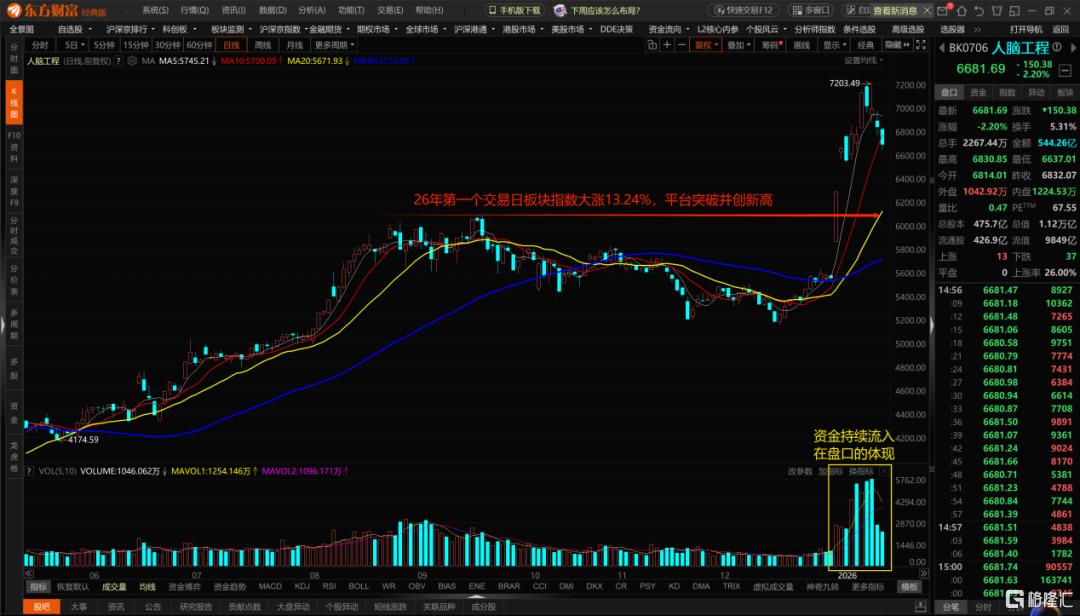
脑机接口是一项让大脑直接与外部设备建立通信通路的黑科技,既能帮助瘫痪患者重拾行动能力、视障患者恢复视觉感知,还在医疗、工业、交通等多个 领域逐步落地。 2025年,国家将脑机接口列入未来产业重点发展清单,政策支持密集加码,临床试验加速推进,资本市场持续火热。 (来源:东方财富) 元旦后首个交易日,资本市场便对该板块展开积极抢筹,板块指数当日大幅拉升13.24%,后续几日延续强势上涨态势,充分印证了资金持续流入的旺盛 动能。而近几日的缩量回调,更凸显出资金锁仓意愿强烈,筹码稳定性十足,进一步夯实了板块上涨的基础。 再者,全球巨头Neuralink即将启动设备规模化生产,国内企业也在技术研发上频频突破,脑机接口早已脱离实验室概念,成长为千亿级规模的黄金赛道, 新一轮投资机遇已然来临。 01 四重利好共振,脑机接口进入爆发前夜 脑机接口的崛起绝非偶然,政策、临床、融资、产业四大核心力量齐发力,推动行业迈入产业化关键阶段。 政策层面,国家从"中国脑计划"到"十五五"规划,持续将脑机接口列为重点发展方向,2025年更是密集出台支持政策,地方也纷纷设立专项资金,北京、 上海等城市还出台专项行动方案,为产业发展铺路。 临床 ...
融资18亿!奥特曼杀入马斯克脑机地盘
Sou Hu Cai Jing· 2026-01-16 10:51
Group 1 - Sam Altman, CEO of OpenAI, has successfully raised $252 million (approximately 1.8 billion RMB) in seed funding for Merge Labs, a brain-computer interface company, significantly exceeding the early funding scale of most neurotechnology companies [2][3] - Merge Labs is focusing on a non-invasive technology approach, utilizing ultrasound and other methods to send and receive information without implanting electrodes in the brain, contrasting sharply with Elon Musk's invasive strategy with Neuralink [2][3] - The competition between Altman and Musk in the brain-computer interface sector represents a broader trend in the global brain-computer interface industry, which is experiencing rapid growth due to technological breakthroughs, supportive policies, and increased capital investment [6][9] Group 2 - OpenAI is the largest investor in Merge Labs' recent funding round, indicating a potential integration of OpenAI's core algorithms with brain-computer interface technology, which distinguishes Merge Labs from other companies in the field [4] - Merge Labs aims to connect biological intelligence with artificial intelligence to maximize human capabilities and experiences, developing a new paradigm of brain-computer interfaces for high-bandwidth interaction with advanced AI [4] - The global brain-computer interface market is projected to grow from approximately $2.62 billion in 2024 to $12.4 billion by 2034, with China's market expected to increase from 3.2 billion RMB in 2024 to 5.58 billion RMB by 2027, reflecting a compound annual growth rate of about 20% [6]

OpenAI投资山姆·奥特曼脑机接口初创公司Merge Labs
Sou Hu Cai Jing· 2026-01-16 10:44
Core Insights - OpenAI has invested in Merge Labs, a brain-computer interface startup founded by CEO Sam Altman, which aims to connect biology and artificial intelligence to enhance human capabilities [2][3] - Merge Labs completed a $250 million seed funding round, with a valuation of $850 million, and OpenAI was the largest investor [2][3] - The company plans to develop non-invasive technology that connects to neurons using molecules instead of electrodes, utilizing methods like ultrasound for information transmission [2][3] Company Overview - Merge Labs is defined as a research laboratory focused on maximizing human capabilities by connecting biology and AI [2][7] - The startup's mission includes restoring lost abilities, supporting healthier brain states, and enhancing connections between individuals [2] Competitive Landscape - The investment intensifies competition between Altman and Elon Musk, whose company Neuralink is developing invasive brain-computer interface chips for severely paralyzed patients [3] - Neuralink's approach requires surgical implantation, contrasting with Merge Labs' non-invasive technology [3][7] Investment Dynamics - OpenAI's investment in Merge Labs is described as a "circular transaction," as success for Merge Labs could lead to more users for OpenAI, validating the investment [5][7] - OpenAI aims to collaborate with Merge Labs to develop scientific foundational models and advanced tools, enhancing research in bioengineering and neuroscience [5] Founders and Leadership - Merge Labs' co-founders include Alex Blania and Sandro Herbig from Tools for Humanity, along with Tyson Aflalo and Sumner Norman from Forest Neurotech, and researcher Mikhail Shapiro from Caltech [3][4] - The co-founders will continue their roles in their respective companies while also serving on the board of Merge Labs [4][5] Future Vision - Altman has long envisioned the concept of "fusion" between humans and machines, suggesting that this integration could be essential for human survival in the face of superintelligent AI [6] - The potential for brain-computer interfaces to create natural, human-centered interactions with AI is highlighted as a key reason for OpenAI's investment [5][6]

马斯克领衔,脑机接口商业化元年来了?
Tai Mei Ti A P P· 2026-01-16 08:14
Core Insights - The announcement by Elon Musk regarding Neuralink's plans for large-scale production and fully automated surgeries in 2026 marks a significant step towards the commercialization of brain-machine interfaces (BMIs) [1][2] - The excitement in global capital markets is evident, with related stocks in the A-share market experiencing significant gains, indicating a strong investor interest in the BMI sector [2] Group 1: Technological Advancements - Neuralink is leading the invasive BMI sector by integrating AI into the entire process, significantly reducing surgery time from 6-8 hours to approximately 30 minutes, which is described as a "production line" approach [3][4] - The R1 surgical robot developed by Neuralink utilizes AI for real-time navigation, achieving micro-level precision in electrode placement, thus minimizing surgical trauma [3] - Neuralink's devices can decode neural signals with over 95% accuracy, allowing paralyzed individuals to perform tasks like gaming and social media interaction using only their thoughts [4] Group 2: Competitive Landscape - Chinese companies are exploring different technical routes in the BMI space, with firms like Boryeong and BrainTiger focusing on semi-invasive and flexible electrode technologies to balance signal quality and safety [5][6] - Boryeong's NEO system has successfully completed surgeries on 36 spinal injury patients, demonstrating the potential for restoring motor functions [5] - BrainTiger has made strides in real-time Chinese language decoding, achieving a 71.5% accuracy rate in clinical trials, showcasing advanced capabilities in high-level brain function decoding [6] Group 3: Market Challenges - Despite the technological advancements, the BMI industry faces significant hurdles in transitioning from innovative technology to a mature business model, with current clinical trials being limited in scope [7][8] - The market for BMIs is highly specialized, targeting severe neurological conditions, which may limit its immediate commercial viability [8] - The long-term reliability of implanted devices is a concern, as immune responses can lead to signal degradation, posing challenges for sustained use [9] Group 4: Ethical and Regulatory Considerations - The collection and use of neural data raise ethical questions regarding privacy and data security, with a lack of established regulations in place [10][11] - The potential for misuse of technology and risks associated with hacking highlight the need for a robust ethical framework to guide the commercialization of BMIs [10][11] - The balance between investor enthusiasm and the practical realities of the BMI market will be crucial for the industry's future [11]
OpenAI砸巨资投脑机接口,Altman又要和马斯克较量了
Hua Er Jie Jian Wen· 2026-01-16 04:09
Core Insights - Merge Labs, co-founded by OpenAI CEO Sam Altman, has raised $252 million in funding, with OpenAI as the largest investor, aiming to develop brain-computer interface devices to seamlessly connect humans with AI [1] - The funding round was led by Bain Capital, with other investors including Gabe Newell, co-founder of Valve Corporation [1] - Merge plans to initially focus on medical applications before expanding to consumer products, although it has not disclosed its valuation [1] Company Overview - Merge aims to develop non-invasive brain-computer interface devices, differentiating itself from competitors like Neuralink, which focuses on invasive implants [2] - The company is positioned as a research lab to tackle complex scientific and engineering challenges associated with high-bandwidth devices that can process large amounts of data [2] - Merge currently has fewer than 50 employees and is planning to continue hiring, without a designated president or CEO [5] Competitive Landscape - The launch of Merge intensifies the competition between Altman and Elon Musk, who were once close business partners and co-founders of OpenAI [3] - Musk founded Neuralink in 2016 to develop implantable devices aimed at enhancing human capabilities and preventing obsolescence in the age of AI [4] Industry Dynamics - The brain-computer interface sector has seen rapid growth, with over $2 billion in funding in the U.S., driven by advancements in AI that provide the necessary computational power for brain implants [5] - Companies are exploring non-surgical products, such as external headsets, which are perceived as more attractive to consumers [5]