
南京银行

Search documents
重要股东和董监高频出手上市银行获增持释放积极信号
Zhong Guo Zheng Quan Bao· 2025-09-10 20:18
Group 1 - Recent announcements from banks such as Suzhou Bank, Qingdao Bank, and Nanjing Bank indicate that major shareholders and executives plan to increase their holdings in their respective banks, reflecting confidence in the long-term prospects of the Chinese capital market and the banks' investment value [1][2] - Suzhou Bank's chairman and other executives intend to collectively purchase at least 4.2 million yuan worth of A-shares between September 8 and December 31, funded by their own resources [1] - Qingdao Bank's major shareholder plans to acquire between 233 million and 291 million shares, increasing their stake to between 19.00% and 19.99% within six months from the announcement [1] Group 2 - Nanjing Bank's shareholder, Nanjing Gaoke, increased its stake from 8.94% to 9.00% by purchasing 7.5077 million shares between July 24 and August 4, demonstrating confidence in the bank's future development [2] - More than ten listed banks have reported similar plans for share buybacks this year, indicating a broader trend of confidence among bank executives and major shareholders regarding future growth and profitability [2] - The overall performance of the banking sector has improved, with a year-on-year increase in operating income and net profit of 1.0% and 0.8%, respectively, supported by growth in non-interest income [2] Group 3 - Insurance capital has shown a preference for bank stocks, with over 700 stocks appearing in the top ten circulating shareholders of A-share listed companies, and six of the top ten heavyweights being bank stocks [3] - The stability and quality of bank assets have attracted long-term funds, as banks provide high and stable dividend yields, making them appealing in the current "asset scarcity" environment [3] - The investment logic for bank stocks has shifted from a "growth cycle" based on macroeconomic factors to a focus on "low volatility dividends" driven by asset scarcity, with state-owned banks being core dividend assets due to their high yields and low valuations [3]

创新新材料科技股份有限公司关于公司及子公司2025年度向银行等金融机构申请综合授信提供担保事项的进展公告
Shang Hai Zheng Quan Bao· 2025-09-10 19:15
Core Viewpoint - The company and its subsidiaries are applying for a total of 20.3 billion RMB in guarantees to secure loans and other financial services from various banks for operational and business development needs [1]. Group 1: Guarantee Details - The company’s subsidiary, Innovation Metal, is providing a guarantee of 3.3 billion RMB for a comprehensive credit application to Zheshang Bank [1]. - A guarantee of 2 billion RMB is provided for a domestic letter of credit application to Bohai Bank [1]. - Guarantees totaling 2 billion RMB are provided for free ticket business applications to Ping An Bank by Innovation Metal and Qingdao Liwang Precision Technology [1]. - The company is providing an 8 billion RMB guarantee for a syndicated loan application by its subsidiary, Innovation Metal, to Hang Seng Bank [1]. - A guarantee of 3 billion RMB is provided for a working capital loan application to Ping An Bank by Innovation Metal and its subsidiary [1]. - The company is providing a 1 billion RMB guarantee for a financing lease application by its subsidiary, Innovation Precision, to Yongying Financial Leasing [1]. - A guarantee of 1 billion RMB is provided for a domestic letter of credit application by its subsidiary, Suzhou Chuangtai, to Nanjing Bank [1]. Group 2: Current Guarantee Status - As of the announcement date, the total external guarantee balance of the company and its subsidiaries is 129.84 billion RMB, with the company providing 56.98 billion RMB in guarantees to its subsidiaries and subsidiaries providing 31.69 billion RMB in guarantees to the company [2][6]. - The total external guarantee balance accounts for 120.38% of the company's most recent audited net assets [6]. Group 3: Internal Decision-Making Process - The company’s board of directors approved the proposal for the 2025 comprehensive credit application and guarantee limit, allowing for a total of up to 170.48 billion RMB in guarantees for the year [3]. - The guarantees are within the approved limits and do not require further board or shareholder approval [5]. Group 4: Necessity and Reasonableness of Guarantees - The guarantees are deemed necessary for securing loans and improving financing decision efficiency, ensuring smooth operational activities without harming the interests of the company and its shareholders [5].

益客食品:关于为全资子公司提供担保的进展公告
Zheng Quan Ri Bao· 2025-09-10 13:45
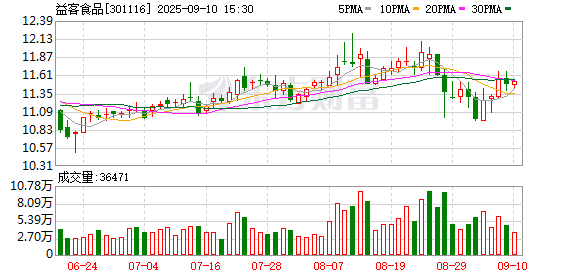
证券日报网讯 9月10日晚间,益客食品发布公告称,2025年9月10日,为满足全资子公司沭阳众客种禽 的业务发展需要,公司与南京银行股份有限公司宿迁分行签订《保证合同》,约定公司为沭阳众客种禽 向南京银行申请的授信业务而形成全部债权本金人民币1,500万元提供连带责任保证担保。截至本公告 日,公司及子公司对外累计担保总额81,767.06万元,占公司最近一期经审计净资产的46.37%。 (文章来源:证券日报) ...


江苏银行登顶,万亿城商行座次重排
Huan Qiu Wang· 2025-09-10 06:54
Group 1 - The core point of the article highlights a significant reshuffling in the ranking of China's city commercial banks, with Jiangsu Bank surpassing Beijing Bank to become the largest by total assets, reaching 4.79 trillion yuan, a 21% increase from the previous year [1][3] - The top three city commercial banks now include Jiangsu Bank, Ningbo Bank, and Nanjing Bank, with Ningbo Bank achieving 3.47 trillion yuan in assets, surpassing Shanghai Bank for the first time [1][3] - The performance of banks in the Yangtze River Delta region is notably strong, with Jiangsu, Ningbo, and Nanjing banks all reporting net profit growth exceeding 8%, significantly outpacing Beijing Bank and Shanghai Bank [3] Group 2 - Jiangsu Bank's corporate loan balance surged by 300 billion yuan in the first half of the year, reflecting a 23.3% increase, while Ningbo Bank's corporate loans grew by 21.34%, indicating robust growth in public business [3][4] - The competitive landscape is intensifying, with lower-ranked banks like Xiamen International Bank and Shengjing Bank facing challenges, including low net profit and asset quality pressures [3][4] - Despite the general pressure of narrowing net interest margins, leading banks like Jiangsu and Nanjing have managed to optimize their liability structures, achieving a reverse increase in interest margins, showcasing strong operational resilience [4]



南京银行(601009) - 南京银行股份有限公司2025年第一次临时股东大会资料
2025-09-08 09:00
2025 年第一次临时股东大会资料 股票代码:601009 南京银行股份有限公司 二〇二五年九月 南京银行股份有限公司 2025 年第一次临时股东大会会议须知 为维护全体股东的合法权益,确保股东大会的正常秩序和议事效率,保证股 东大会的顺利召开,根据中国证监会《上市公司股东大会规则》、公司《章程》 和公司《股东大会议事规则》等规定,特制定本须知。 一、公司根据《公司法》《证券法》《上市公司股东大会规则》和公司《章 程》的规定,认真做好召开股东大会的各项工作。 二、会议主持人在议案表决前宣布现场出席会议的股东和代理人数及其所持 有表决权的股份总数时,会议登记终止。 三、股东参加股东大会,应当认真履行其法定义务,会议开始后应将手机铃 声置于无声状态,尊重和维护其他股东合法权益,保障大会的正常秩序。 四、股东参加股东大会依法享有表决权、发言权、质询权等权利。根据公司 《章程》规定,于股权登记日(即 2025 年 9 月 9 日)在公司借款逾期未还的股 东,或股东质押本公司股权数量达到或超过其持有本公司股权的 50%时,其在股 东大会上的表决权将被限制。 五、股东需要发言的,需先经会议主持人许可,方可发言。股东发言时 ...
资产规模扩增 业绩稳健增长 服务实体增效
Xin Hua Ri Bao· 2025-09-07 21:42
Core Viewpoint - The nine listed banks in Jiangsu have demonstrated steady growth in their mid-year performance for 2025, with overall positive trends in their financial results [1][2]. Financial Performance - As of June 30, total assets reached 4.79 trillion yuan, a significant increase of 21.16% compared to the end of the previous year [2] - Jiangsu Bank reported operating income of 44.864 billion yuan, up 7.78% year-on-year, and net profit attributable to shareholders of 20.238 billion yuan, an increase of 8.05% [2] - Nanjing Bank achieved operating income of 28.48 billion yuan, growing 8.64% year-on-year, and net profit of 12.619 billion yuan, up 8.84% [2] - Jiangsu Bank and Nanjing Bank's stock prices have risen approximately 80% and 67% respectively from early 2024 to mid-2025, leading to market capitalizations of 195.6 billion yuan and 137.2 billion yuan [3]. Innovation in Financial Services - Jiangsu banks are addressing the financing challenges faced by technology enterprises lacking physical collateral through innovative financial solutions [4] - Suzhou Bank successfully executed the first national case of data intellectual property license income rights pledge financing, providing 3 million yuan to a tech company [4] - Jiangsu Bank's "Science and Technology e-loan" enabled a biotech firm to secure 10 million yuan in just two working days, showcasing the efficiency of their digital financial services [5]. Focus on Inclusive Finance - Several banks have prioritized inclusive finance as a core strategy to tackle financing difficulties for small and micro enterprises [7] - Changshu Bank's "Changyin Microfinance Model" has resulted in 72.11% of its loans being 10 million yuan or less, with a significant focus on the e-commerce sector [7] - Su Nong Bank has established a dedicated team for technology finance, successfully launching the first "loan + equity" business in the province [7]. Agricultural and Rural Finance - Zijin Bank has differentiated itself by focusing on agricultural finance, creating a specialized "Three Rural Center" to enhance rural service offerings [8] - As of June 30, Zijin Bank's loans for agriculture and small enterprises reached 128.38 billion yuan, accounting for 66.89% of its total loans, marking a 2.29 percentage point increase since the beginning of the year [8]. Conclusion - Overall, the nine listed banks in Jiangsu are solidifying their operational foundations through robust performance, innovative services to address financing bottlenecks for technology firms, and targeted strategies to invigorate the small and micro economy, thereby contributing to high-quality regional economic development [6][8].
上市银行资产质量大扫描: 地产风险持续出清 零售贷款承压
Zheng Quan Shi Bao· 2025-09-07 18:27
Core Viewpoint - The overall non-performing loan (NPL) ratio of listed banks in China remains at an excellent level in the first half of 2025, with most banks showing stable or improved asset quality, while some retail loan segments are experiencing increased pressure on asset quality [1][7]. Group 1: Non-Performing Loan Ratios - Among A-share listed banks, 20 banks reported a decrease in NPL ratios, with declines ranging from 0.01 to 0.12 percentage points, while 15 banks maintained stable NPL ratios [2]. - Sixteen listed banks have NPL ratios below 1%, with Chengdu Bank reporting the lowest at 0.66% [2]. - Xi'an Bank achieved the largest reduction in NPL ratio, decreasing by 0.12 percentage points to 1.6% by the end of June [2][3]. Group 2: Risk Management Trends - The risk management trends highlighted by bank executives include the ongoing clearance of risks in real estate and local government financing platforms, while retail sectors like personal loans are under pressure [1][4]. - Agricultural Bank of China reported a 0.05 percentage point decrease in the NPL ratio for real estate loans by the end of June [4]. - The overall NPL ratio for state-owned banks averaged 1.21%, outperforming the industry average by 0.28 percentage points [3]. Group 3: Retail Loan Quality Concerns - Several banks, including Huaxia Bank and Chongqing Rural Commercial Bank, have seen increases in personal loan NPL ratios compared to the beginning of the year [7]. - Industrial and Commercial Bank of China noted that retail loan asset quality is generally declining due to market conditions, but expects improvements as economic policies take effect [7][8]. - Credit card transactions and personal loans are facing significant challenges due to consumption downgrades and adjustments in the real estate market, as stated by China Merchants Bank [7]. Group 4: Future Outlook - Analysts from Huatai Securities believe that the asset quality of corporate loans is improving, particularly in the real estate sector, with expectations for continued improvement in the second half of the year [6]. - Despite the overall stability in NPL ratios, there are concerns about the underlying asset quality, particularly in retail loans, which may face pressure from the actual economic conditions [8].
上市银行资产质量大扫描:地产风险持续出清 零售贷款承压
Zheng Quan Shi Bao· 2025-09-07 18:26
Core Viewpoint - The overall non-performing loan (NPL) ratio of listed banks in China remains at an excellent level in the first half of 2025, with most banks showing stable or improved asset quality, while some retail loan segments are experiencing increased pressure on asset quality [1][7]. Group 1: Non-Performing Loan Ratios - 20 out of 42 listed banks reported a decrease in NPL ratios compared to the beginning of the year, with declines ranging from 0.01 to 0.12 percentage points [2]. - 16 banks have NPL ratios below 1%, with Chengdu Bank having the lowest at 0.66% [2]. - Xi'an Bank saw the largest reduction in NPL ratio, decreasing by 0.12 percentage points to 1.6% by the end of June [2]. Group 2: Risk Management Trends - The risk management landscape is characterized by two main trends: ongoing risk clearance in real estate and local government financing platforms, and rising pressure on retail loans such as personal business and consumer loans [1][4]. - Agricultural Bank of China reported a 0.05 percentage point decrease in the NPL ratio for real estate loans by the end of June [4]. Group 3: Retail Loan Quality Concerns - Several banks, including Huaxia Bank and Chongqing Rural Commercial Bank, have reported increases in personal loan NPL ratios compared to the beginning of the year [7]. - Industrial and Commercial Bank of China acknowledged a general decline in retail loan asset quality due to market conditions, but expects improvements as economic policies take effect [7][8]. - Challenges in retail banking are attributed to consumption downgrades and adjustments in the real estate market, impacting credit card transactions and personal loans [7].
本周聚焦:2025上半年银行确认了多少金融资产处置收益?OCI浮盈有多少?
GOLDEN SUN SECURITIES· 2025-09-07 08:20
Investment Rating - The report maintains an "Increase" rating for the banking sector, indicating a positive outlook for the industry [1]. Core Insights - In the first half of 2025, the contribution of financial asset disposal gains from AC and OCI accounts to revenue reached 5.2%, an increase of 2.9 percentage points compared to 2024 [1][2]. - The investment income growth rate for 42 listed banks was 23.6%, with AC, OCI, and TPL gains showing year-on-year growth rates of 134.7%, 79.0%, and -8.4% respectively [1]. - The report highlights that the increase in disposal gains does not necessarily indicate a significant increase in asset disposal scale, as market conditions and strategies vary among banks [2]. Financial Asset Disposal Gains - The contribution of AC and OCI financial asset disposal gains to revenue was 5.2%, up 2.9 percentage points from 2024, with AC asset disposal gains contributing 2.6% [2]. - Among different types of banks, rural commercial banks had the highest contribution from AC and OCI disposal gains, reaching 11.0%, an increase of 6.2 percentage points from 2024 [2]. - Specific banks such as Jiangyin Bank, Sunong Bank, and Zijin Bank had high disposal gain ratios relative to their revenue, at 28.9%, 26.7%, and 22.7% respectively [2]. OCI Floating Profit Situation - The overall OCI floating profit decreased compared to the end of the previous year, accounting for 12.6% of the estimated profit for 2025 [3]. - Major state-owned banks like CCB and ABC reported significant OCI floating profits, with balances exceeding 30 billion [3]. - The average contribution of OCI floating profits to profits for city and rural commercial banks was notably high, with Ningbo Bank's ratio reaching 35% [3][6]. Sector Trends - The banking sector is expected to benefit from expansionary policies aimed at stabilizing the economy, with a focus on real estate and consumer spending [7]. - The report suggests a focus on banks with improving fundamentals, such as Ningbo Bank, and those with dividend strategies like Jiangsu Bank and Chengdu Bank [7]. - Attention is also drawn to banks with potential convertible bond conversion expectations, including Shanghai Bank and Industrial Bank [7].





南京银行杭州分行落地首笔本外币一体化账户业务
Ren Min Wang· 2025-09-06 13:37
Group 1 - The core viewpoint of the news is the successful launch of the integrated foreign currency account by Nanjing Bank Hangzhou Branch, which meets the multi-currency settlement needs of a technology company in Zhejiang [1][2] - The technology company, established in 2015 with a registered capital of 10 million yuan, primarily provides cloud services to overseas clients and has a high demand for multi-currency settlements [1] - The integrated foreign currency account simplifies the account opening process, significantly improves operational efficiency, and supports multi-currency settlements, providing a more efficient solution for cross-border capital flow [1][2] Group 2 - The integrated foreign currency account is an important innovation promoted by the People's Bank of China to enhance cross-border financial management [2] - As one of the first pilot institutions in Zhejiang Province, Nanjing Bank Hangzhou Branch aims to support more small and micro enterprises in expanding their international markets [2] - This business model reduces financial costs and operational difficulties for enterprises by managing multiple currencies through a single account, aligning with the bank's commitment to serve the real economy with professionalism and efficiency [2]