
鞍钢股份

Search documents
鞍钢股份取得全保护浇注原油储罐容器钢连铸板坯制造方法专利
Sou Hu Cai Jing· 2026-01-09 02:36
Group 1 - The core point of the article is that Angang Steel Company Limited has obtained a patent for a manufacturing method of continuous casting slabs for oil storage tank containers, indicating innovation in the steel production process [1] - Angang Steel Company Limited was established in 1998 and is located in Anshan City, primarily engaged in the smelting and rolling processing of ferrous metals [1] - The registered capital of Angang Steel Company Limited is approximately 936.92 million RMB [1] Group 2 - The company has made investments in 54 enterprises and has participated in 5,000 bidding projects [1] - Angang Steel holds 5 trademark information entries and 5,000 patent information entries, showcasing its focus on intellectual property [1] - The company possesses 616 administrative licenses, indicating a significant level of regulatory compliance and operational capability [1]
【行业深度】一文洞察2026年中国罐式集装箱行业发展前景及投资趋势研究报告
Sou Hu Cai Jing· 2026-01-09 02:03
Core Viewpoint - The tank container industry in China has developed significantly over the past two decades, making China the largest producer of tank containers globally, accounting for 92% of the world's production and sales [2][8]. Industry Development History - The development of the tank container industry in China has gone through four stages: the initial stage (1950-1970), the promotion stage (1980-1990), the rapid growth stage (2000-2010), and the standardization stage (2010-present) [7]. - In the initial stage, the concept of tank containers was not clearly introduced, while the promotion stage saw the gradual entry of tank containers into the market [7]. - By the 21st century, China became a major manufacturer of tank containers, with leading companies like CIMC SAFEWAY and SINGAMAS emerging [7]. Industry Policies - The Chinese government has actively promoted specialized and containerized logistics for chemical products, laying a solid foundation for the sustainable development of tank containers [10]. - Policies such as the "One Port, One Policy" initiative aim to enhance the integration of container rail-water transport, targeting a 15% annual growth in container transport volume by 2027 [10][11]. Industry Chain - The tank container industry chain consists of upstream raw materials and components (steel, alloys, valves), midstream manufacturing, and downstream applications in energy, chemicals, and food and beverage sectors [12][13]. Market Potential - China's tank container production is projected to reach 40,000 units in 2024, representing 95% of global production, with CIMC SAFEWAY maintaining a leading market share [2][8]. - The growth of the liquid chemical, food and beverage, and clean energy logistics markets presents significant opportunities for tank containers [2]. Related Companies - Key listed companies in the tank container sector include CIMC Huaneng (301559), Sifang Technology (603339), and Shengsi Container (00716) [3].


2025年中国汽车车桥行业发展历程、产业链、市场规模、重点企业及趋势研判:车桥行业正加速向轻量化与高效化迭代[图]
Chan Ye Xin Xi Wang· 2026-01-09 01:43
Core Insights - The automotive axle industry in China is experiencing significant growth driven by increasing demand for vehicles, particularly SUVs, and advancements in automotive technology [1][11] - The market size of China's automotive axle industry is projected to reach 67.158 billion yuan in 2025, reflecting a year-on-year growth of 5.93% in 2024 [1][12] - The global automotive axle market is expected to grow to 49.526 billion USD by 2030, indicating a robust demand for high-performance axles [11] Industry Overview - Automotive axles, also known as vehicle axles, connect the wheels to the vehicle frame and are crucial for transmitting forces and maintaining vehicle stability [2][9] - The industry is categorized into light, heavy, and suspension axles, with light axles primarily serving passenger vehicles and heavy axles for commercial vehicles [2][4] Industry Development History - The axle industry began in the early 20th century, evolving from simple steel and chain constructions to advanced materials and manufacturing processes [4][5] - Significant advancements occurred in the 1980s in China, transitioning from reliance on foreign technology to independent research and development [5][6] Industry Value Chain - The upstream of the axle industry includes raw materials like high-strength steel and production equipment, while the midstream focuses on manufacturing, and the downstream encompasses various vehicle applications [7][8] Current Industry Status - The global automotive market is recovering post-pandemic, with production expected to reach 93.95 million units by 2024, which positively impacts the axle industry [10][11] - China's automotive production is projected to be 31.28 million units in 2024, with a notable increase in new energy vehicles [10][11] Competitive Landscape and Key Players - The global axle market is dominated by international giants like ZF, Bosch, and Cummins, while Chinese manufacturers focus on commercial vehicle axles [12] - Key players in China include Liaoning Shuguang Automotive Group, Dongfeng Dana Axle Company, and others, with a strong emphasis on technology and product development [12][13] Industry Trends - The future of the axle industry is leaning towards specialization, with customized solutions for different vehicle types and driving conditions [14] - Lightweight designs using advanced materials and integrated systems are becoming a priority to enhance vehicle efficiency and performance [15][16]


十五五开局之年!锁定这一海洋装备与关键材料盛会,抢占先机
DT新材料· 2026-01-08 16:05
Group 1 - The conference marks the 11th International Marine Anti-Corrosion and Anti-Fouling Forum and Marine Key Materials Conference, focusing on the development of marine engineering equipment and technology in China since 2016 [2] - The event will feature a comprehensive analysis of global marine equipment anti-corrosion and anti-fouling technology, sharing innovative methods and transformative technologies in marine key materials [2] - The conference will include a main forum, 12 specialized forums, 3 frontier technology and youth forums, and various networking activities, inviting global government departments, industry organizations, experts, and corporate representatives to collaborate [2] Group 2 - The organizing institutions include the National Key Laboratory of Marine Key Materials, the Institute of Oceanology, Chinese Academy of Sciences, Ocean University of China, and the 725th Research Institute of China Shipbuilding Group [4] - The conference will address macro policies, latest research achievements, and industry advancements, with a focus on innovative materials and technologies in marine applications [13] Group 3 - Specialized forums will cover topics such as marine functional materials, marine structural materials, and marine environmental materials, focusing on new types of anti-corrosion coatings and materials for various marine applications [13][14] - The conference will also explore corrosion and protection technologies, digital technologies, and artificial intelligence applications in marine material development [14][15] Group 4 - The event will feature a youth forum aimed at encouraging young scientists to present key scientific issues and innovative solutions, with awards for outstanding presentations [17] - Various specialized forums will focus on marine key materials, corrosion and protection technologies, and wear and protection technologies, addressing the latest research and practical applications [18][19][20] Group 5 - The conference will include special activities such as large-scale terminal matching sessions, showcasing the latest solutions for anti-fouling, corrosion life prediction models, and innovative products and technologies [21] - The previous conference in 2025 highlighted applications in green shipping, deep-sea aquaculture, offshore wind power, coastal nuclear power, and marine oil and gas, with over 500 participants and numerous presentations [23][24]

实践与思考丨围绕目标任务做深做实政治监督
Zhong Yang Ji Wei Guo Jia Jian Wei Wang Zhan· 2026-01-07 23:39
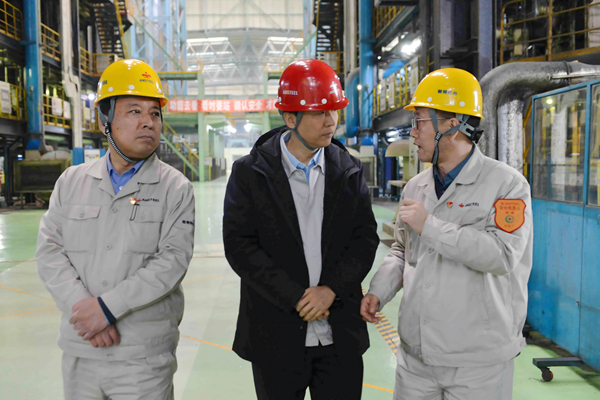
Core Viewpoint - The article emphasizes the importance of political supervision in state-owned enterprises, particularly focusing on Ansteel Group's commitment to high-quality development and alignment with national strategies [2][3]. Group 1: Political Supervision - The Ansteel Group's supervisory body has developed a political supervision work guide, establishing a comprehensive list of 57 key items to ensure effective oversight [3]. - The supervision focuses on aligning with the directives of Xi Jinping and the Central Committee, ensuring that the company's actions are consistent with national policies [3][4]. - A three-tiered supervision system has been established to monitor the implementation of key directives and ensure unified action across the organization [4]. Group 2: Special and Daily Supervision - Special supervision is prioritized to ensure the implementation of Xi Jinping's directives, with a focus on 41 key measures across various operational areas [5]. - Daily supervision involves regular communication between the company's leadership and supervisory bodies to enforce accountability and adherence to party discipline [6]. - The supervisory body aims to enhance the effectiveness of daily oversight by integrating various supervisory functions and ensuring a coordinated approach [7]. Group 3: Targeted Supervision - The supervisory body is intensifying oversight on key personnel, particularly focusing on the "one leader" and critical positions to prevent power abuse [8]. - Specific measures have been developed to enhance supervision of key roles, including regular discussions and assessments of leadership conduct [8][9]. - Young leaders are being educated on discipline and integrity, with initiatives aimed at fostering a culture of compliance and ethical behavior [10][11].

2025年中国冶金专用设备制造行业政策、产量、市场规模、重点企业及趋势研判:下游需求带动冶金专用设备规模扩张,行业呈现大型化、智能化趋势[图]
Chan Ye Xin Xi Wang· 2026-01-07 01:19
Industry Overview - The rapid development of key sectors in China's economy, such as automotive, shipbuilding, construction, petrochemicals, nuclear energy, and oil and gas transportation, has significantly boosted the demand for the upstream metallurgy industry, thereby driving the growth of the metallurgy equipment manufacturing industry [1][8] - The market size of China's metallurgy equipment manufacturing industry is projected to grow from 103.085 billion yuan in 2018 to 143.675 billion yuan in 2024, with a compound annual growth rate (CAGR) of 5.69% [9] Policy Support - The Chinese government has introduced numerous policies to support the metallurgy equipment manufacturing industry, focusing on large-scale, intelligent, and green transformation of equipment, as well as enhancing digital technology applications [2] - Specific initiatives include the "Copper Industry High-Quality Development Implementation Plan (2025-2027)" and the "Aluminum Industry High-Quality Development Implementation Plan (2025-2027)," which aim to promote innovation and the modernization of equipment [2] Industry Chain - The upstream of the metallurgy equipment manufacturing industry consists of raw materials and components, including steel, non-ferrous metals, castings, and forgings, which are essential for manufacturing [4] - The midstream involves the production and manufacturing of metallurgy equipment, while the downstream includes industries such as iron and steel, steel processing, and non-ferrous metal smelting [4] Production and Growth Trends - China's steel production is a critical raw material for metallurgy equipment manufacturing, with production expected to grow from 1.05 billion tons in 2017 to 1.4 billion tons in 2024, reflecting a CAGR of 4.2% [6] - The production of metallurgy equipment experienced a recovery in 2022, with output reaching 6.8849 million tons in 2024, a year-on-year increase of 0.63% [7] Competitive Landscape - The industry features a dual structure of international giants and domestic leading enterprises, with companies like CITIC Heavy Industries and China First Heavy Industries emerging as key players in the domestic market [9][10] - Domestic companies are increasingly capturing market share by leveraging local demand, cost-effectiveness, and rapid service response, challenging the dominance of foreign firms in certain segments [9] Future Development Trends - The industry is expected to focus on large-scale and extreme manufacturing capabilities, with advancements in equipment aimed at higher efficiency and lower energy consumption [12] - There will be a significant shift towards integrating smart technologies and digital twin systems throughout the equipment lifecycle, enhancing predictive maintenance and operational efficiency [13] - The trend towards green and low-carbon processes will become a core innovation direction, emphasizing the importance of carbon reduction technologies in equipment design and manufacturing [14]


趋势研判!2025年中国步进电机行业发展历程、产业链、市场规模、竞争格局及未来趋势:国产替代加速与需求扩张,促进步进电机竞争力稳步提升[图]
Chan Ye Xin Xi Wang· 2026-01-07 01:12
Core Insights - The stepper motor industry in China has seen significant growth, with the market size increasing from 1.739 billion yuan in 2016 to an expected 3.89 billion yuan by 2024, representing a compound annual growth rate (CAGR) of 10.59% [1][9] - The Chinese government is actively supporting the industry through policies aimed at technological innovation and standardization, which is expected to further boost market demand [1][9] - The global stepper motor market is projected to reach $2.411 billion by 2029, with a growth of 1.7% year-on-year in 2024 [8] Industry Overview - Stepper motors convert electrical pulse signals into corresponding angular or linear displacements, making them essential in various applications [4] - The industry has evolved from its origins in the 19th century to a critical component in modern automation and precision control systems [5][6] - The stepper motor industry is characterized by a diverse supply chain, including raw materials, manufacturing, and various application sectors such as industrial automation and consumer electronics [7] Market Dynamics - The stepper motor market in China is expanding rapidly due to the transformation of the manufacturing sector and increasing consumer demands for quality and performance [1][9] - The industrial automation sector is a key application area for stepper motors, which are used for precise control in mechanical systems [8] - The Chinese industrial automation market is projected to grow from 165.7 billion yuan in 2017 to 273.9 billion yuan by 2024, with a CAGR of 7.44% [8] Competitive Landscape - The global stepper motor market is dominated by Japanese companies, which account for over 70% of hybrid stepper motor production and 65% of permanent magnet stepper motors [9][10] - Chinese companies are increasingly competitive, with leading firms like Jiangsu Leili, Dingzhi Technology, and Mingzhi Electric making significant strides in technology and market share [12][14] - The industry is transitioning from standardized products to customized, high-performance solutions, driven by the need for deeper understanding of application scenarios [12] Future Trends - The future of stepper motors is expected to focus on high precision and dynamic response through the integration of advanced control algorithms and high-resolution encoders [17] - There is a trend towards smart motors that integrate control functions and communication capabilities, simplifying system design and enhancing performance [18] - Customization and the use of new materials will be crucial for meeting the specific demands of emerging applications in sectors like medical devices and aerospace [19]



鞍钢股份(000898) - H股公告-截至二零二五年十二月三十一日止股份发行人的证券变动月报表
2026-01-06 09:45
股份發行人及根據《上市規則》第十九B章上市的香港預託證券發行人的證券變動月報表 FF301 截至月份: 2025年12月31日 狀態: 新提交 致:香港交易及結算所有限公司 公司名稱: 鞍鋼股份有限公司(備註1) 呈交日期: 2026年1月6日 I. 法定/註冊股本變動 | 1. 股份分類 | 普通股 | 股份類別 | H | | | 於香港聯交所上市 (註1) | | 是 | | | --- | --- | --- | --- | --- | --- | --- | --- | --- | --- | | 證券代號 (如上市) | 00347 | 說明 | H股 | | | | | | | | | | 法定/註冊股份數目 | | | 面值 | | | 法定/註冊股本 | | | 上月底結存 | | | 1,411,540,000 | RMB | | | 1 RMB | | 1,411,540,000 | | 增加 / 減少 (-) | | | | | | | RMB | | | | 本月底結存 | | | 1,411,540,000 | RMB | | | 1 RMB | | 1,411,540,000 | ...
鞍钢股份(00347) - 截至二零二五年十二月三十一日止股份发行人的证券变动月报表
2026-01-06 08:40
FF301 股份發行人及根據《上市規則》第十九B章上市的香港預託證券發行人的證券變動月報表 截至月份: 2025年12月31日 狀態: 新提交 致:香港交易及結算所有限公司 公司名稱: 鞍鋼股份有限公司(備註1) 呈交日期: 2026年1月6日 I. 法定/註冊股本變動 | 1. 股份分類 | 普通股 | 股份類別 | H | | | 於香港聯交所上市 (註1) | | 是 | | | --- | --- | --- | --- | --- | --- | --- | --- | --- | --- | | 證券代號 (如上市) | 00347 | 說明 | H股 | | | | | | | | | | 法定/註冊股份數目 | | | 面值 | | | 法定/註冊股本 | | | 上月底結存 | | | 1,411,540,000 | RMB | | | 1 RMB | | 1,411,540,000 | | 增加 / 減少 (-) | | | | | | | RMB | | | | 本月底結存 | | | 1,411,540,000 | RMB | | | 1 RMB | | 1,411,540,000 | ...
趋势研判!2025年中国供暖设备行业政策、产业链、市场规模、重点企业及发展趋势:供暖设备向节能环保与智能化转型,市场规模将增长至686.56亿元[图]
Chan Ye Xin Xi Wang· 2026-01-06 01:17
Industry Overview - The Chinese heating equipment industry has experienced robust growth driven by rising living standards and supportive government policies. Consumer demand has shifted from basic heating functions to higher energy efficiency, smart control, and environmental features [1][5] - The market size of China's heating equipment industry is projected to grow from 40.082 billion yuan in 2020 to 62.101 billion yuan in 2024, with a compound annual growth rate (CAGR) of 11.57%. By 2025, the market size is expected to reach 68.656 billion yuan [1][9] Policy Support - National policies in energy conservation and clean energy have created a favorable environment for technological upgrades and market expansion in the heating equipment sector. For instance, initiatives promoting sewage source heat pump technology and clean heating solutions are being implemented [5][11] - The continuous expansion of urban centralized heating areas, which grew from 8.309 billion square meters in 2017 to 12.094 billion square meters in 2024, provides a solid market demand foundation for the heating equipment industry, with a CAGR of 5.51% [5][6] Industry Chain - The heating equipment industry chain consists of upstream raw materials and components, including steel, copper, aluminum, and various other materials. The midstream involves the manufacturing of heating equipment, while the downstream includes applications in sectors like real estate [6][7] - Key raw materials such as steel, copper, and aluminum are essential for constructing core structures and functional components of heating equipment. The production of these materials has been increasing, with steel output rising from 1.05 billion tons in 2017 to 1.4 billion tons in 2024, and copper output increasing from 1.867 million tons to 2.350 million tons in the same period [7][8] Market Trends - The heating equipment industry is moving towards higher efficiency, environmental sustainability, and smart technology integration. Future trends include the deep integration of heating systems with renewable energy sources, such as heat pumps and solar energy, to achieve near-zero carbon operations [11][12] - The industry is also expected to see advancements in smart technology, transitioning from automated control of individual devices to autonomous decision-making and collaborative optimization across entire heating systems [12][13] - Customization and diversification of heating solutions will be key, with tailored products and services designed for different climates, building types, and user needs, enhancing overall energy efficiency and user experience [13][14] Key Companies - Major players in the industry include international brands like Vaillant, Bosch, and Ariston, which dominate the high-end market, and domestic leaders like Wanhe and Sunflower, which focus on mid-range and mass-market segments [9][10] - Wanhe Electric, a notable company in the heating equipment sector, reported a revenue of 5.524 billion yuan in the first three quarters of 2025, reflecting a year-on-year growth of 5.54% [10][11]

